Location
Mount Vernon, WA 98274
Location
Mount Vernon, WA 98274

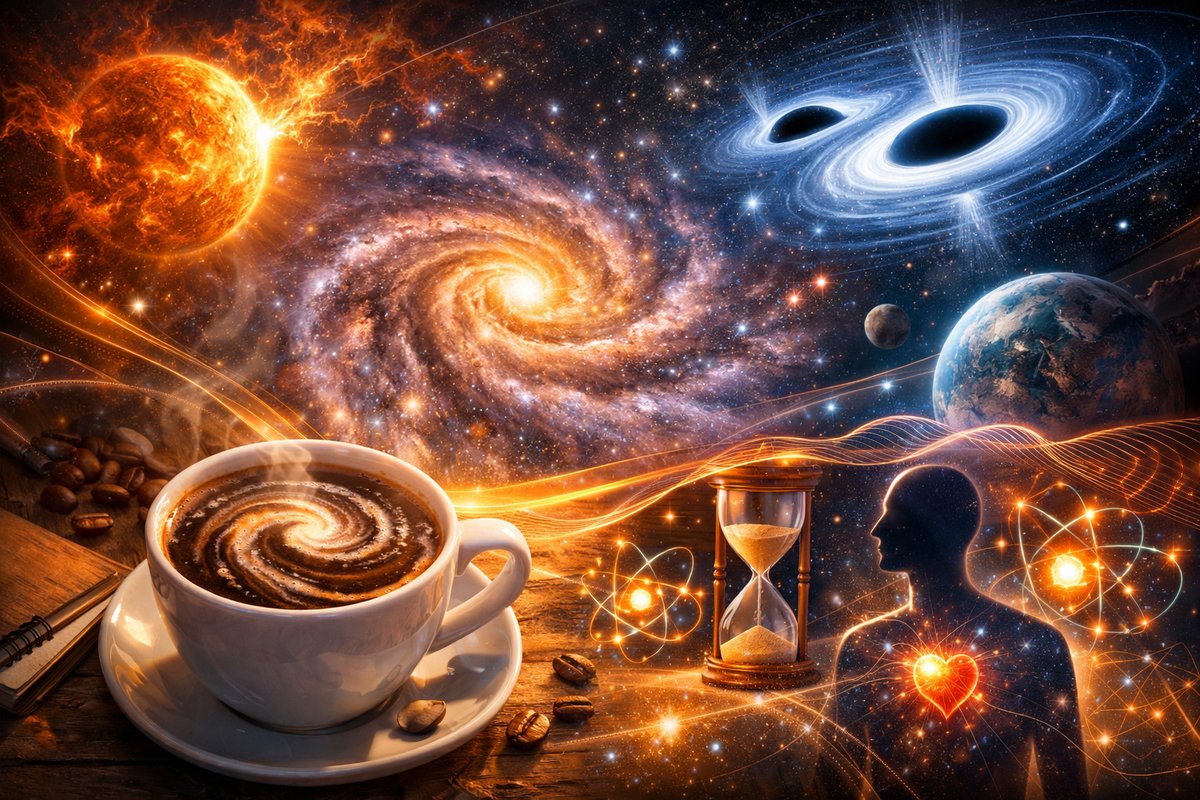
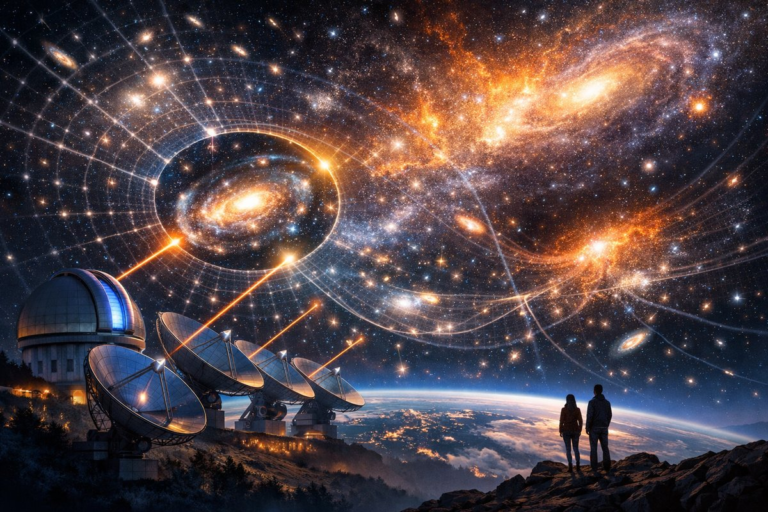
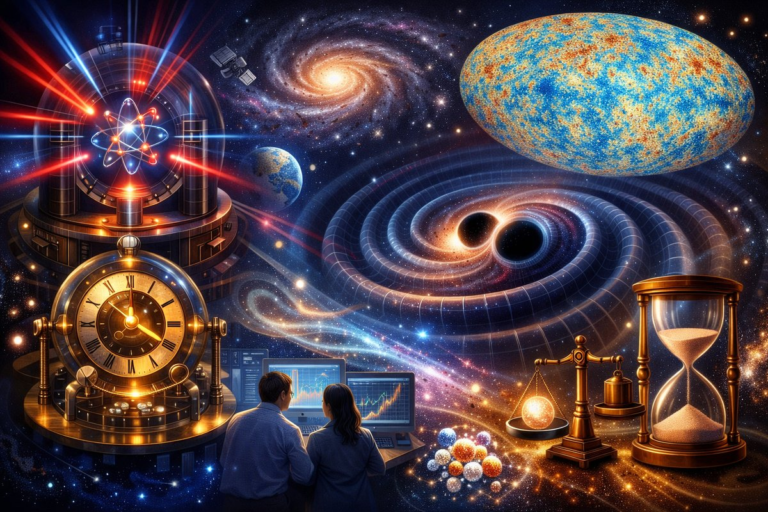
From the kaleidoscope of morning coffee to the hidden pull of distant galaxies, the forces of light, mass, and entropy are not just cosmic curiosities-they sculpt the textures of our daily existence. This news feature unpacks recent discoveries and everyday surprises that reveal science's secret threads woven through both the universe and the human heart.
In a bustling airport lounge, passengers glance at their watches, unaware that every tick of those hands carries the imprint of cosmic time. Thanks to Einstein’s theory of relativity, a traveler hurtling through the skies experiences time ever so slightly differently than a friend sipping tea at ground level. Such effects might be imperceptible on a single journey, yet they’re woven into the fabric of modern life-governing satellite signals, global communications, and even high-frequency trading.
Outside the terminal, the late-afternoon sun fractures through a coffee shop window into a prism of warm hues. That simple rainbow is a reminder that light-electromagnetic waves oscillating across the void-holds secrets about both the cosmos and our own perceptions. Scientists have recently refined handheld spectrometers capable of revealing a beverage’s acidity or a leaf’s chlorophyll content, turning everyday items into mini-laboratories. It’s a testament to how instruments once reserved for star-gazing now fit in a pocket, inviting curious minds to decode the colors around them.
Across town, researchers in a materials lab are probing the weight of zero-the notion that even a perfect vacuum carries energy. Their experiments center on microbalances so precise they measure changes in mass smaller than a grain of pollen. When shelved alongside towering particle colliders, such delicate scales bridge the gulf between the subatomic and the sturdy coffee mug brimming with morning brew. Each gram registered-or lost-traces the subtle interchange between field energy and tangible matter.
Entropy, the measure of disorder, often eludes casual conversation. Yet it lurks behind the scrawl in a physics student’s notebook, the muddled state of a desk piled with papers, and the slow cooling of a cup of tea. A recent study modeling kitchen processes showed that the heat exchange in cooking pasta follows the same thermodynamic principles that govern star formation. The collapse of interstellar gas clouds, driven by gravity and heat loss, echoes in a bubbling pot that transitions from chaotic boil to uniform al dente. In both realms, the march toward equilibrium reflects a cosmic narrative of transformation.
This interplay of order and chaos, mass and light, extends beyond labs and lecture halls into the human psyche. Photographers harness the wave-particle duality of light with pinhole cameras and diffraction gratings to capture landscapes that feel simultaneously timeless and ephemeral. Meanwhile, architects draw on gravitational insights to design structures that defy intuition-slender bridges that withstand roaring winds, lofty towers that sway without peril. The same equations that chart black hole behavior inform steel cables and carbon composites, reminding us that sophisticated math can yield designs as poetic as they are practical.
Entropic decay and renewal also shape how communities tell stories. In one digital art collective, creators feed algorithmic patterns with text from classic novels, generating luminescent tapestries that shift unpredictably. Each new iteration bears the marks of statistical randomness-an echo of entropy at work. Viewers describe an uncanny resonance, as if ancient tales have been refracted through a modern lens, producing insights that neither the original author nor the programmer could have foreseen.
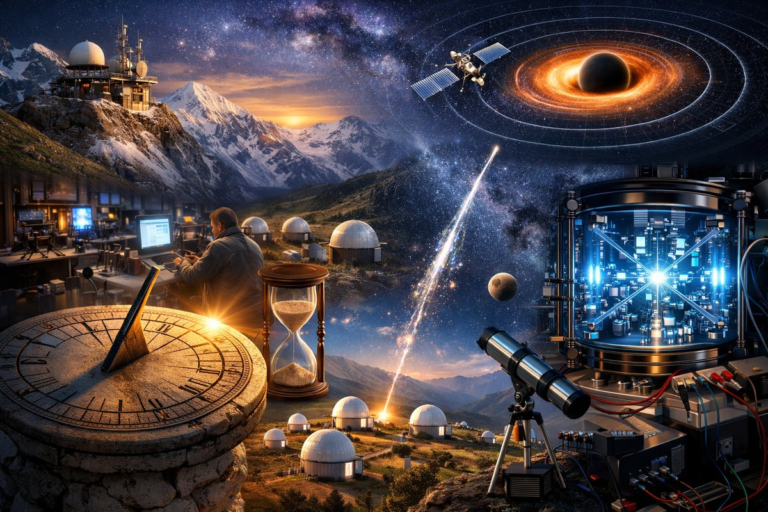
At the edge of these explorations stands a new generation of educational tools. Lab-on-a-chip devices let students mix minuscule chemical samples with ease, studying reaction rates and molecular dynamics without hazardous volumes. Compact light meters transform city rooftops into observatories for tracking skyglow and monitoring light pollution. Even a simple hourglass-meticulously calibrated-finds renewed appeal as a tactile demonstration of time’s relentless flow.
Yet the greatest mysteries remain both vast and intimate. Dark matter hints at unseen mass comprising most of the universe, detectable only through gravitational nudges on visible galaxies. Its nature is a puzzle inviting scientists and dreamers alike to imagine particles that interact solely through gravity. Meanwhile, in the human body, mass manifests as muscle and marrow, bone density and breath-the physics of weight grounded in the biology of life. Each heartbeat, each lift of a finger, is a small victory over entropy’s tug.
As twilight falls and stars pierce the sky, observers armed with entry-level telescopes see flickers of distant suns, each with its own story scripted in light-years. Amateur astronomers help map supernova remnants, contributing data that professional observatories weave into grander models. Their passion underscores a timeless truth: science isn’t the province of a select few, but a collective endeavor fueled by curiosity.
In the end, the threads of reality-time, matter, and entropy-are not distant abstractions but active participants in our lives. They shape the clink of spoon against mug, the silent drift of galaxies, and the dance of data in a lab’s control room. By embracing these forces, we uncover new ways to tell our stories, design our cities, and find wonder in the everyday.
May this exploration inspire you to catch the next burst of solar spectrum through a prism, weigh the unseen energies swirling in a droplet, or simply feel the universe’s gentle tug as you watch the seconds pass.