Location
Mount Vernon, WA 98274
Location
Mount Vernon, WA 98274

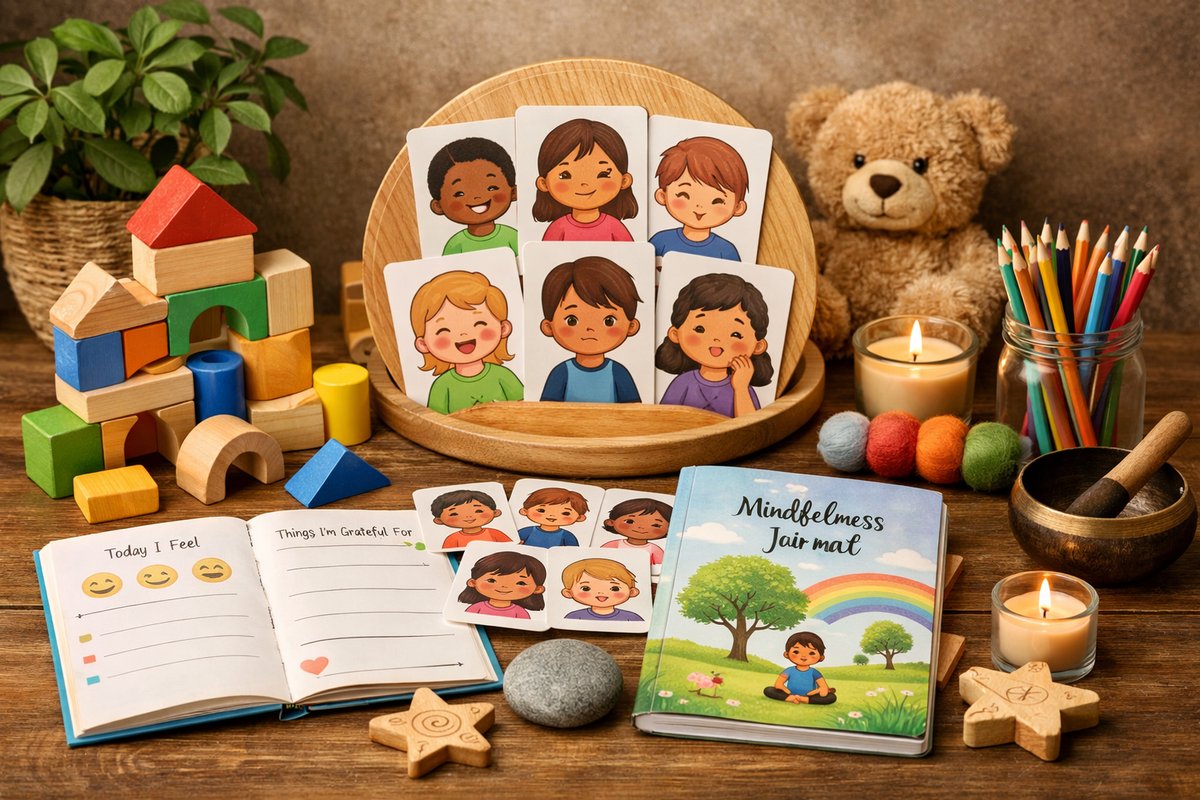
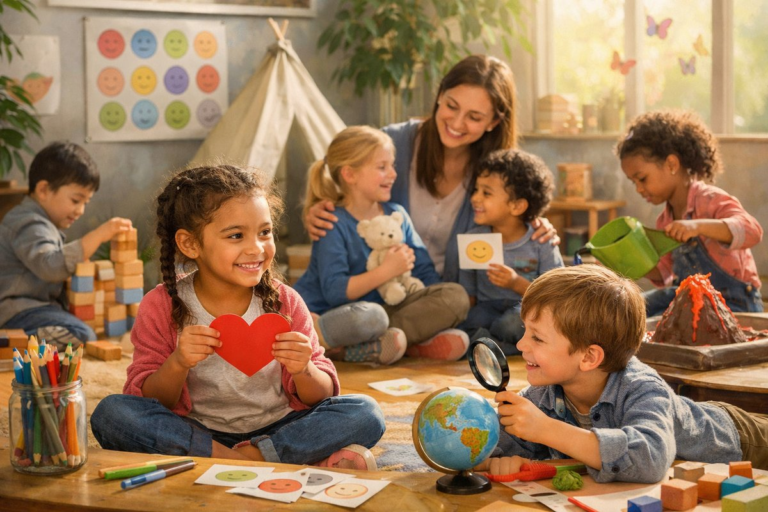
A growing wave of educators and parents are blending hands-on learning toys with emotional literacy tools to nurture well-rounded thinkers. From wooden building blocks that spark open-ended play to emotion-recognition cards and mindfulness journals, the shift toward holistic childhood development is gaining momentum.
A new movement in both classrooms and family living rooms is demonstrating that academic achievement and emotional intelligence can grow hand in hand. Recent research indicates that children who practice naming their feelings, apply reflective strategies and explore open-ended play are more likely to develop resilience, problem-solving skills and genuine curiosity. As schools update curricula to support social-emotional learning and parents seek resources beyond traditional drills and worksheets, a suite of innovative tools has emerged to connect the dots between heart and mind.
A multi-year study led by a consortium of child development researchers tracked students from preschool through elementary school. Those who received targeted social-emotional coaching alongside math and reading lessons showed as much progress in literacy as peers in standard programs, while also scoring 20 percent higher on measures of self-regulation and classroom collaboration. Educators report classrooms where daily emotion check-ins and collaborative play are prioritized feel calmer and more inclusive. Parents, too, are noting that children return from school with richer language around feelings and better conflict-resolution habits.
Underpinning this shift is the recognition that curiosity blossoms most when children feel safe to express themselves. Playwrights and educators have long championed open-ended resources-like free-form blocks or magnetic tiles-to invite exploration rather than prescribing outcomes. When a child stacks wooden blocks into a tower that tumbles, they practice cause and effect. When they rebuild a fortress or reimagine those blocks as an imaginary rocket ship, they exercise narrative skills and agency.
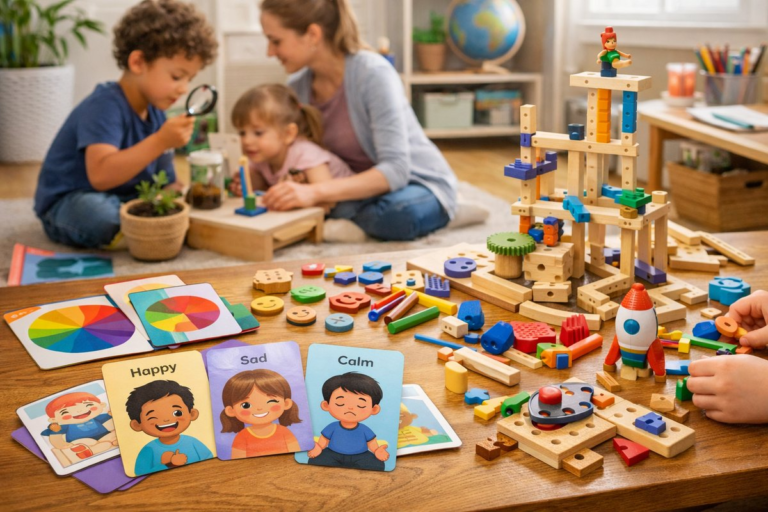
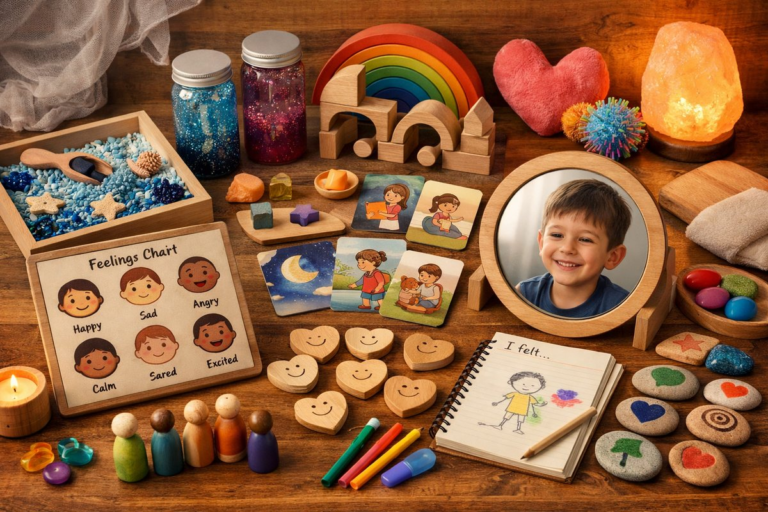
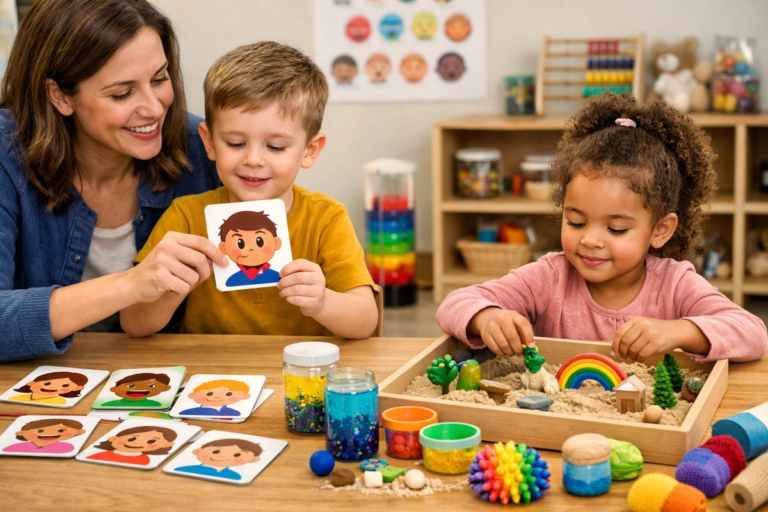
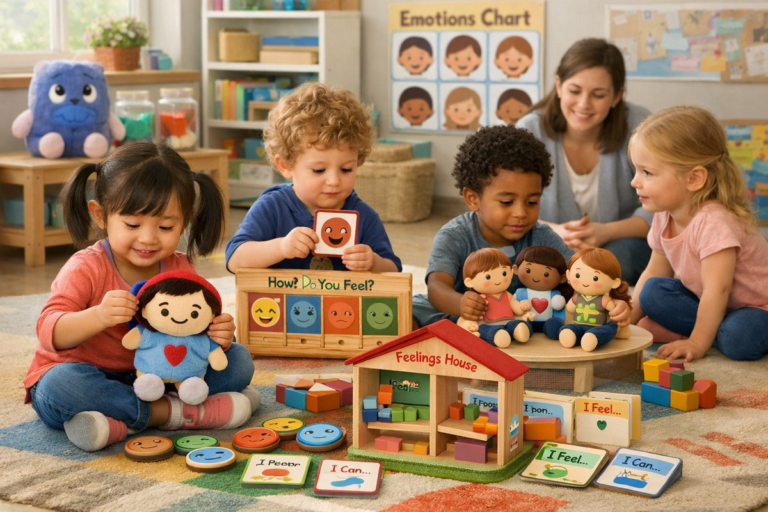
Beyond pure construction sets, a suite of tools designed specifically to foster emotional awareness has gained traction. Emotion flashcards, for instance, display expressive faces alongside single-word prompts such as “excited,” “worried” or “proud.” In mixed-age play groups, children swap cards to share stories about moments when they felt each emotion, deepening both vocabulary and empathy. At home, some families integrate a “feeling board” where kids move a token to illustrate their mood, opening a gateway to conversation before the day even begins.
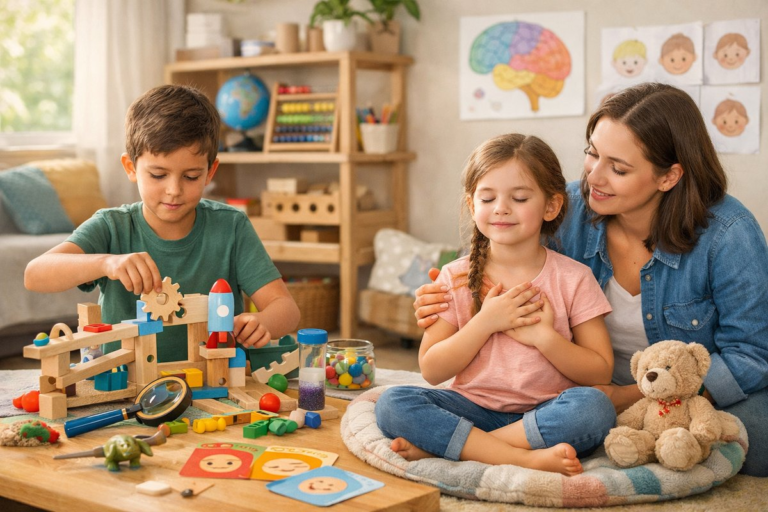
A companion to visual exercises, guided journals crafted for young writers encourage daily reflection. Pages might prompt children to list three things they’re grateful for or to sketch a moment they found challenging. These practices lay a foundation for mindfulness, equipping kids with a toolkit to pause, breathe and reframe setbacks as growth opportunities.
Hands-on STEM kits are also evolving to include social twists. Magnetic building sets once focused solely on geometric shapes now offer prompts for collaborative challenges: build a bridge that can hold two toy cars, or design a habitat model that protects small figurines from “storms.” By weaving real-world scenarios into technical tasks, these kits cultivate both engineering thinking and cooperative problem solving.
Educators and parents agree that integration matters more than any single product. A classroom might kick off the morning with a brief group breathing exercise, then move into partner-driven social investigations using emotion cards, before transitioning to open geometric play or coding robots that respond to voice commands. At home, a parent might read a picture book about kindness, pause for questions, then hand over art supplies so children can create scenes illustrating what kindness looks like in their world.
Financial constraints can pose challenges. High-quality materials often come at a premium, yet community groups and school PTA programs are stepping in to fund toy libraries and emotion-literacy workshops. Some districts are reallocating discretionary budgets to purchase shared kits rather than individual textbooks. In more resource-rich settings, rotating boxes of curated materials travel from classroom to classroom weekly, ensuring variety without huge inventories.
The rise of digital tools has also reshaped emotional learning. Apps designed for family use offer interactive scenarios where virtual characters express thoughts and feelings. Kids choose dialogue options to help calm an anxious friend or cheer up a disappointed peer, practicing emotional coaching in a safe, imaginary space. While screen time remains a concern, thoughtful developers emphasize short sessions and adult-guided play rather than passive consumption.
Critics caution against over-structuring; some experts warn that forcing emotional introspection too early can feel artificial. The most successful programs strike a balance: they allow spontaneous play and storytelling alongside gentle prompts. Apple-free art centers, outdoor nature walks and sand-table investigations remain just as vital as any packaged resource. Ultimately, expertise lies in how adults facilitate reflection, listen without judgment and weave intentional moments of connection into everyday routines.
Parents report tangible changes. One mother describes her seven-year-old son pausing mid-tantrum, taking a deep breath and selecting an emotion card to explain he’s feeling overwhelmed. A father notes that his daughter, after working on a gratitude journal each night, now offers heartfelt thanks when a sibling shares a toy. Teachers see quieter, more focused classrooms where lessons begin with check-ins and end with group debriefs on how students felt while learning new concepts.
Policy discussions at district and state levels are beginning to reflect this paradigm. New guidelines recommend allocating time each day for social-emotional activities and calling for professional development in trauma-informed teaching. A handful of districts have embedded emotion-competency benchmarks into report cards, prompting conversations between teachers and parents about a child’s ability to articulate needs and work collaboratively.
Looking ahead, advocates anticipate more cross-pollination among disciplines. Architects of early childhood centers are designing flexible spaces with integrated reflection corners and communal creation tables. Pediatricians are prescribing screen-time retreats paired with emotion-recognition games. Even playground manufacturers are prototyping equipment that triggers cooperative tasks-swings that require two children to balance, obstacle courses that demand teamwork.
This holistic approach reframes parenting and education as co-creative journeys. The focus shifts from test scores and rote drills to the joy of wonder, the clarity of self-understanding and the bonds formed through shared discovery. Whether it’s a simple set of wooden blocks, a deck of emotion cards or a children’s mindfulness journal, the common thread is agency: offering kids the freedom to explore ideas, express feelings and invent solutions.
In an era of evolving challenges, from global uncertainty to rapid technological change, equipping the next generation with both cognitive flexibility and emotional resilience feels not only timely but essential. Far from diluting academic rigor, infusing learning with heart creates richer contexts for mastery. When young minds learn that confusions and frustrations are part of the process-and that support is always available-they develop the confidence to tackle complex problems and the compassion to collaborate effectively.
As this movement continues to accelerate, parents and educators are encouraged to seek resources aligned with these principles and adapt them to local needs. Community centers, libraries and online forums regularly host swap meets for gently used emotion-tool kits and cooperative STEM games. Crowdfunding campaigns help underwrite purchases for underfunded schools. Workshops led by child psychologists and veteran teachers coach adults in facilitating reflective conversations.
One guiding mantra emerges: curiosity thrives when the heart feels heard. By weaving together play-based exploration, emotion-literacy tools and moments of mindful pause, families and classrooms can become laboratories of empathy and innovation. The result is a new blueprint for childhood, one where academic milestones and emotional competencies grow together, equipping children to navigate an unpredictable future with both skill and kindness.