Location
Mount Vernon, WA 98274

Location
Mount Vernon, WA 98274
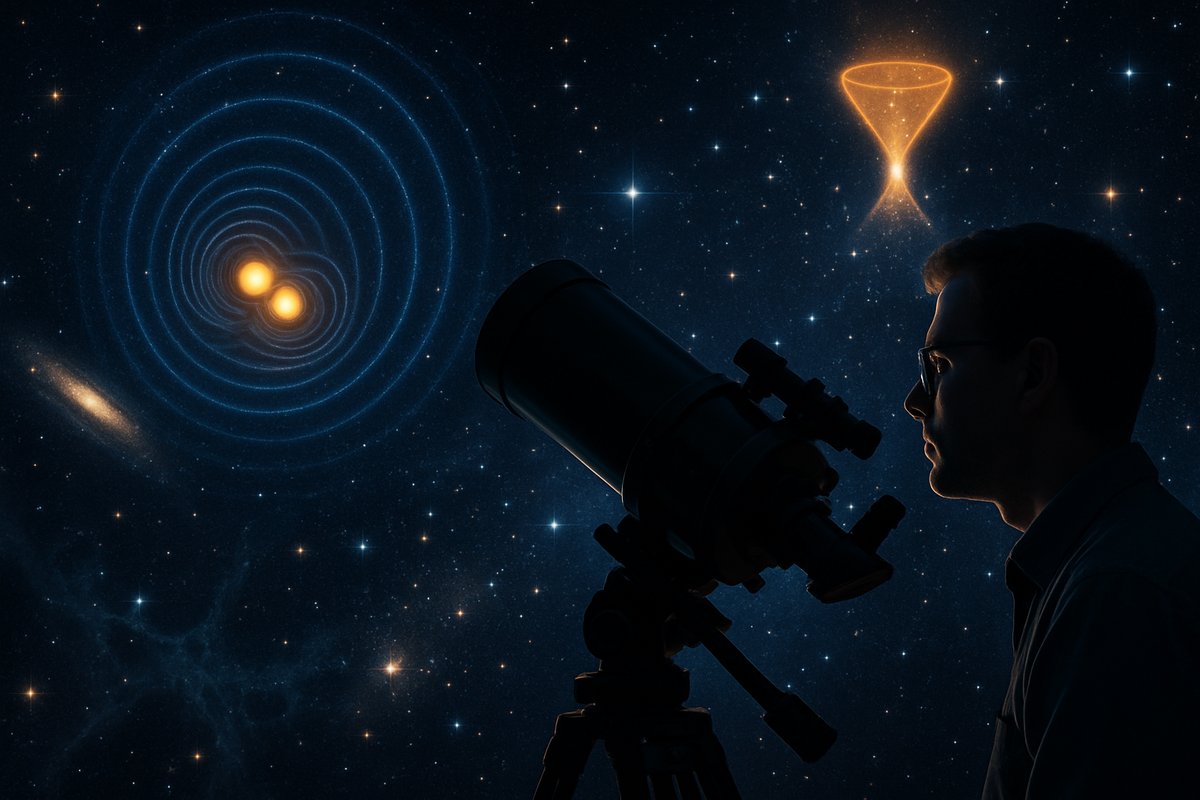
Recent breakthroughs in gravitational wave astronomy and deep-sky surveys are shedding light on the fundamental building blocks of the universe. Scientists are mapping dark matter, testing the nature of time, and probing the quantum frontier-all while the biggest questions remain tantalizingly unanswered.
A ripple in spacetime first detected just months ago has reignited global curiosity about the fabric of the universe. When a gravitational wave observatory registered faint tremors from the merger of a massive black hole and a neutron star, research teams around the world sprang into action. The signal not only confirmed long-predicted models of extreme gravity but also offered an unexpected window into how matter behaves under conditions impossible to replicate on Earth.
Data arrived in streaming packets that researchers processed within hours. Unprecedented sensitivity in the detectors allowed scientists to isolate features of the waveform tied to the properties of nuclear matter crushed to densities beyond those in atomic nuclei. These fleeting moments of violent cosmic collision revealed how time itself stretches and slows under intense gravity-a real-time demonstration of time dilation predicted by relativity.
Matter in the universe is familiar yet deeply mysterious. Ordinary atoms make up less than five percent of the cosmic budget, leaving an unseen majority termed dark matter. While laboratory searches for hypothetical particles have yet to yield direct detections, astronomers are mapping dark matter’s gravitational fingerprint across the sky. Recent deep-sky surveys using powerful optical telescopes and wide-field cameras have charted the invisible scaffolding that shapes galaxy clusters and cosmic filaments.
One ongoing project analyzes light from distant galaxies as it bends around intervening dark-matter clumps. By tracing subtle distortions in galaxy shapes, researchers generate high-resolution maps of the dark web that binds cosmic structures together. These cartographies are revealing surprising irregularities in dark-matter distribution, hinting that our models may need revision or that unknown physics lurks beyond current theories.
Dark energy, the enigmatic force driving cosmic expansion, remains one of modern science’s greatest puzzles. In the past year, teams studying distant supernovae and baryon acoustic oscillations refined measurements of the expansion rate. Tension between different methods has grown rather than diminished, sparking discussions about potential new particles or interactions. Some theorists have revived models in which dark energy evolves over time, a prospect that would upend the notion of a static cosmological constant.
Time itself is no less perplexing. Atomic clocks placed in orbit show minute rate differences compared with their counterparts on Earth, confirming relativity’s predictions to staggering precision. Yet at the quantum scale, time may not flow as we experience it. Experiments with entangled particles are exploring whether quantum correlations can reveal hidden structures of time or even permit information exchange that blurs classical cause and effect.
Recent tabletop experiments cooled mechanical oscillators to near absolute zero and entangled them with photons, pushing the boundary between the quantum and classical worlds. By measuring phase shifts in interferometers, physicists can test whether time emerges from quantum entanglement in a fundamental way. These efforts could point toward a unified picture of quantum gravity, where space, time, and matter all stem from the same underlying quantum fabric.
At the same time, large-scale observatories are planning next-generation missions. A spaceborne gravitational wave detector will someday observe mergers of supermassive black holes in distant galaxies, offering clues about how cosmic giants grow. Meanwhile, underground laboratories equipped with ultra-sensitive detectors seek to catch rare dark matter particles interacting with ordinary nuclei. Each null result refines theoretical models, guiding the hunt for the unseen forces that govern the cosmos.
The interplay between time and matter also sparks philosophical reflection. If time began at the big bang, what preceded it, if anything? Some quantum gravity proposals replace the classical singularity with a ‘bounce’ or a foamy quantum phase. Others invoke multiple universes with varying physical laws. While these ideas remain speculative, they are being tested indirectly through precision measurements of the cosmic microwave background and primordial gravitational waves that could reveal traces of an earlier epoch.
Practical applications of these esoteric pursuits are already tangible. Precise timekeeping underpins global positioning systems, while quantum research drives advances in sensors, secure communications, and computing. An improved understanding of dark matter could one day inform new materials or energy technologies. In this sense, the quest to decode time and matter is not just an abstract adventure but a force for innovation with real-world impact.
Looking ahead, astronomers and physicists anticipate fresh data from a fleet of new observatories. Ground-based telescopes equipped with adaptive optics will peer deeper into the early universe, while satellite missions will map dark energy’s influence on cosmic expansion. Meanwhile, advances in quantum engineering will push entanglement experiments into realms once thought purely theoretical.
Despite these leaps, core mysteries persist. What is dark matter made of? How does spacetime emerge from quantum bits? Can the divergent realms of general relativity and quantum mechanics be reconciled in a single coherent theory? Each experiment brings more pieces to the puzzle, yet the complete picture remains tantalizingly out of reach.
This unfolding story of time, matter, and mystery continues to captivate both specialists and the public alike. As new findings emerge, they ripple through classrooms, laboratories, and digital platforms, inspiring the next generation of explorers. Whether you gaze at the night sky or follow data streams from deep-sea detectors, you are part of a collective human quest to understand the cosmos and our place within it.
In the end, the universe invites wonder. It challenges our most cherished assumptions and calls on us to expand both our technology and our imagination. With each discovery, we grow closer to grasping the fundamental workings of reality-yet the horizon of mystery always recedes, urging us onward. As we peer into the depths of space and the heart of matter, the journey itself becomes as profound as any destination.