Location
Mount Vernon, WA 98274

Location
Mount Vernon, WA 98274

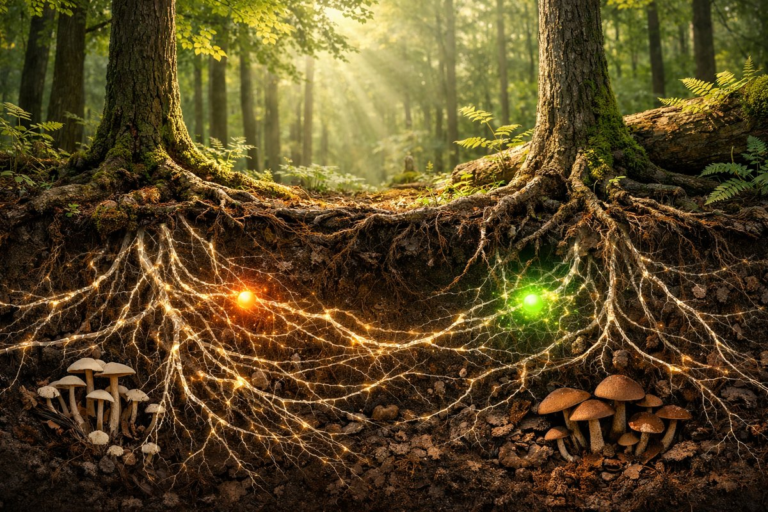
Beneath the forest floor, a vast web of fungal threads knits trees together in a mutual embrace. Recent research shines light on these subterranean allies, revealing their crucial role in nutrient exchange and ecosystem recovery.
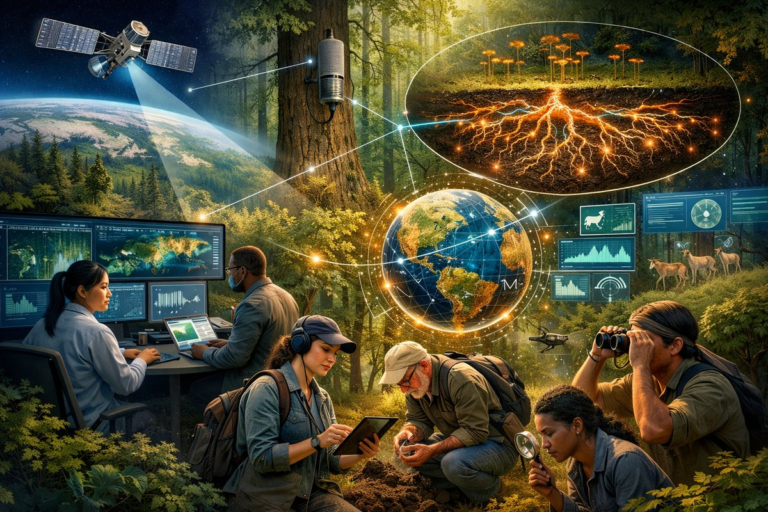
Early each morning, sunlight filters through towering canopies, painting the forest floor with dappled gold. Yet the true story of the woodland’s endurance unfolds where the eye cannot see: in a labyrinth of fungal filaments that bind trees and soil into a living tapestry. These mycorrhizal networks, often called the “wood wide web,” shuttle nutrients, water, and chemical signals among plants, fortifying the community against drought, disease, and disturbance. A recent series of field experiments and advanced imaging studies is illuminating how these organisms engineer resilience, offering new hope for reforestation and conservation efforts worldwide.
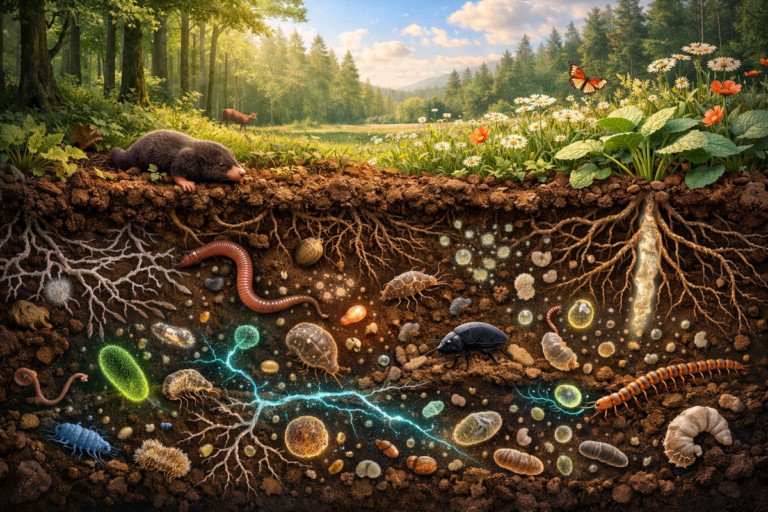
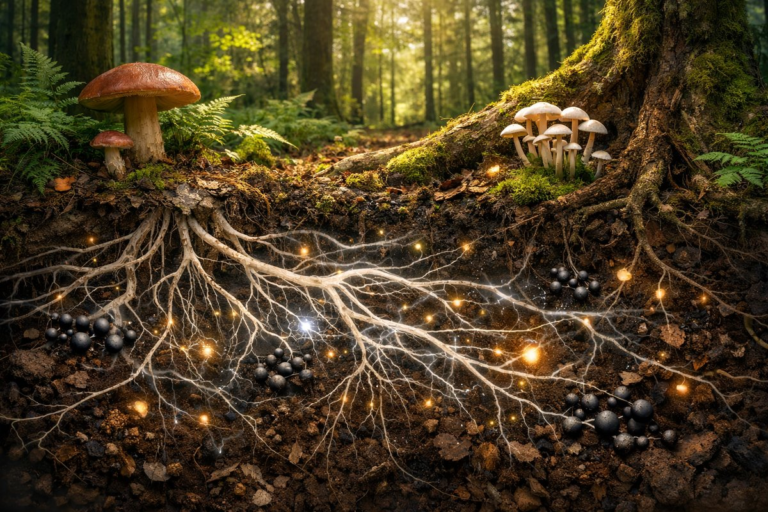
Soil cores taken from temperate woodlands reveal an intricate mesh of thin hyphae radiating from tree roots. Using fluorescent tracers that light up under laser scanning microscopy, researchers have tracked the movement of phosphorus and nitrogen along these fungal highways. In one experiment, seedlings connected to mature trees via a shared network received a continuous supply of phosphorus even when planted in impoverished soil. Nearby seedlings without that connection lagged behind in growth and leaf production, underscoring the fungal role as nutrient broker and guardian.
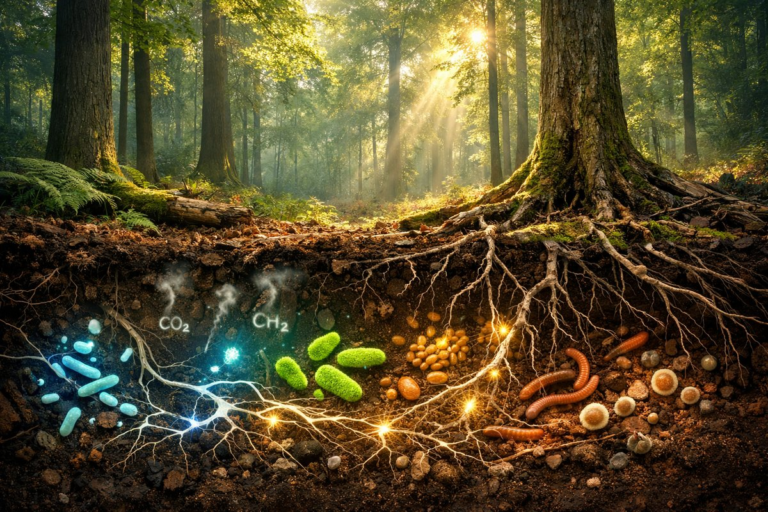
Beyond nutrient sharing, mycorrhizal fungi act as communal sentinels. When one tree suffers an early-stage infection from bark beetles or fungal pathogens, it releases stress hormones into the soil. The network picks up these chemical cues and delivers them to neighboring plants, which in turn bolster their own defenses by producing protective compounds like tannins and phytoalexins. Field observations show that stands interlinked by robust mycorrhizal associations exhibit lower rates of tree mortality during regional outbreaks compared to fragmented or monoculture plantations.
Advances in noninvasive imaging have been pivotal. A new ground-penetrating radar system tuned to detect moisture contrasts picks up the denser hyphal mats around roots. Combined with high-resolution soil moisture sensors buried at multiple depths, this technology maps the ebb and flow of water transport through subterranean channels during dry spells. In one Mediterranean forest study, patches with healthy mycorrhizal connectivity remained moist down to 30 centimeters even during a month-long heatwave, while adjacent clear-cut patches turned to dust.
Citizen scientists have joined the effort by collecting soil samples along transects that span city parks, old-growth reserves, and rehabilitated clearings. Equipped with portable pH meters and simple soil auger probes, volunteers gauge acidity, texture, and organic content. Samples are dried, sieved, and incubated with bait plants in lab kits to encourage mycorrhizal colonization. After a fortnight, the presence and density of hyphal mantles around the roots are logged. These distributed data sets are feeding machine learning models that predict hotspots of fungal activity across landscapes, enabling targeted restoration where underground networks need rekindling.
In reclaimed mining sites and post-agricultural fields, inoculating tree seedlings with local mycorrhizal strains has shown promise. Nursery technicians dip roots into spore suspensions before outplanting, ensuring new saplings arrive preconnected to the underground community. Five years down the line, these inoculated trees display 30 percent greater survival rates and faster canopy closure compared to uninoculated controls. The technique also reduces the need for fertilizer and irrigation, aligning with sustainable forestry practices.
Mycorrhizal diversity matters. In boreal forests, ectomycorrhizal species dominate, forming thick sheaths around roots and extending fewer but sturdier cords into the soil. In contrast, tropical rainforests teem with arbuscular mycorrhizal fungi, which penetrate root cells directly and produce finer networks. Recent DNA metabarcoding across climatic gradients has revealed surprisingly high overlap: certain specialist fungal taxa thrive in both cool and warm biomes, suggesting a latent capacity for cross-ecosystem partnerships. Such plasticity could be harnessed to bolster resilience against shifting climate zones.
In urban green spaces, where soil compaction and pollution hamper fungal health, park managers are experimenting with targeted soil aeration and mulching to rekindle mycorrhizal growth. Trials in three metropolitan areas show that core-aerating high-traffic lawns, then layering leaf mold and wood chips, can boost fungal spore counts tenfold within six months. The result is lusher turf, healthier street trees, and improved stormwater infiltration through the enriched soil matrix.
The revelations from these studies ripple beyond forests. Agricultural systems stand to gain by integrating mycorrhizal partners. In corn and soybean rotations, seed coatings enriched with arbuscular mycorrhizal spores are cutting synthetic fertilizer use by up to 40 percent. Farmers report stronger root structures and better drought tolerance. Trials are also underway in vineyards and orchards, where fungal networks may buffer perennial crops against erratic weather and soil erosion.
Scaling up these natural alliances requires nuanced stewardship. Overapplication of phosphorous-heavy fertilizers can suppress mycorrhizal colonization, depriving plants of their fungal lifeline. Clear-cut logging disrupts network continuity, leaving isolated trees to fend for themselves. Even well-intentioned tree-planting campaigns can falter if saplings lack compatible fungal inoculum. A holistic approach that regards soil life as integral to ecosystem services is essential.
As policymakers draft new conservation plans, mycorrhizal resilience is gaining a seat at the table. Funding streams now support mycorrhizal mapping projects, and educational programs train the next generation of ecologists in fungal ecology and soil-health diagnostics. Land managers are convening fungal-inoculation workshops and exchanging spore banks to preserve local strains.
Returning to the forest trail, the hush of needles underfoot and the moss-cushioned logs recall the forest’s surface charms. But beneath, the gentle hum of nutrient exchange-and the calculated risk-sharing between trees-reminds us that lasting resilience may never rise aboveground. It’s in those fine, almost invisible threads that the forest weaves its future. To work alongside these unseen engineers is to recognize that our stewardship must begin in the soil as much as in the sky.