Location
Mount Vernon, WA 98274

Location
Mount Vernon, WA 98274
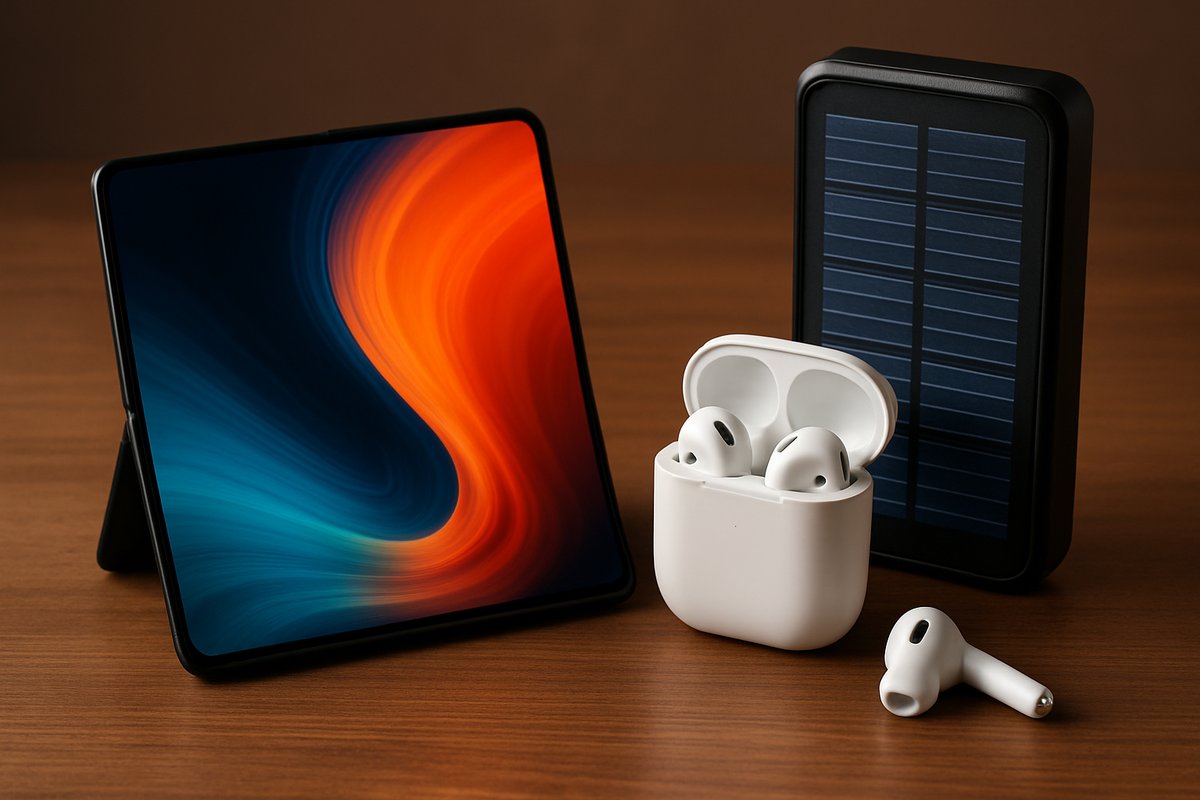
From foldable micro-OLED screens to AI-powered translation earbuds and solar-charged battery packs, a new generation of tech gadgets is transforming daily life. These innovations blend sustainability, privacy and seamless integration to help users stay connected, productive and curious wherever they go.
In a world where our devices seem to grow bulkier with every new feature, a counter-trend is quietly taking hold. Engineers and designers are rethinking what it means for everyday gadgets to be powerful, private and portable. This next wave of innovation isn’t merely about adding more sensors or cramming in extra gigabytes of memory. Instead, the emphasis is on miniaturization, modularity and local intelligence – giving users devices that adapt to their routines without compromising data security or draining natural resources.
The most eye-catching breakthroughs come in the form of ultra-thin, foldable micro-OLED screens that can double as digital notebooks or wearable displays. Imagine slipping a palm-sized panel into your pocket that unfolds into a vibrant, 7-inch workspace. These screens employ flexible polymers and graphene-enhanced electrodes that bend without creasing and resist moisture in everyday use. Early prototypes already boast pixel densities rivaling traditional tablets, yet weigh mere ounces. As the manufacturing process matures, we’ll see drop-resistant versions and seamless touch response, making foldable modules viable for commuters, students and creatives alike.
But screens are only one part of the story. The future of smart tools lies in embedding local AI engines directly on device silicon. Instead of routing voice commands or biometric data through remote servers, these on-chip neural accelerators handle speech recognition, language translation and pattern analysis in real time – all while keeping raw data locked behind hardware encryption. The result is a class of translation earbuds capable of interpreting conversations between two people speaking different languages, without pinging a cloud service or exposing transcripts to third-party servers. This level of privacy and speed opens doors for journalists in the field, international travelers tackling new dialects and remote workers collaborating across time zones.
Material science is another frontier driving sustainability in pocket-sized tech. Traditional lithium-ion batteries are giving way to silicon-carbon anodes and solid-state electrolytes that extend cycle life and reduce risk of thermal runaway. Paired with miniature solar charging cells built from recycled polymers, portable power banks are becoming lighter, safer and more eco-friendly. Some prototypes even prime themselves in indirect indoor light, trickling a slow charge into a capacitive reservoir so that your next outdoor adventure never ends with a dead battery.
Integration across devices is where the magic really happens. Many of these next-gen gadgets adopt an open modular standard, allowing you to snap together components like a magnetic smart ring, a health-tracking patch and a tiny environmental sensor. Each component carries only the hardware it needs, while a central hub handles coordination and power distribution. That means if the ring’s battery is low, the patch can wirelessly share surplus juice to keep your vital stats monitored. When paired with a foldable screen, the setup becomes a lean mobile workstation, perfect for digital nomads balancing client calls, note-taking and on-the-fly design sketches.
At home and in the office, ambient computing takes center stage. Wall-mounted panels integrate proximity sensors, air-quality monitors and gesture-controlled lighting – all managed by a local edge server. No cloud connection is required to adjust room temperature, check real-time carbon footprint or trigger a smart coffee brewer once movement is detected near the countertop. Privacy-minded users appreciate that these systems don’t store continuous audio or video feeds offsite, and they can fine-tune exactly which data streams are recorded or shared.
The emotional resonance of this tech shift lies in its ability to simplify without oversimplifying. Gadgets become effortlessly intuitive, anticipating user needs while staying out of the way. For a language learner, the smart earbuds discreetly transcribe foreign phrases into a heads-up display on the foldable screen. For a solo hiker, the solar-charged battery pack and micro-weather sensor cabinet keep vital information at hand, offering reassurance in isolated landscapes.
Workshops and maker spaces are already embracing open-source frameworks to customize these devices. Hobbyists 3D-print snap-on mounts for foldable screens, embed low-power microcontrollers into everyday tools, and hack together gesture-driven controls for home appliances. Community-maintained repositories document soldering guides for flexible circuit boards and firmware updates that refine on-device AI performance. These grassroots efforts ensure gadgets remain repairable, upgradeable and aligned with user priorities rather than dictated by rigid corporate roadmaps.
Urban commuters aren’t left out of the equation. Foldable keyboards that retract to the size of a credit card pair with micro-holographic projectors, turning any café table or park bench into a virtual workstation. Magnetic charging docks in public transit hubs juice up devices using contactless resonant charging, eliminating the need for proprietary cables. Transit apps negotiate directly with local payment tokens stored inside secure enclaves on devices, updating balances in near-real time while preserving passenger anonymity.
Behind these innovations is a growing commitment to reducing e-waste. Component manufacturers are pledging take-back programs for end-of-life modules and adopting bio-based casings sourced from agricultural byproducts. A push toward standardizing charging ports and data connectors further curbs the proliferation of single-use power bricks and tangled cables.
Privacy remains a core value throughout this ecosystem. Biometric authentication shifts from centralized databases to on-device vaults. Health metrics and environmental logs stay encrypted under user-controlled keys. Whenever remote syncing is necessary – say, backing up lumosity scores or motion data to a personal cloud – it occurs via private peer-to-peer channels with end-to-end encryption, rather than public APIs.
So what does the horizon look like? Expect a trade show floor dominated by modular satellite communicators that hook onto backpacks, haptic-feedback gloves for remote collaboration, and micro-LED e-paper that adapts instantly to direct sunlight or dim indoor settings. Underneath the sleek exteriors, battery chemistry keeps evolving, and open-source firmware ensures long-term software support. The result is a toolkit of gadgets that flex to meet changing needs rather than forcing users into rigid upgrades.
This generation of pocket-sized powerhouses demonstrates that progress doesn’t have to come at the cost of convenience, privacy or environmental stewardship. As these innovations trickle into mainstream availability, they’ll empower users to build personalized ecosystems of devices – lightweight, secure and richly interconnected. The frontier of everyday tech has arrived, and it’s as much about what you can shed (excess weight, data vulnerability, single-use waste) as what you can gain.