Location
Mount Vernon, WA 98274

Location
Mount Vernon, WA 98274

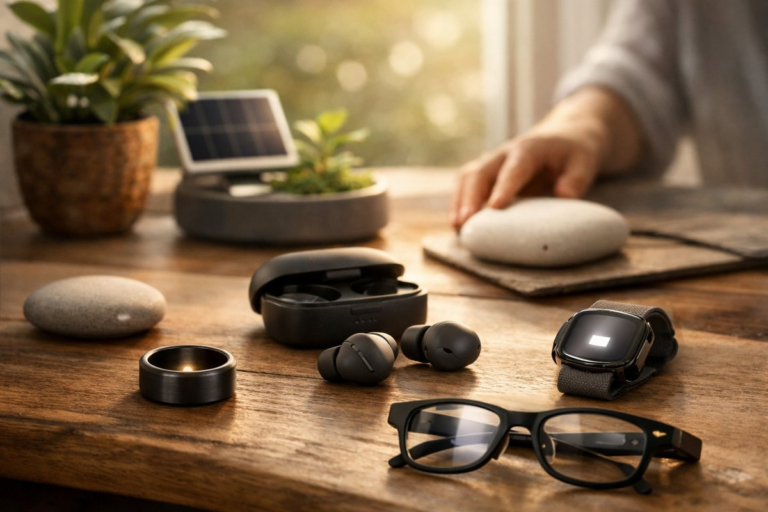
From ultracompact power hubs to multifunctional wearable sensors, a new wave of mini gadgets is redefining how we work, play, and recharge on the go. This deep dive uncovers futuristic yet practical tools that fit in the palm of your hand while delivering heavyweight performance.
Imagine stepping out for a spontaneous day trip armed with devices so small you barely notice them in your pack-yet powerful enough to run your work sessions, capture crisp video, monitor your health, and charge every accessory in sight. Welcome to the era of pocketable performance, where innovation is measured in millimeters and every gadget is engineered for maximum impact with minimal footprint. This wave isn’t just about shrinking circuits; it’s about rethinking what a single tool can do and weaving sustainability, connectivity, and intelligent design into every component.
In recent years, the push toward remote work, on-demand creativity, and ever-present connectivity has driven engineers to explore both new materials and novel architectures. Lithium-based battery chemistries have evolved to store more energy per gram, and silicon carbide semiconductors now handle higher voltages with less heat. These breakthroughs combine with flexible printed circuit boards and 3D-printed housings to yield devices that flex, fold, and adapt to user needs. It’s the marriage of hardware resilience with software smarts that lets a compact gadget morph from a portable monitor one moment to a power station the next.
Take the rise of ultracompact monitors: once limited to five inches, today’s clamshell screens stretch beyond seven inches of vibrant color, yet they slip into a pocket sleeve. They pair via USB-C to laptops, tablets, and even smartphones, essentially offering you a dual-screen workspace without a bulky backpack. In coffee shops and coworking spaces, users plug in and expand their canvas in seconds, boosting productivity in a way that used to require a heavy docking station and multiple cables. These lightweight displays now come with adjustable stands, built-in battery packs, and even touch controls-features that would have been unheard of in desktop monitors a few years ago.
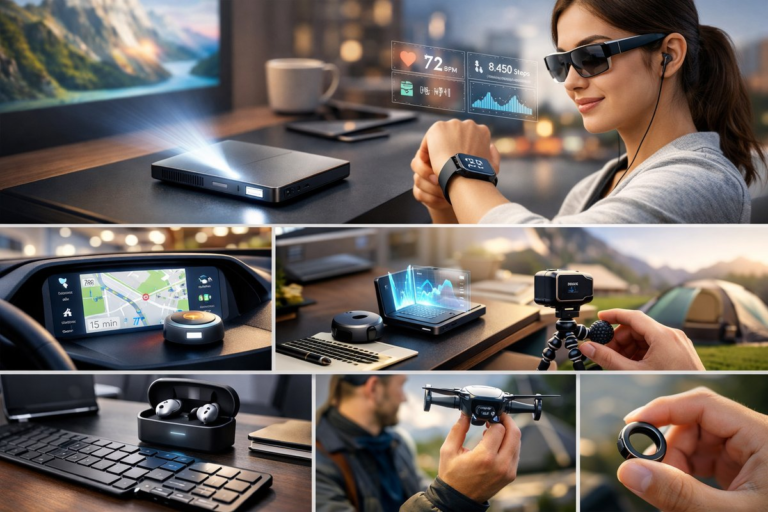
Meanwhile, portable projectors have shed their ceramic bulbs and cooling fans in favor of silicon-based light engines, cutting weight by half and noise to near silence. Modern pico projectors weigh as little as 200 grams, produce enough lumens for presentations in dimly lit rooms, and can mirror smartphone screens for workouts, art displays, or impromptu movie nights. Their rechargeable batteries often last two to three hours, and some models integrate wireless screen-casting protocols, eliminating the need for dongles and adaptors.
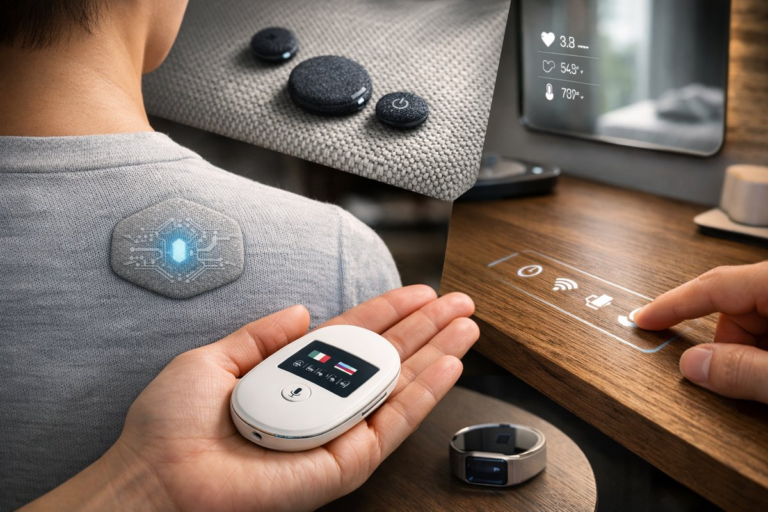
At the intersection of wearables and wellness, smart sensors have become astonishingly tiny. Photoplethysmography (PPG) units used for heart monitoring now occupy mere millimeters of a watch band, while electrodermal activity sensors tucked into earbuds can detect subtle changes in stress levels. These modules sync with companion apps to provide real-time feedback and actionable insights, from guided breathing sessions to posture reminders. The data privacy safeguards built into these devices emphasize on-device processing and encrypted syncing, so your biometric profile stays under your control.
Energy remains the linchpin of portability, and that has driven new attention to foldable solar panels and modular power stations. Ultrathin photovoltaic cells laminated between robust polymer films can now be draped over a backpack like a tarp, harvesting sunlight on the move. Coupled with lightweight battery modules that snap together magnetically, you can scale your storage capacity from 10 watt-hours to well over 200 watt-hours depending on your anticipated needs and safety regulations. Charging thresholds, temperature monitoring, and load balancing are all managed by built-in microcontrollers, ensuring each cell charges and discharges uniformly to maximize lifespan.
Integration is key: rather than carrying separate plugs and cables for each device, universal power delivery standards have converged on one or two port types. A single cable can carry data, video, and power simultaneously. This reduction in cable clutter isn’t just about neatness; it minimizes failure points and extends the life of each connector. Some innovators have even explored magnetic quick-release tips that adapt to multiple port geometries, providing both secure attachment and rapid detachment in case of accidental tugs.
Beyond hardware, the software ecosystems have matured to support seamless hand-offs. Picture pausing a video call on your laptop as you step into your car and instantly picking it up on a smartphone without rejoining or losing video context. Such continuity relies on cross-platform development frameworks and standardized communication protocols that have only recently become robust enough for mass adoption. Developers are now releasing companion apps and browser extensions that recognize local networks and orchestrate device transitions with minimal user input.
Designers are also paying greater attention to materials and end-of-life considerations. Recycled aluminum, bio-based plastics, and modular components that can be swapped rather than replaced are appearing in high-end models. Some companies now publish disassembly guides under open-license terms, encouraging third-party repair services and reducing electronic waste. This circular approach doesn’t just benefit the environment; it extends product longevity and keeps repair costs down for consumers.
These portable powerhouses are reshaping daily routines. A field researcher might monitor environmental data with a handheld spectrometer that interfaces with a smartphone, then beam findings back to headquarters via a satellite link on the same device. A traveling educator could transform any hotel room into an interactive classroom using a mini projector, portable monitor, and wireless keyboard. Even casual users benefit: draining battery anxiety by tapping into a foldable solar charger during a weekend hike or customizing their workspace in a bustling café.
Yet, every breakthrough invites new questions. As devices become more capable and more personal, how do we maintain privacy while leveraging collective intelligence? How does the proliferation of wireless signals intersect with concerns about electromagnetic exposure? What guardrails ensure that powerful AI enhancements in small form factors remain safe and transparent? Industry groups are convening working groups to draft guidelines, and some open-source projects aim to certify devices against privacy and security benchmarks.
Longer term, researchers are exploring printed electronics that seamlessly embed circuitry into fabrics and paper, and micro-supercapacitors that can discharge energy in milliseconds to power burst-mode photography or rapid-response sensors. These advances suggest a future where even the clothes we wear can adapt, sense environmental changes, and interface with networks. Gadgets could be less about objects you carry and more about invisible layers of intelligence woven into daily life.
That said, the immediate horizon is already transformative. When the next wave of miniaturized power grids, wearable labs, and adaptive displays arrives, we’ll find ourselves carrying entire toolkits in our pockets-tools that were once the size of desktop towers. The frontier of innovation is not just smaller; it’s smarter, more connected, and more responsible than ever before. Each device encapsulates a story of material science breakthroughs, software craftsmanship, and a commitment to sustainability.
For curious readers, novice admins, and lifelong learners alike, the message is clear: the future of everyday tech isn’t defined by weight or volume alone, but by an ecosystem of synergy. It’s the harmonious dance between hardware and software, between energy and design, and between personal agency and collective progress. As you explore these pocket-sized powerhouses and smart tools, consider not just what they can do for you today, but how they fit into a larger vision of equitable access, environmental stewardship, and boundary-breaking creativity.
Ready to equip yourself? Below is a curated selection of real-world gadgets that capture the spirit of this miniaturization movement. Each item complements the story’s setting and helps you harness the benefits of portable power, versatile displays, and intelligent sensing in your own life.