Location
Mount Vernon, WA 98274

Location
Mount Vernon, WA 98274
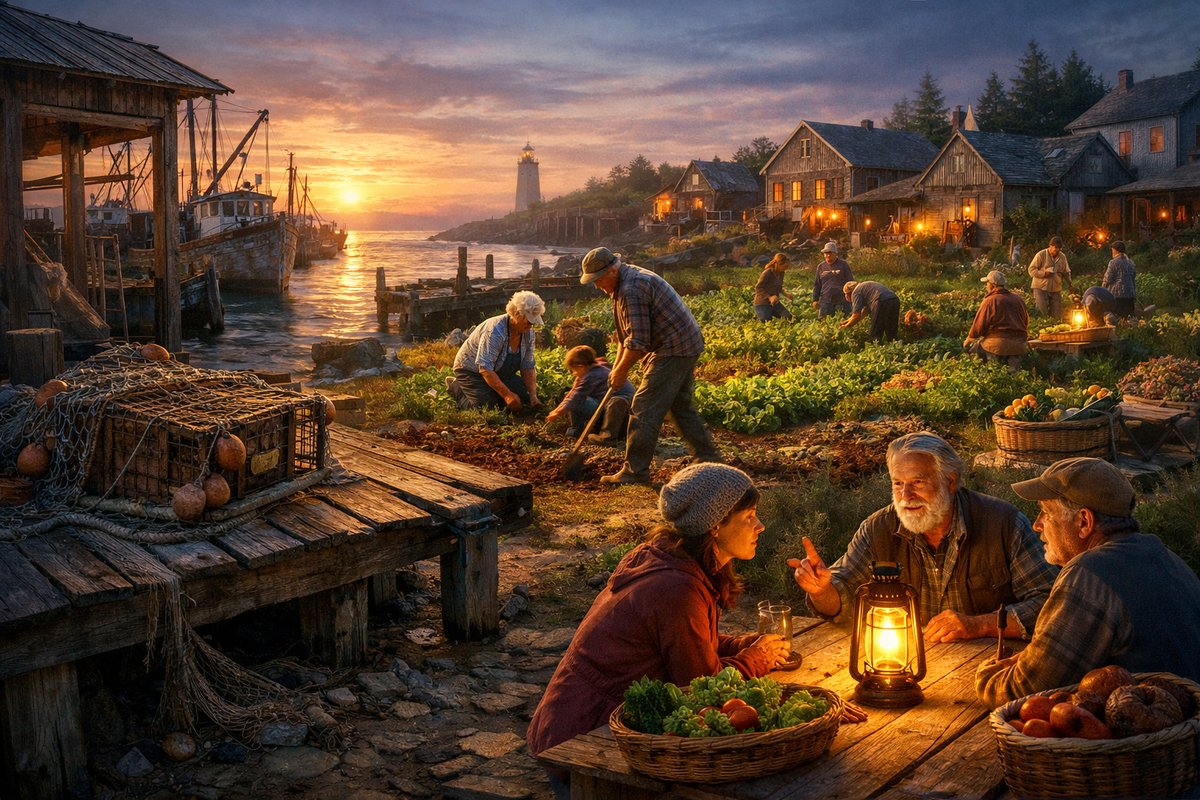
When the nets lay empty and the old docks creaked under the weight of abandoned hopes, one coastal town chose solidarity over surrender. In Seaside Hollow, neighbors tilled communal soil, shared stories by lantern light, and rediscovered purpose in everyday acts of care. This is the story of how simple tools and quiet courage rewove a community's fabric.
There’s a hush in Seaside Hollow before dawn, punctuated only by the distant hiss of waves and the shiver of wind through salt-worn timbers. For years, this seaside settlement depended on a once-thriving fishery, but depleted stocks and rising costs turned old livelihoods into ghost stories. Docks that once brimmed with gleaming catch now sagged under empty nets, and shop windows gathered dust where tourists once lingered.
Empty piers became meeting spots for the few who remained: Lily, a third-generation fisherwoman whose weathered hands still remembered the heft of mackerel; Marco, a carpenter who carved driftwood into puzzles when demand for ship repairs vanished; and Aisha, the town’s schoolteacher, determined that her students see beyond loss. They gathered at Rosie’s Overflow Cafe, clutching mugs of black coffee, and quietly vowed to kindle something new from the ash of their shared heartbreak.
That vow took shape in an abandoned boathouse by the shore. Its rotting beams and shattered windows spoke of neglect, but inside, a handful of volunteers saw potential. By the end of the first week, they had patched broken glass with recycled plastic panels, cleared years of accumulated driftwood, and laid a floor of reclaimed planks. They called it the Hollow Greenhouse.
The glass panels brought sunlight. They installed shelving along one wall and filled it with seed trays donated by a nearby university extension. For Lily, whose nets were empty, planting lettuce and kale became an exercise in faith. Each tender sprout felt like a promise.
Marco fashioned raised beds from leftover timber. His rough-hewn skills transformed the space into neat rows, each labeled with chalk and hope: basil, spinach, cherry tomatoes. A group of children pressed their palms into soil for the first time, giggling as dark earth sifted through their fingers. Aisha led seed-swapping workshops, encouraging lifelong learners to barter seeds and stories. An older fisherman named Rafa, too frail to cast nets, shared tales of abundant summers past, breathing life into young imaginations.
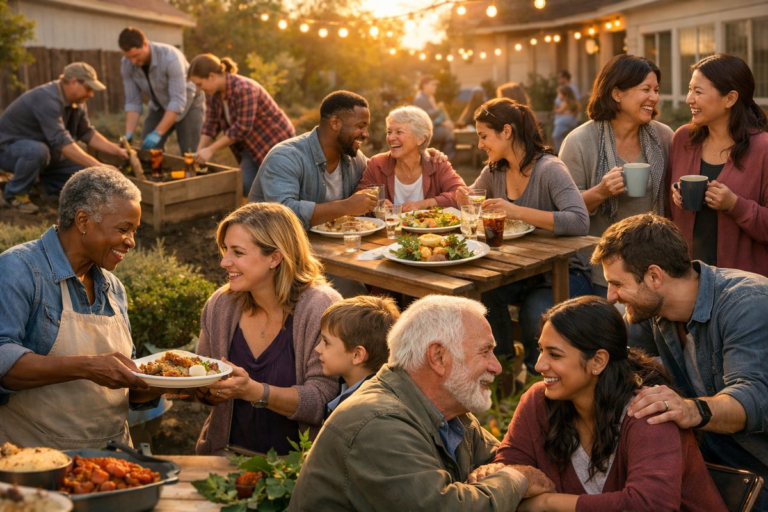
As seedlings grew, so did community ties. Neighbors who once only nodded across yards now swapped tools and recipes. Evening gatherings by the greenhouse flickered with solar lanterns, donated through crowd-funded drives. Under their warm glow, folks roasted sweet potatoes grown on-site and passed around bowls of mixed greens dressed in wild-herb vinaigrette. It felt like more than a meal; it felt like belonging.
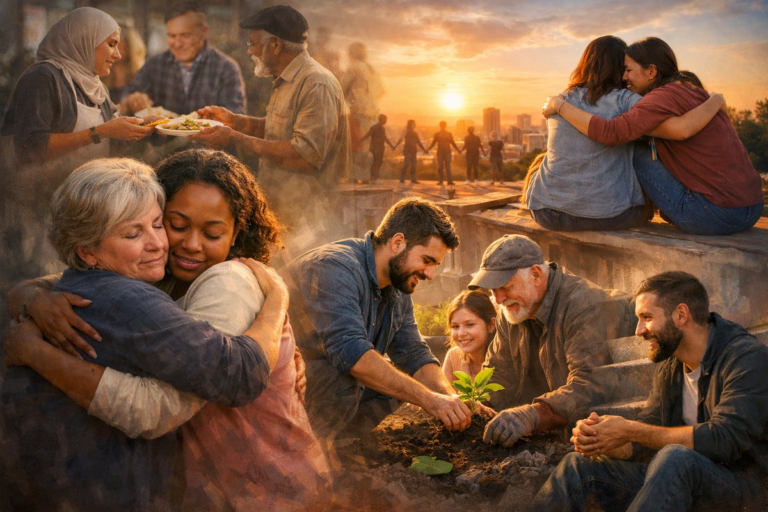
In that circle, grief was welcomed. Tears for livelihoods lost, for anglers who moved on, for seasons that would never return. But grief shared felt lighter. When someone faltered, others carried them: ferrying seedlings to dry homes, repairing broken hoses, or simply offering an extra chair at the table.
By mid-summer, the Hollow Greenhouse overflowed. Baskets of produce were distributed to families facing hardship and sold at a weekly market table in the town square. The modest income supported fuel for water pumps and covered seeds for the next sowing. People marveled at how soil, once an afterthought, had become the lifeblood of their revival.
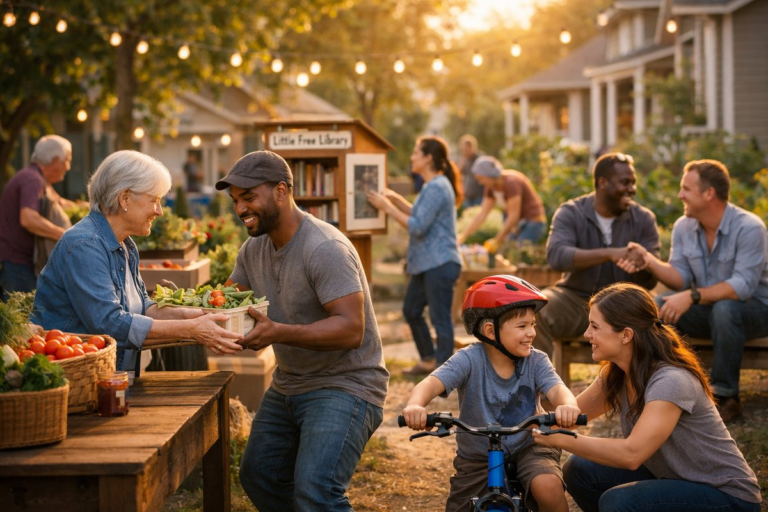
The ripple effect reached beyond vegetables. Marco used timber leftover from greenhouse repairs to build benches for a new shared workspace, where aspiring woodworkers and seamstresses taught each other craft skills. A small lending library sprouted on a reclaimed shelf, stocked with used novels, carpentry guides, and gardening manuals. Visitors swapped books as casually as they once might have haggled fish prices.
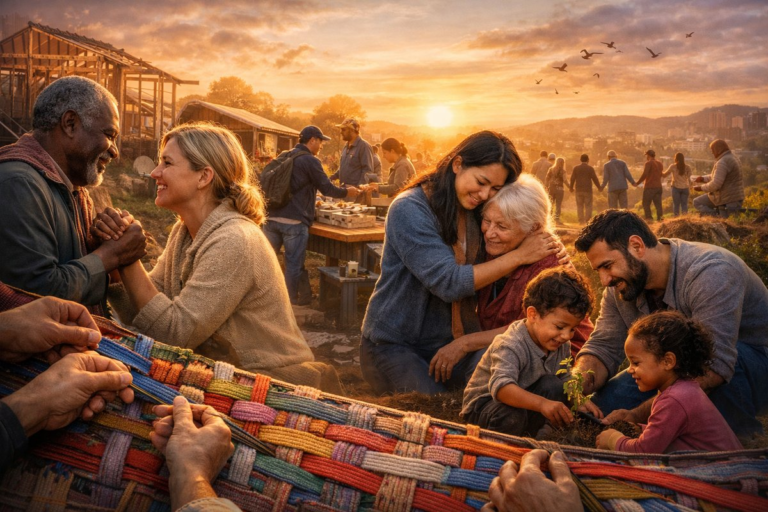
At the heart of it all was Aisha’s story circle. Once a weekly after-school activity, it evolved into an intergenerational forum. Grandparents recounted childhood memories of carefree summers; teenagers sketched dreams of new trades; newcomers offered fresh perspectives on renewable energy and aquaculture. Each narrative was a thread woven into the town’s evolving tapestry.
Energy, too, found a new path. Weather-worn rooftops received secondhand solar panels, funded by small grants and community bake-sale marathons. Power flowed to the greenhouse fans and a tiny office built beside it. An antique radio, rescued from a junk pile, crackled with local tunes and late-night calls to share tips on composting and irrigation.
Along the shoreline, exhaustion from winter storms had carved gullies into sand dunes. Local teenagers organized weekend dune-restoration projects, planting native grasses. They learned to anchor young plants with biodegradable mesh and kept tide charts to avoid high-water setbacks. Their efforts slowed erosion and became a living classroom in environmental stewardship.
When hurricane season threatened, Seaside Hollow no longer braced for worst-case isolation. A volunteer emergency network sprang up, using community radio to share weather updates and safety plans. They stockpiled medical kits, fresh water barrels, and foil blankets-supplies purchased with earnings from greenhouse sales. It felt significant that the seeds sown with bare hands had germinated into collective grit and preparation.
By autumn, the greenhouse felt almost too small. Plans emerged for a second structure: a partially submerged aquaponic unit where fish waste would fertilize floating beds of greens. The design came from a young engineer who joined after reading about the project online. Seaside Hollow had gone from a forgotten cove to a model for rural renewal.
Throughout the seasons, people talked about purpose. A mother who’d considered leaving admitted she stayed for the solidarity. A High School graduate returned from college, choosing to teach sustainable agriculture instead of chasing an urban career. Strangers passing through paused to share a meal and found themselves convinced to linger.
Above all, the transformation felt deeply personal. Where a single fisherman once tracked his own catch, he now measured success by how many families he helped feed. Where a teacher once saw empty desks, she now saw hungry minds eager to learn and expand horizons. Where a carpenter once built playthings for tourists, he now crafted lasting benches for neighbors to gather.
Seaside Hollow didn’t pretend every struggle had faded. Some fish stocks remain too low to support commercial nets. Insurance premiums for coastal property have soared. But sustainable choices have eased dependence on outside resources. Relationships woven through shared toil create resilience no storm can wash away.
In this small town, renewal wasn’t born from a single act of heroism but from countless simple gestures: sharing seed packets, patching plastic panels, passing a solar lantern around a circle of hungry hands. These acts articulate a universal truth: sometimes hope takes root in the smallest corners of our lives, and by tending what feels insignificant, we cultivate the extraordinary.
Living stones, some philosophers call them-humans who, when gathered, become something sturdier than brick or mortar. In Seaside Hollow, every hand that dug into dirt, every voice that spoke up at dusk, and every lamp lit beneath the greenhouse rafters contributed to a foundation that endures. The tide may shift, and the waves will still roar, but the community has learned to listen not just to the sea but to one another. And in that listening, they found the power to carry on.