Location
Mount Vernon, WA 98274

Location
Mount Vernon, WA 98274
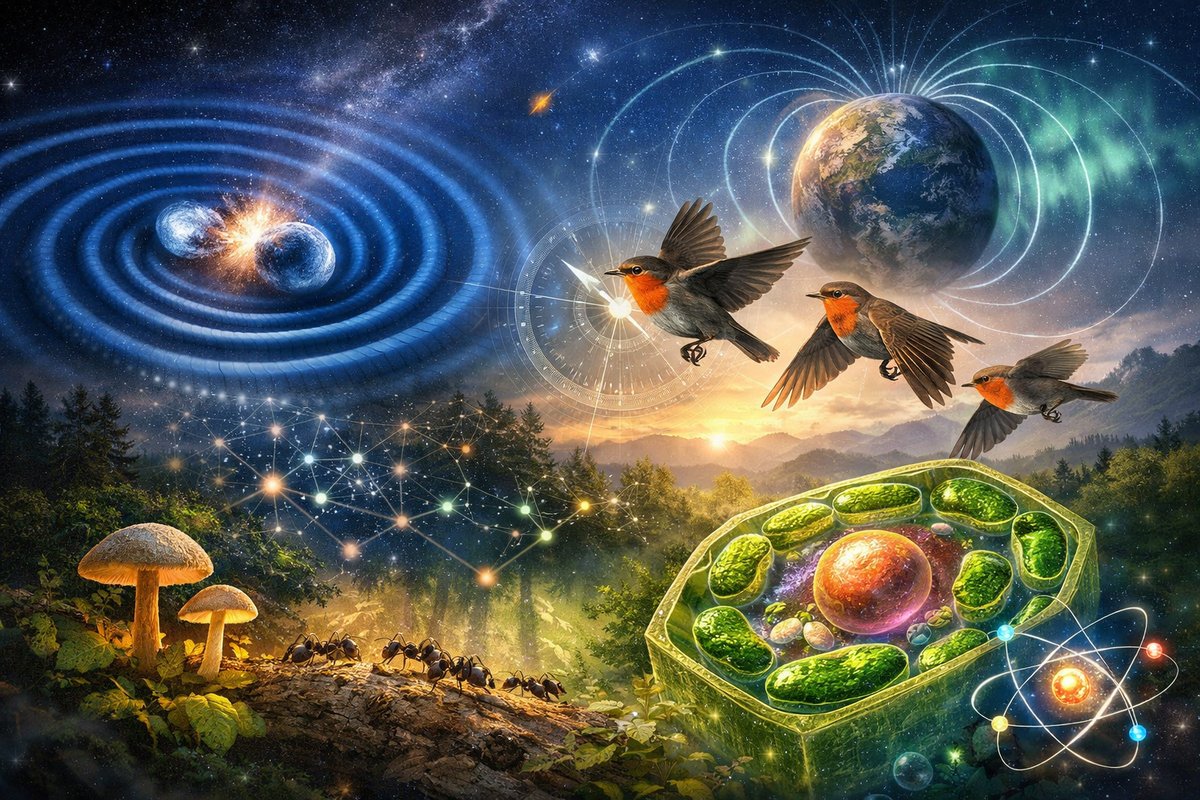
From the subtle tug of distant collisions to the hidden compass of migrating birds and the strange coherence inside plant cells, researchers are unveiling the intricate patterns that weave our world. A convergence of gravitational wave detection, magnetoreception studies, emergent behavior research and quantum biology is reshaping how we understand natural forces.
In a quiet corner of eastern Washington, a pair of massive L-shaped arms stretch four kilometers across the desert plain. At the heart of this extraordinary apparatus, laser beams race back and forth in perfect synchrony, probing the very fabric of spacetime. When two black holes collided over a billion years ago, the resulting gravitational waves-the ripples in the cosmic pond-reached Earth’s surface. Sensitive detectors in Hanford and Louisiana captured that faint quiver, and since the first detection by LIGO, researchers have recorded dozens more, revealing a hidden universe of merging neutron stars, black holes and perhaps something entirely new.
These spacetime tremors are not just astrophysical curiosities. Scientists are now applying similar wave-analysis methods to study small-scale gravitational anomalies on Earth. Geophysicists at several universities monitor minute variations in Earth’s gravitational field to map underground water reservoirs, mineral deposits and fault lines. By combining long-baseline laser interferometry with advanced algorithms, they can detect mass shifts equivalent to a few grams moving tens of kilometers away. It’s a high-precision choreography that turns gravity into an underground cartographer.
Meanwhile, across continents and oceans, another pattern-decoding quest is under way in living creatures. Many bird species migrate thousands of miles, traversing landscapes they have never seen. A growing body of work in behavioral biology and quantum chemistry points toward magnetoreception-a biological compass powered by quantum effects. Specialized proteins in cells, called cryptochromes, appear to form radical pairs when hit by sunlight. These pairs exist in a quantum superposition of spin states, and the Earth’s magnetic field subtly shifts that balance. The bird’s visual system then translates these spin changes into directional cues, allowing a hatchling to fly to a wintering ground it cannot learn from its parents.
Field experiments in northern Europe and North America have tracked displaced robins and starlings outfitted with tiny GPS sensors. When researchers exposed these birds to weak oscillating magnetic fields, their homing instincts faltered or became disoriented. Laboratory studies using purified cryptochrome proteins monitored under precisely controlled magnetic and light conditions have confirmed shifts in reaction rates consistent with the radical-pair model. This work marks a rare case of quantum mechanics playing a functional role in a macroscopic, living system.
While gravity ripples and magnetoreceptors probe extremes of scale-from cosmic cataclysms to migratory compasses-another frontier explores how simple rules at the local level give rise to complex patterns at the system scale. Emergent phenomena appear in flocks of starlings that twist and turn as if a single mind drives hundreds of birds. They surface in schools of fish that evade predators with a flash of synchronized motion. In human-built systems, they show up in traffic waves, power-grid instabilities and social media trends.
In one recent study, a team of physicists and computational biologists built a swarm-robotics platform where each robot follows only two rules: maintain a minimum distance from neighbors and align its direction with nearby units. With just these inputs, the swarm can navigate cluttered spaces, adapt to obstacles and reconfigure itself when some robots are disabled. Simulations at scale reproduce patterns seen in animal groups and even some microbe colonies. Insights from this work are already informing drone-based infrastructure inspections and warehouse inventory management.
Back in nature, patterns of microbial communities tend to follow similar emergent rules. Soil bacteria form filamentous networks that optimize nutrient sharing and resist drying. Marine phytoplankton create vast, shifting blooms that regulate global carbon dioxide uptake. In each case, local interactions-chemical signaling, nutrient exchange and physical contact-aggregate into macroscopic behaviors with planetary consequences.
Emergent systems theory also finds fertile ground in climate science. Phenomena like El Niño, monsoon cycles and sudden stratospheric warmings stem from countless interactions among air masses, ocean currents and land features. Researchers employ high-resolution models and machine learning to spot precursors to extreme events weeks or even months in advance. The goal is to transform weather forecasting from a statistical extrapolation into a true dance between data, pattern recognition and physical laws.
On the subatomic scale, quantum physics holds its own share of surprising patterns. Delicate interference effects in double-slit experiments reveal that particles like electrons and photons behave as both waves and particles, depending on the experimental setup. Recent tabletop versions of these classic experiments use ultra-thin diffraction masks and single-photon emitters, allowing hobbyists and undergraduate labs to witness the double-slit mystery firsthand.
Even more tantalizing, quantum entanglement-once called “spooky action at a distance”-is emerging as a practical tool rather than a philosophical puzzle. Entangled pairs of photons generated in nonlinear crystals can outperform classical light in high-precision measurements, leading to new sensors for magnetic fields, gravitational gradients and timekeeping. Early prototypes of quantum-enhanced magnetometers detect fluctuations at the femtotesla level-orders of magnitude more sensitive than conventional devices. In the years ahead, these tools could revolutionize mineral exploration, medical imaging and tests of fundamental physics.
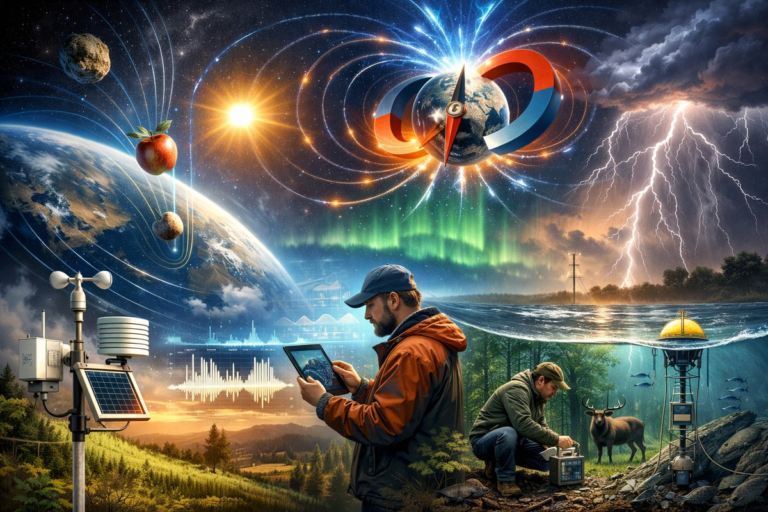
Across scales and disciplines, a unifying theme has begun to crystallize: Nature often nests simple rules within complex structures, with each layer feeding back into the next. Gravity shapes galaxies, but the same inverse-square principle gives apples a pull toward Earth’s surface. Magnetism steers robotics, and the radical pairs in bird eyes. Emergent behaviors pattern ant hills and power grids alike. Quantum quirks animate photosynthetic pigments and fringe on the edges of futuristic sensors.
This unity does not mean we have a single equation for everything-far from it. Yet by recognizing the interplay between scales, researchers can transfer insights from one realm to another. Data-analysis techniques honed on LIGO waveforms can help filter seismic noise in archaeological surveys. Swarm-intelligence algorithms can manage global logistics networks. Quantum coherence principles inspired by marine algae might improve solar-cell efficiency.
Institutions around the globe are investing in interdisciplinary centers dedicated to natural patterns. New facilities combine high-power lasers, gravimeters, magnetometers, bio-labs and supercomputers under one roof. Students trained in this environment become fluent in multiple “languages” of science-classical mechanics, statistical physics, quantum theory and network science.
Public engagement has surged in parallel. Citizen-science projects enable volunteers to classify galaxy shapes, track bird migrations via smartphone apps and record soil moisture with low-cost gravimeters. Open-source hardware movements share designs for magnetoreception sensors and Foucault pendulums, letting enthusiasts replicate cutting-edge experiments on a kitchen table.
Amid these advances, challenges remain. Nonlinear feedback in complex systems can mask underlying rules. Quantum effects are often fragile in the noisy, warm world outside specialized labs. Interdisciplinary communication itself poses hurdles-jargon and assumptions differ widely between fields.
Yet curiosity keeps forging ahead. Workshops bring astrophysicists and biologists together. Machine-learning experts code alongside theorists. And the drive to see nature’s code in action spans from the Arctic tundra to the depths of quantum-tech incubators.
For anyone drawn to wonder, these efforts underscore a profound truth: the patterns of nature form a vast tapestry, one where gravity, magnetism, emergent behavior and quantum mechanics are threads woven together. By listening closely-whether through a lab interferometer, a bird’s DNA, a swarm of robots or a single photon-we begin to hear the same song echo across scales.
In the coming decade, that melody promises to grow richer. Improved detectors will catch gravitational waves from even more distant events. Better quantum sensors will sharpen our view of hidden fields. Enhanced models will predict emergent crises in ecosystems and infrastructure. Above all, each discovery reinforces our place within this grand symphony-an ecosystem where understanding natural forces is the key to unlocking new horizons.