Location
Mount Vernon, WA 98274

Location
Mount Vernon, WA 98274
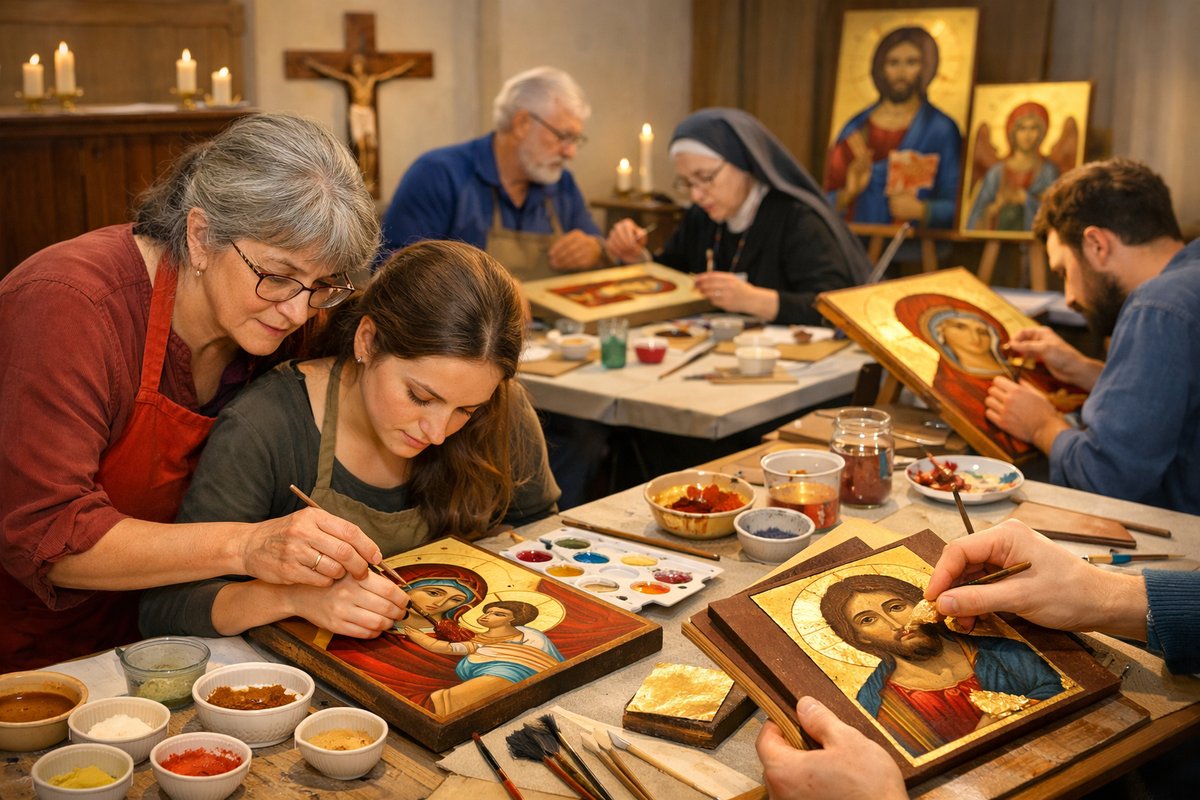
In a novel fusion of age-old artistry and modern devotion, congregations are hosting community workshops in icon painting. Participants explore scripture through egg tempera techniques and gold leaf gilding, forging personal connections to Christian tradition and one another.
Across several city parishes, church halls that once hosted weekday Bible studies are now enlivened by the gentle rhythm of brush strokes on wooden panels. On any given evening, neighbors gather around long tables draped with protective cloths, dipping fine brushes into bowls of natural pigment. The hum of quiet conversation mingles with soft prayers as participants trace the contours of saints’ faces and halos under the guidance of volunteer instructors steeped in Orthodox and Byzantine art traditions. This emerging practice offers a tangible bridge between ancient devotional methods and contemporary spiritual exploration.
Icon painting has its roots in the early centuries of Christian worship, when artists sought to convey sacred stories and theological truths through carefully composed imagery. Those icons, often painted on gesso-primed wood with egg tempera and embellished with gold leaf, served as focal points for prayer and liturgy. Today’s workshops revisit these venerable techniques, inviting novices and long-time churchgoers alike to regain a sense of contemplative pace and ritual craftsmanship. Instructors share historical notes on early monastic ateliers, where icons were crafted in cellars or cloistered corridors, offering a living connection to predecessors who painted devotion into being.
Each session begins with a brief devotional reading, drawing attention to a gospel passage or hymn that corresponds to the icon subject. Participants then sketch preliminary outlines, learning how composition reflects theological meaning-whether emphasizing the gentle gaze of the Theotokos or the triumphant stance of a martyr. As brushes glide over the prepared surface, attention shifts from everyday concerns to a deeper listening. Many describe the process as a form of lectio divina in color: a slow, prayerful dwelling on scriptural imagery. Instructors circulate, offering tips on color blending, pigment layering, and maintaining a meditative atmosphere amid the hum of brushes on board.
Materials play a central role in the experience. Workshops provide wooden panels pre-coated with gesso primer, sets of natural mineral pigments, egg tempera binders, and gilding supplies-including adhesive and thin gold leaf sheets. Artists learn how to prepare their own pigments by mixing powdered ochre, cinnabar red, and ultramarine blue with egg yolk emulsion. The gilding stage, when participants apply delicate gold leaf around halos and background fields, often elicits gasps of wonder. Many describe the moment the metallic sheen catches the light as a metaphor for divine radiance breaking through ordinary time.
For some attendees, the act of painting offers more than artistic skill building. Maria, a schoolteacher in her thirties, recalls her first brush stroke as both humbling and exhilarating. She had long felt adrift between busy routines and deep-seated longing for spiritual stillness. Through icon work, she found a creative discipline that tethered her heart to scripture. ”I didn’t expect to learn so much theology by mixing paints, but every hue and brushstroke becomes a prayer of gratitude,” she reflects. Others share stories of family members uniting across generations in these workshops, rediscovering shared heritage and faith through a common task.
Church leaders emphasize that the workshops extend beyond art education. They position icon painting as a form of embodied prayer practice, inviting participants to slow down, reflect on sacred stories, and cultivate presence. Some congregations have structured small groups that meet weekly, pairing painting tutorials with scripture reading and prayer circles. In these circles, attendees discuss how crafting an image of a particular saint or scene resonates with their own life journeys-whether wrestling with uncertainty, seeking healing, or offering thanks for daily blessings.
In keeping with growing attention to environmental responsibility, several parishes have sourced sustainably harvested wood panels and eco-friendly pigments. One workshop introduced recycled glass beads for decorative accents, turning leftover materials into a symbol of redemption through creative reuse. Organizers have also emphasized accessibility, offering sliding-scale fees and outreach grants for students and seniors. By blending ecological mindfulness with artistic tradition, the initiative models how sustainable practices can flow from Christian convictions about stewardship and shared abundance.
Looking ahead, organizers plan to host an inter-parish exhibition that brings together finished icons from multiple congregations. Instead of a silent gallery, the showcase will feature narrated testimonials, live demonstrations, and communal prayer gatherings. Digital platforms are also in development, where participants can upload step-by-step photos of their work, exchange tips, and reflect on spiritual insights. Virtual tutorials led by master iconographers aim to connect isolated communities with the broader movement, fostering a network of contemplative creators.
In reviving these ancient traditions, churches are crafting a new space for faith formation-one that marries hand and heart, color and contemplation. Through the quiet art of icon painting, believers are rediscovering the power of focused attention, communal support, and tangible encounter with scripture. As workshops flourish, participants speak of renewed courage to bring beauty into daily life, carrying the shimmer of gold leaf and the depth of sacred stories wherever they go.