Location
Mount Vernon, WA 98274

Location
Mount Vernon, WA 98274
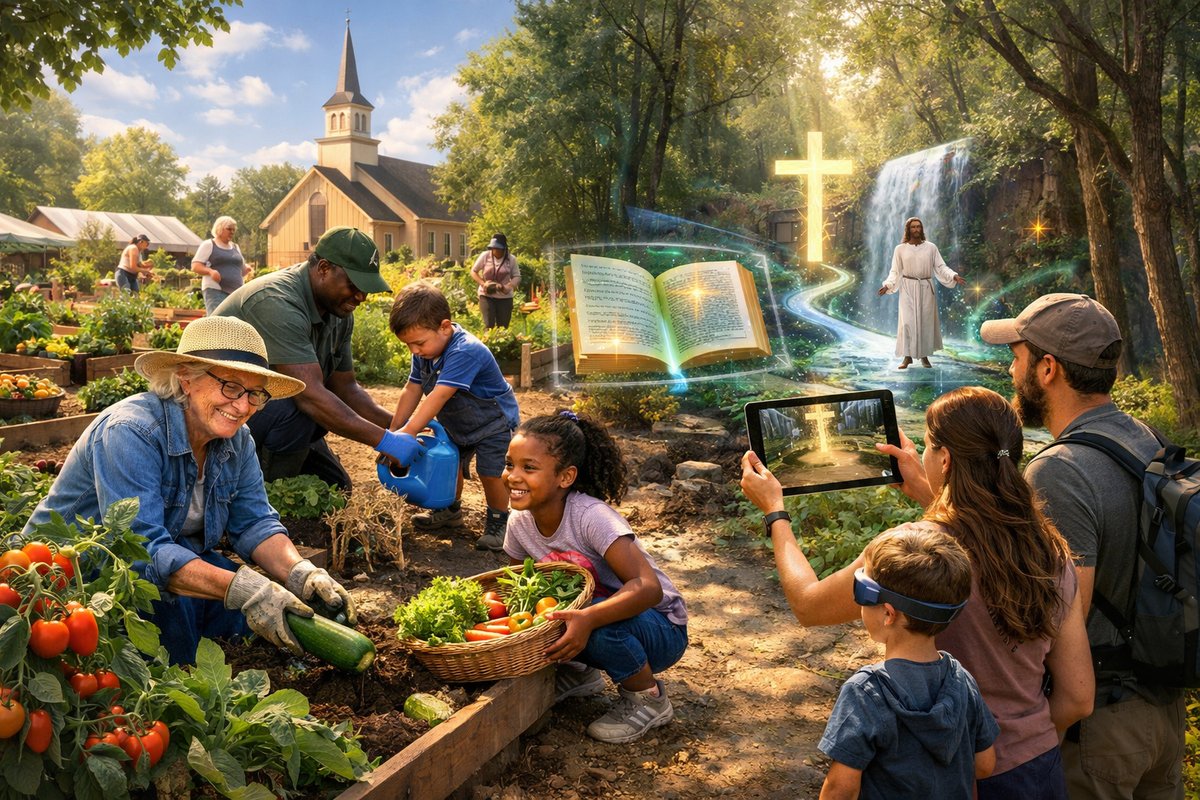
A growing number of congregations are blending environmental stewardship with digital discipleship by planting community gardens that feed neighbors and launching augmented reality scripture trails that bring verses to life. These hybrid ministries foster intergenerational connections, support local food banks, and invite worshippers into immersive spiritual practice under open skies.
Across the country, a fresh wave of faith communities is reimagining what it means to walk in the footsteps of their spiritual forebears. Far from the usual pews and pulpits, they’re crafting pilgrimage paths that intertwine soil and software, community gardens and augmented reality scripture experiences. The goal is simple yet profound: to draw people outdoors, invite them into tangible acts of creation care, and guide them through deeper encounters with sacred text using digital tools.
At St. Mark’s Episcopal Church in Seattle, Sunday mornings now begin with garden gloves as much as hymnals. The parish transformed an unused parking lot into the “Green Way Station,” a half-acre of raised beds where volunteers grow lettuce, tomatoes, and kale donated each week to a neighborhood food bank. Families from nearby apartment buildings stop by after services, join hands in planting seeds, and record reflections in a shared prayer journal stationed under a walnut tree. The garden isn’t just a place to cultivate vegetables; it’s a living homily on abundance, generosity, and the rhythms of creation.
Just a few states away, St. Helena’s Methodist Church in Atlanta unveiled an augmented reality scripture trail winding through its wooded grounds. Visitors download a free AR Bible app to their tablet or smartphone, then scan markers placed along the path. With a quick tap, virtual verses appear hovering over mossy stones, branches, or benches. Passages about living water rise from a trickling stream; psalms about strength echo through the canopy when you approach an ancient oak. The congregation collaborated with a faith-based tech nonprofit to map twenty key stations, each designed to spark meditation and conversation.
“Our youngest members grew up on video games and screens, so we wanted to speak their language,” explains Pastor Teresa Nguyen. “But we also know that God often speaks through creation itself. By combining both, people discover scripture in fresh ways-and sometimes feel it more deeply when it’s literally right before their eyes.” Attendance at midweek prayer walks has doubled since the AR trail launched three months ago, and youth group leaders report that teens who rarely picked up a physical Bible are now quoting verses from memory.
The technology behind these immersive trails isn’t proprietary or costly. Many congregations tap into open-source AR platforms and adapt free augmented reality Bible apps already available. Volunteers simply print water-resistant markers, download geo-tagging tools, and upload short reflections or voiceover clips. Tablets stored in lockable charging stations are checked out like library books. A handful of congregations even partner with local universities for student-led coding workshops, providing hands-on experience for computer science majors eager to explore ministry innovation.
Back at St. Mark’s garden, the impact goes deeper than hands in the dirt. Maria Lopez, a high school junior, credits weekly tending shifts with helping her manage anxiety. “When I’m under that walnut tree recording a prayer or just pulling weeds, I feel calm and connected,” she shares. “It reminds me that faith isn’t only inside a building-it’s in the soil, in the cycle of growth.” Meanwhile, retirees like Gordon Patterson find new purpose mentoring younger volunteers and sharing stories that link ancient parables about sowing and reaping with modern agricultural science.
Environmental stewardship has surged as a key component of contemporary Christian practice, and community gardens are a natural expression of creation care. According to a recent survey by a national faith-based nonprofit, nearly 20 percent of food banks now receive produce donations from church-sponsored gardens. These projects also reduce carbon footprints by shrinking food miles and fostering local resilience. Volunteers track yield data, experiment with pollinator-friendly plantings, and host public workshops on composting, often inviting neighboring congregations of different denominations or faith traditions to participate.
For those drawn to a quieter, more solitary pilgrimage, digital walking guides operate like personal chaplains in your pocket. GPS-triggered reflections prompt walkers to pause at historic stones, water features, or winding footbridges. Users can record audio prayers or unlock short videos narrated by local pastors recalling scripture’s relevance to that precise spot. It’s a modern twist on the Stations of the Cross, inviting contemplation one marker at a time.
Of course, these hybrid ministries face obstacles. Funding for garden infrastructure, durable trail markers, and charging kiosks doesn’t always appear in annual budgets. Volunteer training for both horticulture and basic tech support requires time and expertise. Unpredictable weather can delay planting seasons or wreak havoc on sensitive electronic equipment. To address this, many churches have applied for small grants from regional foundations or partnered with civic groups offering green-space revitalization funds. Tech-savvy parishioners lead informal classes to troubleshoot AR glitches and teach device maintenance.
Long-term sustainability often depends on low-energy solutions. At St. Helena’s, for instance, solar panels mounted on the fellowship hall roof power outdoor charging stations. Portable solar power banks are available for check-out on planting days, so volunteers can keep tablets fully charged even during extended garden shifts. By blending off-grid energy with carefully selected hardware, congregations maintain minimal utility overhead while keeping ministries running year-round.
Word of these initiatives is spreading. Ecumenical networks are sharing blueprints for garden design and AR trail layouts. Conferences on digital ministry now feature breakout sessions on creating outdoor spiritual experiences that marry tech and earth-based practice. As interest grows, more churches are exploring partnerships with environmental nonprofits, local schools, and municipal parks departments-bridging sacred and civic spaces in unprecedented ways.
In a world where screens often draw people indoors, these innovative programs offer an invitation to step outside-to till the earth, breathe fresh air, and see scripture dancing on leaves and stones. They remind us that faith can flourish in the convergence of code and chlorophyll, that the ancient impulse to journey still thrives when guided by GPS beacons and hummingbirds alike. And perhaps most importantly, they create new points of connection across generations, cultures, and technological divides-proving that the pilgrimage of the heart need not be confined to a single path, but can unfold beneath open skies and in the vivid glow of digital revelation.