Location
Mount Vernon, WA 98274

Location
Mount Vernon, WA 98274
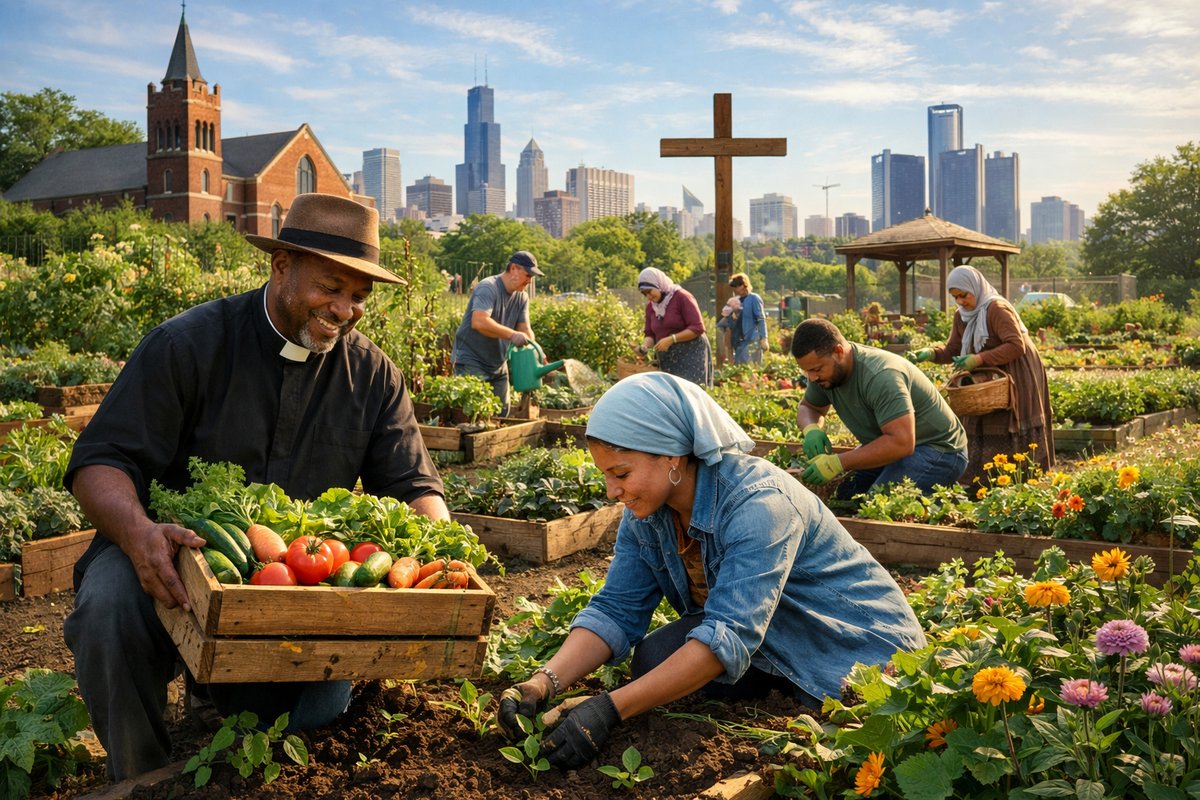
A network of urban congregations is transforming vacant lots into flourishing community gardens, blending food justice with spiritual practice. Across cities from Chicago to Detroit, faith communities are growing fresh produce, nurturing relationships, and discovering new ways to live out creation care.
Behind a redbrick church in a dense Chicago neighborhood, kale and collard greens stretch toward the sky under the late afternoon sun. Alongside raised beds brimming with tomatoes and peppers, volunteers gather each Saturday to weed, water, and pray. What began as a small ministry initiative has grown into a thriving community garden, yielding more than a ton of fresh produce last season and sparking a movement among urban congregations seeking to address food insecurity while deepening spiritual practice.
In recent years, food deserts in many U.S. cities have left residents without reliable access to fresh fruits and vegetables. According to a recent report, more than 10 percent of urban households struggle to secure affordable, nutritious food. Faced with this reality, congregations across the country are converting empty plots, abandoned parking lots, and churchyards into gardens that serve both pantries and pews. These green sanctuaries offer a hands-on way for faith communities to respond to hunger, bringing together neighbors of all ages and backgrounds to plant, harvest, and share.
At Grace Covenant Presbyterian in Chicago’s South Side, the Feed the Soul Garden began as a pilot project initiated by a team of young adults studying community development. After securing a small grant from a regional foundation, leaders enlisted local volunteers and partnered with a nearby university’s environmental science department to test soil for heavy metals. Raised beds filled with clean topsoil were built on church grounds, and within months, the first lettuce, radishes, and herbs were ready for harvest. Volunteers delivered weekly boxes of produce to families on the church’s care list and stocked local food banks, supplementing emergency relief with fresh offerings.
Mary Johnson, volunteer garden coordinator, remembers one midday when a retired teacher arrived at the garden gate. She carried a folding chair and a small notebook, seeking space to pray and reflect. “I didn’t come for the vegetables,” the teacher said. “I came for the stillness among the vines.” Over time, informal prayer gatherings took shape among the raised beds. Participants spoke of how the rhythm of planting, tending, and harvesting mirrored spiritual disciplines of sowing faith and reaping hope. On Sunday mornings, the congregation now gathers in the garden circle for a brief blessing of the seeds, inviting all who pass by to linger in a sacred plot of earth.
This blend of ecological stewardship and spiritual formation is not unique to Chicago. In Baltimore, Bell Cohn United Church of Christ transformed a vacant lot into a multicolored tapestry of peppers, squash, and beans, training youth from a neighboring housing complex in organic farming techniques. The produce feed program grew so rapidly that last fall, the church hosted a “harvest festival” on its lawn, drawing over three hundred neighbors for seed-to-table meals and music. In Detroit, Eastern Market Ministries launched an initiative to install solar-powered irrigation systems in their gardens, ensuring consistent water supply while modeling renewable energy use. These projects have coalesced into a loose coalition known as the Faith & Soil Alliance, which shares best practices, coordinates seed exchanges, and advocates for urban agriculture zoning reforms.
Funding for these initiatives comes from diverse sources: denominational grants, local foundations, and crowdfunding from congregants. One coalition member reports that their collective gardens produced nearly $50,000 worth of fresh produce last year, all distributed at no cost to families in need. Beyond the tangible food relief, church leaders emphasize the intangible benefits: building intergenerational connections, teaching sustainable practices, and fostering a sense of shared purpose. Digital tools help coordinate volunteers. A simple open-source spreadsheet tracks planting schedules, harvest yields, and donation deliveries, accessible on smartphones and tablets during weekend shifts.
While some faith communities embrace high-tech solutions like solar pumps or app-based volunteer sign-ups, many rely on basic tools: trowels, watering cans, and handwritten logs pinned to a community bulletin board. The low-barrier entry encourages congregations of any size or budget to participate. A pastor in Atlanta notes that even a single raised bed in a church courtyard can nurture new relationships and spark conversations about food justice and creation care. These small gardens become living classrooms where children learn about soil biology and adults discover practical theology in the pattern of the seasons.
For readers eager to start their own faith-filled garden, several steps can help ensure success. First, assess soil conditions and sunlight exposure. Raised beds or container gardening can mitigate contamination and improve drainage. Next, recruit volunteers with diverse skills-elderly members can share gardening wisdom, while tech-savvy volunteers maintain simple digital logs. Partnering with local food banks or food justice nonprofits can streamline distribution. Incorporating brief devotional moments into garden workdays, such as shared prayers before planting or blessing harvested produce, weaves spiritual meaning into practical service. Finally, seek small grants or in-kind donations from community partners: gardening centers may provide surplus compost, and hardware stores might donate tools or discounted supplies.
Across cities and denominations, these gardens reveal a vision of the church as both a spiritual and ecological sanctuary. They challenge the walls that often separate worship and service, inviting faith communities to cultivate hope in the soil and in one another. As urban landscapes shift and economic pressures mount, the simple act of planting seeds becomes a powerful expression of faith in action-rooted in the earth, nourished by compassion, and oriented toward flourishing for all.
Amid rows of leafy greens and sweet peas, new friendships take root. Children irrigate seedlings alongside grandparents. Neighbors who once rushed past church doors now linger to ask about zucchini recipes or share memories of their grandparents’ garden. In these shared spaces, the boundary between volunteer and beneficiary fades. Everyone finds purpose in tending creation and in bearing abundance. One Saturday afternoon, as the sun set over the horizon, Mary Johnson paused at the edge of the garden, breathed in the scent of fresh basil, and whispered a quiet prayer of thanks. In that moment, the garden was more than a plot of land-it was a testament to what happens when faith, soil, and community converge.
As urban congregations continue to sow seeds of compassion and resilience, their gardens stand as living testimony to the transformative power of small acts. From Chicago to Baltimore, Detroit to Atlanta, the message is clear: when faith communities cultivate both the land and their neighbors, they harvest far more than crops-they cultivate hope.