Location
Mount Vernon, WA 98274

Location
Mount Vernon, WA 98274
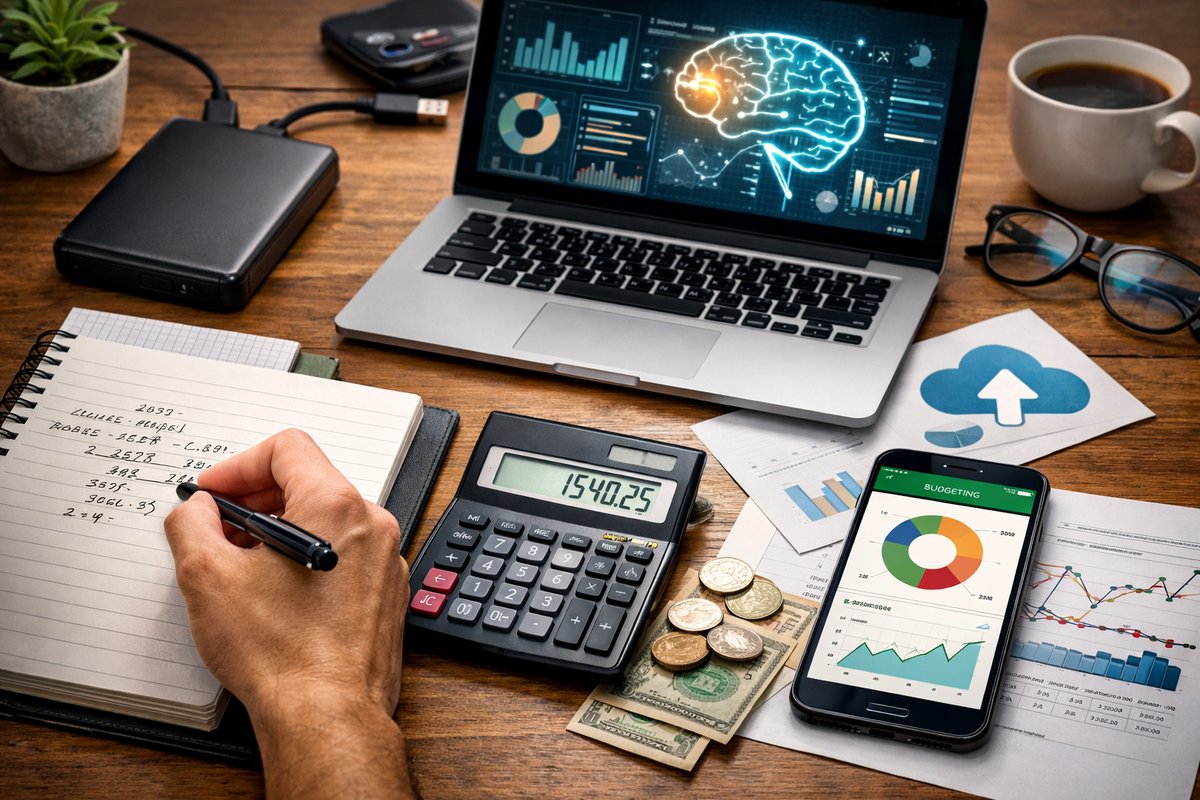
Consumers and small-business owners are blending digital platforms, AI insights, and analog tools to navigate rising costs and complex markets. This article explores how simple notebooks, calculators, secure backups, and smart interfaces can work together to bring clarity, confidence, and sustainability to budgeting and investing.
In an age where smartphones host dozens of finance apps on their home screens, some of the most impactful tools remain the simplest. Take Leah, a freelance graphic designer who found herself overwhelmed by subscription fees, fluctuating project income, and mounting credit card balances. She had tried three different apps in six months, only to end up with fragmented data, confusing charts, and more anxiety than insight. Then she picked up a pocket-sized notebook, jotted down her monthly expenses on a page alongside clear income targets, and rediscovered the power of analog clarity.
Meanwhile, across town from Leah’s studio, Sam, the owner of a vintage clothing boutique, was wrestling with inventory costs, payroll, rent, and his own personal savings goals. He adopted an AI-driven budgeting platform capable of categorizing transactions in real time, benchmarking his spending against peers in his industry, and nudging him toward more sustainable practices-like reinvesting a portion of profits into ethical suppliers. The fusion of human judgment with machine precision gave Sam the kind of actionable insight he’d struggled for years to achieve.
These two stories illustrate a broader trend: modern financial freedom isn’t a choice between paper ledgers and digital dashboards. Instead, it’s about combining them into a unified workflow that plays to each tool’s strengths. A physical finance journal can keep you grounded by forcing you to articulate goals in your own handwriting. A versatile budgeting app can crunch real-time data, generate alerts when you’re edging toward overspending, and even suggest low-carbon investing opportunities. When backed up regularly and secured properly, that mix of technologies can deliver both speed and peace of mind.
At the macro level, inflation rates have eased in recent quarters, yet wage growth and housing costs continue to squeeze households. Consumers are keener than ever to harness transparent fee structures and low-cost investment vehicles that align with their values. Sustainable exchange-traded funds (ETFs), community-driven peer-to-peer lending platforms, and green bond marketplaces have all seen surges in adoption. But tapping into these channels often requires meticulous record-keeping, reliable digital security, and the confidence to cross from budgeting to investing without second-guessing every move.
For people like Leah and Sam, establishing a habitual routine is vital. That might begin each morning with a quick scan of account balances on a mobile finance app, followed by ten minutes spent writing down key figures in a pocket notebook. Later in the week, they might export transaction data into a spreadsheet template-complete with built-in formulas for debt-repayment projections and retirement-savings scenarios. The hybrid approach also compensates for digital disruptions: if a server goes down or an app needs an update, your backup journal and spreadsheet files are still within reach.
Of course, security is paramount when handling personal finances digitally. Password reuse remains one of the most common vulnerabilities. That’s why many people are pairing cloud-based password management with hardware-based password vaults-small devices that store encrypted credentials offline. Biometric access on your phone or tablet adds an extra layer, while periodic exports of critical documents ensure you can recover data even if your primary systems fail.
Analog tools deserve their moment, too. A desktop financial calculator can handle complex functions-net present value, internal rate of return, tax-adjusted cash flows-without relying on an internet connection. A customizable notebook or budgeting journal provides a tactile experience that reinforces memory and encourages reflection. Jotting down thematic spending categories like “groceries,” “utilities,” and “carbon offset contributions” gives visceral insight into where your money actually goes.
In the realm of investing, digital platforms now offer fractional shares that let first-time investors buy portions of high-value stocks or bond funds with as little as a few dollars. It’s an important democratization, but building a diversified portfolio still calls for disciplined record-keeping and periodic rebalancing. Here again, a simple spreadsheet with dynamic charts can be your best friend, alerting you when allocations deviate from ideal targets and prompting you to top up underweight categories.
Small businesses face similar challenges. Sam’s boutique uses a cloud-based point-of-sale system synchronized with his budgeting dashboard. At month’s end, he exports sales data and cross-references it against his hand-written cash flow forecasts. He tucks old receipts into a desk organizer, scans them using a portable scanner or smartphone app, and stores encrypted images on an external solid-state drive. The result is a backup archive that’s impervious to internet outages and ransomware attacks.
Meanwhile, emerging fintech startups are experimenting with voice-activated assistants that let you check account balances, schedule bill payments, or adjust savings targets with simple verbal commands. Some chatbots now offer personalized coaching on debt reduction or sustainable investing, while others integrate with smart home devices to remind you when a bill is due or when your spending habits trigger a red flag. It’s easy to feel overwhelmed by the pace of innovation, but focusing on a core set of reliable tools-both digital and analog-can keep your workflow lean and resilient.
Accessibility matters, too. Not everyone has the luxury of time or high-speed internet. That’s where offline-first solutions shine. A plain-paper budgeting journal or a stand-alone financial calculator requires no subscription, no login credentials, and no network connection. Even a basic spreadsheet application installed on your laptop can deliver hundreds of budgeting and forecasting functions without any cloud dependency.
As you refine your financial toolkit, prioritize interoperability. Choose apps that export CSV files, devices that sync via universal standards, and notebooks with refillable pages. Automate repeating tasks with simple macros or micro-scripts. Schedule monthly “finance check-ins” on your calendar. Back up everything to at least two different locations-cloud and physical media. And don’t overlook the value of periodic reflection: set aside time each quarter to review your analog notes alongside digital analytics.
Building a future of financial freedom isn’t about chasing every shiny new gadget or platform. It’s about crafting a personalized ecosystem that balances automation with mindfulness. By integrating a handful of carefully selected apps, notebooks, calculators, and security devices, you can demystify your finances, reduce stress, and align your money habits with your values. Whether your goals involve paying down debt, building an emergency fund, or investing in sustainable companies, the right toolkit can turn ambition into action-and confusion into confidence.