Location
Mount Vernon, WA 98274

Location
Mount Vernon, WA 98274
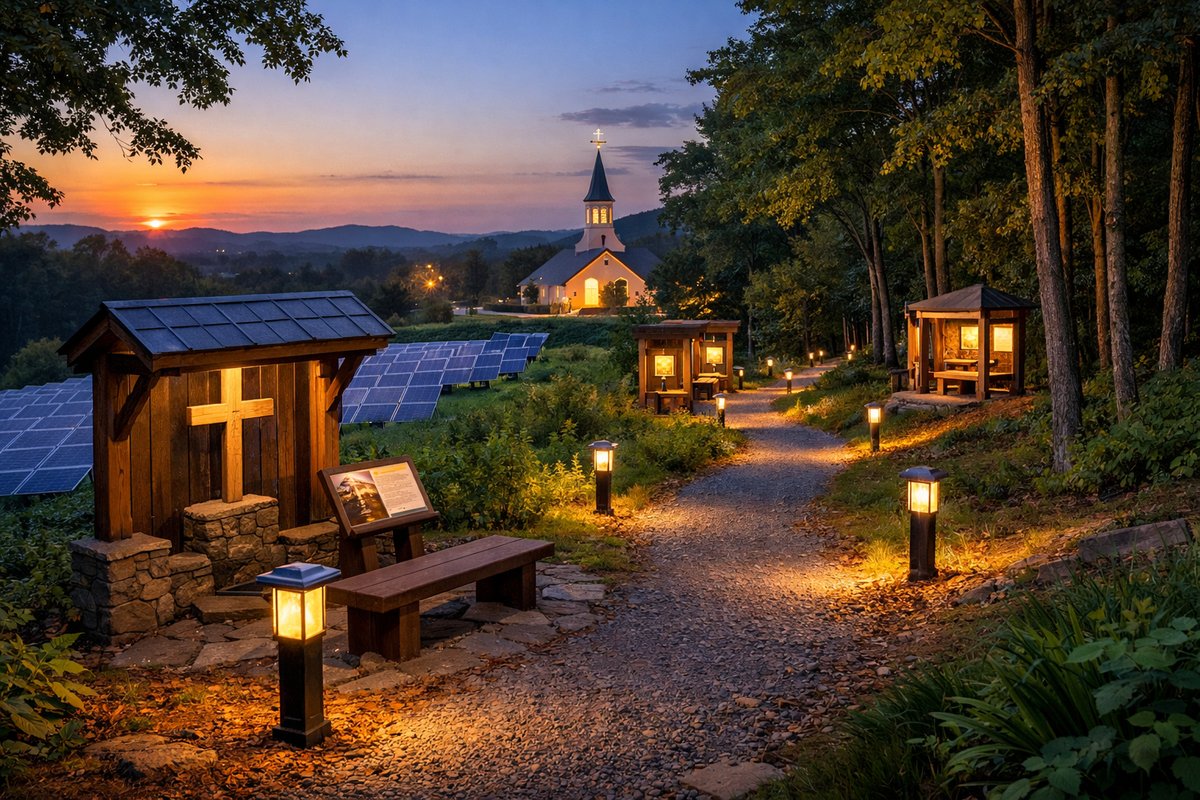
A growing wave of congregations is merging environmental stewardship with spiritual practice by installing solar-powered prayer trails on church grounds. These illuminated pathways guide worshippers through scripture-based meditation stations, offering fresh opportunities for reflection, community engagement, and sustainable innovation in faith spaces.
On a crisp evening outside a small Midwestern town, the grounds of St. Harmony’s Community Church glow softly under the gentle hum of solar-powered lanterns. Families and solo visitors meander along a winding footpath, pausing at wooden prayer stations where QR codes link to short scripture readings and guided reflections. Nearby, a row of native perennials and drought-tolerant grasses thrives under the same solar panels that power benches’ built-in USB ports, inviting worshippers to linger in conversation, prayer, or silent contemplation.
The concept of solar-powered prayer trails has taken root in dozens of congregations nationwide over the past year. Drawing on both environmental concern and a desire to revitalize outdoor spiritual practice, church leaders are turning neglected lawns and underutilized green spaces into luminous, low-impact paths of devotion. “Our congregation wanted to honor our calling as stewards of creation while providing a fresh way to experience prayer and scripture,” explains a pastor leading one such initiative. “The result feels like a sanctuary in motion-always open, day or night.”
These trails unite practical and spiritual objectives. Solar panels discreetly line overhead pergolas and lamp posts, storing energy by day and casting warm light at dusk. Each mile of wiring is powered by sunlight, avoiding new utility costs and teaching congregants about renewable energy. In many cases, local environmental nonprofits and diocesan grant programs have contributed funding or equipment, underscoring the collaborative spirit between faith communities and green advocates.
At the heart of each trail are themed prayer stations. One station might explore themes of healing, featuring a verse about rest for the weary alongside a weatherproof audio player where visitors can hear testimonies from congregation members. Another invites participants to consider the parable of the mustard seed amid a patch of native wildflowers. QR code placards allow smartphone access to brief podcasts, short videos, or downloadable prayer prompts, offering layers of interaction beyond the physical space.
“This is not simply landscape architecture,” notes an environmental consultant working with faith groups on sustainable design. “It’s a living classroom where theology and ecology meet. You see people talking about soil health one moment, then reflecting on a passage from Isaiah the next. It changes how the community sees both the land and their faith.” In many instances, local high school environmental clubs and college sustainability programs have pitched in, helping plant pollinator-friendly gardens whose blossoms feed bees and butterflies drawn to the trails.
Beyond environmental education, the illuminated paths encourage more inclusive worship. For those who find traditional pew-bound services challenging-families with young children, individuals with sensory sensitivities, or those grieving loss-the open-air setting can feel less formal. Evening prayer walks provide a safe, well-lit place to process struggles, while midday strolls under solar-shaded seating areas offer respite for seniors seeking connection with others.
Church leaders report that attendance at evening prayer sessions has doubled in some congregations since the installations began. One rural parish credits the trail with attracting local hikers and nature enthusiasts unfamiliar with organized religion, sparking conversations that can blossom into shared volunteer projects, study groups or casual outdoor worship gatherings. “In one evening, we had more visitors wander through than our typical Sunday service,” shares a lay coordinator. “They came for the lights and gardens, stayed for the community.”
Creating these trails does present logistical challenges. Congregations must secure permits for added lighting, verify that audio equipment is weatherproof, and maintain batteries and solar cells through harsh winter months. Some churches have formed maintenance teams-youth groups and retirees working side by side-to clear paths, replace broken fixtures, and refresh signage. This cooperative upkeep not only extends the trail’s lifespan but also strengthens bonds among volunteers.
Funding often comes from a mix of sources: dedicated faith-based environmental grants, community fundraising dinners, and creative events like “trail launch parties” with live worship music under string lights. One diocese has established a matching grant program, enabling smaller congregations to partner with larger parishes to share design plans and bulk-purchase equipment. The cost of installing ten solar-powered lights and their associated programming can range from a modest few thousand dollars for a short loop to mid-five figures for an extended multi-station network, depending on terrain and technology choices.
As word spreads, interest is blooming in urban neighborhoods where church lots can feel cramped or purely paved. Several city parishes are experimenting with pocket prayer trails-compact circuits around parking areas enhanced by solar fairy lights, vertical gardens, and mini prayer stations attached to lamp poles. These micro-trails transform asphalt expanses into pockets of sacred green, scattering moments of calm amid urban hustle.
Biblical symbolism underscores the spiritual vision behind these installations. The Psalmist speaks of God guiding believers “with a lamp unto my feet,” and many participants reflect on this imagery as they step under the gentle glow of solar lanterns. For some, the winding path echoes life’s journey-sometimes straight, sometimes curved-and the intermittent light stations offer reminders to pause, reflect, and realign with deeper truths.
Looking ahead, denominational networks are exploring ways to share open-source trail maps, smartphone app integrations, and maintenance protocols. Imagine a regional system where hikers can follow a continuous prayer trail spanning multiple church properties, with an app facilitating check-ins, virtual prayer walls, and geocached scripture readings. Such an interconnected network could foster fellowship beyond a single parish’s walls, weaving a tapestry of faith and sustainability across diverse communities.
For many, the solar-powered prayer trail movement represents the next wave of faith-based innovation-one that holds environmental integrity and spiritual well-being in balanced esteem. As churchyards glow softly at dusk, they become more than meeting places; they stand as living symbols of hope, care for creation, and the enduring search for light in darkened times.
In an era where technology often claims to isolate, these solar-based pathways are doing the opposite: inviting all to move, ponder, converse, and worship in shared spaces that honor both the earth and the divine. Congregants find themselves walking new ground while deepening ancient roots, discovering that stewardship and prayer can light the way forward for both faith communities and the planet they inhabit.