Location
Mount Vernon, WA 98274

Location
Mount Vernon, WA 98274
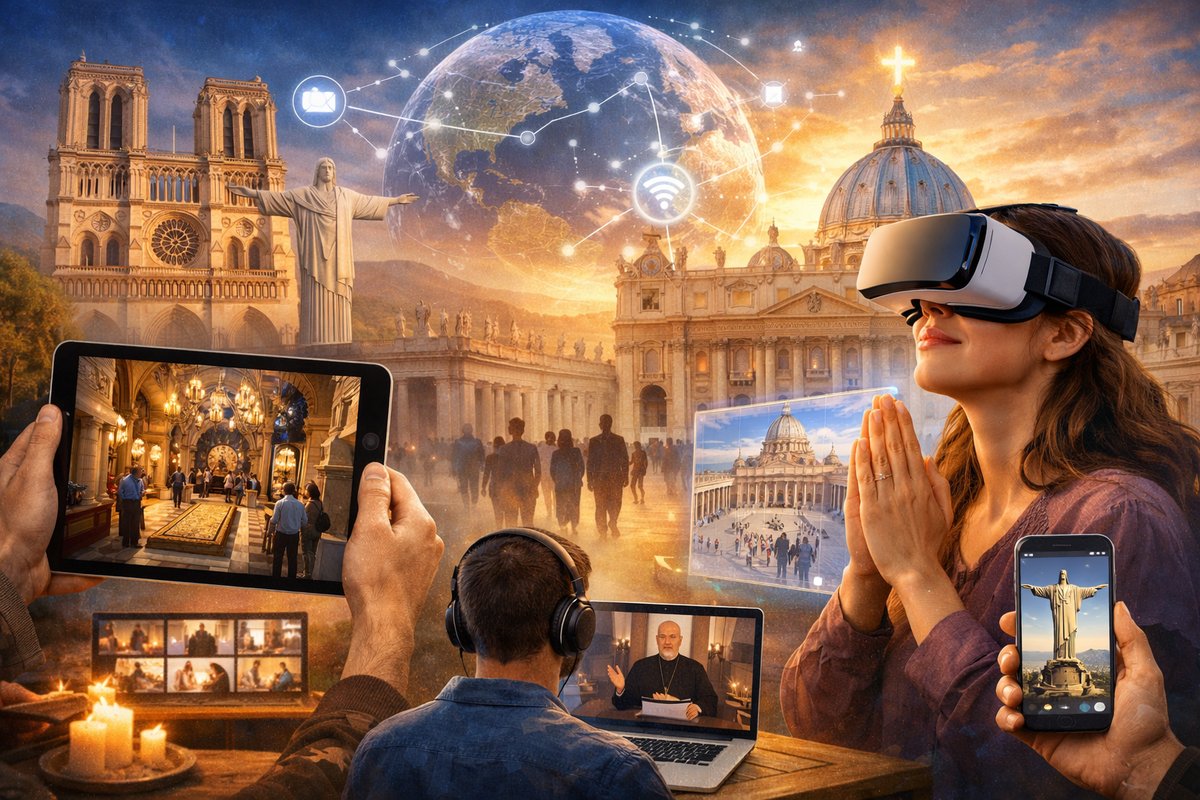
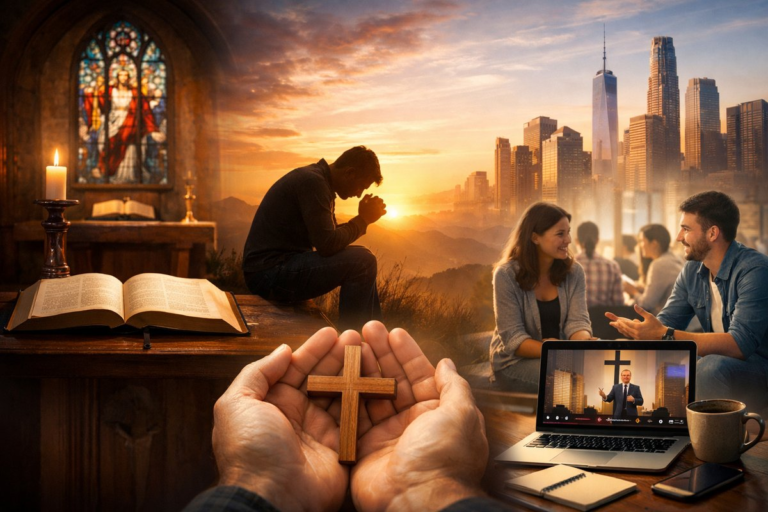
Churches and ministries around the world are embracing digital pilgrimage experiences, blending technology with age-old devotional practices. From virtual tours of sacred sites to immersive livestream retreats, Christians are discovering fresh pathways to spiritual connection and community engagement.
When 47-year-old Sarah Mitchell slipped on a virtual reality headset last spring, she didn’t expect to find herself standing at the Western Wall in Jerusalem. Yet moments after launching her church’s new digital pilgrimage program, she was overwhelmed by the sense of presence and awe. For many worshippers unable to travel far or gather in large groups, virtual faith journeys are emerging as a powerful complement to traditional pilgrimage.
The shift toward digital devotion began in earnest during the global pandemic, when livestream services and smartphone devotion apps became lifelines for isolated communities. Now, churches large and small are experimenting with immersive technologies, guided audio walks and interactive prayer maps to deepen personal spirituality. A recent survey by a leading religious research institute found that 62 percent of American Christians have tried some form of online pilgrimage or virtual worship experience in the past year, with satisfaction rates rivaling those of in-person events.
In a midsize diocese in the Midwest, a team of liturgy specialists partnered with a local tech collective to produce a thirty-minute virtual tour of key holy sites in Rome and Jerusalem. Viewers navigate between ancient basilicas and prayerful courtyards while a narrator shares scripture readings and historical insights. Parishioners describe moments of profound stillness when the virtual camera pauses at a rose-windowed chapel or frames the rolling hills of Galilee at dusk.
Meanwhile, a network of evangelical churches has developed a smartphone app called Pilgrim’s Path that offers self-guided journeys across seven continents. Users unlock daily devotionals keyed to landmarks like Canterbury Cathedral, Chartres Cathedral and the Holy Sepulchre. Each reflection includes archival photographs, reflective prompts and ambient soundscapes recorded on location. The app logs prayer activity and progress, enabling small groups to compare notes and pray together over video calls.
On a global scale, an ecumenical coalition recently launched an interactive website that maps out routes taken by early Christian missionaries. Congregations can sponsor digital pilgrim teams that “visit” remote villages, view short documentary clips and respond to on-screen prayer requests submitted by local believers. The coalition reports more than five million unique sessions in the first quarter after launch, with participants from over eighty countries engaging in shared reflection.
Users often speak of a heightened sense of connection and belonging, even when they are miles apart. Jeremy Hayes, a seminary student in Seattle, says that exploring a virtual replica of the Way of the Cross each Good Friday reinforced his sense of solidarity with persecuted Christians overseas. “I felt like I was praying shoulder to shoulder with people I’ll never meet in person,” he says. “It expanded my imagination of what the body of Christ can be.”
Pastors and theologians note that digital pilgrimage revives a classic tension between embodied ritual and mediated experience. While nothing can fully replicate the texture of stone chapels or the scent of incense, virtual journeys open up pilgrimage to those with limited mobility, tight budgets or caregiving responsibilities. Theologically, this invites a broader understanding of sacramental presence-recognizing that divine encounter can occur through screens and speakers as well as through tactile devotion.
Challenges remain, of course. Internet access is not universal, and some participants report “tech fatigue” after long hours of screen-time devotion. Others express concern that digital translations of sacred spaces risk commodifying holy experiences. To address these issues, several ministries have introduced shorter modules-five to ten minutes each-and emphasize intentional pauses for silent prayer or journaling away from the device.
One surprising byproduct of virtual pilgrimage is a renewed focus on local community service. After “visiting” refugee camps online, youth groups in multiple cities have organized clothing drives and letter-writing campaigns. Congregations that once equated pilgrimage with distant travel now see mission as starting in their own neighborhoods. Digital tools, these leaders say, are amplifying compassion in tangible ways.
For individuals interested in embarking on a digital pilgrimage, experts recommend a few best practices. Choose a quiet space free of distractions. Plan to engage actively-keep a journal or sketchbook nearby for reflections. Share the experience with friends or small groups via video chat to foster accountability and communal insight. Lastly, balance online devotion with time offline, whether through a mindful walk, a moment of prayer in nature or lighting a candle at home.
Technically, most virtual pilgrimage programs require only a smartphone or tablet and a stable Wi-Fi connection. For a more immersive experience, many participants invest in an entry-level virtual reality headset and noise-cancelling headphones. Some churches lend kits on a short-term basis, allowing members to experiment without a large personal investment. As bandwidth and device capabilities improve, developers are exploring augmented reality overlays for neighborhood prayer walks and location-based app features tied to local landmarks.
Looking ahead, faith leaders anticipate that digital and in-person pilgrimage will continue to converge. Hybrid retreats combining VR sessions with small-group worship are already on the calendar in multiple dioceses. Pilgrim’s Path is adding live translator chats so users can converse with local guides at Mediterranean monasteries. And a leading Christian university is piloting a course in “Virtual Sacred Geography,” where students analyze historical pilgrimage routes and then test-drive digital reconstructions of medieval waystations.
Ultimately, the rise of virtual pilgrimage speaks to a wider moment of innovation in Christian practice-one that values tradition and adaptation in equal measure. As people seek ways to root their faith in a fast-changing world, technology becomes less a distraction and more a bridge. Whether standing beside a cloistered chapel in VR or choosing to feed a neighbor after an online refugee tour, worshippers are discovering that pilgrimage-digital or embodied-remains a journey of heart, mind and community.