Location
Mount Vernon, WA 98274

Location
Mount Vernon, WA 98274
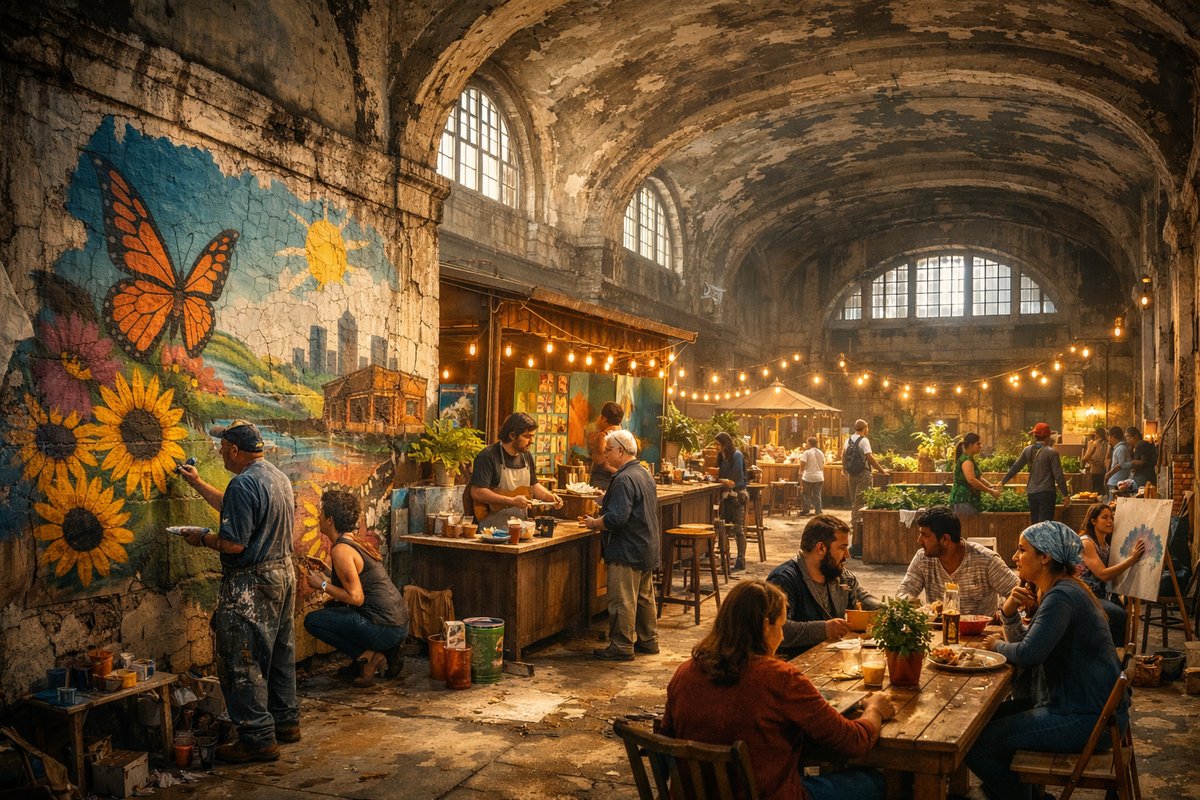
In a once-forgotten city terminal, neighbors transformed cracked concrete and echoing halls into a vibrant haven of art, nourishment, and hope. This grassroots revival weaves together the stories of volunteers who found purpose amid decay and strangers who discovered the quiet courage to rebuild their lives together.
At the heart of a midwestern city stands an unassuming block of concrete and steel, once the busiest bus terminal in the region and now silent for nearly two years. Its soaring ceilings and empty platforms first seemed to be monuments to failure-an echo of shifting transit routes and economic downturn. But to a small band of locals who grew tired of watching their community fray at the edges, the space offered more than memories of departure; it held the promise of reunion.
On a crisp morning last spring, a former art teacher named Dana unlocked the main entrance armed with nothing but a pair of heavy-duty gardening gloves and a weathered sketchbook. She had grown weary of seeing children drift toward screens while entire neighborhoods crumbled in neglect. In the terminal’s foyer, she slid open a rolling door, let in a sliver of sunlight, and announced to the empty hall, “This place is going to thrive again.” Over the following weeks, a retired mechanic, a music therapist, and a handful of young activists joined Dana’s quiet uprising. Their goal: to transform a forsaken transit hub into a community haven.
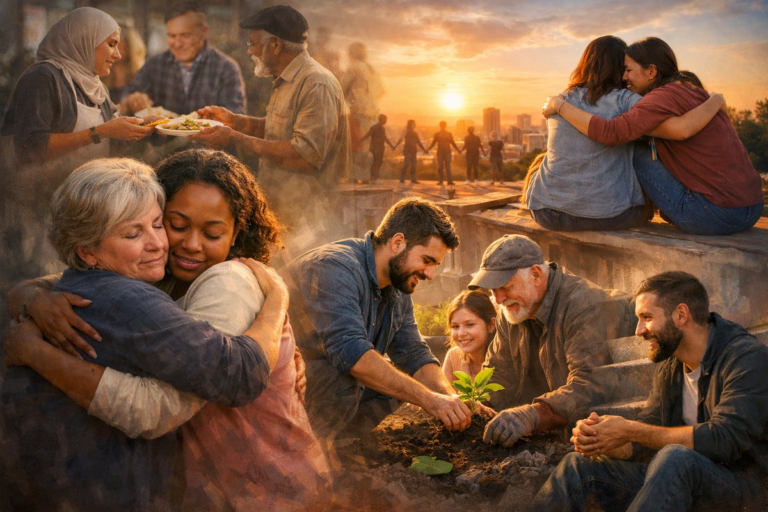
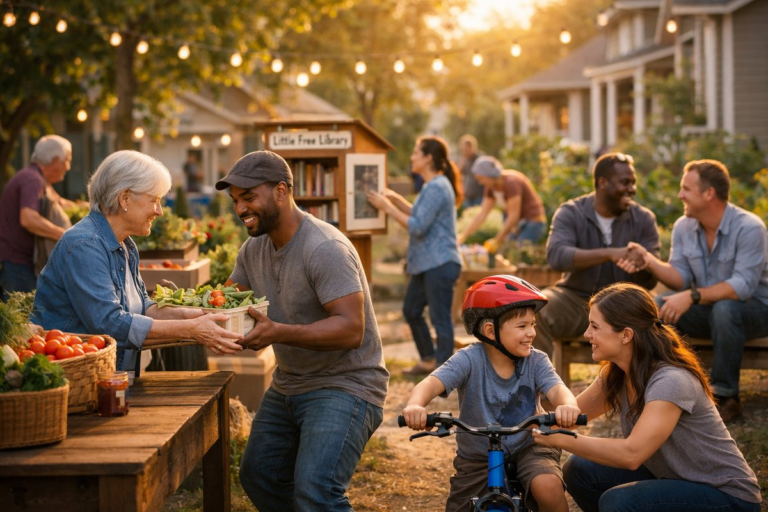
They began by clearing layers of dust and debris from the main concourse. With borrowed brooms and salvaged pallets, they partitioned areas for a community garden, a mobile library, and an art wall that would reflect the city’s collective story. Local families dropped off bags of soil, paint cans, and strings of solar-powered string lights in shades of amber and emerald. Each lunch hour, neighbors streamed in to lend a hand, moving crates of heirloom tomatoes into sprouting planter beds and painting murals inspired by long-lost city landmarks.
By mid-June, rows of leafy greens, bush beans, and marigolds had taken root under the skylights. A cluster of wooden pallets repurposed into raised beds stretched down a former ticketing row. Nearby, children curled up on a chalk-drawn hopscotch court to read donated paperbacks and poetry zines. An improvised stage rose near the east wall, where an old acoustic speaker played evening playlists curated by volunteers. Within weeks, the dormant terminal had become a place where laughter echoed once again and strangers found reasons to linger.
Residents like Malik, a single father who lost his night-shift job at the factory, found more than fresh produce among the planters. He discovered a sense of belonging that had slipped away during hard times. “Every time I water the basil or sketch on the art wall, I remember I still have something to offer,” he said, tracing a spray-painted outline of a heron against a brick column. For Jaya, a college freshman struggling with isolation, the mobile library became her sanctuary. She recited lines of poetry under a string of lights while the sun dipped low, and each verse stitched a new thread in her frayed confidence.
Behind the scenes, the volunteers navigated tight budgets and municipal red tape. They petitioned the city council for permission to install solar panels on the terminal’s roof and received a small grant from a local sustainability foundation. With those panels powering LED fixtures, evening gatherings continued through the night, casting a warm glow on workshops in batik and woodworking. Teenagers learned to sand and stain reclaimed boards under the guidance of an elderly carpenter who once built parade floats. In turn, he relearned what it meant to be part of something larger than himself.
The project’s momentum hinged on everyday tools and humble innovations. Sketchbooks became plan journals. Wooden crates served as compost bins. A cart outfitted with wheels and shelves evolved into a mobile cafe offering herbal teas brewed from mint and chamomile grown onsite. The volunteers joked that they were building a city in miniature, but it was real enough to nourish lonely souls and fuel creative sparks. Each painted bench and hand-lettered banner conveyed an unspoken message: resilience takes root when people care for each other.
One afternoon in late summer, a sudden storm ripped through the district. Sheets of rain pounded the skylights and flooded the garden beds. The solar-powered string lights blinked out as thunder rattled the old steel girders. Volunteers scrambled to secure the mobile library inside the ticket booth and stack pallets against the doors. When the skies cleared, they discovered that half the seedlings had washed away and a section of the art wall had peeled under pressure.
Rather than balk at the setback, the group held an impromptu gathering amid the mud. With tea brewed from rescued mint leaves, they traced new outlines for the mural and replanted fragile seedlings in sturdier containers. They added a temporary wooden awning to shield the gathering area and reinforced the planter beds with stronger bolts. The repairs became a community celebration, complete with stories of each person’s first act of kindness in the space. That evening, under the renewed glow of amber lights, the terminal felt more hopeful than ever before.
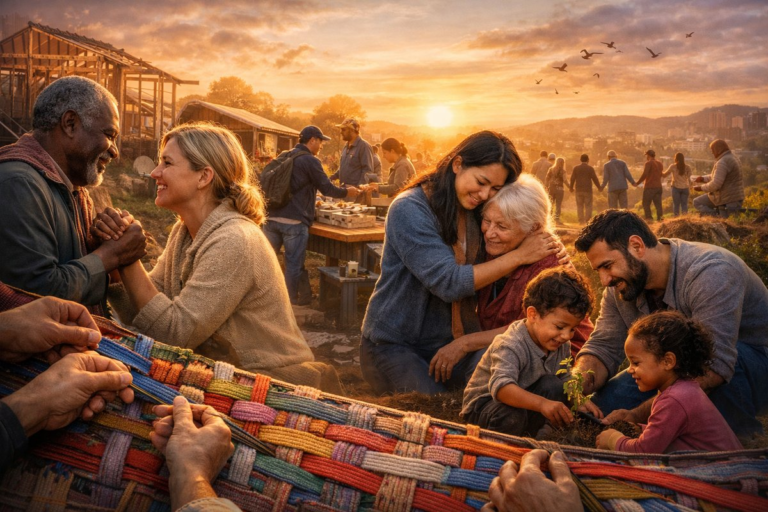
As autumn settled in, the once-silent halls reverberated with weekly open-mic nights. Poets, storytellers, and folk singers claimed the improvised stage. A local community health group set up free checkup stations in convertible kiosks made from shipping containers. Teen artists installed interactive murals that responded to touch and voice, encouraging visitors to record their own verses. Each contribution stitched a new patch onto the growing tapestry of shared experience.
In total, the community project served over two thousand meals by fall, distributed hundreds of pounds of fresh vegetables to nearby neighborhoods, and hosted more than a hundred workshops. But the numbers only hint at deeper transformations: the retiree who rediscovered her passion for sculpting clay, the single mother whose child learned to read across from a refurbished booth, the veteran who found solace in painting night skies on concrete walls. All of them carried a piece of the terminal with them once they left-an unspoken promise of resilience and shared purpose.
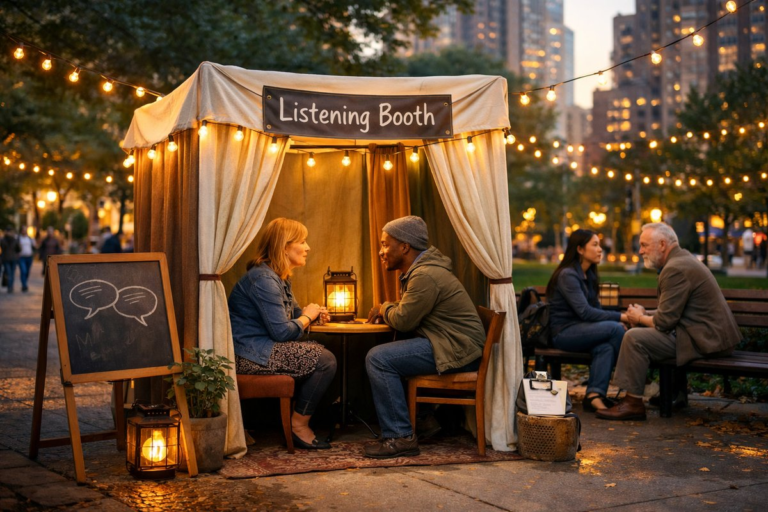
By winter, the terminals’ empty platforms had been partitioned into heated pods for art exhibits and quiet reflection. Strings of solar-powered string lights illuminated crisscrossing walkways. On chilly evenings, people huddled under donated blankets to share stories of personal struggle and triumph. The terminal was no longer a relic of departure; it was a place of return, where fractured lives could reforge bonds of empathy.
Reflecting on the transformation, Dana said, “We didn’t set out to fix a building. We were repairing ourselves and each other.” The emotion in her eyes spoke to the ache of failure and the quiet courage it takes to begin again. In every brushstroke on the walls and every vine winding up new trellises, there lives a testament to collective compassion. What began as a simple desire to repurpose a broken space has become a living reminder that resilience arises when people choose hope over resignation.
Across the country, urban planners and nonprofit leaders have begun visiting the terminal to learn from its blueprint of grassroots renewal. They study how simple tools-gardening gloves, pallets, solar lighting-can catalyze profound social healing. Yet the most powerful lesson remains the intangible one: that communities in motion can weave their stories into architecture, that every cracked wall holds the promise of new beginnings, and that love rooted in common purpose can transform concrete and steel into something beautifully human.
As dawn breaks on a new year, the city terminal stands poised for its next chapter. Plans are underway to expand the garden into winter with cold-climate hoop houses. Student architects are drafting modular extensions for workshops in metalworking and textiles. Through it all, the volunteers remain anchored by the same guiding principle: every person deserves a place to belong, and every act of kindness is a seed that can grow into a forest of hope.