Location
Mount Vernon, WA 98274

Location
Mount Vernon, WA 98274
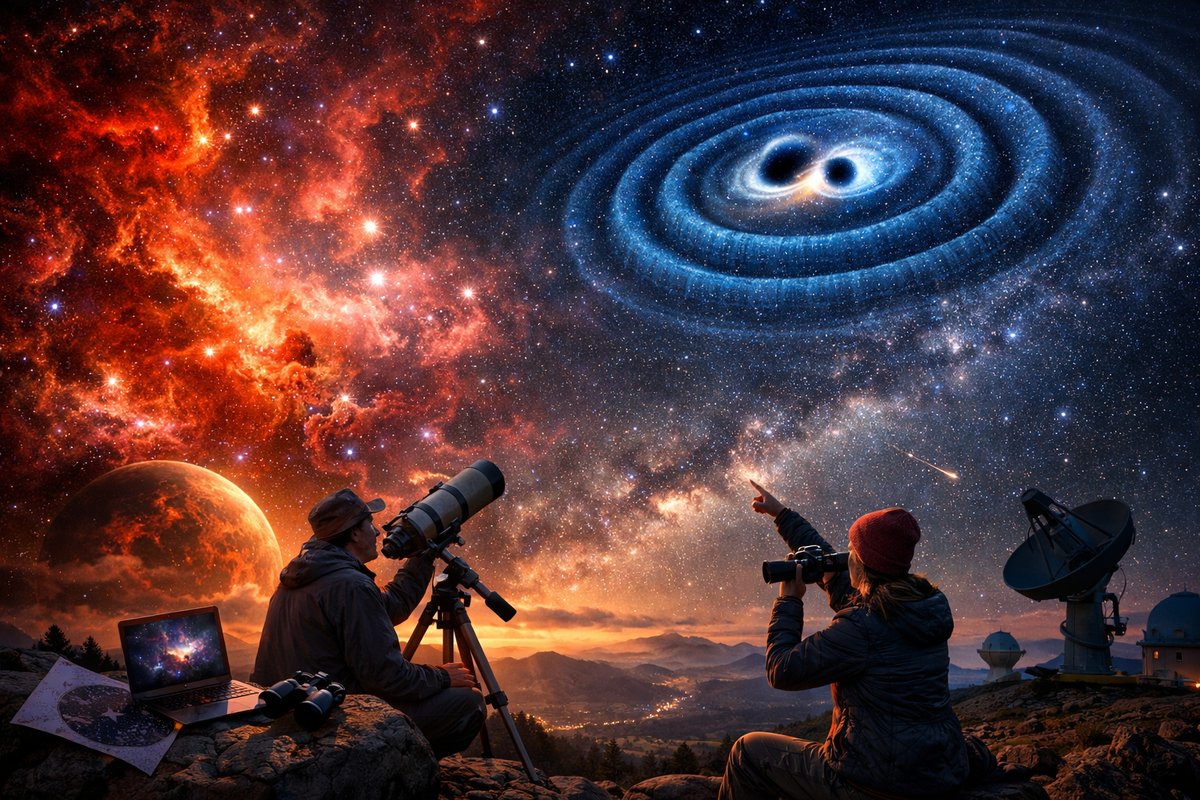
From nebulae glowing in infrared light to the ripples of spacetime revealed by gravitational waves, our cosmic curiosity has never been more alive. This exploration weaves together cutting-edge discoveries, hands-on stargazing tools, and mindful stewardship of the night sky, inviting lifelong learners to chart their own paths amid the stars.
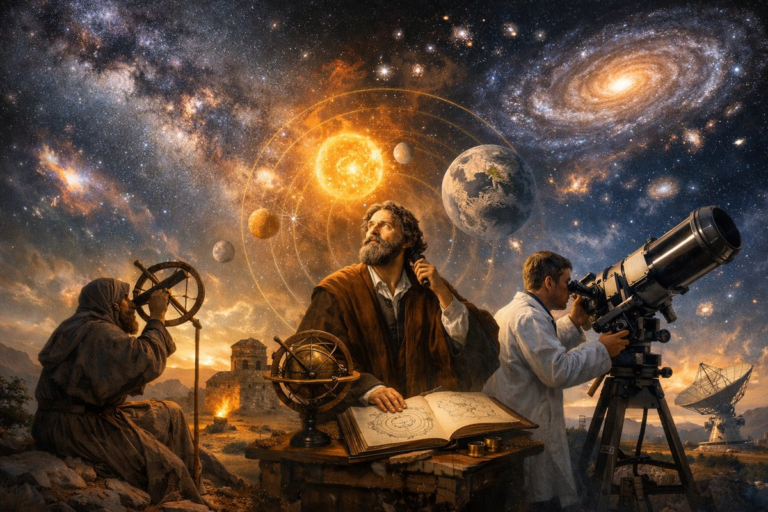
The night sky has always beckoned humanity with an invitation to wonder. From the earliest storytellers who wove legends around the glowing points overhead to modern scientists probing the limits of space and time, cosmic curiosity acts as a compass pointing toward uncharted horizons. Recent images captured by new observatories unveil swirls of gassy nebulae bathed in infrared light, while pulsating echoes from colliding neutron stars remind us that the universe is both a canvas and a laboratory. For lifelong learners, amateur astronomers, and anyone who has ever stared into the black void and dared to ask, “What lies beyond?” the cosmos offers an endless playground of ideas and mysteries waiting to be explored.
In the realm of exoplanets, discoveries arrive with a rhythm that rivals any cosmic heartbeat. Arrays of precision instruments surveying distant star systems have revealed worlds that challenge our assumptions about planetary formation. Some orbit so close to their suns that days bake their surfaces into molten landscapes, while others drift in vast orbits so distant that a year might last centuries. These findings underscore how varied planetary architectures can become and invite us to ask how life might adapt in alien climates. Each new exoplanet catalog entry expands a mental map of possibilities, fueling theories of habitability and the search for biosignatures such as atmospheric methane or distant ocean glints.
While telescopes capture light across the spectrum, a different kind of observatory listens for ripples in spacetime itself. The detection of gravitational waves has opened an entirely new sense with which to explore the universe. When two massive black holes spiral into each other, they send out tremors that wash through our detectors on Earth, stretching and compressing the fabric of reality by imperceptible amounts. These signals carry information about the mass, spin, and environment of the colliding objects, offering a glimpse of physics in its most extreme form. Gravitational wave astronomy complements optical, radio, and X-ray surveys, weaving a richer tapestry of cosmic history.
Even on the largest scales, subtle anomalies in the cosmic microwave background suggest the universe may hold surprises yet to be understood. This primeval echo of the Big Bang reveals patterns of temperature variation that contain clues about the universe’s composition and its earliest moments. While most fluctuations align neatly with predictions, some cold spots and angular anomalies spark debates among theorists-and drive curious minds to refine models of cosmic inflation, dark energy, or the topology of space itself. These debates highlight the interplay of observation and theory, reminding us that every new map of the cosmos can reshape our most fundamental assumptions.
Dive deeper into the quantum realm, and even time itself seems to reveal hidden textures. Quantum entanglement, a phenomenon Albert Einstein famously called “spooky action at a distance,” shows that particles half a world apart can correlate their properties in ways that defy classical logic. This interconnection hints at a deeper substrate woven into the fabric of spacetime, sometimes referred to as quantum foam. Though these effects are fleeting at everyday scales, experiments in quantum optics and cold-atom traps are gradually peeling back layers of reality, offering glimpses of how space and time might be built from discrete units at the Planck scale.
Interwoven with these explorations of the very large and the very small is a broader human story. Dark matter, an invisible substance making up most of the universe’s mass, remains undetected by conventional instruments, yet its gravitational pull shapes the motions of galaxies and clusters. Efforts to capture a fleeting interaction between dark matter particles and sensitive detectors involve cryogenic sensors buried deep underground, shielded from cosmic rays and thermal noise. Each null result tightens the constraints on theoretical models and sparks fresh ideas about mirror worlds or hidden sectors of reality, fueling a cycle of hypothesis and experiment.
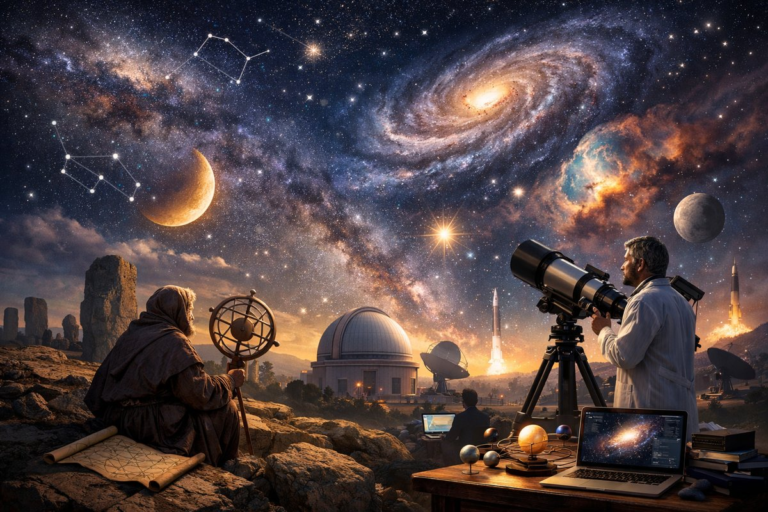
Bringing cosmic wonder into the home or classroom often begins with a telescope. A simple refractor or reflector can reveal the moon’s crater-strewn plain, Saturn’s rings, or Jupiter’s swirling storms. Equatorial mounts help track objects as Earth turns, reducing star trails and allowing for longer observation sessions. Pairing a telescope with a smartphone adapter bridges analog optics and digital imaging, enabling beginners to capture snapshots of celestial targets and share them with online communities. This hands-on experience cultivates not just stargazing skills, but also a sense of shared discovery, as amateurs across the globe compare notes under blanketing skies.
Astrophotography takes that passion further by transforming telescopes into portals for digital exploration. Specialized camera adapters connect DSLR or mirrorless cameras to telescopic optics, transforming faint star fields into luminous panoramas or revealing the intricate filigree of distant nebulae. Post-processing software can stack dozens or even hundreds of exposures to bring out details invisible in single frames. The process demands both technical precision-outlining polar alignment, exposure settings, noise reduction-and artistic vision, guiding color balance and composition. For curious tinkerers, building a rig that balances motion controls, power sources, and camera gear becomes a rewarding engineering challenge.
But cosmic curiosity isn’t confined to outdoor observation. Portable digital planetarium projectors bring the heavens into living rooms and classrooms. These devices project accurate star maps onto ceilings, tracing the ecliptic plane and marking seasonal constellations in real time. Interactive features allow users to adjust the view, speeding up centuries of celestial motion or zooming in on deep-sky objects. For educators, such tools offer a dynamic stage for storytelling: describing the legends behind Orion’s belt or illustrating the precession of Earth’s axis over millennia. For dreamers, they provide a nightly ritual of exploration without stepping into the cold.
Navigators of the heavens have long relied on star charts and sky maps that fold into acquainted shapes, guiding hands to locate elusive targets. Modern illuminated versions combine traditional cartography with glow-in-the-dark ink, enabling quick orientation in moonlit fields. Compact enough for a backpack, a star chart offers a low-tech backup when batteries fail or devices glitch. There’s a tactile joy in tracing lines between stars with a finger, recalling patterns passed down through indigenous astronomies and ancient maritime logbooks. For those who cherish heritage alongside innovation, the simple star map remains an enduring companion.
Light pollution poses a growing challenge for skywatchers. Cities gleam with urban glow that overshadows faint galaxies and shifts the color balance of the night. Fortunately, optical filters designed to suppress specific interference wavelengths can enhance contrast for nebulae and emission-line objects. These filters slip into eyepiece barrels or camera filter wheels, blocking stray sodium-vapor and mercury-vapor lights while transmitting the reds and blues of hydrogen and oxygen emissions. When matched to an observer’s local environment, a light pollution filter can revive lost details, turning suburban backyards into scenic observatories once more.
While looking up offers one perspective, holding a piece of extra-terrestrial rock in a display case creates another. Meteorite sample kits provide polished slices of iron-nickel and chondrite stones, revealing mineral grains older than Earth itself. Examining these fragments with a hand lens or carbide scribe illuminates textures formed under intense heat and pressure in the early solar system. Some kits even include classified fusion crusts-black glassy coatings formed during atmospheric entry-reminding us that these rocks have traveled millions of miles before landing on our planet. Display cases often include labels with fall dates and coordinates, bridging science and museum-caliber artistry.
Curiosity about the cosmos intertwines with broader values of sustainability and mindful observation. Solar-powered telescope mounts and rechargeable power stations minimize environmental impact, while digital logs and cloud storage preserve observation records without mountains of paper. Many stargazing groups partner with parks and environmental agencies to host dark-sky preserves, advocating for responsible lighting policies. Privacy considerations even extend to backyard observatories, with shielded enclosures that respect neighboring properties while securing sensitive equipment. By marrying ecological ethics with high-tech instrumentation, amateur astronomers exemplify how exploration can honor both curiosity and stewardship.
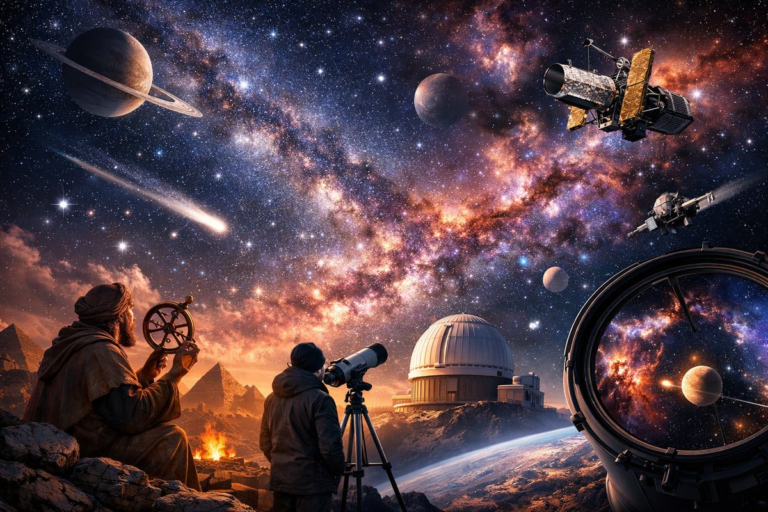
Whether peering through an eyepiece or modeling cosmic formation on a computer screen, the impulse to understand our place in the universe remains an enduring part of the human spirit. Each nebula, star, or subatomic quirk becomes a story thread weaving together science, art, and imagination. As you calibrate your telescope, unfurl a star chart, or download the latest sky-mapping app, remember that curiosity itself is the true north guiding our journey. The universe may be vast and strange, but with each new discovery we carve out a bit more meaning, forging connections that span light-years and light-minutes alike.