Location
Mount Vernon, WA 98274

Location
Mount Vernon, WA 98274
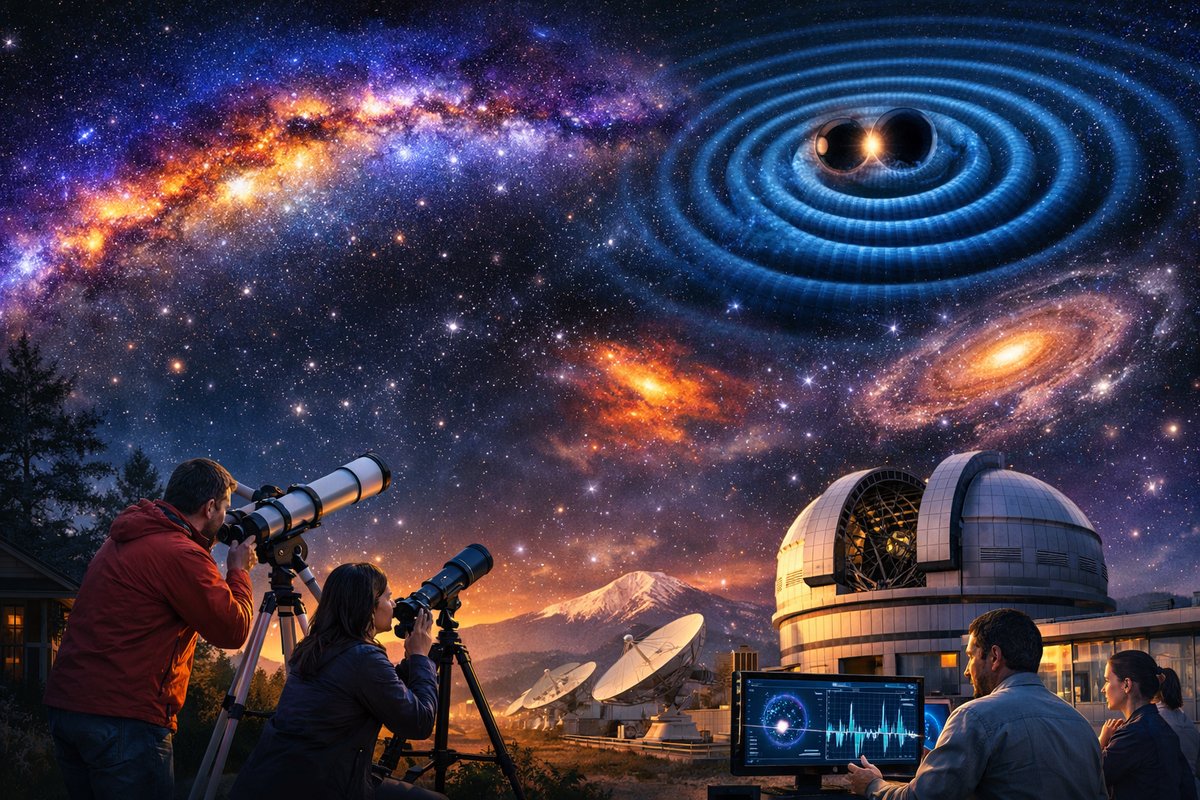
A fresh X-ray map, a rare gravitational wave tremor, and a surge of citizen-science projects are fueling a renaissance of cosmic wonder. From backyard telescopes to international observatories, curiosity is weaving professionals and stargazers into a single quest to decode the universe's subtle signals.
Late last week, astronomers released the most detailed all-sky X-ray map to date, a sweeping tapestry of high-energy sources that stretches from the plane of our Milky Way out into the cosmic void. Captured by an orbiting space telescope equipped with cutting-edge detectors, this new survey pinpoints more than a million hotspots: voracious black holes feasting on stellar debris, the roiling atmospheres of galaxy clusters, and enigmatic objects that flicker in and out of view.
Scientists are already poring over the data, eager to trace faint patterns that hint at the distribution of dark matter and explore unexpected X-ray beacons hidden in dusty star-forming regions. One particularly intriguing cluster, located near the southern celestial pole, appears to glow with a diffuse halo extending millions of light-years. This feature could reveal how intergalactic gas is shock-heated as it sloshes around massive dark-matter scaffolding, offering fresh clues to the cosmic web’s architecture.
Meanwhile, halfway around the globe, a network of gravitational wave observatories marked another milestone with the detection of a rare low-frequency chirp. Spanning nearly a second, this signal arose from the slow dance of two compact objects spiraling toward collision. Unlike the rapid bursts that herald neutron-star or black-hole mergers, this elongated tremor provides a more leisurely view of gravity’s grip at work.
Researchers are analyzing the waveform to test predictions of Einstein’s theory under extreme conditions. But beyond its theoretical import, the long chirp excites a different kind of curiosity: the notion that we can now eavesdrop on cosmic conversations unfolding across vast spacetime. The gentle rise and fall of the signal reminds us that the universe speaks in many dialects-some thunderous, others barely a whisper.
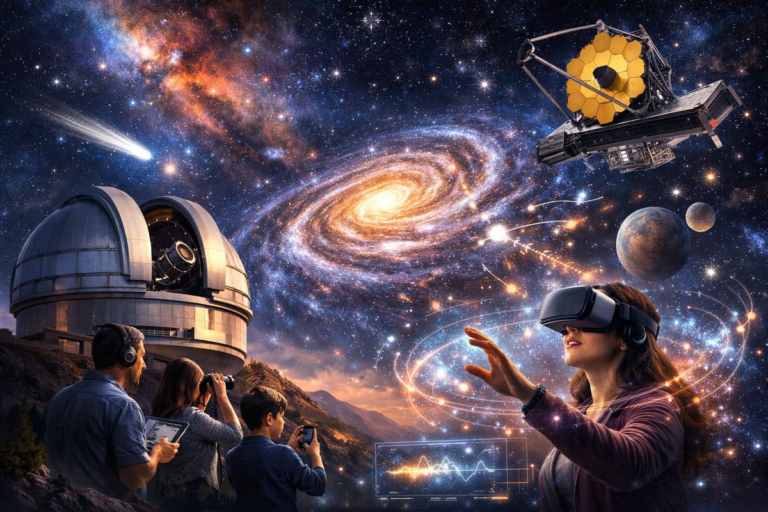
Curiosity is also radiating outward from professional labs into homes and classrooms through a surge of citizen-science initiatives. A newly launched platform invites volunteers to map the filamentary threads that connect galaxies in deep-space surveys. Dubbed the Cosmic Threadfinder project, it harnesses human pattern recognition to classify faint cosmic structures that algorithms often miss.
Project coordinator Emma Liu explains, “Automated pipelines are fantastic at crunching huge datasets, but they can overlook irregular shapes or unexpected twists in the web of galaxies. By blending machine power with human intuition, we hope to unveil novel configurations that challenge our models of structure formation.” Within days of launch, thousands of stargazers, students, and science enthusiasts had logged in to tag curving filaments, some stretching more than a hundred million light-years across.
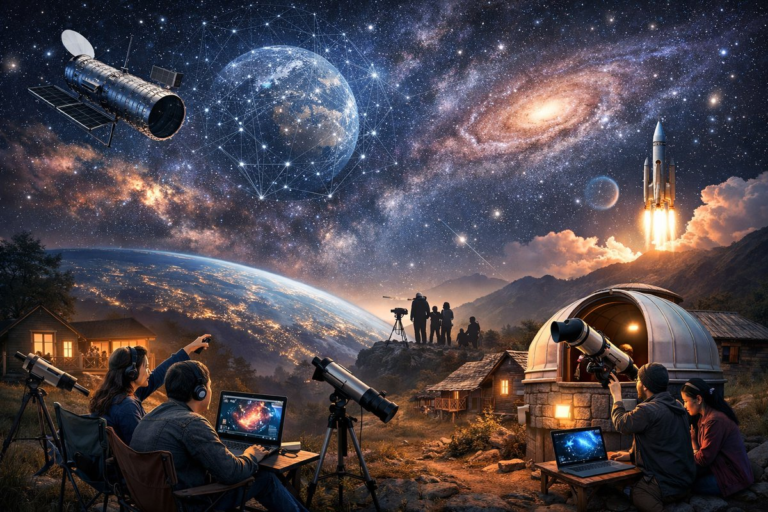
Beyond digital platforms, a growing community of astrophotographers is chasing the universe’s subtle beauty through backyard setups and remote observatory rentals. In the past month, one amateur sky-watcher captured a spectacular jet of charged particles spewing from a distant quasar, its trail weaving like cosmic graffiti across a starry canvas. The image went viral on astronomy forums, prompting professional researchers to take a closer look at archival data from radio telescopes.
That blend of amateur curiosity and professional insight is rewriting the rules of discovery. When a hobbyist photographs an unexpected flare or transient glow, they can instantly alert global networks that pivot large telescopes to capture follow-up observations. In one case this spring, a camera-equipped telescope in a suburban backyard picked up a fleeting infrared flash near a dying star, triggering space-based observatories to record an explosive outburst that might represent the birth of a new neutron star.
On the particle frontier, neutrino astronomers are experiencing their own moment of revelation. A high-energy neutrino detected deep beneath Antarctic ice was recently traced back to a distant blazar-a type of galaxy harboring a supermassive black hole that fires out jets of plasma at nearly the speed of light. This landmark identification strengthens the case for neutrinos as messengers that escape dense environments opaque to photons.
Researchers are now planning next-generation detectors that could localize neutrino sources with even greater precision. If successful, that network could transform how we explore cosmic furnaces: probing the inner engines of exploding stars, colliding galaxies, and active black holes with particles that travel straight and nearly unscathed from their birthplace.
Back on Earth, the celestial calendar is shaping up to delight sky observers of all stripes. This summer’s annual meteor shower promises a higher-than-average rate, and a partial eclipse will cast a gentle shadow across populated regions, offering a chance for safe solar viewing. Astronomy clubs are organizing public star parties, complete with solar filters, binoculars for comet hunts, and guided tours of the night sky.
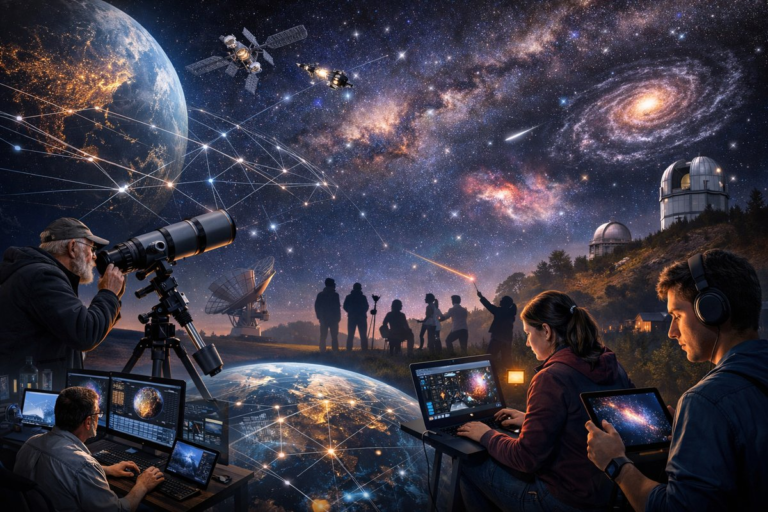
Whether through professional surveys, gravitational wave detectors, or backyard telescopes, these varied channels of exploration share a single thread: the drive to test our theories against the universe itself. Over the past decade, we’ve grown accustomed to sweeping discoveries-Earth-like exoplanets, ripples in spacetime, and the faint glow of the Big Bang’s afterglow. Yet each new milestone only deepens the puzzle, inviting fresh questions about the nature of reality.
As observers gather data on high-energy eruptions, map cosmic filaments, or chase whispers of gravitational tremors, they contribute to a grand collective story. In that story, curiosity is the main character-the spark that transforms dots of light into tales of cosmic evolution, that turns fleeting signals into maps of unseen forces.
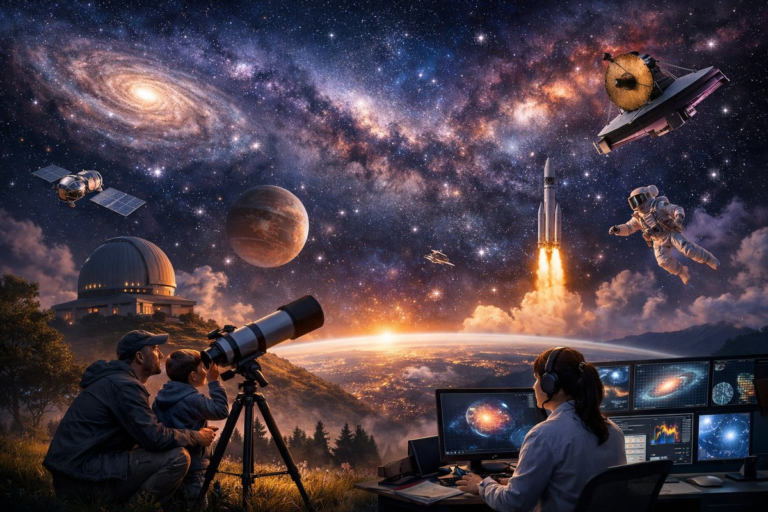
In the days to come, professional journals will publish technical papers, and social feeds will fill with breathtaking images. But beyond the headlines, the truest revelation lies in the shared experience of wonder. When the universe whispers its secrets in X-rays, gravitational waves, or streams of data, we are listening-and that act of listening connects us all, from the mountaintop observatory to the backyard telescope.
This chapter of cosmic curiosity reminds us that exploration is not a solitary pursuit. It is a conversation between instruments and imaginations, between algorithms and human eyes, and between distant events unfolding light-years away and our own desire to understand. Each new discovery is a page turned in a book that spans the cosmos, and every curious mind holds a key to the next revelation.