Location
Mount Vernon, WA 98274

Location
Mount Vernon, WA 98274
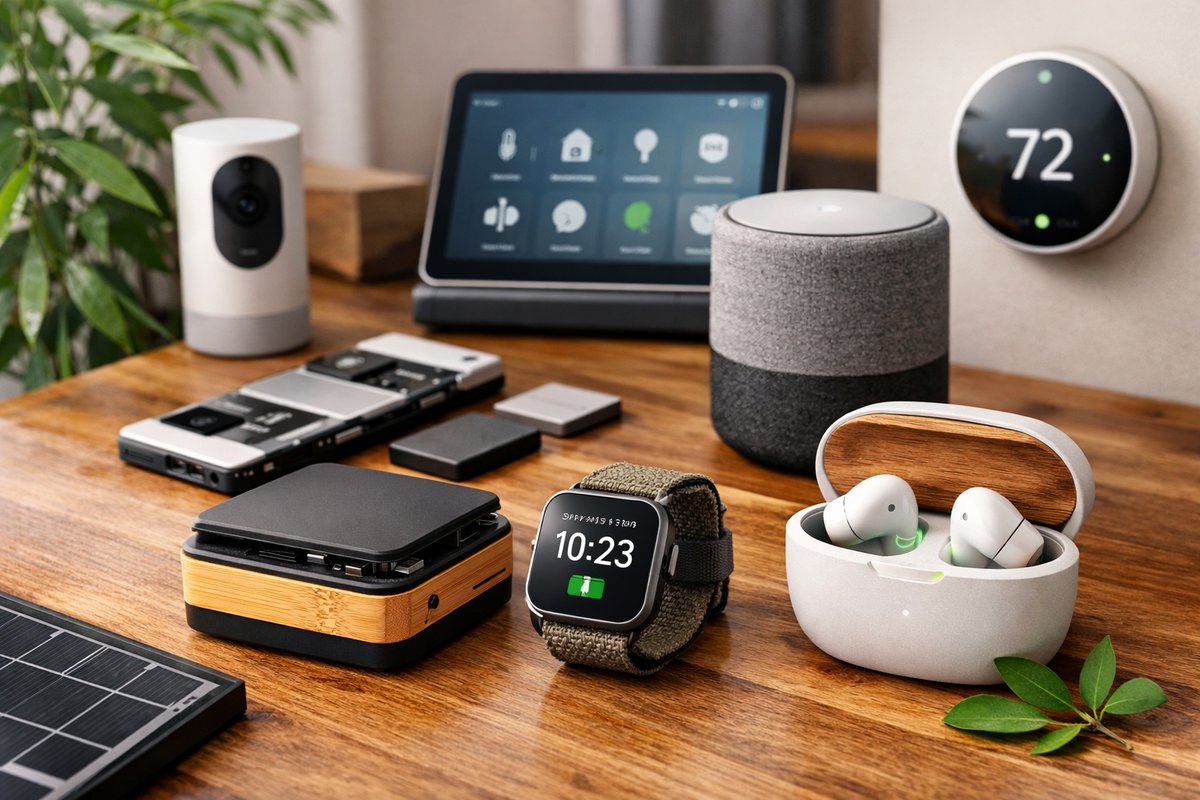
From palm-sized computing platforms to AI-enabled earbuds, today's gadgets blend high performance with sustainable design. Discover how modular devices, smart home integration, and privacy-first architectures are redefining convenience and creativity for curious minds.
The landscape of personal technology is undergoing a remarkable transformation. What once required a desktop tower now slips into a pocket, and modular components invite users to tinker with the very building blocks of their devices. Whether you’re a hobbyist crafting a custom IoT sensor or a busy commuter relying on noise-cancelling earbuds, the frontier of innovation has never felt more accessible.
At the heart of this revolution are ultra-compact computing platforms that democratize experimentation. Bare circuit boards equipped with general-purpose input/output pins, wireless radios, and edge AI accelerators empower anyone to prototype smart gadgets. Enthusiasts deploy environmental sensors on a windowsill to track air quality, build portable gaming consoles in 3D-printed shells, or create wearable gesture controllers that translate hand motions into music. All of this happens without a sprawling lab or a million-dollar budget.
Beyond tinkering, miniaturized single-board computers have matured into fully featured micro-desktops. Equipped with multi-core processors, gigabit network ports, and native support for common peripherals, these devices serve as low-power file servers, home automation controllers, and personal VPN gateways. They run privacy-focused operating systems and local password managers, keeping sensitive data under your roof rather than in distant data centers. For those mindful of digital sovereignty, this shift toward local control is a game changer.
On the smartphone front, modularity is making a comeback. Rather than consigning an entire handset to obsolescence over a single faulty sensor or obsolete chipset, modular designs allow critical components-like the camera module, battery pack, or wireless radio board-to be swapped out independently. This approach extends device lifespans, reduces electronic waste, and rewards curious users who aren’t afraid to pop open a back cover and follow step-by-step repair guides.
Sustainability and longevity also extend to materials. Recycled plastics, aluminum alloys harvested from decommissioned vehicles, and bio-derived composites are finding their way into device enclosures. When manufacturing footprints shrink and end-of-life recycling schemes become the norm, a gadget’s ecological impact can be dramatically lower. Some projects even publish transparently audited carbon-footprint reports, empowering consumers to align purchases with their values.
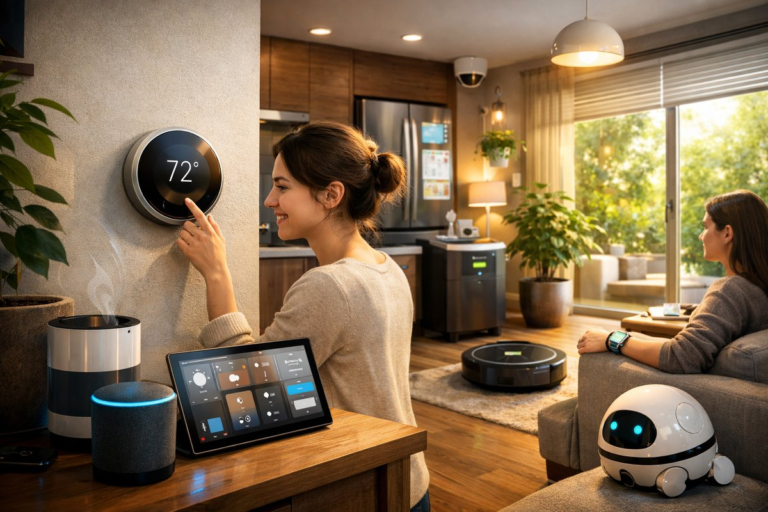
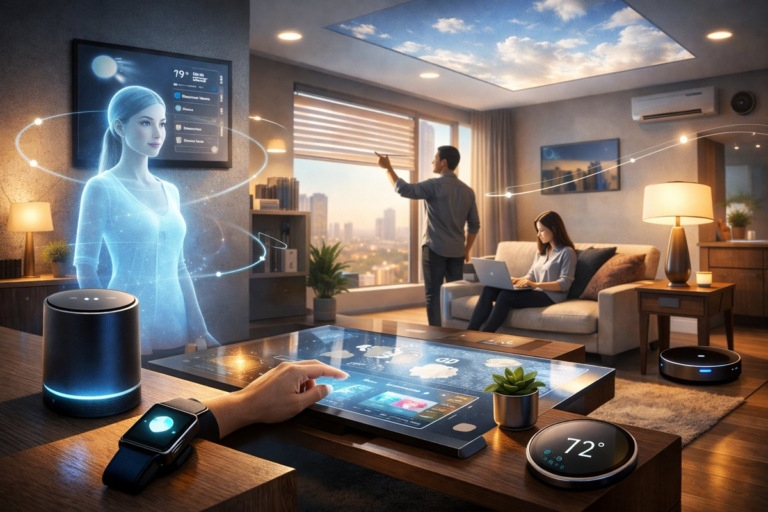
The smart home ecosystem is evolving in parallel. Protocols designed for low-power, local-first operation-coupled with open standards-mean that light bulbs, security cameras, motion sensors, and door locks can all communicate without relying on opaque cloud servers. Matter, Thread, and other emerging frameworks are ushering in a new era of cross-brand interoperability. As a result, a pocket-sized computing hub can orchestrate your living room lighting, adjust climate controls, and keep watch over the front door, all while preserving end-to-end encryption.
Audio technology has seen its own leap forward. Wireless earbuds now pack multi-mic arrays for crystal-clear calls, adaptive noise cancellation that reacts to ambient soundscapes, and edge-accelerated voice assistants ready to handle requests without routing every command to remote servers. Battery efficiencies now reach 10 hours or more per charge, and ultra-low-latency codecs ensure music and video stay perfectly in sync with minimal power draw.
Yet power and convenience must be balanced against security and privacy. As everyday objects gain connectivity-refrigerators checking your milk levels, window sensors alerting you to open doors-the attack surface balloons. Forward-thinking makers embed secure boot systems, hardware encryption modules, and sandboxed firmware architectures. Frequent over-the-air updates and transparent security audits build trust, ensuring that devices designed to simplify life don’t become vectors for intrusion.
The human dimension of these gadgets is increasingly important. Emotion-aware sensors-tracking variables like heart rate variability and stress levels-feed into personalized wellness apps. Haptic feedback modules deliver discreet alerts, and on-device machine learning models adapt to individual usage patterns. This blend of emotional intelligence and privacy-first engineering ensures your smart watch or fitness band respects boundaries while offering genuinely empathetic insights.
Of course, challenges remain. Battery technology advances slower than feature creep, and the quest for thinner devices can conflict with the desire for larger cells. Fragmented software ecosystems sometimes frustrate users who bounce between firmware forks or GL driver versions. And with modularity comes the need for clear documentation and standardized sockets, or risk devolving into a pile of incompatible parts.
Nevertheless, the horizon is bright. Researchers are experimenting with foldable displays that expand to tablet dimensions in a pocketable profile. Ultra-efficient wireless power transfer could one day keep devices trickle-charging whenever they’re near a base station. Decentralized AI models running on tiny co-processors will let earbuds transcribe meetings and translate languages in real time-without ever pinging a cloud server.
In this era of pocket powerhouses and smart ecosystems, the role of the user shifts from passive consumer to active participant. Whether you’re soldering a sensor onto a board, swapping modules in a smartphone, or simply fine-tuning your home automation routines, curiosity is your greatest asset. As the boundaries between hardware, software, and sustainability blur, one thing remains clear: the next chapter of everyday tech belongs to those who dare to explore.