Location
Mount Vernon, WA 98274

Location
Mount Vernon, WA 98274
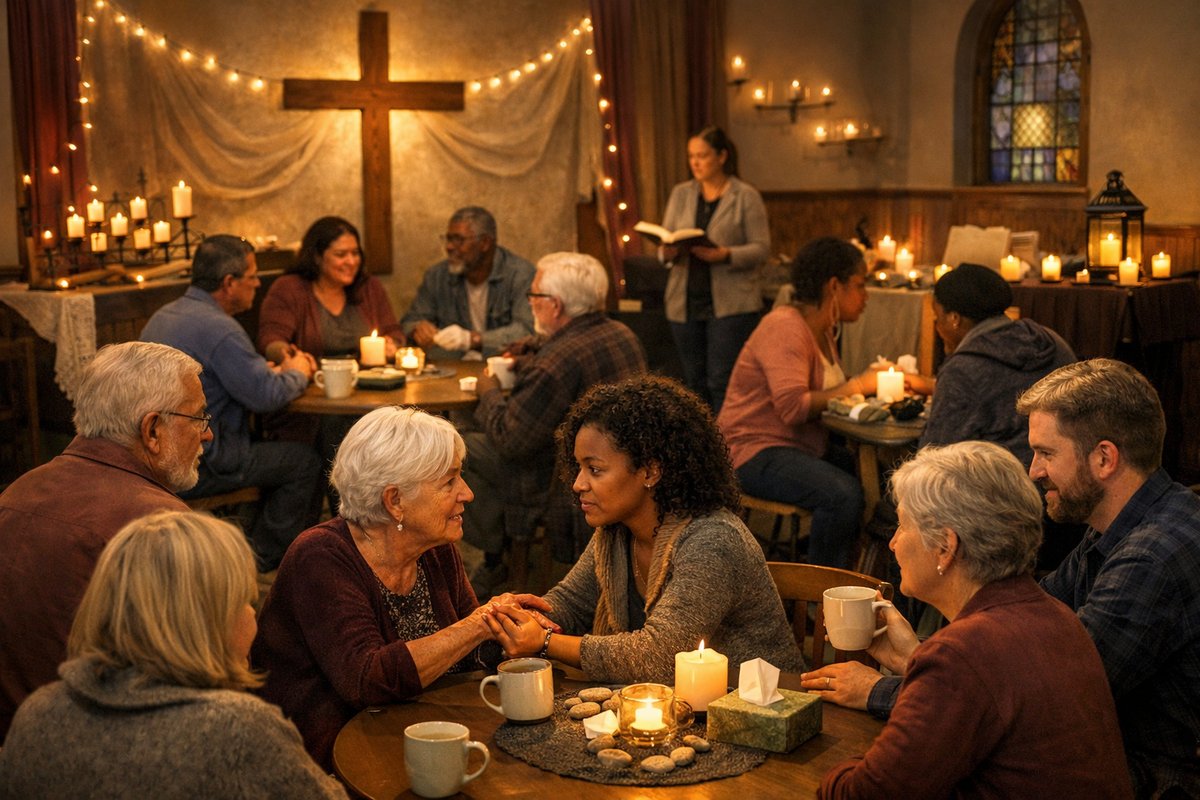
Across the country, congregations are pioneering grief cafés-informal gatherings where people recovering from loss find a warm welcome, shared conversation and spiritual practices rooted in Christian tradition. By blending hospitality, ancient lament rituals and modern mental health resources, these gatherings create sustainable, intergenerational communities of care.
On a crisp Saturday morning, soft light filters through stained glass windows as a handful of visitors settle into mismatched chairs arranged around a low coffee table. Steam rises from ceramic mugs filled with freshly brewed coffee and herbal tea. In a side alcove, fresh pastries rest on a linen cloth, inviting guests to help themselves. This is not a traditional Sunday service. It is a grief café hosted by a local congregation, where loss is honored and conversation is guided by gentle prompts. As chairs creak and voices murmur, participants begin to lean into a shared space of faith and healing.
The idea of a grief café stems from a growing awareness that modern life often isolates people in their sorrow. According to recent surveys by mental health organizations, rates of prolonged grief disorder have risen as social rituals around mourning have diminished. Many find that traditional support groups feel clinical, while informal gatherings lack structure. Churches around the country are stepping into that gap, offering weekly or monthly gatherings where grief can be named, shared and held. In these settings, loss is not hidden behind platitudes but given a voice within a community of faith.
Early adopters of the grief café model point to a Scandinavian pilot project that paired local cafés with chaplains to host conversation circles. In a Christian context, congregations adapt this model by setting up tables in fellowship halls, parish rooms or outdoor courtyards. Volunteers receive brief training on active listening and boundaries. A pastoral facilitator opens each session with a reading-often a passage of lament from ancient psalms or a poem on hope-and invites guests to introduce themselves if they feel comfortable. Simple conversation cards prompt themes like memory, gratitude and longing, creating a rhythm that balances sharing with quiet reflection.
Inside one midweek gathering, a retired teacher places a hand on a soft cushion, reflecting on a recent loss. A young parent tucks a stray curl behind her ear, describing the shock of saying goodbye too soon. Across the room, a college student listens with sympathy, having confronted grief of his own when a grandparent passed. Laughter emerges amid tears as someone recalls a tender memory or a sudden act of kindness that followed sorrow. The air hums with a shared cadence of breath, uniting all present in a mutual journey toward healing.
Behind the scenes, a team of volunteers sets out labels for nametags, lays out extra tissues and restocks the coffee carafe. Pastoral leaders emphasize the importance of confidentiality and respect, offering guidelines rather than rigid rules. They encourage co-hosts to check in on quieter participants and to gently redirect overly long monologues. Mental health professionals often drop in as guests to offer brief insights on coping strategies without turning the gathering into therapy. This collaborative approach honors professional expertise while preserving the open-hearted hospitality of a church event.
For many attendees, the grief café becomes a lifeline. One participant recalls arriving burdened by loneliness and leaving with a phone number from a new friend who had walked a similar path. Another describes how sharing a simple story about a lost sibling lifted the weight of carrying that memory alone. Small rituals-lighting a candle for loved ones, writing a note of remembrance on decorative cards-invite participants to mark their stories in a tangible way. Over weeks and months, a loose network of support grows, with coffee mugs and shared smiles as the glue of companionship.
At the heart of these gatherings lies a theological tradition of lament. Throughout Christian history, lament has been a sanctioned space for voicing pain, crying out to God and wrestling with doubt. The grief café cultivates that tradition in a contemporary idiom, offering structured lament rituals alongside moments of silence. Facilitators sometimes invite guests to read aloud sections of sacred texts that speak to anguish and hope-verses that have sustained communities through famine, exile and personal loss. By naming grief in a communal setting, worshipful lament reclaims its place as a spiritual practice.
These sessions attract a wide range of ages, opening a channel for intergenerational solidarity. Older participants share memories of church funerals and family rituals from decades past. Younger guests speak of digital-age farewells, marked by social media posts and virtual condolences. The café setting bridges these experiences, blending storytelling with reflective pause. In one group, a grandmother and granddaughter discovered a mutual love for psalm chanting, deciding to record a short video to share with absent members. Moments like these reveal how grief cafés can knit together disparate threads of tradition and innovation.
Recognizing that grief touches mind and body, many churches partner with local therapists, hospice volunteers and community health workers. These professionals may rotate as guest speakers or lead brief mindfulness exercises focused on breath and bodily awareness. Some grief cafés incorporate gentle movement such as chair yoga or guided stretching. Others provide information on grief counseling, bereavement hotlines and online support networks. Such collaborations underscore a commitment to holistic care, acknowledging that faith communities can complement rather than replace professional resources.
Sustainability is a key concern for organizers aiming to make these gatherings a regular fixture. Modest budgets and durable materials help keep costs low. Reusable ceramic mugs and cloth napkins replace disposable ware. Coffee beans are often sourced from fair-trade roasters, aligning with broader commitments to social justice. Many churches repurpose existing furniture instead of purchasing new pieces, arranging cozy seating from donated couches and community garage sales. This ethos of stewardship reflects a values-driven approach to hospitality and environmental responsibility.
For congregations interested in launching their own grief cafés, a few practical steps can pave the way. First, identify a small planning team of volunteers and clergy open to exploratory meetings. Survey potential participants to gauge interest and availability. Secure a consistent meeting space-ideally somewhere warm, quiet and easy to access. Collect basic supplies: conversation prompt cards, beverage dispensers and comfortable seating. Outline simple guidelines on confidentiality and active listening. Finally, choose a cadence-weekly, biweekly or monthly-that fits within existing church rhythms without overwhelming volunteers.
Creating the right atmosphere goes beyond décor. Lighting plays a subtle role: warm, indirect light helps foster a sense of calm. Soft instrumental music or gentle nature sounds can play in the background. Scented candles or essential oil diffusers introduce notes of lavender or cedar, stirring memory and grounding the senses. Participants may appreciate fidget-friendly items such as stress balls or prayer beads to occupy their hands. Small touches like hand-written name tags, fresh flowers or seasonal decorations signal a level of care that welcomes guests into a spiritual haven.
Digital tools and resources can expand the reach of grief cafés. Churches may set up private online groups where participants share reflections, poems or artwork between sessions. Short videos on coping strategies or guided liturgies can be recorded and shared for those unable to attend in person. Some congregations create printable grief journals or liturgy booklets accessible via email. By blending in-person gatherings with digital touchpoints, faith communities offer a flexible continuum of care that honors both solitude and solidarity.
As one facilitator reflects, the grief café is a testament to the power of proximity and presence. In a culture that often urges swift recovery or stoic endurance, these gatherings carve out a different path-a space where stories of sorrow are met with listening ears and compassionate hearts. Through shared coffee, scripture and simple rituals, participants discover that healing is not a destination but a communal journey. In the gentle hush of a church hall, amidst steaming cups and soft laughter, grief is transformed from an isolating burden into a collective testament of faith, hope and quiet courage.