Location
Mount Vernon, WA 98274
Location
Mount Vernon, WA 98274


A new wave of kitchen innovations is empowering home cooks to trace every ingredient, grow fresh produce on their countertops, and fine-tune flavors with chemical sensors. From blockchain-backed provenance networks to smart fermentation cabinets, these tools promise a more sustainable, personalized cooking experience.
When Elise places her eyeglasses on before dinner prep, she isn’t just grabbing the nearest recipe book. Those augmented-reality lenses instantly overlay step-by-step instructions on her counter, highlight the basil leaves she just harvested, and alert her to a head of lettuce nearing its prime. In Elise’s kitchen, technology has become as essential as a chef’s knife-helping her manage every detail from seed to sensor.
Around the globe, a wave of kitchen technology is redefining how recipes come to life, how ingredients are sourced, and even how flavors are quantified. Sustainability, transparency, and personalization have moved from buzzwords into the firmware of modern appliances and apps. As consumers demand healthier meals with smaller environmental footprints, innovators are racing to bring lab-grade tools and digital traceability into the heart of the home.
In northern California, a pilot program called FarmChain links small organic farms with urban cooks through a blockchain-based registry of produce. Every spinach leaf and squash blossom bears a digital fingerprint. Buyers can scan a QR code on the package or use an in-app NFC tap to see when the crop was planted, who tended it, and how far it traveled. Participants report a 30% reduction in food waste because they’re more motivated to use produce while it’s freshest-and to plan meals around deliveries that arrive at peak ripeness.
These provenance platforms aren’t just about ethics; they’re about flavor, too. Chefs at community kitchens hosted by FarmChain have compared taste-test scores for two batches of kale: one traced to a greenhouse heated by solar panels, the other grown with conventional methods. The solar-warmed greens scored higher on tenderness and sweetness, a result that dovetails with research from a European horticulture institute showing that controlled microclimates can boost nutrient density. As these data streams flow into home apps, cooks can curate menus based on precise flavor profiles and environmental impact metrics.
Cultivating Flavors at Home
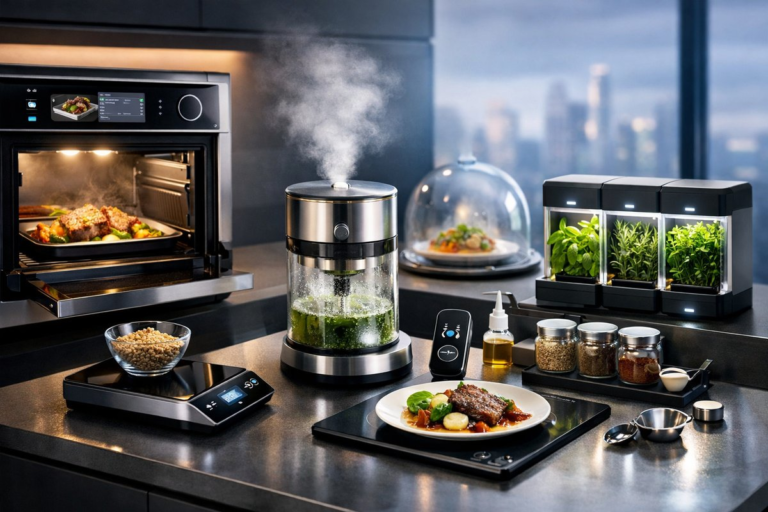
The next frontier isn’t in the supermarket aisle-it’s on the countertop. Compact hydroponic gardens, once a novelty, are now designed to integrate seamlessly into kitchen décor. Systems like AquaLeaf recirculate water and nutrients through plant roots using sensors that track moisture and light levels. A companion app suggests optimal planting schedules for basil, parsley, and microgreens. At a recent food-tech expo in Copenhagen, attendees sampled pesto made from microbasil grown in under two weeks, a pace that defies traditional soil-based timelines.
Nearly 40% of home-gardeners in a 2022 study said they would buy a smart garden if it meant harvesting fresher, pesticide-free herbs year-round. Architects and interior designers are taking note: sleek white cabinets now include hidden hydroponic trays, while integrated grow lights slide out like drawers. For those worried about water waste, the closed-loop reservoirs use less than a liter per week-roughly the same as a drip coffee maker.
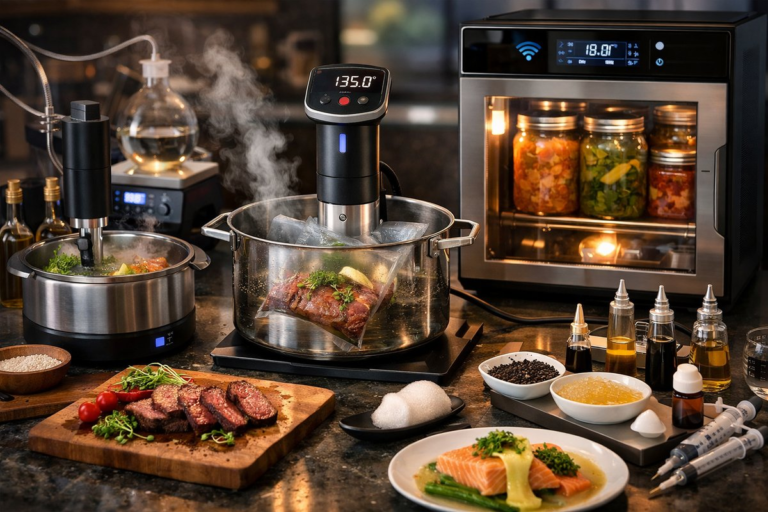
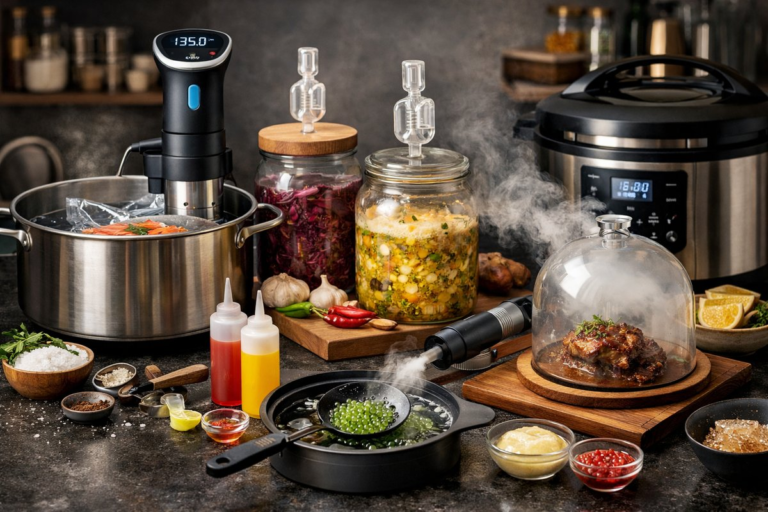
Fermentation, once confined to artisanal kitchens and side-hustle kombucha makers, has also gone high-tech. HomeFerma, a startup headquartered in Seoul, unveiled a countertop fermentation chamber that maintains precise temperature, humidity, and airflow. Built-in sensors monitor pH levels and lactic acid concentrations, sending real-time alerts to a phone when sauerkraut reaches its perfect tang or when kimchi needs the next stir. Users can choose from profiles based on regional styles-Spicy Gwangju-style kimchi or mellow Belgian sauerkraut-and adjust fermentation times with simple sliders.
“We wanted to take the guesswork out of transformative processes,” says the lead engineer at HomeFerma. “Fermentation is as much science as art, so our goal was to give home cooks lab-grade control without the lab.” Early adopters rave about the consistency of each batch, and several small bistros in Tokyo have snapped up the commercial version for pilot testing.
Tasting the Future
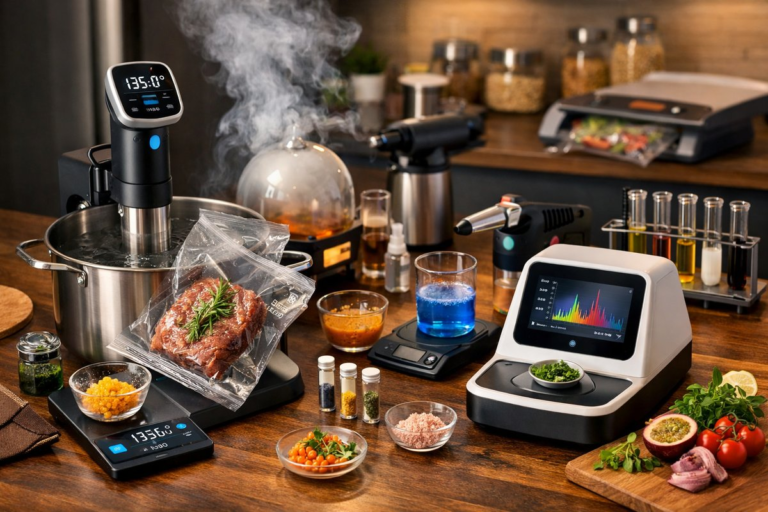
While growers and fermenters tackle ingredients, a growing set of tools helps cooks dial in flavor with lab precision. FlavoSync, a flavor-mapping sensor resembling a handheld spirometer, analyzes volatile compounds above a finished dish. Within seconds, it provides a breakdown of aromatic profiles-earthy esters in mushrooms, citrus aldehydes in peppers-and suggests tweaks such as a spritz of lemon or a dash of smoked salt. The data also feed taste-compatibility charts, matching dishes with beverages or side dishes that complement their chemical “fingerprints.”
In a pilot at a wine bar in Melbourne, sommeliers used FlavoSync to pair small-batch wines with chef-curated canapés. The results were surprising: a table of diners remarked on a pairing of tart goat cheese puffs and a crisp rosé that hadn’t been on the original menu but scored highest on aroma compatibility. The smart sensor doesn’t replace intuition-it augments it with hard data, helping cooks discover flavor relationships they might never have considered.
Behind every breakthrough lies data, and the modern kitchen is generating more than ever. RFID-tagged spice jars, digital pantry trackers, and smart scales feed detailed logs about ingredients, quantities, and expiration dates. A cloud-based analytics service can detect patterns-maybe you use cumin more often in winter, or you consistently underuse that bag of quinoa-and send gentle reminders or shopping lists. These passive insights nudge home cooks toward reducing waste and stocking only what they need.
A networked community is forming around these tools. On CookNode, an open-source platform, home chefs share fermentation profiles, flavor-map readings, and hydroponic growth charts. Users upload time-lapse videos of basil seedlings and compare notes on nutrient mixes. The real magic happens when data from hundreds of kitchens converge, revealing trends in taste and cultivation that no single cook could detect alone.
Privacy, Power, and the Path Ahead
All of this innovation comes with a caveat: data privacy. Kitchen data may seem innocuous, but logs of what you eat, how much you throw away, and when you dine can paint a detailed picture of lifestyle and health. Leading manufacturers now offer local-only data processing modes or end-to-end encryption to keep personal insights off company servers. It’s a reminder that every sensor has its dark side, and home cooks must weigh convenience against control.
Energy efficiency is another concern. From fermentation chambers to hydroponic lights, these gadgets draw power. Designers are responding with low-energy modes, solar-ready models, and energy-usage dashboards. In some pilot neighborhoods, homeowners who ran smart gardens and fermentation units reported only a marginal 5% increase in monthly energy use-less than the gain from a mid-sized refrigerator.
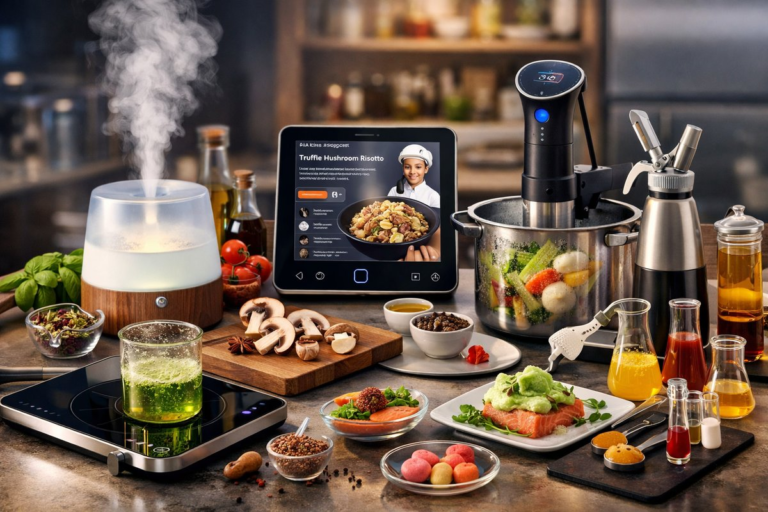
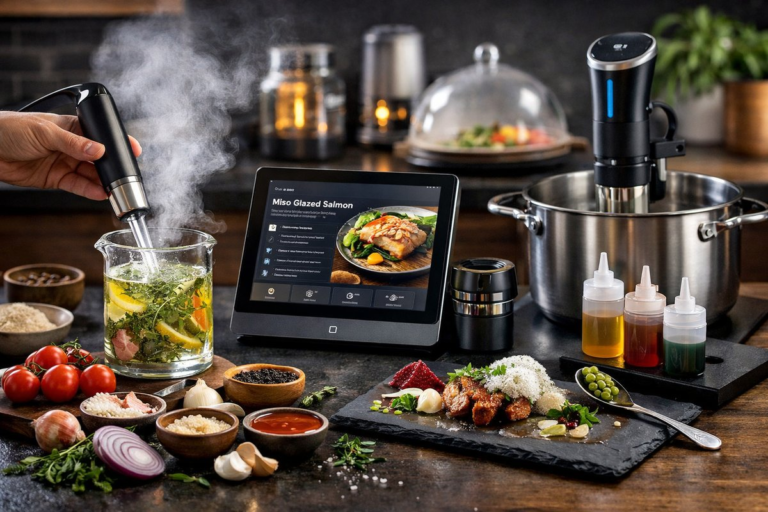
As these fragmented technologies begin to integrate, the kitchen of tomorrow promises to be a unified hub-one interface controlling nutrient flows, flavor analytics, AR guidance, and supply-chain transparency in concert. Imagine a touchscreen that shows your garden’s status, suggests tonight’s menu based on what’s freshest, and lets you lock in next-week ingredient deliveries from local farms. That vision isn’t far off.
Whether you’re a seasoned home cook or an aspiring gastronome, the surge of tools invites experimentation. These innovations aren’t about replacing the human touch-they’re about amplifying it. From digital seed to data-driven dish, the kitchen is morphing into a space where curiosity and sustainability meet precision and science. As sensors whir, lights pulse softly under plant leaves, and blockchain entries timestamp every harvest, the humble act of cooking transforms into an expedition-one where each meal becomes a story of technology, taste, and thoughtful design.
Feeding Your Curiosity
The kitchen of tomorrow is already taking shape on countertops, in cloud platforms, and behind every sensor-driven door. Embracing these technologies invites us to cook with deeper awareness-of origin, of flavor chemistry, and of our own habits. What began as recipes scrawled in notebooks now unfolds through real-time data streams, garden tunnels, and handheld analyzers. For the home cook, this isn’t science fiction; it’s the next evolution of gathering around the table-with a dash of curiosity and a pinch of tomorrow’s tech.