Location
Mount Vernon, WA 98274
Location
Mount Vernon, WA 98274


A new wave of consumer electronics is putting maintenance, customization, and longevity back in the hands of users. From snap-apart earbuds to upgradable power banks, modular design is reshaping how we buy, fix, and cherish our everyday devices.
Consumer electronics have long been a tale of convenience and obsolescence: sleek gadgets packed with the latest features, destined to become e-waste within a couple of years. Now, a growing community of designers, engineers, and everyday tinkerers is challenging that status quo with a powerful idea-modular repair. By creating components that snap, slide, or twist apart, these innovators are restoring agency to the owner and breathing new life into the devices we use every day.
The modular movement taps into both practicality and emotion. Instead of tossing a cracked headphone jack or a failing battery, you simply replace the damaged module-or better yet, upgrade it. This sense of ownership sparks curiosity, inviting us to learn what’s inside our gadgets and how they work. At the same time, it strikes a blow against mounting e-waste. According to recent figures from a global waste-monitoring organization, the world created more than 50 million metric tons of e-waste last year-enough to fill over 140 Boeing 747 airplanes. Modular design offers a clear path to trimming those numbers.
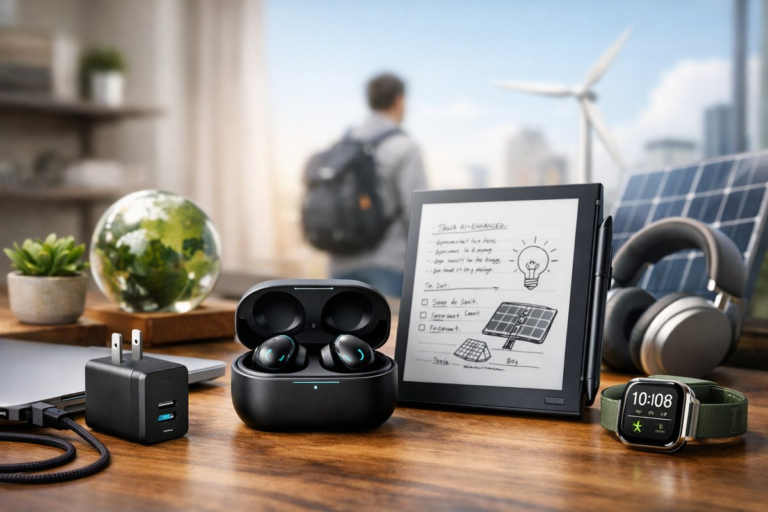
Take smart earbuds as an example. Traditional models are compact, but once a speaker driver or battery goes, the entire unit often ends up in a landfill. Modular earbuds, by contrast, break down into pods that house speakers, batteries, and controls. If you burn out one component, you buy just that piece. In many cases, third-party manufacturers step in to offer drop-in replacements, spawning mini-ecosystems of parts and upgrades. Users can experiment with higher-capacity battery pods for longer playtime or swap drivers tuned for richer bass or crisper highs.
This ethos extends beyond audio gear. Flashlights built around standardized circuit boards and LED modules invite upgrades to brighter or more efficient diode arrays. Portable battery packs now sport slide-in cells and charging circuits, allowing owners to swap in higher-capacity lithium packs or even choose cells made through greener manufacturing processes. Manufacturers are also releasing easy-to-follow tear-down guides, complete with spare part inventories and compatible third-party listings.
Perhaps the signature piece in this narrative is the modular smartphone. Though past attempts by major brands stumbled over technical and regulatory hurdles, grassroots projects and smaller companies have achieved workable designs. A typical modular phone includes a core logic board into which users slot memory, cameras, wireless transceivers, and charging ports. Want a better low-light camera? Unclip the existing module and pop in a new lens assembly. Cracked screen? Swap the entire front assembly in minutes without specialized tools.
Enthusiasts share their experiences on online forums and video channels, building a sense of community around repair and customization. New users are drawn in by tutorials showing how to replace a defective fingerprint sensor or upgrade from 4G to 5G connectivity. The dialog often extends to open-source hardware groups, where blueprints for aftermarket modules are freely exchanged. Smaller-scale 3D-printed cases, printed circuit boards, or snap-in button arrays further broaden the possibilities.
The shift toward modularity reshapes retail and after-sales services as well. Electronics rental platforms now offer module-by-module replacement subscriptions instead of full-device swaps. Repair cafes and maker spaces host regular “mod nights,” where novices and experts come together to fix, upgrade, and riff on new ideas. Even traditional retailers are exploring in-store kiosks stocked with common replacement modules, letting customers walk out with a fresh battery or camera lens in under ten minutes.
Critics point out that modular designs can carry trade-offs. Interchangeable units sometimes add bulk, making devices less pocketable. Module connectors can introduce additional points of failure. And designing a truly future-proof module ecosystem requires careful coordination between manufacturers and accessory makers. Yet, the overall momentum suggests these challenges can be overcome. Component makers are standardizing pin layouts and communication protocols. Designers are refining snap-together mechanics to be both sturdy and slim. And as consumer demand for sustainable tech grows, economies of scale will likely drive down costs.
The modular repair revolution also dovetails with other emerging trends. With the rise of decentralized edge computing, some modules now carry their own microprocessors for specialized tasks like voice processing or gesture recognition, offloading work from the main board. Others integrate energy-harvesting features-tiny solar cells or motion-powered generators-to keep low-power sensors alive indefinitely. In industrial IoT, easily replaceable sensor modules cut downtime in factories, illustrating how user-centric design can scale from home to enterprise.
Above all, modular repair rekindles our emotional connection to the objects around us. We become caretakers rather than mere consumers. A phone that has seen years of service and a half-dozen upgrades carries stories-of road trips, daily commutes, and late-night playlists-that you simply wouldn’t get from a brand-new, sealed unit. It feels more personal, more sustainable, and ultimately more human.
For those looking to join the movement, the first step is choosing gadgets built for take-apart simplicity. Seek out electronics with visible screws, standardized ports, or advertised upgrade paths. Familiarize yourself with basic tools: a precision screwdriver set, a plastic spudger, and an anti-static strap go a long way. Online communities offer step-by-step guides to disassembly and reassembly, complete with part numbers and supplier recommendations.
Looking ahead, expect to see even more seamless integration between modular hardware and open-source software. Imagine buying a base camera module and then downloading firmware tweaks to add night-vision capabilities or color filters. Or ordering a module with a blank logic board you program yourself for niche applications. As augmented reality glasses and wearable health monitors become mainstream, modularity could ensure these devices evolve alongside our changing needs and expectations.
The promise of indefinite longevity, paired with reduced e-waste and deeper user engagement, makes modular repair one of the most compelling stories in consumer tech. It represents a departure from the endless cycle of replacement and disposal, offering instead a path where our cherished gadgets grow with us, piece by piece.
What component will you replace first? Whether it’s a fading battery, a malfunctioning sensor, or an outdated camera, modular design hands the tools-and the empowerment-to you. The era of disposable electronics is giving way to a future of lasting connections, both digital and emotional.