Location
Mount Vernon, WA 98274
Location
Mount Vernon, WA 98274


A surge in ultra-sensitive space-time probes and high-resolution imaging satellites is reshaping our understanding of the universe-and stirring unexpected privacy concerns on Earth. As detectors chase gravitational waves and constellations of cameras circle overhead, scientists and policymakers are grappling with how to protect individuals below these cosmic sentinels. The outcome will set new standards for ethical technology and digital rights in an era of unprecedented surveillance capabilities.
In recent months, a global array of gravitational-wave observatories captured ripples from colliding neutron stars with ever-greater precision. At the same time, private and public satellites are beaming back ground-level images of Earth in unprecedented detail-spotting cars in parking lots, gatherings at public squares, and even the shape of individual rooftop solar panels. What began as a pure effort to explore space-time is starting to bleed into the realm of everyday life. Advanced detectors designed to measure the expansion of the universe and the whisper of black hole mergers now share technological lifeblood with Earth observation systems that can track patterns of human behavior in real time.
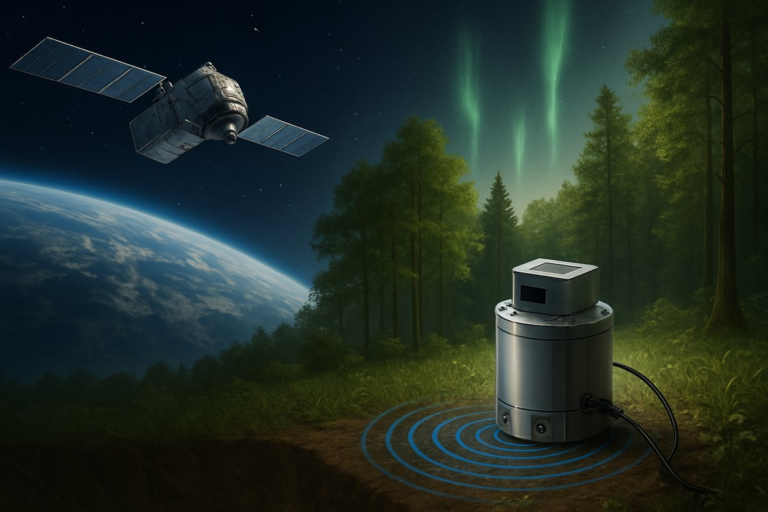
Commercial satellite constellations, launched by companies offering daily Earth imagery, have grown from a handful of craft to dozens of miniaturized satellites in low-Earth orbit. Each carries high-resolution optical cameras, synthetic-aperture radar or multispectral sensors. With revisit times measured in hours, these constellations can assemble almost continuous time-lapse videos of farm fields, construction sites and coastal erosion. In parallel, academic scientists are pushing the limits of space-time probes-interferometers that detect the faint stretching of space itself when massive objects accelerate. The same signal-processing algorithms used by astrophysicists to filter out cosmic noise also power image recognition engines that identify buildings, roadways and even individuals on the ground.
This technological overlap has triggered fresh debates about where scientific curiosity ends and mass surveillance begins. On one hand, the ability to monitor climate change, deforestation and natural disasters from orbit accelerates humanitarian relief and environmental research. On the other, mounting evidence shows that overly granular satellite data can be exploited to track political gatherings, inspect private property and reveal commercially sensitive information. Civil liberties advocates warn that without clear limitations, these orbiting sensors could become tools of unregulated surveillance, eclipsing the safeguards that exist in cyberspace or in the physical world.
Drawing parallels with spyware detection on personal devices reveals instructive lessons. Cybersecurity experts deploy anomaly-detection systems to flag unusual data flows, signature-based scanners to identify known threats, and sandboxing environments to isolate suspicious activity. Similar approaches are emerging for spaceborne data streams: independent auditors can examine access logs for unauthorized queries, while AI-driven filters can automatically redact images when they zoom in on designated private zones. Some research groups are even developing ‘digital do-not-track’ beacons that homeowners could broadcast to signal satellites to blur or omit their rooftop imagery.
At the policy level, a growing coalition of space agencies and privacy groups has begun drafting guidelines for “satellite data stewardship.” The proposals call for transparency in data-collection practices, impact assessments before system launches, and mechanisms to report potential privacy infringements. They recommend that raw data used for purely scientific missions-like mapping cosmic microwave background radiation-be segregated from Earth-imaging payloads, to prevent accidental cross-contamination. By mirroring best practices in spyware detection-data minimization, encryption at rest and in transit, and routine security audits-this framework aims to protect personal privacy without stifling scientific advancement.
Current international treaties governing outer space, such as the Outer Space Treaty of 1967, emphasize freedom of exploration and prohibit claims of sovereignty over celestial bodies. However, they say little about privacy when it comes to remote sensing of Earth. National regulations vary widely: some countries require licenses for high-resolution satellite imagery; others impose no restrictions. In the European Union, the General Data Protection Regulation (GDPR) applies to personal data regardless of source, but enforcement against imagery collected from space remains untested. As a result, data brokers and analysis platforms operate in a murky zone, interpreting local laws to suit their business models.
Digital rights advocates argue that individuals should have a say in how orbital sensors capture and share data that pertains to their lives. A proposed “Right to Orbital Privacy” would grant property owners or national communities the ability to approve or veto high-fidelity imaging over specific zones. Implementing such a right raises technical challenges: satellites move at thousands of kilometers per hour, and coordinating real-time consent signals would require new onboard computing and communications protocols. But early-stage prototypes, blending small edge-computers and standardized permission beacons, are already under development by research labs seeking to embed privacy protections into the platform architecture.
Underpinning these efforts is a broader conversation about ethical technology in the age of ubiquitous sensing. Responsible AI frameworks demand that developers consider unintended consequences-like revealing sensitive financial transactions by tracking vehicle movements to private clinics or churches. Ethics committees at several space science consortia now include legal scholars, human rights experts and community representatives alongside physicists and engineers. Their mandate is to balance the allure of cosmic discovery with the moral duty to safeguard individual freedoms. They examine case studies, simulate edge cases where data might be misused, and establish red lines beyond which certain types of ground observation are prohibited.
Practical solutions are emerging in both hardware and software. Privacy-preserving satellites use on-board AI to perform image processing in orbit, transmitting only aggregated or anonymized results. Data encryption modules lock down beam links, requiring multi-party authentication before sensitive imagery is released. On the ground, advanced spyware-detection platforms monitor satellite downlinks for signs of anomalous usage patterns, akin to how endpoint security software alerts IT teams to unauthorized data exfiltration. Together, these tools form a layered defense-much as cybersecurity layers protect personal computers from intrusion and data theft.
Meanwhile, advocates for open science underscore the immense public good that comes from accessible satellite data. Environmental researchers track glacier melt and wildfire spread; urban planners model traffic flows and energy usage; epidemiologists correlate night-time light patterns with disease outbreaks. In many of these cases, the benefits to society outweigh the privacy risks-provided adequate safeguards are in place. Data trusts-neutral third-party stewards-are gaining traction as a governance model. They manage the flow of satellite-derived information, vetting data requests to ensure alignment with ethical standards and returning insights to communities in need.
Looking ahead, the next frontier lies in crafting international norms that transcend national borders and commercial interests. A coalition of spacefaring nations is exploring an “International Declaration on Surveillance-Free Zones,” akin to demilitarized space above the poles, where ground-level observations would be strictly limited. Negotiators are discussing thresholds for spatial resolution, temporal revisit rates and permissible data uses. If adopted, such a declaration could reshape the relationship between cosmic exploration and individual privacy, setting a blueprint for responsible sensor development in other domains-from oceanic drones to airborne monitoring.
The fusion of space-time science and Earth observation stands as one of the most exciting intersections of our era. As gravitational wave detectors continue to unveil secrets of black holes and neutron stars, and as satellite fleets deliver real-time insights into our planet’s health, society must reconcile its thirst for knowledge with respect for personal autonomy. By importing best practices from spyware detection, embedding privacy by design in platforms, and establishing robust digital rights frameworks, we can ensure that the tools we loft into orbit remain instruments of wonder-not surveillance felons. The choices made now will echo across decades, defining how humanity explores both the heavens and the hidden corners of daily life.