Location
Mount Vernon, WA 98274

Location
Mount Vernon, WA 98274
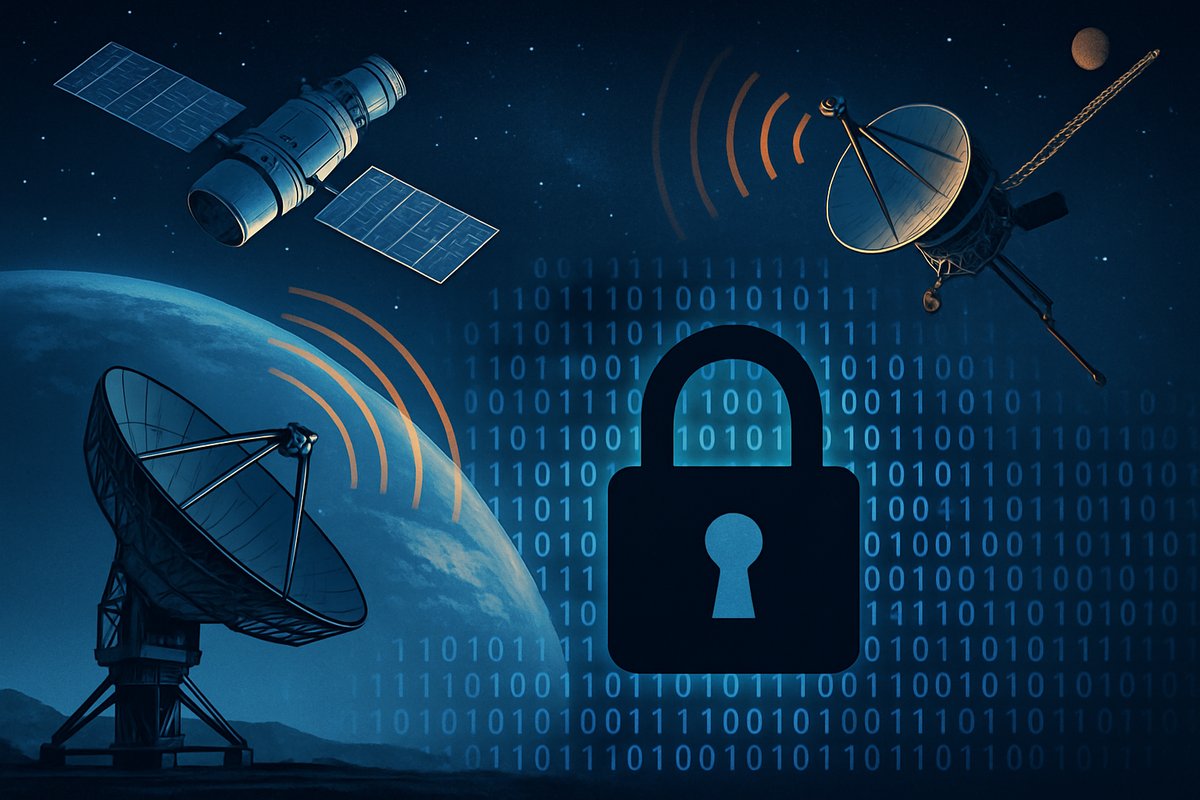
As radio telescopes, Earth observation satellites, and interplanetary probes capture unprecedented streams of data, a new battleground has emerged between cosmic science and individual privacy. From low-frequency interference in radio astronomy to proposals for in-orbit signal filters, policymakers and technologists are scrambling to protect digital rights and detect potential spyware hiding in space-derived datasets.
In a meeting convened under the International Telecommunication Union’s Radiocommunication Sector last quarter, member states debated nonbinding guidelines to govern how “space-borne sensors” handle signals that may include private or commercial communications. Delegates from regions with emerging satellite networks warned that unregulated spectrum use could inadvertently scoop up terrestrial data, while radio-astronomy advocates argued for an expanded “quiet-zone” concept in orbit. The result is an evolving patchwork of proposals that sits at the crossroads of cosmos exploration and digital-rights protection.
Radio telescopes operating at centimeter and decimeter wavelengths have long contended with terrestrial radio-frequency interference (RFI). In 2020, the U.S. Federal Communications Commission auctioned C-band spectrum to telecom operators, triggering protests from astronomers who feared signal spillover into protected bands. Even today, the Square Kilometre Array (SKA) project in Australia and South Africa enforces strict radio-quiet buffer zones on the ground; regulators are now examining whether similar constraints should apply to adjacent orbital lanes.
Meanwhile, researchers from the University of Cambridge published a study earlier this year in Nature Astronomy showing that a constellation of small satellites equipped with low-power radio receivers could, in principle, detect city-scale communications from hundreds of kilometers away. Although the sensitivity required lies beyond current commercial deployments, the work sounded an alarm: future probes might be dual-use devices capable of legitimate scientific measurements and covert eavesdropping.
That dual-use risk has caught the eye of spyware-detection experts. Open-source developers in the cybersecurity community have begun adapting terrestrial tools-such as spectral analysis frameworks and anomaly-detection algorithms-to scan space-derived data archives for code signatures or patterns consistent with malicious payloads. One prototype tool, built on a software-defined radio (SDR) platform, sifts through archived radio-astronomy recordings to flag abrupt spectral spikes that could betray hidden communication channels.
The stakes extend beyond technical filtering. Legal scholars point out that existing digital-rights frameworks like the European Union’s General Data Protection Regulation (GDPR) were never written with in-orbit operations in mind. If a satellite inadvertently captures a private conversation, does that fall under “personal data” as defined by GDPR? Or is it exempt as part of a licensed radio-astronomy activity? Similar questions hover around the U.S. Satellite Communications Act. Without clear definitions, companies and research institutions risk running afoul of privacy laws when they share or monetize space-derived datasets.
Policymakers have begun exploring solutions. Earlier this year, the European Commission’s proposed Data Act included language urging member states to consider “extraterrestrial data hygiene” measures. Though the Act focuses primarily on IoT devices, advocates successfully inserted a clause encouraging research into automated scrubbing of personally identifiable information from any dataset, regardless of origin.
Across the Atlantic, the Artemis Accords-an international agreement for lunar exploration-now feature a nonbinding annex on data stewardship. Signatories pledge to coordinate communication frequencies and share best practices for filtering sensitive signals collected near Earth or on the Moon. While the annex lacks enforcement power, it marks the first time a space-exploration treaty has explicitly referred to privacy and digital-rights concerns.
In academia, an interdisciplinary group at the Massachusetts Institute of Technology’s Ethics Initiative has launched the COSMIC DATA Project, publishing a white paper titled “Data Sovereignty in Space-Time Landscapes.” Drawing on interviews with astronomers, satellite engineers, ethicists, and data-protection officers, the paper calls for an Outer Space Data Convention. Among its recommendations:
• Mandatory metadata tagging for any dataset derived from active or passive space sensors, indicating potential privacy or commercial sensitivity.
• In-orbit execution of signal-masking algorithms before downlink, using edge-computing hardware hardened against tampering.
• An international registry of payloads with radio-frequency emission or reception capabilities, to foster transparency and accountability.
At the technical front, engineers are experimenting with on-board artificial-intelligence modules that can classify incoming signals in real time. One prototype uses machine-learning models to distinguish between astrophysical phenomena-like pulsar emissions-and structured modulated signals typical of digital communications. If the system flags potential private data, it either encrypts the downlink segment or deletes it entirely before transmission to ground stations.
Critics caution against overreliance on automated filtering. Misclassification risks discarding valuable scientific data, and adversaries could train custom signal types that evade detection models. They argue that cybersecurity measures used on Earth-such as intrusion-detection systems and endpoint-security suites-should run in parallel with in-orbit filters, enabling ground teams to audit raw data if necessary.
These debates intersect with broader questions of digital justice. Civil-society groups fear that without robust safeguards, space-derived data could become another resource exploited by governments or corporations for surveillance. Picture marketing firms slicing satellite imagery of urban neighborhoods to infer demographic trends or law-enforcement agencies mining radio-frequency side-channels for illicit activity. The potential for privacy invasion extends beyond visible-light imagery to the radio, infrared, and LIDAR bands now accessible from orbit.
Industry is taking note. A consortium of small-satellite operators recently formed the Space Data Ethics Alliance, committing to voluntary audits of ground-station processing pipelines and offering end-users the option to apply privacy preferences to raw sensor streams. Although the Alliance has no legal clout, its members hope that market pressure from privacy-minded clients-ranging from insurance firms to environmental NGOs-will drive wider adoption of ethical-tech practices.
Government agencies are also moving toward clearer rules. The U.S. National Space Council convened a workshop on data governance in early spring, exploring how existing export controls apply to advanced signal-processing hardware. The Department of Commerce is reviewing whether to treat certain in-orbit encryption modules as dual-use items requiring additional licensing.
Ultimately, the collision of cosmic discovery and digital-rights protection calls for a layered approach. Technical safeguards such as in-orbit filters and anomaly detectors must coexist with legal frameworks that define data ownership, consent, and accountability. Ethical-tech guidelines-drafted in collaboration with civil society, industry, and academia-can provide normative guardrails even before treaties and laws catch up.
As humanity pushes further into space-from lunar gateways to Mars missions and deep-space telescopes probing the fabric of space-time-our understanding of privacy must expand accordingly. The night sky may belong to all of us, but the data it yields increasingly brushes against the intimate contours of daily life. Navigating this frontier will require new partnerships among astronomers, policymakers, cybersecurity experts, and human-rights advocates. Only by weaving privacy-preserving technologies into the very design of cosmic sensors can we ensure that the age-old quest to chart the heavens does not come at the expense of individual freedoms on Earth.
In the months ahead, expect more working groups, white papers, and pilot projects to emerge-each grappling with the practical and moral implications of cosmic data collection. The clock is ticking: as launch schedules accelerate and mega-constellations proliferate, every new satellite could be both a beacon for scientific discovery and a potential vector for privacy intrusion. The question now is whether our global community can chart a course that safeguards digital rights while unlocking the mysteries of space and time.