Location
Mount Vernon, WA 98274
Location
Mount Vernon, WA 98274

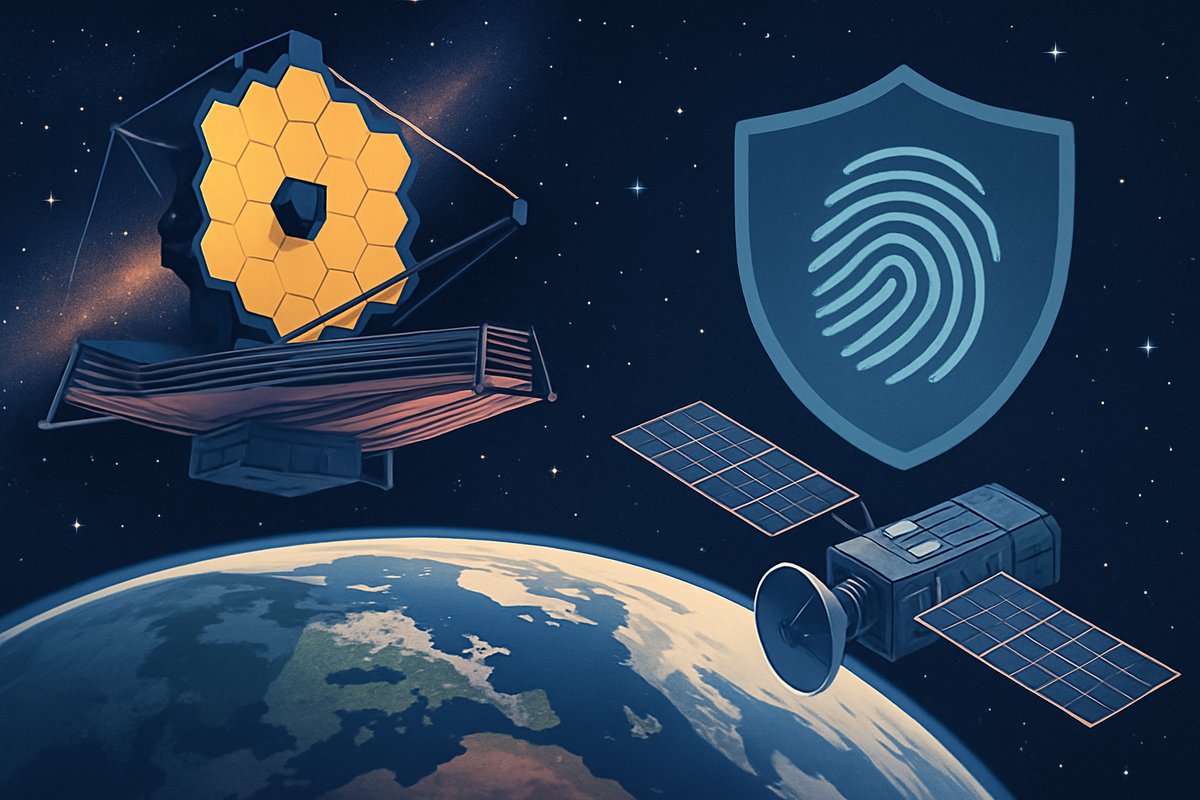
Advanced space telescopes and Earth-observing satellites are opening new frontiers in astrophysics and climate science, but they also collect immense volumes of terrestrial data. Balancing the promise of cosmic discovery with robust privacy protections requires a fresh ethical toolkit, transparent governance models, and next-level spyware detection in both orbit and on the ground.
The latest generation of spaceborne observatories was celebrated for its ability to peer back to the origins of the universe. Yet alongside the search for distant galaxies, these instruments also capture subtle signals from our own planet-infrared emissions from power plants, radio chatter from remote communities, and glimpses of clandestine installations. As astronomy, Earth science, and defense intersect in low Earth orbit, the boundary between space exploration and surveillance grows ever thinner.
Behind the scenes, national space agencies and private operators deploy constellations of microsatellites to map atmospheric composition, track shipping lanes, and monitor natural disasters. These networks rely on hyperspectral imagers, synthetic aperture radars, and radio-frequency receivers to collect multi-modal data streams. While invaluable for climate modeling and disaster response, the same datasets can reveal individuals’ daily routines, expose sensitive industrial sites, or uncover patterns of civilian movement-raising pressing questions about consent, oversight, and accountability.
For decades, privacy law has focused on terrestrial surveillance: CCTV cameras, cellular towers, and online tracking. But as sensor payloads drift beyond the horizon, existing frameworks struggle to keep pace. Regulations designed for ground-based actors seldom account for orbital assets that operate under complex international treaties and private-public partnerships. Should an astrophysics lab be held to the same data-protection standards as a social media company? What rights do citizens have to opt out when the instrument recording their image is hurtling 500 kilometers overhead?
Detecting unauthorized or malicious interventions in space systems is equally critical. Spyware-detection techniques developed for smartphones and corporate networks are now being adapted to monitor firmware integrity on satellites and ground stations. Cybersecurity researchers analyze telemetry logs to spot anomalous command sequences that could signal a hijacked link, while machine-learning algorithms flag suspicious data exfiltration patterns in downlinked payload files. These methods form the digital immune system that guards the sensors we rely on for both cosmic insight and environmental stewardship.
But defending space infrastructure demands more than just technical countermeasures. It calls for an ethical-tech mindset that embeds privacy, transparency, and fairness into every stage of design and operation. Open-data initiatives can help: by publishing metadata about imaging schedules, sensor resolutions, and data-sharing agreements, agencies invite public scrutiny and foster trust. At the same time, encryption protocols ensure that only authorized researchers can access sensitive portions of raw datasets-shielding personal and proprietary information from unintended exposure.
Digital-rights advocates argue that citizens should have a say in how space-derived data is collected, processed, and distributed. They propose consent frameworks akin to those used in health and genomics research, where participants agree to defined uses of their biometric information. Could a similar model apply to satellite imagery capturing a town square or a border checkpoint? Granting individuals or communities the right to limit certain types of analysis-in exchange for sanitized or aggregated results-might strike a balance between scientific value and personal dignity.
International collaboration introduces yet another layer of complexity. Space treaties guarantee that outer space belongs to all humankind, but they say little about terrestrial privacy. A satellite operated by one nation may overfly another without explicit consent, so long as it adheres to non-interference principles. To address this gap, a coalition of research institutions has proposed a voluntary privacy pledge: all signatories agree to adhere to shared guidelines on acquisition transparency, data minimization, and user grievance mechanisms. While not legally binding, the pledge creates a normative standard that can drive procurement requirements and public expectations.
At the hardware level, engineers are exploring privacy-preserving sensors that blur or redact sensitive features before data leaves the instrument. Techniques borrowed from computer vision-face-anonymization filters, vehicle-license-plate masking, and scene abstraction-can be implemented on-board to strip personally identifiable traces. Such “smart sensors” reduce the risk of misuse downstream, but they require rigorous testing to ensure they don’t compromise scientific objectives, like measuring thermal hotspots or detecting subtle environmental changes.
Meanwhile, software layers employ zero-trust architectures that isolate data processing pipelines. Each module, whether it performs noise reduction, image stitching, or spectral analysis, must authenticate its inputs and outputs, and its code must be auditable by third parties. By treating every component as a potential threat surface, system architects shrink the exploitable footprint that spyware authors might leverage to siphon off high-value information.
Public engagement is essential to forging lasting trust. Planetary scientists and privacy scholars are teaming up to host citizen forums, online workshops, and interactive dashboards that illustrate how space technologies intersect with everyday life. These platforms allow participants to visualize trade-offs: for instance, higher-resolution imagery can aid farmers in precision agriculture but also create more detailed personal data profiles. Armed with this insight, communities can lobby for policy safeguards that align with their values.
The stakes extend beyond privacy alone. Ethical-tech frameworks insist on environmental and social impact assessments for satellite launches, addressing concerns about orbital debris, atmospheric pollution, and resource equity. A comprehensive governance model weaves together digital rights, data ethics, and space sustainability so that the long-term health of both our planet and its cosmic neighborhood is protected.
As deep-space missions venture further, the lessons learned from Earth-observation surveillance will inform the design of autonomous probes and telescopes. Future spacecraft equipped with on-board data triage may filter or encrypt sensitive signals before relaying them back to mission control. Robotics teams working on lunar or Martian surfaces might apply privacy-by-design principles to prevent unintended capture of human subjects during crewed missions.
The convergence of cosmos exploration and privacy surveillance is not a dystopian twist but a reflection of our interconnected reality. Satellites do not exist solely for astrophysics or military reconnaissance; they serve a multitude of civic functions, from disaster relief to climate monitoring. As we push the boundaries of space-time research, we must also expand the boundaries of accountability and respect for individual freedoms.
Crafting a robust ethical framework requires sustained dialogue between scientists, technologists, policymakers, and civil society. It demands proactive investments in spyware detection for space systems, novel hardware that prioritizes privacy at the sensor level, and legal instruments that extend digital rights beyond terrestrial borders. Only by weaving these elements together can we ensure that the next chapter of cosmic discovery uplifts human dignity rather than undermining it.
In the end, the telemetry beams racing down from orbit carry more than raw data; they carry our collective trust. Protecting that trust is as critical as calibrating a telescope’s mirror or decoding a cosmic signal. By embracing ethical-tech principles today, we can open the door to tomorrow’s breakthroughs-secure, inclusive, and respectful of privacy both on Earth and among the stars.