Location
Mount Vernon, WA 98274
Location
Mount Vernon, WA 98274


A wave of ultra-compact gadgets is reshaping daily routines, from on-the-fly language translation to portable projectors that turn any surface into a meeting room. These tools marry convenience with thoughtful design, unlocking new ways to connect, create, and stay informed wherever life takes you.
In a world where flexibility has become the new standard, the latest generation of pocket-sized gadgets is answering the call for on-demand connectivity, productivity, and wellness. No longer relegated to bulky laptops or static desktop setups, today’s personal tech tools slip easily into a bag or even a pocket, empowering travelers, remote workers, and adventurers alike.
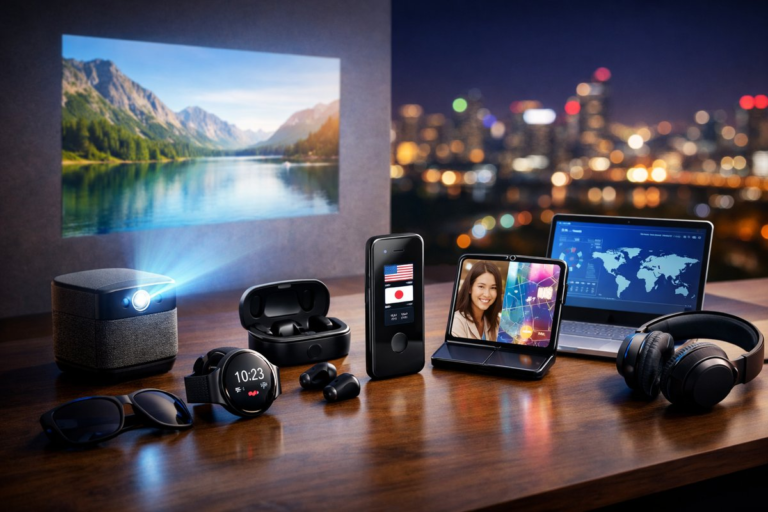
At the heart of this revolution is a push toward seamless communication across borders and languages. Real-time translation earbuds now pack advanced speech recognition and machine-learning models into earbud housings barely larger than a coin. They capture spoken words in one tongue, process them locally to preserve privacy, and deliver an almost instantaneous translation directly into the listener’s ear. Whether navigating foreign marketplaces, collaborating with international colleagues, or sharing stories at a family gathering overseas, these devices dissolve language barriers without a tether.
Similarly, the rise of ultra-compact projectors has transformed any wall, desk, or tent flap into an impromptu display. These palm-sized projectors use laser-phosphor or DLP technology to render crisp images even in brightly lit environments. Some models integrate speakers and support plug-and-play connections to phones or USB sticks. Travelers can host movie nights under a starry sky; business professionals can sketch diagrams on a rented conference-room wall; educators can bring interactive lectures to remote classrooms. By combining lightweight construction with energy-efficient light sources, these projectors epitomize the blend of convenience and performance.
Tech that caters to remote productivity has also gone miniature. Foldable Bluetooth keyboards paired with compact trackpads allow users to assemble a full workstation on a café tabletop. Some kits even include detachable stands that prop up tablets or phones at ergonomic angles. The result is a setup that rivals a traditional laptop for typing comfort, freed from the constraints of power cords and heavy cases. With customizable key mappings and support for multiple device profiles, these keyboards adapt to a shifting array of tasks-from drafting emails to coding scripts-without skipping a beat.
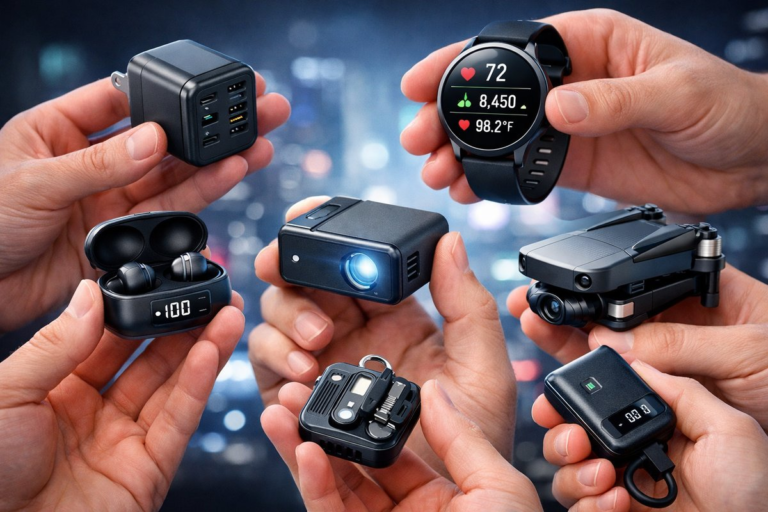
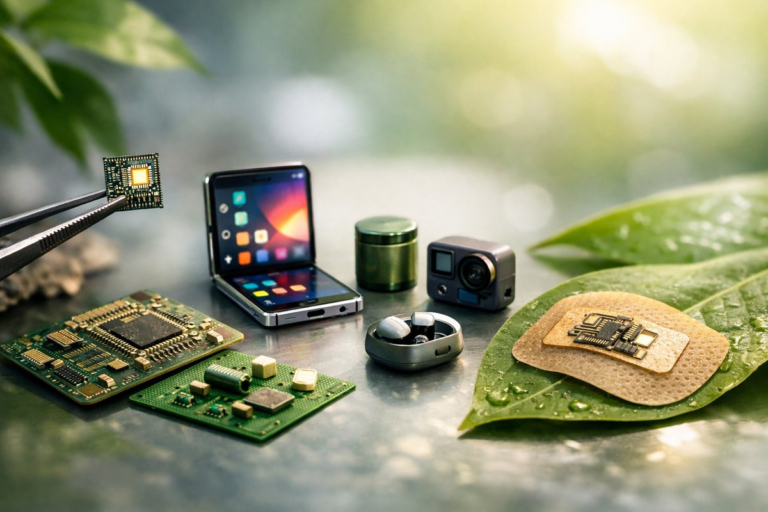
Health-focused gadgets have followed suit, leveraging microelectronics and low-power wireless protocols to monitor vital signals on the go. Tiny electrocardiogram patches, wearable rings that track heart-rate variability, and clip-on pulse oximeters can all feed data to a smartphone app. By offering insights into stress levels, sleep patterns, and blood oxygenation, these tools help users make informed lifestyle adjustments in real time. Crucially, recent models emphasize secure data encryption and local storage options, putting users in control of their personal health information.
Environmental awareness is another area where compact sensors have made a splash. Handheld air quality monitors measure particulate matter, volatile organic compounds (VOCs), and humidity, alerting users to hidden hazards at home or in the office. Pocket-size UV meters gauge sun exposure, helping outdoor enthusiasts and gardeners safeguard skin health. Some multi-sensor units even include built-in geotagging, allowing people to crowdsource pollution maps or track seasonal allergens in their community.
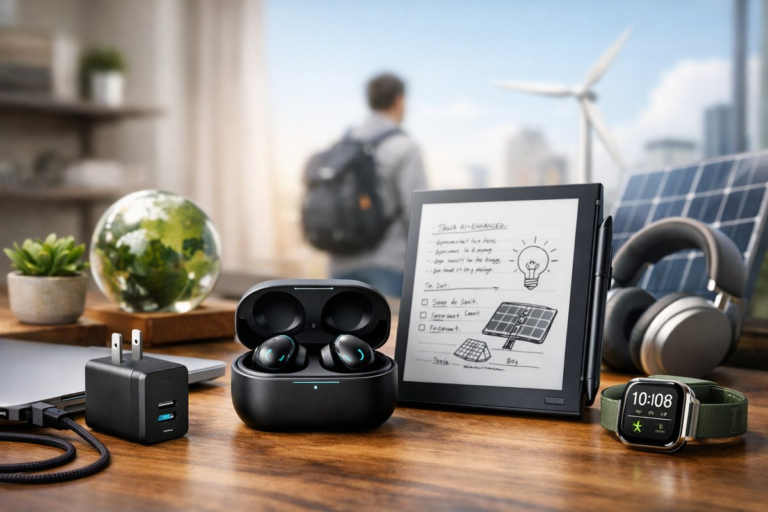
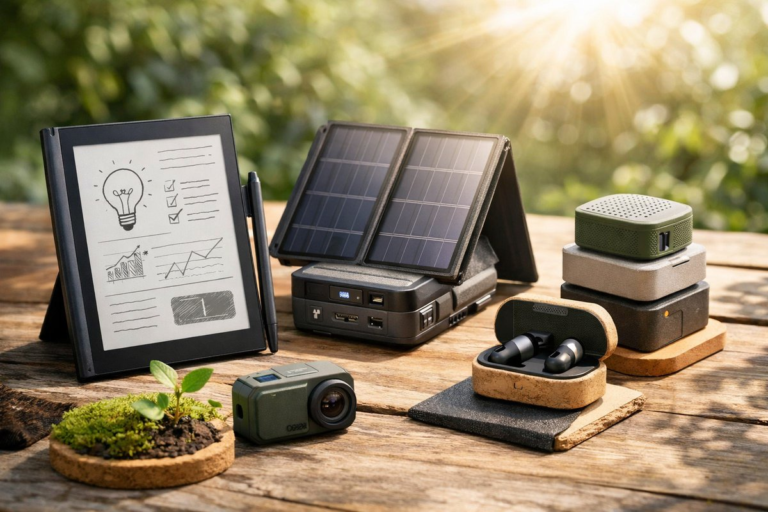
All these gadgets rely on portable power solutions that refuse to weigh you down. Slim solar battery packs with fold-out panels can recharge phones and wearables under direct sunlight. Wireless charging pads slim enough to slip into a notebook pocket deliver cable-free juice drops between meetings. Battery packs incorporating both USB-C Power Delivery and wireless output modes ensure compatibility with an ever-evolving roster of devices. By integrating durable materials and reversible cables, manufacturers are minimizing e-waste and simplifying long-term ownership.
Sustainability has become a guiding principle for many of these designers. Some pocket tech brands prioritize easily replaceable components, accessible repair guides, and recycled housing materials. Others commit to carbon-neutral shipping for accessories and maintain trade-in programs that refurbish old units. The result is a market where conscious consumers can choose products aligned with environmental values, without sacrificing feature sets or performance.
As these tools proliferate, concerns about data security and privacy grow louder. Leading models in this space have begun to ship with on-device AI processors that handle voice commands, translation tasks, and sensor fusion without routing sensitive data to remote servers. Offline speech engines and encrypted local storage reduce exposure to potential breaches. Meanwhile, modular firmware updates address vulnerabilities and tailor functionality to user preferences, ensuring that personal tech remains both powerful and private.
Interoperability is another key trend. Many of today’s pocket gadgets leverage open standards such as Bluetooth Low Energy (BLE) and Matter, making it easier to weave them into existing smart-home ecosystems or cloud-based workflows. A portable door-lock keypad can join a home automation hub; a handheld environmental sensor can feed data into a personal health dashboard; a mini projectors can cast streaming content from cloud-based media libraries. By leaning on universal protocols, these devices sidestep vendor lock-in and foster a more fluid, user-centric experience.
Emotional intelligence and accessibility are also rising to the forefront. Voice assistants embedded in tiny hubs or wearable formats assist users with reminders, language learning, or mood tracking, all while adapting responses based on tone and context. Haptic feedback and speech-to-text options broaden usability for people with hearing or vision challenges. The emphasis on inclusive design means that pocket tech isn’t just about novelty-it’s about enabling independence and well-being for a diverse range of users.
Looking ahead, the next wave of pocket innovations promises even more modularity and personalization. Imagine swappable sensor modules that clip onto a base device-adding new environmental probes, biometric readers, or storage options in minutes. Or customizable skins and LED indicators that allow gadgets to express user identity and mood. As 3D-printing services mature, indie developers could even fabricate bespoke accessories to extend the life and functionality of existing tools.
The era of truly pocket-sized pioneers is here. From language translators in your ear to solar-powered power banks in your backpack, these gadgets offer a glimpse into a future where technology seamlessly fades into the background of daily life. By choosing tools that align with privacy, sustainability, and emotional well-being, users can harness the full potential of innovation without compromise. Whether you’re a digital nomad, a health-minded commuter, or simply someone who craves more flexibility, the right pocket tech can transform how you interact with the world-no matter where that world may be.