Location
Mount Vernon, WA 98274
Location
Mount Vernon, WA 98274


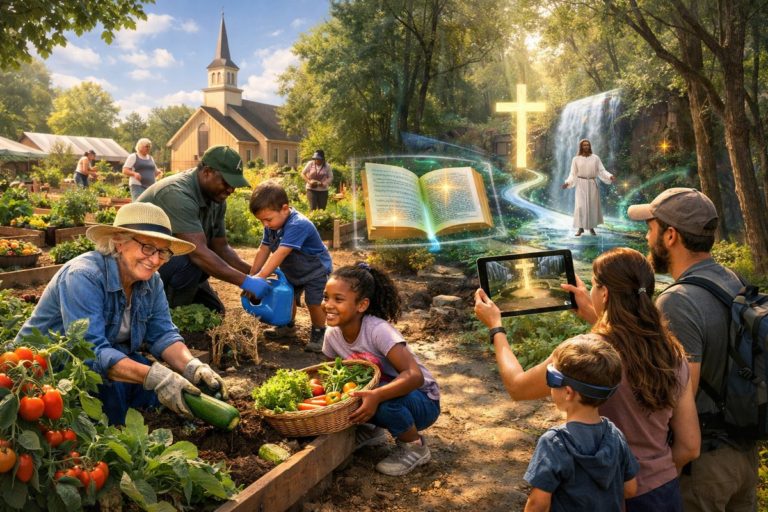
Across cities and towns, faith communities are transforming vacant lots into vibrant gardens where worship meets environmental stewardship. These "living prayer spaces" combine scripture, seasonal planting, and hands-on care for creation, inviting both longtime members and curious neighbors into a joint act of faith and renewal.
In a once-forgotten urban block, rows of raised beds now flourish with basil, tomatoes, and wildflowers, each bordered by a small plaque bearing a scriptural passage. What began as a modest dream at St. Paul’s Parish in a Midwestern city has grown into a model for congregations nationwide: community gardens designed as immersive prayer spaces.
The initiative has its roots in a challenge issued two years ago by the church council: find an innovative way to engage both members and local residents, deepen spiritual practice, and care for creation. A vacant lot next door, long slated for development, offered the perfect canvas. Parishioners, local gardeners, and nearby renters volunteered their weekends to clear debris, build raised beds, and install benches carved from reclaimed timber.
Today, the Garden of Grace hosts weekly “Prayer & Planting” gatherings. At dawn, a small group circles a patch of mint, reading aloud verses from Psalm 104 as dew still glistens on leaves. In the afternoon, families with young children trace the days of creation by tending one bed for each day, connecting Genesis 1 with hands-on stewardship.
A recent survey by a leading faith research group found that 45 percent of young adults say they want their congregations to take direct action on environmental issues. That growing interest has driven a network of churches, mosques, synagogues, and interfaith centers to consider green ministry as a vital component of spiritual formation.
Behind the worshipful rhythm lies careful planning. Each garden is laid out with intentional scripture stations: lavender by a sign quoting Matthew 6:28 on God’s care for the lilies, a row of sunflowers beneath a placard reflecting Romans 8:19 on creation’s longing. At key points, benches form circle shapes for small-group prayer and scripture study, emphasizing communal reflection.
Pastor Rachel Nguyen, who oversees the Garden of Grace project, explains that the goal isn’t simply to grow vegetables but to cultivate awareness of God’s presence in the natural world. “When we plant, weed, and harvest together, we discover spiritual truths in soil and seed,” she says. “It reminds us that faith isn’t just words-it’s rooted in daily, tangible practice.”
Volunteers attest to that shift. John, a retiree who joined last year, says tending pepper plants helped him overcome anxiety: “I’d never gardened before. As I learned to nurture each seedling, I felt my own hope growing. The garden became a sanctuary when I wasn’t sure where to turn.” Several participants report that the simple act of kneeling to weed or watering early in the morning has become a form of prayer, a rhythm that grounds their days.
The movement isn’t confined to one denomination. In a coastal town on the West Coast, a Lutheran congregation partnered with an environmental nonprofit to plant native species in an adjacent park, citing the biblical mandate to care for creation. In the Northeast, an Episcopal parish opened seasonal beehives to teach both young and old about pollinators, adding a honey harvest celebration to its fall schedule of services.
This emerging genre of “eco-liturgical” practice draws inspiration from wider currents in global Christianity. Programs like the EcoChurch initiative encourage congregations to pursue sustainability awards, while Vatican documents emphasize ecological conversion as part of modern discipleship. Yet local leaders stress that the heart of the work is spiritual, not merely environmental.
For churches considering their own living prayer spaces, organizers recommend starting small. Identify a plot even the size of a few raised beds. Gather a planning team that includes people with gardening experience and those passionate about worship design. Secure basic tools-gloves, hand trowels, watering cans-and choose hardy plants suited to your climate and season.
Scripture-reading guides tuned to the garden context can help volunteers integrate reflection with activity. A downloadable “Faith & Soil” devotional circulated by one network offers weekly themes, from “Seeds of Forgiveness” to “Harvesting Gratitude.” These prompts give structure to gatherings while honoring the rhythms of nature.
Challenges do arise. Zoning regulations may limit what can be planted, and funding is often tight. One parish paid municipal fees by hosting a community bake sale among the tomato rows. Another secured a small grant from a local foundation that supports urban renewal projects. Volunteer burnout is real, so rotating responsibilities and celebrating small milestones-first blossoms, harvest festivals, shared meals-help maintain momentum.
Looking ahead, organizers hope to spark collaborations between rural and urban congregations, sharing seeds and stories. One proposal under discussion would match city gardens with farm partners to exchange produce and swap best practices. Such reciprocal relationships aim to remind communities that faith nourishes both the soul and the wider world.
Ultimately, these garden sanctuaries ask a simple question: where do we encounter the divine? For those who wander through pathways lined with rosemary and thyme, stop to read a verse carved in wood, and kneel to tend a bed of salad greens, the answer often comes in the quiet rustle of leaves, the hum of pollinators, and the shared labor of hands turned earthward.
As congregations across the country prepare for spring planting, the seeds they sow promise more than fresh produce. They offer a tangible invitation to worship, study scripture, and live out care for creation in community. In that shared journey, gardens become living cathedrals-green spaces where faith and earth meet in harmony and hope.