Location
Mount Vernon, WA 98274
Location
Mount Vernon, WA 98274


From ultra-compact projectors to AI-driven wearables, a new wave of portable tech is transforming how we work, play, and stay healthy. These inventions blend high performance with sustainable and privacy-minded design, making daily life more seamless and secure.
Stepping onto the subway, you pull a slim, foldable wireless keyboard from your pocket and tap out an email on your smartphone. Around you, commuters stay plugged into charging cables and oversized power banks. Yet a new breed of pocket-friendly powerhouses and smart tools is emerging: devices that shrink workstation-grade performance and AI-powered features into the palm of your hand. They promise to turn any café table, park bench, or train seat into a fully equipped digital studio while reducing waste, protecting privacy, and adapting to individual needs.
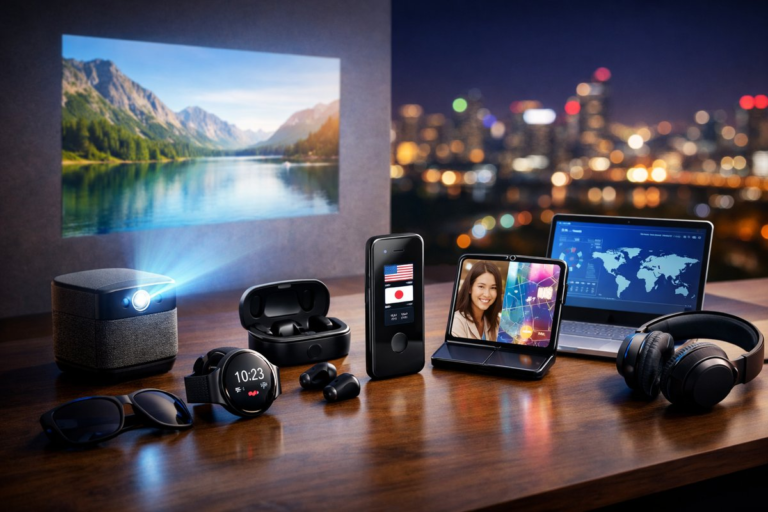
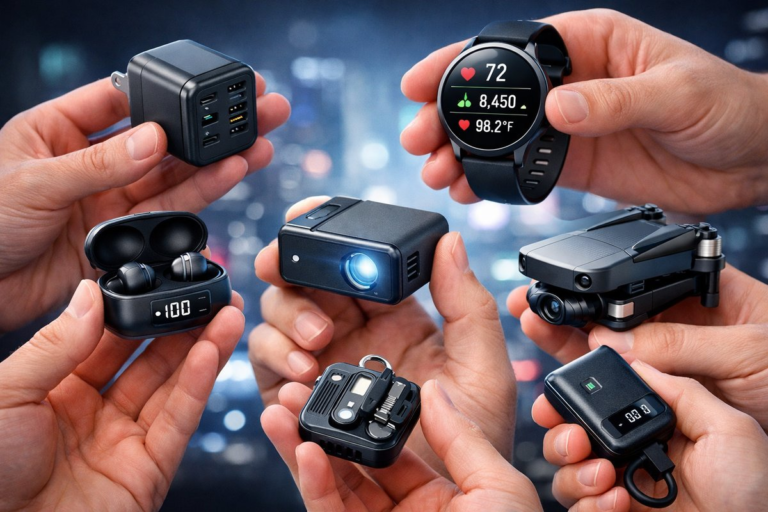
Early prototypes of miniaturized projectors once cast fuzzy, dim displays. Today’s micro-LED pocket projectors beam razor-sharp images onto any surface-even in broad daylight. Roughly the size of a deck of cards, these devices connect wirelessly to laptops and phones, offering motley presentations or movie nights on the go. Advanced heat-dissipation systems and efficient lamp modules keep battery drain minimal, so a single charge can last up to two hours of continuous streaming.
Meanwhile, foldable wireless keyboards have shed the bulk of earlier iterations. Crafted with flexible polymer keys, they snap flat when not in use. Paired with ergonomic tilt stands, they recreate satisfying tactile feedback. Writers can draft entire chapters without lugging around a laptop, while designers sketch on touchscreen tablets with digital pens that tap directly into cloud-based workflows.
Digital pens have evolved beyond simple styluses. Many now include onboard AI assistants that transcribe handwriting in real time, recognize mathematical expressions, and even convert rough doodles into polished vector graphics. Built-in sensors capture pressure, tilt, and stroke speed, reproducing the nuance of ink on paper. The pen’s companion app can suggest synonyms, detect conflicting ideas, or flag passages for later review-turning note-taking into an interactive creative session.
In-ear devices once focused on music and calls. The latest generation of wireless earbuds features adaptive AI noise management. Tiny array microphones analyze ambient sound and adjust noise-cancellation levels on the fly: tuning out city traffic when you’re on the move, then letting in human voices when you step into a conversation. Real-time translation modules can whisper foreign-language captions directly into your ear during travel, breaking down language barriers without bulky fold-out translators.
Portable health monitors now do more than track steps or heart rate. New pocket-sized analyzers use multi-spectral sensors to measure blood oxygen, hydration, and even stress-related biomarkers through a quick fingertip scan. The data syncs with personal health dashboards that chart trends over weeks, offering proactive insights rather than reactive alerts. By staying attuned to subtle changes, users can detect potential issues-like dehydration or increased cortisol levels-before they escalate.
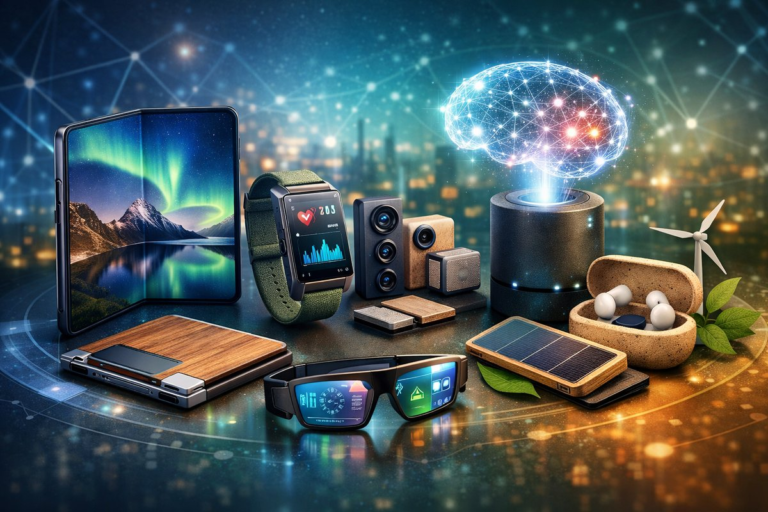
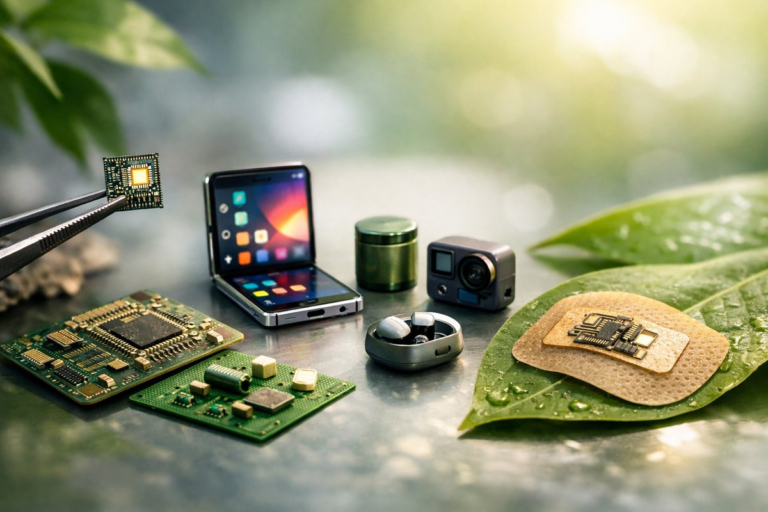
Underpinning many of these breakthroughs is a surge in sustainable design. Battery modules incorporate recycled materials and feature modular cells that users can swap individually-extending device lifespans and reducing e-waste. Circuit boards are built on bio-resins derived from plant sources, cutting down reliance on petrochemicals. Packaging across manufacturers has shifted to compostable or minimal cardboard wraps, reflecting growing consumer demand for eco-friendly choices.
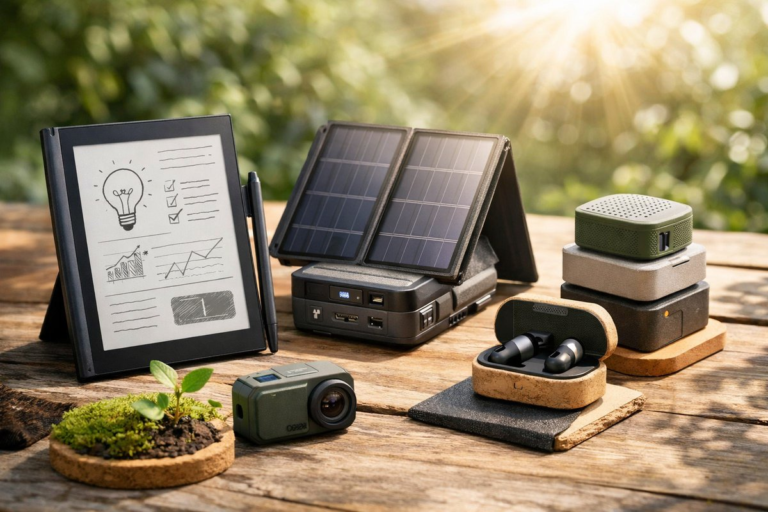
E-ink notebooks, once the domain of niche enthusiasts, are entering the mainstream as digital notepads that mimic paper without the waste. Their monochrome displays draw virtually no power when static, allowing weeks of uninterrupted note-taking on a single charge. Users can annotate PDFs, sort pages by custom tags, and share selected sections via encrypted Wi-Fi-all while enjoying a glare-free reading experience.
For off-grid charging, compact solar panels now fold down to the size of a paperback book yet deliver enough wattage to run laptops, routers, and battery banks simultaneously. Advances in photovoltaic cell efficiency have boosted conversion rates, so even a quick coffee-break in the park can top off your power pack. Intelligent power-management chips prevent overcharging and reroute excess energy to nearby devices, creating pop-up charging stations wherever sunlight is available.
Privacy and data security have also become core selling points. On-device AI processing eliminates the need to stream sensitive voice commands or biometrics to remote servers. Encryption engines built into device firmware protect personal files, while local sandbox environments keep experimental app features from accessing unrelated data. You retain ownership of your information, deciding precisely which insights to share with cloud services.
To tie it all together, cross-platform integration frameworks are maturing. Whether you’re drafting a presentation on your folding keyboard, reviewing sketches from your digital pen, or adjusting workout plans via your health monitor, a unified companion app can orchestrate data flows. It automatically syncs between laptops, phones, and tablets without cluttering storage or compromising security. Context aware, the software suggests device pairings: for instance, prompting you to open your e-ink notebook app when you start sketching on the bundled stylus.
Yet this rapid innovation brings challenges. Compatibility standards remain fragmented, leaving consumers juggling multiple charging cables or proprietary dongles. Open-source alliances are pushing for universal connectors and communication protocols, but mass adoption has yet to arrive. Meanwhile, product roadmaps shift as startups pivot from niche features to broad platforms, making it tricky to predict whether a device you buy today will still receive updates a year from now.
Designers are racing to make these powerful tools more accessible. Voice-activated assistants can guide first-time users through setup steps, while modular accessories-like snap-on stands or grip-enhancing shells-let people with varying physical abilities tailor devices to their needs. Tutorials embedded in device menus encourage experimentation, transforming the learning curve into a discovery journey rather than a barrier.
Industry bodies and consortia are forging emerging standards that promise easier device swapping and a more unified user experience. Interoperability certifications signal that a given gadget will charge via any certified charger or pair seamlessly with diverse operating systems. Forward-thinking manufacturers are pledging multi-year support for key security updates, addressing consumer concerns about planned obsolescence.
At its core, this technological renaissance is about empowerment. By blending high-performance hardware with intelligent software and sustainable materials, the next generation of gadgets aims to make everyday tasks more fluid and intuitive. Whether you’re a remote worker juggling virtual meetings, an artist sketching ideas on the fly, or a fitness enthusiast tracking health metrics between sessions, these devices adapt to your personal rhythm rather than forcing you into a predetermined workflow.
We’re witnessing the convergence of physical and digital realms in our pockets. The line between wearable, working, and wellness technology is blurring. A single device might serve as a notebook, a translator, and a health coach. It learns from your habits, respects your privacy, and cuts environmental impact. The result is a seamless extension of your living and working spaces-one that evolves with you instead of aging out.
Curiosity remains the driving force. As enthusiasts, we’re invited to test the limits of these tools: to repurpose a smart pen as a melody writer, or to craft impromptu presentations with a projection device on a blank cafe wall. Developers and tinkerers are already hacking these gadgets into home automation hubs, DIY environmental sensors, and interactive art installations. The canvas is expansive, and the building blocks are getting smaller and smarter by the day.
Looking ahead, the most transformative breakthroughs may not be the flashiest hardware but the invisible layer of intelligence that weaves them together. A future where devices anticipate needs-suggesting an energy-saving mode when your battery dips below 20 percent, or proposing a workout routine based on your latest health scan-feels within reach. The next wave of pocket-size powerhouses and adaptive tools won’t just make us more productive; they’ll help us live better, with deeper insights into our bodies, our environments, and our interactions with the world around us.
We’re standing at the threshold of a new era in which tech and gadgets transcend tasks to become thoughtful companions. As these innovations land in stores and online marketplaces, they offer more than convenience-they extend an invitation to reimagine what everyday life can look like when the right tool is always at hand.