Location
Mount Vernon, WA 98274
Location
Mount Vernon, WA 98274

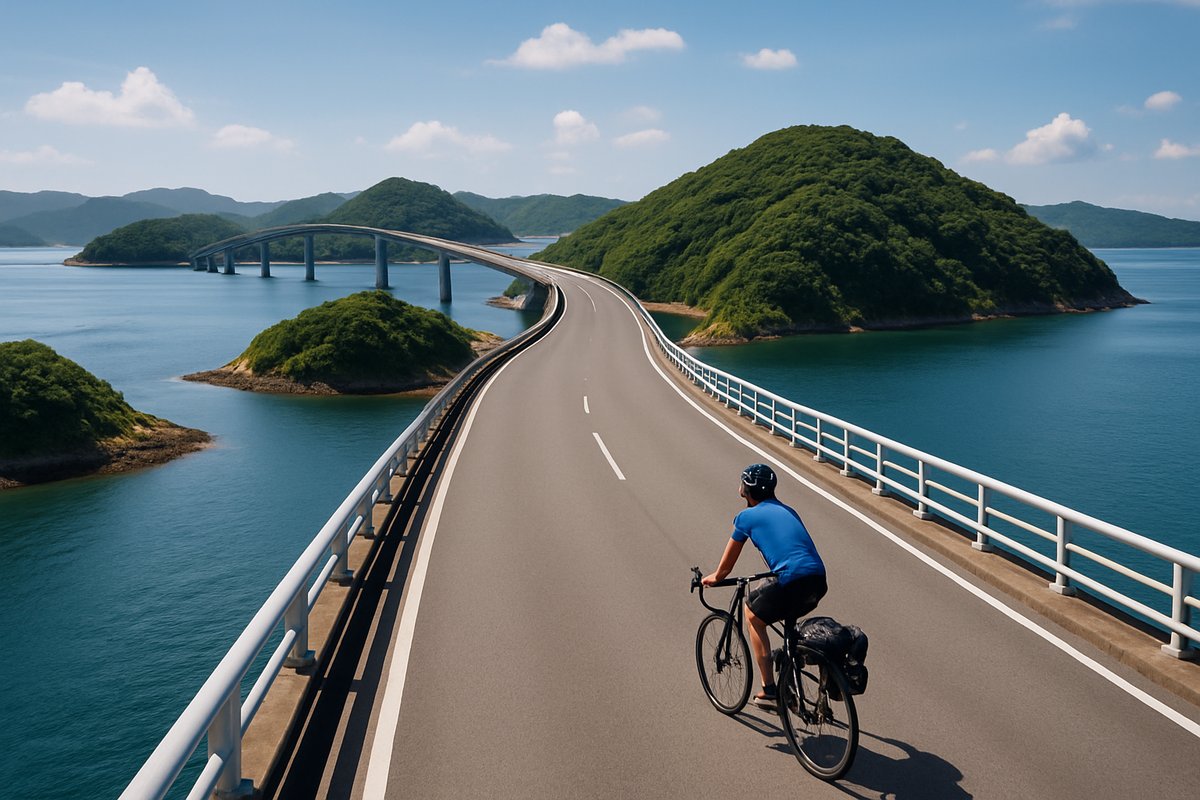
A 60-kilometer cycling route unfurls across a series of sea bridges and green isles, inviting riders to travel slowly, connect deeply and carry stories of salt air, local hospitality and self-discovery home. This journey across an archipelago's hidden trails turns every pedal stroke into an act of mindful exploration.
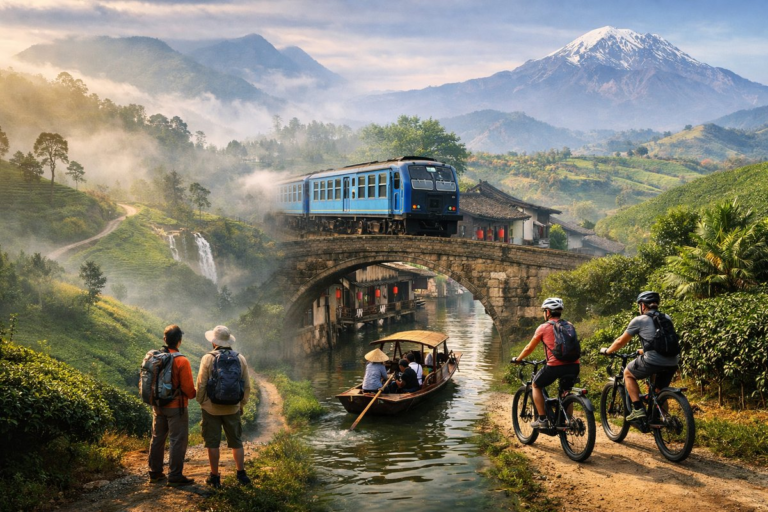
Dawn’s first light slips across the water as you clip into your pedals, ready for a journey that will stretch more than just your legs. The island-hopping cycling route-spanning roughly sixty kilometers and nine elegantly arched bridges-threads together a constellation of communities in a mild sea. It isn’t just a scenic ride. This is an invitation to slow down, breathe in salt-scented breezes, and meet the islanders whose livelihoods have shaped these shores for centuries.
Moments after leaving the mainland, your view shifts from distant shipping lanes to quiet fishing coves where nets dangle like curious spider webs. Each bridge elevates you high above the sea, so that the blue horizon appears endless. Below, the water surface sparkles in fractal patterns, teasing you with its depth and mystery. It’s easy to understand why this route-originally built to link remote fishing villages and markets-has become a ritual for anyone seeking an immersive, low-impact way to travel.
Long before it adorned cycling maps, these paths carried salt, tea leaves, and handwoven textiles from one island to the next. Local elders still recall when children chased goats down narrow lanes, and merchants paddled bamboo rafts to unload pottery. Today, a network of centuries-old stone markers and signposts guide you gently from port town to port town, whispering tales of multi-generational craft traditions and the rhythms of island life.
Soon you roll onto your first islet, greeted by sloping fields of citrus trees. Lemons and yuzu fruits dot the branches like gemstones, and their fragrance mingles with the salty sea spray. An elderly farmer tending a small orchard offers you a freshly picked fruit. You taste its bright tang and notice how the bitterness carries a memory of wind-whipped days, mossy stones and the patient labor of hands folded in soil.
Conversations happen naturally here. A local ceramicist pauses in her workshop to teach you how to wheel-throw a cup shaped like a caught wave. Children wave from school uniforms as they pedal past lined-up school bicycles. A pair of fishermen haul nets on a wooden dock and, with a shy smile, press a piece of grilled fish wrapped in rice into your palms. Each act of sharing feels intimate, almost ceremonial.
When dusk approaches, you seek out a family-run guesthouse with sliding paper doors and polished wooden floors. You shed cycling gloves, dip into a hot spring bath fed by natural springs and settle onto a tatami mat. The night hums softly: cicadas in distant groves, the hush of passing bicycles, the subtle rhythm of your own heartbeat.
Dinner arrives course by course: slices of glistening mackerel, pickled daikon radish, a bowl of steaming rice sourced from terraced paddies on the neighboring isle. The host ladles miso soup rich with wakame seaweed, and you realize each flavor is an emblem of community and place. Sharing this meal, you feel connected to a lineage that values reciprocity over consumption, and relational richness over accumulation.
Pedaling the next morning feels different-more internal than external. Each turn of the crank becomes a meditation, a way to witness thoughts drift by without grabbing at them. The steady rhythm promotes a gentle focus: the cooling spray on your face, the smooth pitch of a bridge arching overhead, the patterns of light dancing on ripples below.
Small details start to matter. A bench tucked next to a stone shrine, where petals of cherry blossom drift like confetti. A wooden sign inviting passersby to rest and carve their initials in weathered planks. A hidden trail descending to a black sand beach, where driftwood logs form a wind-sculpted mosaic.
This isn’t mass transit tourism. It’s low-carbon, glide-on-two-wheels exploration that leaves little footprint but yields oversized insights. You notice how your body adapts to the terrain: shifting weight uphill, relaxing on descents, shifting seamlessly between effort and ease. You carry only the essentials-a change of clothes, a handful of snack balls made from rice and seaweed, a notebook to capture passing moments.
By the time you return to the starting point, you’ve spent three days weaving your story into the islands’ tapestry. You’ve learned a few words of local dialect, offered silent thanks at a mountaintop shrine, and carried home more than photos: an awareness of how landscape, community and self can harmonize under simple conditions.
This route is more than a cycling adventure. It’s a mindful pilgrimage where every hill climb teaches patience, every downhill reminds you of joy, and every conversation becomes a bridge between cultures. You leave not just with souvenirs or souvenirs captured on camera, but with a deeper connection to the world and the curious spirit that makes travel resonate long after you hang up your helmet.