Location
Mount Vernon, WA 98274
Location
Mount Vernon, WA 98274

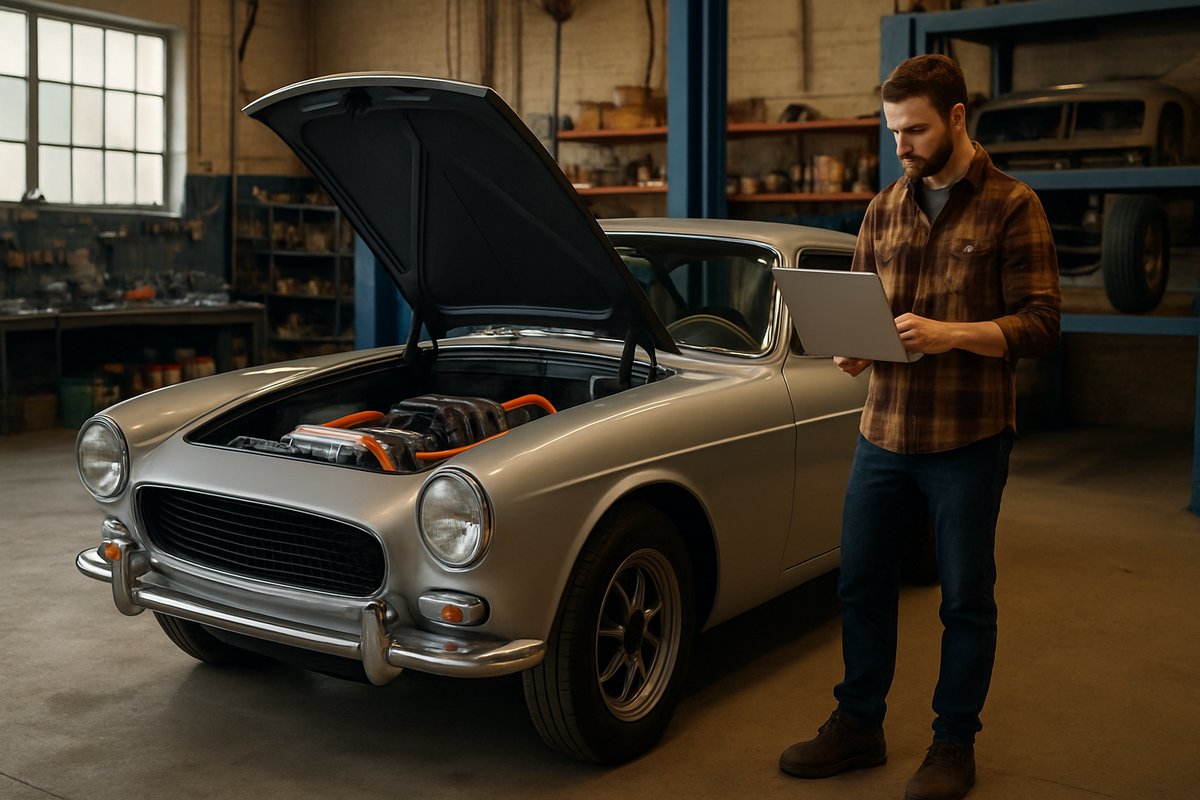
Across workshops and back roads, a new breed of gearheads is giving old classics a second life on electric powertrains. This movement blends nostalgia with sustainability, community with cutting-edge tech, redefining what it means to hit the open road.
On a quiet stretch of backroad just outside a small Midwestern town, a 1965 coupe glides by without a trace of exhaust or engine roar. Instead of the rumble of a V8, there’s only a soft hum and the subtle whir of an electric motor. Behind the wheel is a hobbyist who spent months under the hood, trading pistons and carburetors for batteries and controllers. What began as a passion project has grown into a phenomenon: the DIY electric car conversion movement.
Once confined to the imaginations of hot rodders dreaming of faster street machines, electric conversions are enjoying a renaissance. Industry reports show a significant uptick in inquiries for conversion kits, with specialty suppliers noting year-over-year growth in the mid-20 percent range. What was once a niche subculture of experimental tinkerers is now drawing mainstream attention from car clubs, environmental advocates, and nostalgia seekers alike.
The roots of this trend stretch back decades. Long before electric vehicle charging stations lined highways, resourceful enthusiasts were repurposing salvaged parts and repackaging the hot-rod ethos for cleaner power. Early adapters cobbled together starter motors from industrial equipment and jury-rigged battery banks in trunk compartments. They traded acceleration for novelty, and while range was limited, the allure of silent motion planted a seed that today’s builders are cultivating with advanced technology and modular design.
Modern conversion kits arrive with detailed instructions and plug-and-play components. High-capacity battery modules slot into former fuel tanks or custom subframes. Electric drive units bolt directly to stock transmission housings or replace entire rear ends. Power electronics manage thousands of charge-discharge cycles per year, and integrated cooling systems keep temperatures in check during spirited drives. A digital touchscreen gauge cluster displays state of charge, range predictions, and energy flow in real time.
Community gatherings have become a focal point for sharing knowledge. Online forums host step-by-step build diaries, while garage-open weekends invite curious passersby to peek under custom-fabricated wheel arches. Regional events celebrate converted classics alongside factory-built electric models, creating cross-pollination between traditional car lovers and EV enthusiasts. Together, they trade tips on sourcing high-density cells, adapting regenerative braking, and meeting local safety regulations for street use.
The environmental benefits are compelling. A converted sedan can eliminate years’ worth of tailpipe emissions without sacrificing the character of its original design. Instant torque delivery makes for thrilling acceleration from a standstill, and regenerative braking recaptures energy that would otherwise dissipate as heat. For many, this combination of performance and sustainability adds a new layer of meaning to long-standing automotive traditions.
Yet DIY conversions come with challenges. Costs for a complete kit can rival those of purchasing a brand-new economy car, especially if high-quality battery cells or custom fabrication services are involved. Builders must navigate wiring hazards, comply with safety standards, and sometimes secure professional inspections before registering their modified vehicles. Patience and problem-solving skills are essential, as is a willingness to troubleshoot software configurations and firmware updates for motor controllers.
Real-world examples underscore both the possibilities and complexities. In California, a restored compact pickup from the 1970s now serves as a neighborhood workout machine, hauling longboards and surfboards along coastal highways without a drop of gasoline. In the Rust Belt, a once-abandoned four-door sedan was resurrected with an electric powertrain and now doubles as a mobile coffee bar at local farmers markets. Each build tells a story not only of reclaimed metal and rewired harnesses but of communities coming together around shared ambition.
For those considering a conversion, the process often begins with selecting a suitable donor car. Lightweight bodies with simple suspension layouts and ample trunk space tend to be preferred. Next comes mapping out a budget and sourcing a conversion kit or component packages-often a motor, controller, battery modules, and associated wiring and cooling hardware. Some builders opt for a full turnkey kit, while others mix and match components based on availability and personal preference.
Once pieces arrive, the workshop becomes a classroom. Rusted floor panels may be cut out to create space for battery trays. Motor mounts get welded in place. Control modules find their home in weather-proof enclosures under the dash. Electricians run high-voltage lines with care, and mechanics retrofit original gauges with digital equivalents. Testing takes place incrementally: first powering up systems on the bench, then rolling chassis tests in low-speed environments, and finally cautious road trials before celebrating a completed conversion.
The driving experience itself is a revelation. Electric torque grants immediate response that classic engines simply cannot match, and regenerative braking allows drivers to muscle vehicles back to a standstill with a single pedal. On quiet rural roads or urban streets, the absence of engine noise opens space to savor wind in the cabin, birdsong, or simply one’s own thoughts. For many DIY builders, this sensory shift transforms not just the machine but the way they connect to familiar landscapes.
As charging infrastructure expands, converted vehicles benefit from growing networks of home and public chargers. Portable charging cables and adapter kits ensure compatibility with various outlets, giving road-trippers confidence that they can recharge between scenic viewpoints or small-town stops. In some regions, electric-only zones and incentives for zero-emission vehicles provide additional motivation for maintaining a clean, electrified classic.
Looking ahead, the DIY electric conversion community shows no signs of slowing. Open-source projects are emerging, pooling collective expertise on battery management strategies and software tuning. Fabricators are prototyping modular subframes that fit multiple car models. Enthusiasts are exploring solid-state battery technology and advanced thermal management for longer range and faster charging. What was once a boutique pastime is evolving into an industry of sustainable hot-rodding.
At its heart, this movement reconnects drivers with automotive heritage while steering toward a cleaner future. Each silhouette rolling down the highway carries echoes of yesteryear’s styling cues and the promise of tomorrow’s power sources. By blending memory with motion, passion with practicality, DIY electric car conversions remind us that the open road remains a canvas for innovation-and that the next great ride may be powered as much by imagination as by electrons.