Location
Mount Vernon, WA 98274
Location
Mount Vernon, WA 98274


A fresh wave of cosmic revelations is inviting adventurers of the mind to peer into the hidden tapestries of space and time. From subtle spectral signatures around distant exoplanets to the quantum dance within laboratory vacuum chambers, this exploration marries playful wonder with rigorous science.
In the quiet hours just before dawn, an array of infrared detectors aboard a high-orbit observatory turned its gaze toward a distant star system. The faint glow of what appeared to be swirling dust rings and gaseous plumes emerged in infrared hues that the naked eye cannot see. These images, captured over successive nights, reveal patterns that hint at unseen exoplanets carving pathways through protoplanetary disks. It’s a reminder that cosmic exploration isn’t just the domain of moonshots and giant rockets. Often, it’s the silent whispers of light, decoded by sophisticated instruments, that carry the most profound secrets.
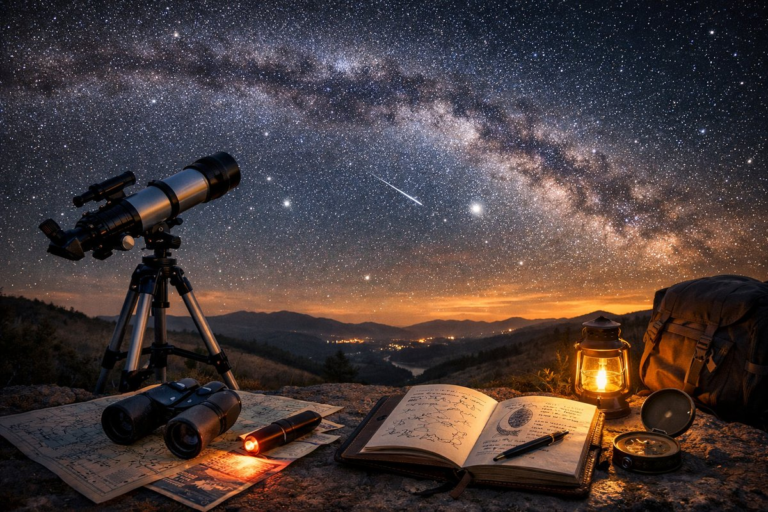
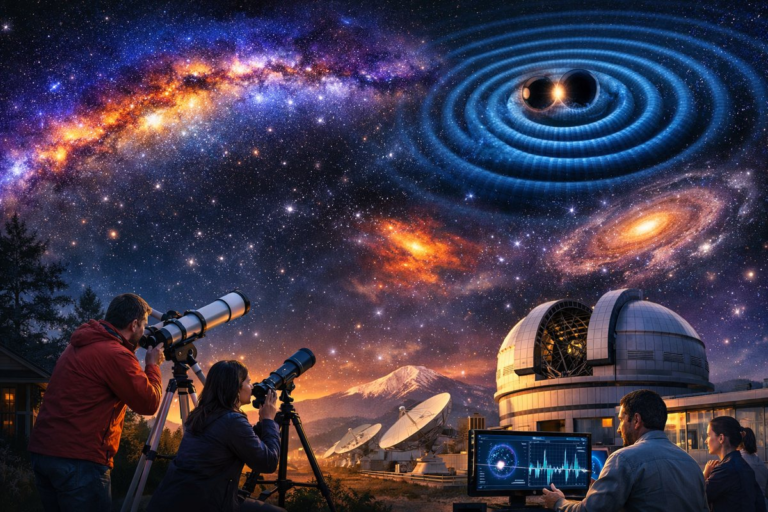
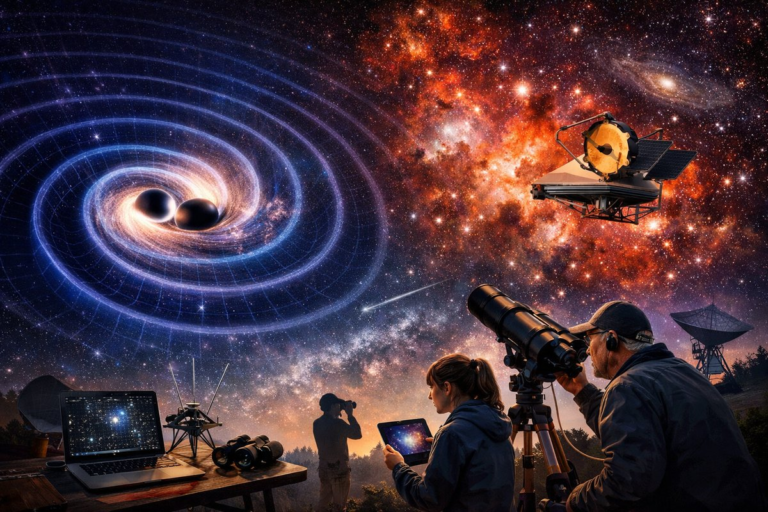
Across continents, a network of amateur stargazers has synchronized their backyard telescopes to follow these reports. Armed with maps printed from open-source survey data, they compare notes on subtle fluctuations in brightness known as transits. When a planet crosses the face of its star, starlight dims ever so slightly. By pooling many small observations, these citizen scientists help refine the orbits and sizes of worlds too distant to be resolved directly. Their enthusiasm for nightly skywatching is a testament to the enduring human drive to collect data, even when it arrives as a barely perceptible ripple in a sea of photons.
Meanwhile, deep within university labs, researchers are chasing echoes of the universe’s birth in a very different way. By cooling metals to near absolute zero and generating vacuum conditions close to interstellar space, they study quantum fluctuations that mimic phenomena thought to have occurred in the first fractions of a second after the Big Bang. Tiny particles of light-virtual photons-blink into and out of existence, scattering off superconducting detectors in ways that reflect spacetime’s granular fabric. While these tabletop experiments may feel removed from expansive nebulae or distant galaxies, they offer a microcosm of cosmic processes and remind us that the laws governing the vast and the minute are written in the same mathematical language.
Perhaps the most playful of these scientific endeavors arrives courtesy of a portable planetarium projector. This dome-shaped device can transform a living room, classroom, or community center into a star-filled theater. Projecting realistic star fields, constellations, and even the Milky Way’s hazy band, these projectors are becoming tools of public outreach as well as professional education. They spark spontaneous questions: What if we could navigate by the stars on a future interplanetary voyage? How would ancient sailors have interpreted a supernova? These theatrical displays encourage a sense of scale and wonder, bridging the gap between polished lecture slides and the raw expanse of night.
Yet cosmic curiosity doesn’t require high-tech gadgets alone. In remote deserts and mountain retreats, groups of science writers, artists, and educators gather to trace their hands along celestial charts drawn in chalk on stone floors. They use star atlases passed down for centuries to re-familiarize themselves with stellar myths and mnemonic patterns. As they lie on their backs under a crystalline sky, the constellations above often misalign with the etched diagrams below-subtly shifting due to Earth’s axial precession over millennia. This gentle mismatch prompts reflection on time’s passage, the impermanence of human memory, and the invitation to constantly re-map our relationship with the heavens.
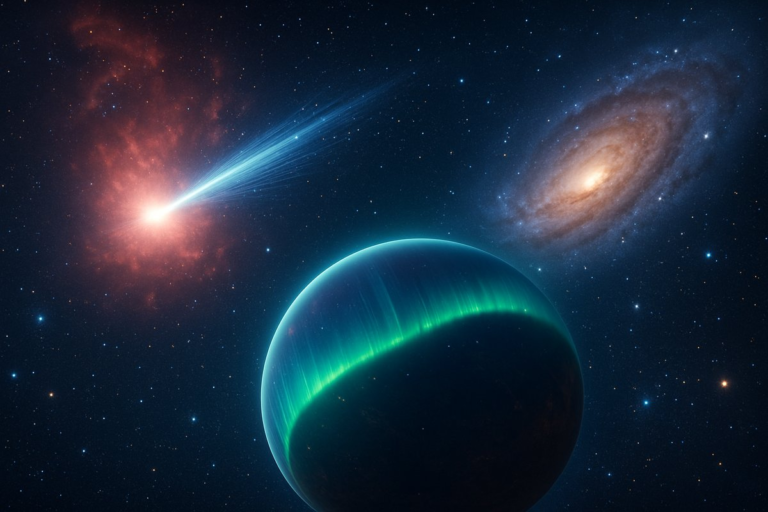
On the professional front, spectral analysis of starlight continues to yield surprising chemistry. By passing light through diffraction gratings, astronomers resolve individual wavelengths and identify the fingerprints of elements. In a recent campaign targeting a red dwarf star, they detected the telltale signs of water vapor, sodium, and complex hydrocarbons in the atmosphere of a Neptune-sized exoplanet. While none of these signatures guarantee habitability, they push the boundaries of our understanding and underscore the need for ever-more-sensitive instrumentation. Each spectral curve feels like a handshake across light years-a subtle greeting from a distant world.
Even as we refine our telescopes and spectrometers, theoretical physicists are pushing inwards. Black holes, once thought of as inscrutable cosmic drains, have recently been “seen” in silhouette against glowing gas with very-long-baseline interferometry. These images collapse millions of pixels and observations from Earth’s biggest radio dishes into a single, elliptical outline. The famous ring of light is actually a swirling shadow boundary-a last glimpse of photons deflected by the black hole’s immense gravity. Analyzing its shape and brightness confirms predictions of Einstein’s theory in regimes of extreme curvature, suggesting that even our most elegant theoretical constructs hold true in nature’s grandest laboratories.
The ripple effects of these discoveries extend beyond the scientific community. Poets and painters find fresh metaphors in the uneven glow of galactic cores; composers weave radio telescope data into ambient soundscapes; choreographers structure movement sequences after orbital resonances. This cross-pollination of disciplines injects space science into the broader cultural bloodstream, transforming esoteric equations into emotionally resonant experiences. When a gallery visitor hears a sonified exoplanet orbit or watches dancers trace Lissajous curves in zero-gravity-inspired choreography, cosmic phenomena become visceral and personal.
Yet for all this heady exploration, the simplest act of gazing skyward remains profound. A child in a rural field, free from urban light pollution, can still point out planets, spot meteors, or follow the arc of the Milky Way. With a modest pair of stargazing binoculars, she might track Jupiter’s moons or glimpse the chaotic swirl of the Orion Nebula. In those moments, science and wonder merge effortlessly. Tools and data become secondary to the primal feeling of connection-a sense that we are part of something far grander than our daily routines.
Institutions are taking notice. Libraries and community centers worldwide are hosting “cosmic curiosity nights” with interactive workshops on telescope basics, star chart reading, and safe solar observation. These events emphasize sustainability by recommending low-power lighting, reusable star charts, and eco-friendly travel to remote viewing sites. The ethos is clear: exploring the universe should honor our planet as well. When attendees learn to calibrate their own equipment or code simple star-tracking apps, they build not only knowledge but also a culture of responsible stewardship.
At the same time, digital platforms are weaving playful layers of storytelling into cosmic data. Augmented reality apps allow users to overlay virtual constellations onto real skies, complete with animated mythic creatures springing from celestial connections. Others simulate time-lapse journeys across millions of years, showing how galaxies collide, stars are born, and supernovae seed the cosmos with heavier elements. This gamified approach converts abstract numbers into dynamic narratives, inviting lifelong learners to craft their own journeys through deep time and distant space.
Scientific teams continue to push boundaries-planning missions to return samples from asteroids, designing next-generation infrared and X-ray telescopes, and exploring laser-driven propulsion concepts. Each proposal carries risk, immense cost, and technical complexity, but they also promise transformative discoveries. Will we find signs of microbial life on ocean-world moons? Could we detect biosignatures on an exoplanet? Or might future physicists finally unify gravity with quantum mechanics through experiments conducted in microgravity? These are questions that drive budgets and inspire textbooks, but they also spark the same childish excitement that first drew humankind skyward.
In this era of rapid transformation, hypotheses can shift overnight. One month’s candidate exoplanet could fail to meet criteria; the next, an unexpected solar storm might knock out communications satellites. Researchers adapt, redesign, and sometimes start from scratch. But within every setback lies a new pathway-another chance to refine ideas, build stronger instruments, or peer in a different wavelength. Curiosity, after all, is not a straight line but a circuitous dance of trial, error, and discovery.
Perhaps the most important lesson of all is that cosmic curiosity lives in small moments. It’s the thrill of aligning a telescope’s eyepiece with a pinpoint of light; the surprise of decoding rainbow-colored spectra; the delight of sharing a whispered “look, a shooting star!” on a cool night. It’s the collective joy that we can still marvel at the universe’s complexity-and that each one of us, armed with patience and imagination, can contribute to its unfolding story.
As humanity stands on the cusp of new frontiers-from crewed lunar landings to controlled fusion experiments-the thread that binds progress together is our refusal to stop asking “what if?” The sky still beckons with uncharted mysteries, and every photon that reaches our instruments carries a fragment of the cosmos’s grand narrative. It is in the interplay between curiosity and rigor, between playful wonder and scientific discipline, that the next chapter of cosmic exploration will be written. The universe awaits, and so do the countless questions that will guide us there.