Location
Mount Vernon, WA 98274
Location
Mount Vernon, WA 98274

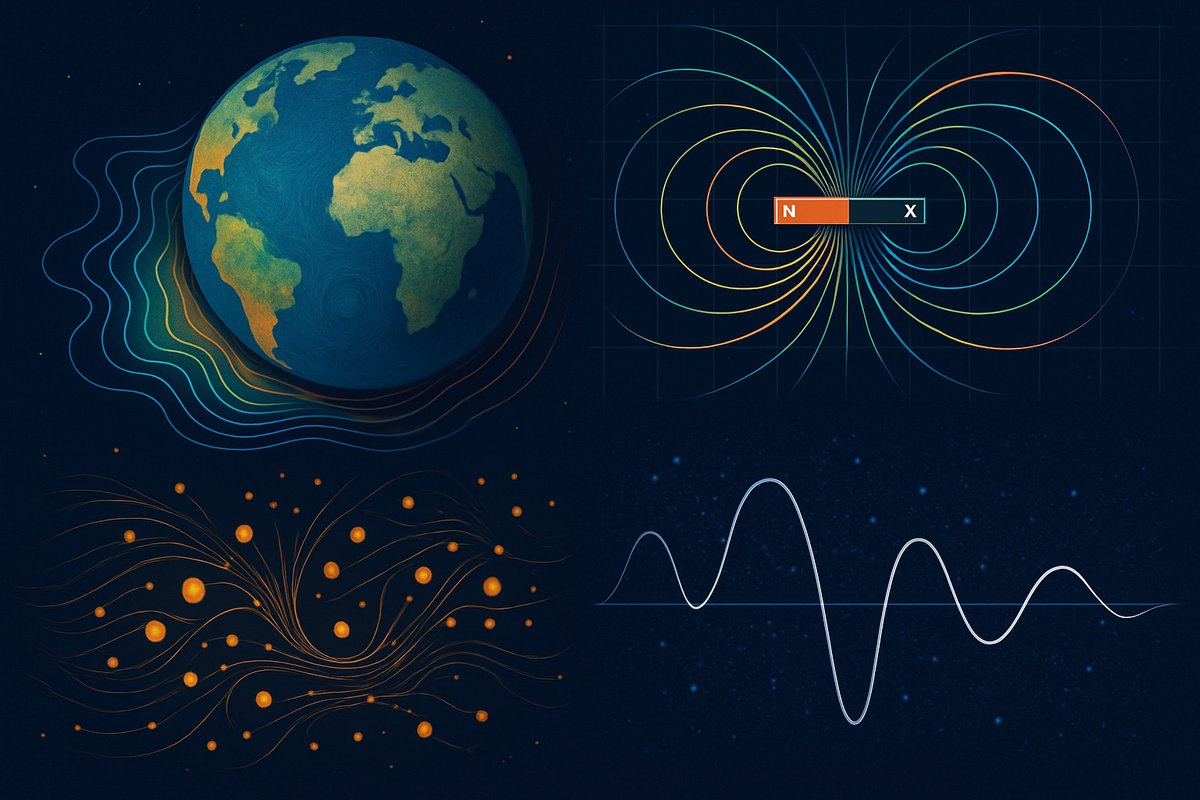
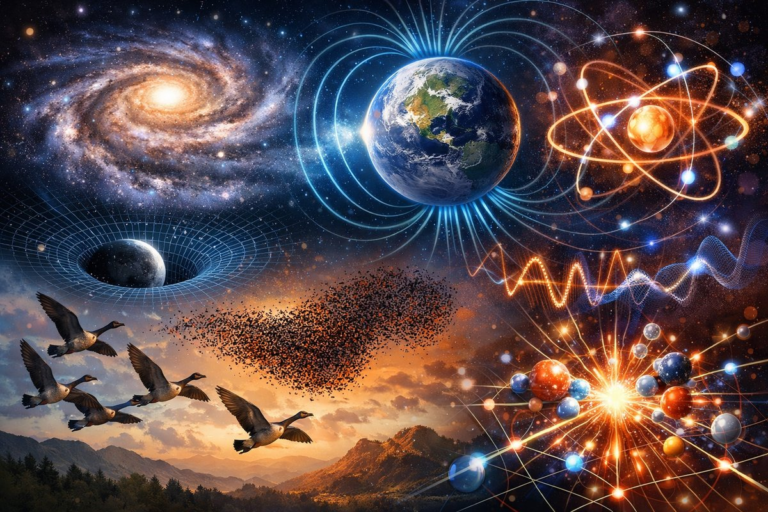
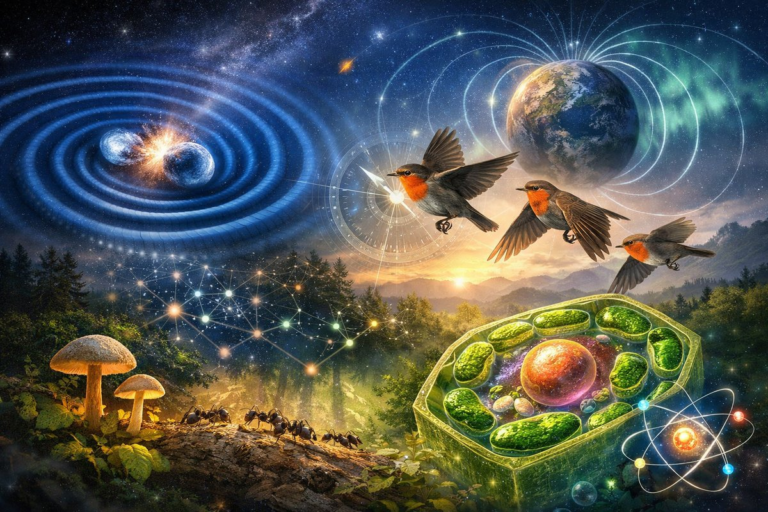
From the imperceptible pull of gravity to the secret choreography of magnetic fields, nature is woven from threads we rarely see yet constantly feel. This exploration journeys through shifting gravity anomalies, magnetic reversals, emergent swarms, and quantum flutter to reveal the seamless continuum of forces that make our planet-and universe-come alive.
Imagine standing at the summit of a lofty mountain and feeling an almost imperceptible lightness underfoot. That sensation is more than a trick of the mind: gravity itself varies across Earth’s surface in response to dense rock formations, shifting water reserves, and molten flows deep underground. Satellites in low orbit map these minute fluctuations, offering a dynamic portrait of a planet in constant motion-its gravity field rising and falling like the breath of a living organism.
These gravitational maps, derived from twin observatories flying in synchronized formation, have unveiled hidden reservoirs, tracked melting glaciers, and even detected signals from vast underground aquifers. In regions once thought geologically stable, slight anomalies have prompted fresh research into tectonic stresses and volcanic precursors. The lesson is clear: gravity is neither uniform nor static, but a storyteller that records Earth’s subtle transformations.
Beyond our planet, astronauts experience the dramatic flip side of gravity’s reach. On the International Space Station, microgravity reshapes fluids, weakens bones, and rewrites the rules of combustion. Fire behaves strangely without a downward pull, forming spherical bubbles rather than rising flames. This altered state yields insights into material science, biotechnology, and human physiology-discoveries that circle back to life on Earth, improving medical treatments and manufacturing techniques.
While gravity quietly holds us to the ground, magnetism governs another hidden realm: the invisible shields that protect life from solar winds. Deep within Earth, a churning iron core generates a magnetic shield that deflects harmful radiation. Yet this field does not remain constant. Over geological epochs, it shifts, wanes, and reverses polarity, leaving a breadcrumb trail locked in ancient lava flows and mineral crystals.
Compass needles once pointed reliably north, guiding sailors across oceans. Today, magnetic drift forces modern navigators to recalibrate GPS and mapping systems more frequently. Research stations near the poles document rapid field changes, linking them to turbulent flows in the core. As the magnetic field slows in one region and strengthens in another, scientists race to understand how these variations may influence radiation exposure at high altitudes, satellite lifetimes, and even migratory patterns of magnetic-sensitive species.
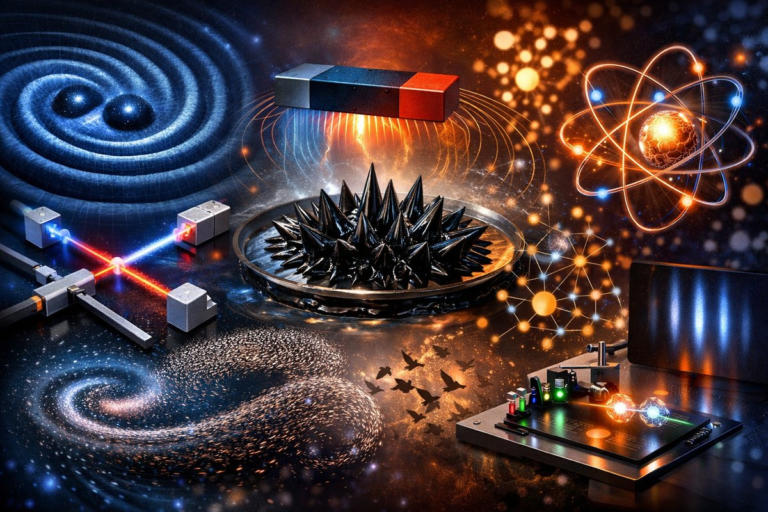
Magnetism also finds expression in mesmerizing demonstrations of ferrofluid-dark, oil-like liquid studded with iron nanoparticles. Placed near a strong magnet, the fluid spikes and valleys into intricate patterns, revealing field lines in three dimensions. What appears as an abstract sculpture is in fact a real-time map of invisible forces, bridging art and science in a dance of symmetry and tension.
Beyond fundamental forces, nature teems with emergent behavior: complex patterns springing from simple rules. Colonies of ants build towering mounds with efficient ventilation shafts, yet no single insect oversees the project. Individual responses to temperature and pheromones collectively yield architectures optimized to maintain stable interior climates. Such decentralized intelligence inspires engineers developing self-organizing robots and adaptive building materials.
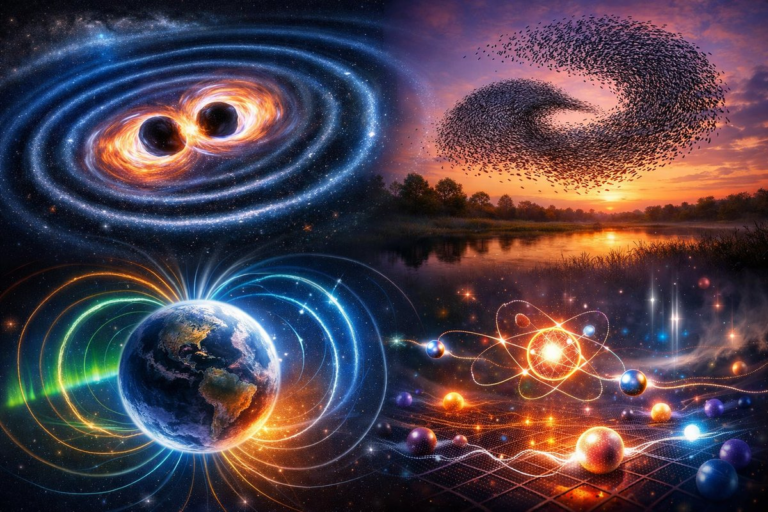
High above wetlands at dusk, thousands of starlings wheel and dive in unison, creating cloud-like murmuration patterns that twist across the sky. Each bird follows a handful of neighbors, yet the flock moves as if guided by a single mind. Physicists and biologists collaborate to decode these aerial ballets, using high-speed cameras and computer models to demonstrate how local interactions cascade into graceful, large-scale formations.
In a laboratory, a shallow basin of water vibrates gently, causing grains of sand to leap and cluster into rippling patterns. These so-called granular waves mimic dunes in deserts and ripples on beaches. Such tabletop experiments capture the essence of emergent systems: energy input plus local rules yields structures far grander than their parts, teaching us how simple elements can self-assemble into complexity across scales.
At the smallest frontier, quantum fluctuations flicker into existence for mere instants, shaping the vacuum itself. In empty space, particles and antiparticles continuously wink in and out of reality, leaving faint fingerprints detectable in high-precision experiments. These vacuum fluctuations influence fields, energies, and even the large-scale structure of the cosmos, offering tantalizing clues about why our universe has just the right properties to host stars, planets, and life.
Quantum tunneling-where particles slip through energy barriers they cannot classically surmount-underpins technologies from tunnel diodes to the chemistry of our bodies. Enzymes exploit tunneling to speed up reactions, and the ion channels in cell membranes depend on quantum effects to regulate electrical currents. In every protein that powers our cells, quantum phenomena lend efficiency and precision beyond our everyday grasp.
The interplay of forces becomes most apparent when storms in space disturb Earth’s magnetic shield, triggering auroras that light up polar skies. Charged particles carried by solar gusts dive along field lines into the upper atmosphere, colliding with atoms and sending cascades of colorful light across the horizon. This cosmic choreography draws together gravity, magnetism, and quantum physics in a spectacle visible from cruise ships, tundras, and city balconies alike.
Back on the ground, gravitational-wave observatories pick up ripples in the fabric of spacetime itself. When black holes collide billions of light-years away, they send shockwaves that minutely squeeze and stretch our planet. By measuring these distortions, we open a new window on the universe, one that may eventually bridge gravity with quantum theory, resolving puzzles at the heart of modern physics.
Our instruments-from superconducting gravimeters to atomic magnetometers, from high-speed cameras capturing murmuration to quantum sensors probing the vacuum-are the language through which nature whispers its secrets. Each device amplifies a particular dialect of the cosmos, turning whispers into codified data that guides our understanding and fuels future innovation.
To stand amid these forces is to feel a profound connection with the world around us. Gravity anchors our bones, magnetism shields our lives, emergent systems teach us cooperation, and quantum quirks remind us that reality is woven from possibilities. No single discipline holds the full story: only by weaving threads from geology, physics, biology, and engineering do we see nature’s grand tapestry.
Whether you’re tracking shifts in Earth’s gravity to predict seismic risks, harnessing magnetic fields to build better electronics, or using quantum sensors to peer into hidden realms, these forces invite us to explore, innovate, and marvel. As we tune our instruments and sharpen our curiosity, new discoveries await-proof that the planet’s subtle dance continues, and that genuine wonder thrives wherever we look.