Location
Mount Vernon, WA 98274
Location
Mount Vernon, WA 98274

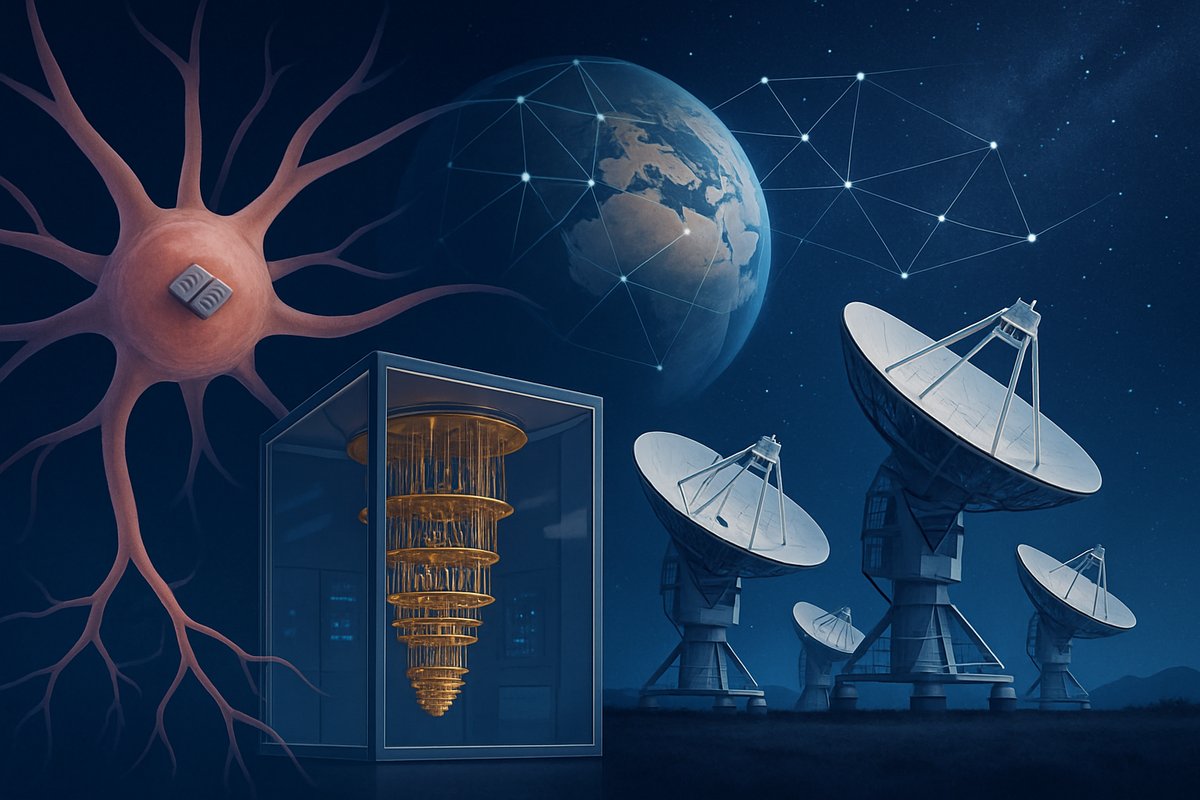
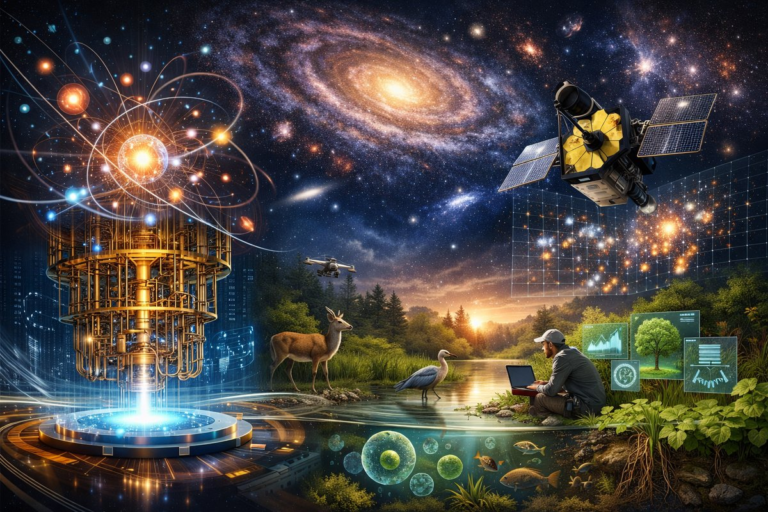
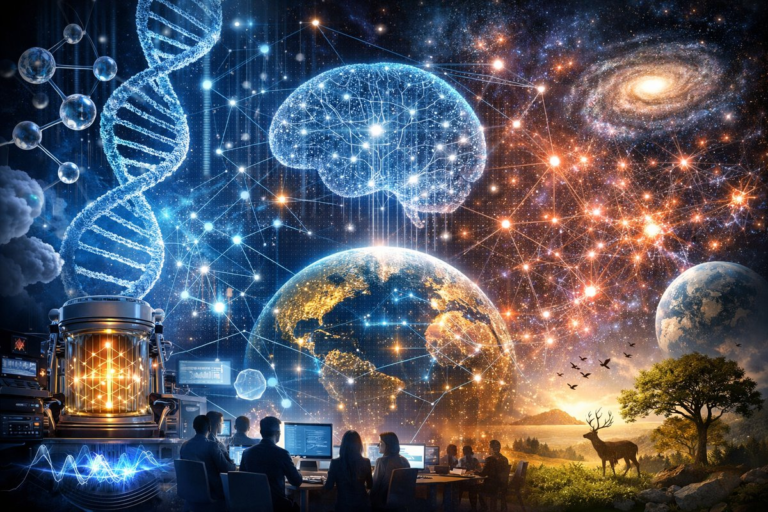
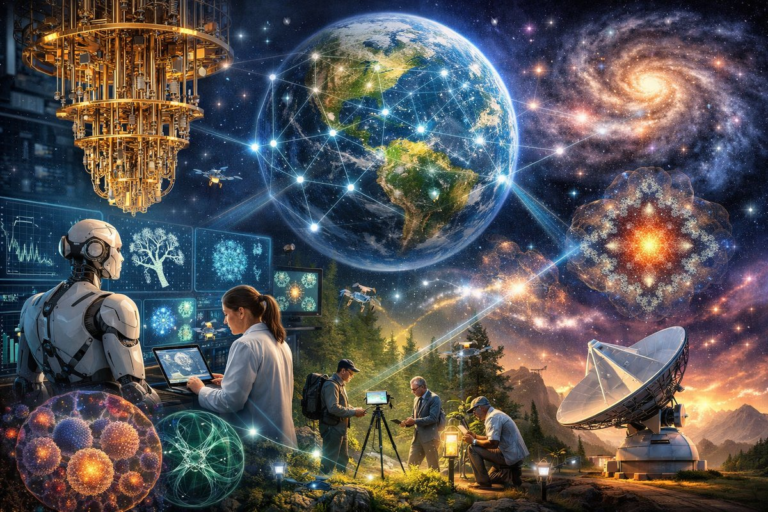
Across scales from neural dust in our bodies to vast arrays detecting cosmic rays, science is entering a golden age of distributed sensing. By combining quantum devices, citizen-built instruments, and global networks, researchers are unlocking patterns that once lay hidden-from subterranean aquifers to faint echoes of the universe.
In labs and deserts, atop rooftops and beneath the waves, a quiet revolution is underway. Sensor nodes once limited to individual experiments are now springing up everywhere, forming a vast, interconnected web of observation. These networks range from microscopic implants that record neural firing patterns to ground-based telescopes sharing data on cosmic ray showers. Together they promise a paradigm shift: science not as a collection of isolated studies, but as a distributed tapestry of real-time insights.
The history of large-scale sensing began with radio arrays built to capture the whisper of distant galaxies. Early collaborations stitched dozens of dishes into a coherent instrument, revealing the diffuse structure of hydrogen in our cosmic neighborhood. Back then, the barrier lay in synchronizing clocks across great distances and handling vast amounts of analog data. Modern digital electronics have transformed that landscape: fiber-optic links deliver terabits per second, GPS-locked timing is accurate to nanoseconds, and cloud platforms store and serve petabytes at scale.
Meanwhile, novel cosmic arrays are taking shape. Citizen astronomers are deploying compact particle detectors on rooftops, measuring the rain of muons generated when high-energy cosmic rays smash into Earth’s atmosphere. By triangulating timing differences across hundreds of detectors, they can reconstruct the direction of incoming particles and map variations in cosmic flux. This networked approach has even contributed to real-time alerts for solar storms and enabled cross-disciplinary studies linking cosmic weather to atmospheric physics.
Closer to home, quantum gravimeters are emerging as precision probes of subterranean structures. Using ultracold atoms trapped in vacuum chambers, these devices measure minute variations in Earth’s gravitational field. Teams carrying backpack-sized sensor kits now walk fault lines and aquifer boundaries, producing maps of density contrast that once required drilling and seismic surveys. The fusion of quantum physics and geoscience is revealing hidden rivers beneath ice sheets and charting groundwater reserves under megacities.
On the microscopic frontier, a concept known as “neural dust” is pushing distributed sensing into biological domains. Tiny, passive sensors-no larger than a grain of sand-can be scattered within tissue to record local electric fields or chemical concentrations. Powered wirelessly by ultrasound beams, they transmit bursts of data that allow doctors to monitor neuronal networks or track tumor metabolism in real time. While still in the prototype phase, such implants promise personalized medical feedback loops with unprecedented resolution.
Environmental monitoring is also riding the sensor wave. Floating buoys bristle with chemical analyzers, temperature probes, and acoustic detectors, sending live updates on ocean acidification, harmful algal blooms, and migrating mammal calls. Networks of roadside air-quality sensors alert urban planners to pollution hotspots, empowering communities to demand greener infrastructure. By placing low-power nodes wherever power lines or cellular signals run, environmental data is becoming as ubiquitous as the air we breathe.
Part of this boom stems from low-cost hardware. Single-board microcontroller kits, paired with mass-market sensors for humidity, magnetism, and light, let hobbyists and researchers prototype new nodes in hours. Open-source firmware libraries handle data logging and wireless protocols, while online marketplaces supply everything from lithium-ion batteries to ultraviolet photodiodes. The result is a democratization of observational science, where backyard innovators stand shoulder to shoulder with university teams.
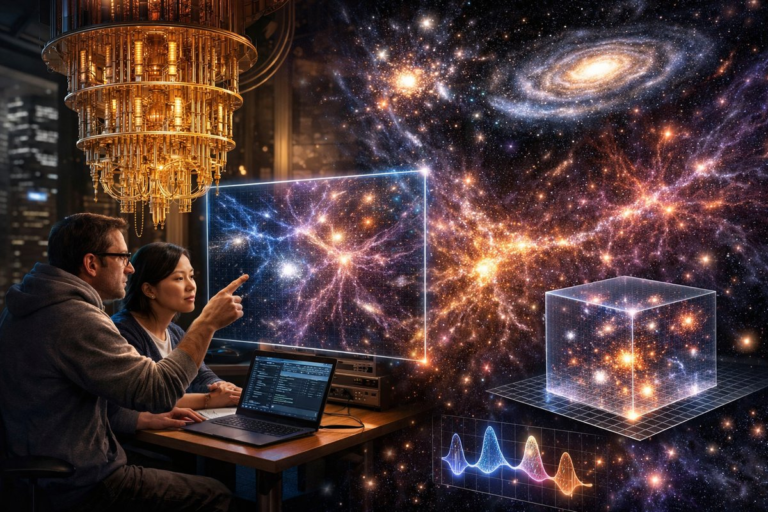
Bringing these diverse nodes together requires robust data architectures. Internet-of-Things platforms ingest streams from tens of thousands of endpoints, applying edge-computing filters to flag anomalies before forwarding summaries to central servers. Machine learning models sift through noise, correlating a cosmic ray spike on one rooftop with geomagnetic disturbances measured halfway around the world. Dashboards visualize multidimensional trends, allowing researchers to drill down from planetary-scale dynamics to molecular-level fluctuations.
This shift toward distributed observation is more than a technical advance; it represents a philosophical change in how we know the world. Traditional labs, confined by budgets and space, offered deep but narrow windows into phenomena. In contrast, sensor networks provide broad, contextual tapestries where patterns emerge from sheer scale. It’s a move from isolated snapshots to living, breathing datasets that evolve alongside the processes they track.
Yet scaling up poses new challenges. Calibration drift across thousands of low-cost sensors can introduce biases that masquerade as real effects. Data deluge can overwhelm storage and analysis pipelines, turning precious insights into digital clutter. Ensuring interoperability among devices built on different standards demands shared metadata schemas and validation protocols. Meeting these challenges calls for collaboration between engineers, data scientists, and domain experts.
As networks grow, ethical considerations enter the frame. Ubiquitous sensors can uncover personal or proprietary information-detecting room occupancy or monitoring industrial emissions in real time. Questions of data ownership, consent, and transparency become critical. Building privacy-aware architectures, where raw data stays encrypted at the edge and only aggregated metrics leave the node, is an essential part of responsible innovation. In this sense, distributed sensing is inseparable from ethical tech, demanding both technical rigor and an unwavering respect for individual rights.
A striking example of scale in action comes from an urban cosmic-ray project that placed particle detectors on hundreds of public rooftops. Volunteers installed waterproof stations that log muon count rates by the minute. Within months, the network revealed subtle flux variations correlated with building heights and geomagnetic lattitude-and even detected surges tied to distant solar flares. By empowering citizens to join a global observatory, the project fused public outreach with frontier research.
We stand at the dawn of a new era: one in which science unfolds as a collaborative tapestry of nodes weaving together signals across domains and dimensions. From tiny implants peering into living tissue to sprawling arrays mapping cosmic phenomena, distributed sensing invites us to embrace a broader, deeper view of reality. It asks us to think not just as isolated investigators but as partners in an ever-expanding collective curiosity. The next discovery might come from a garage-built spectrometer, a sea-drifting buoy, or a pattern hidden in the muon winds-so let us build, measure, and imagine without limits, revealing the unseen and celebrating the awe that binds us to the universe and each other.