Location
Mount Vernon, WA 98274

Location
Mount Vernon, WA 98274
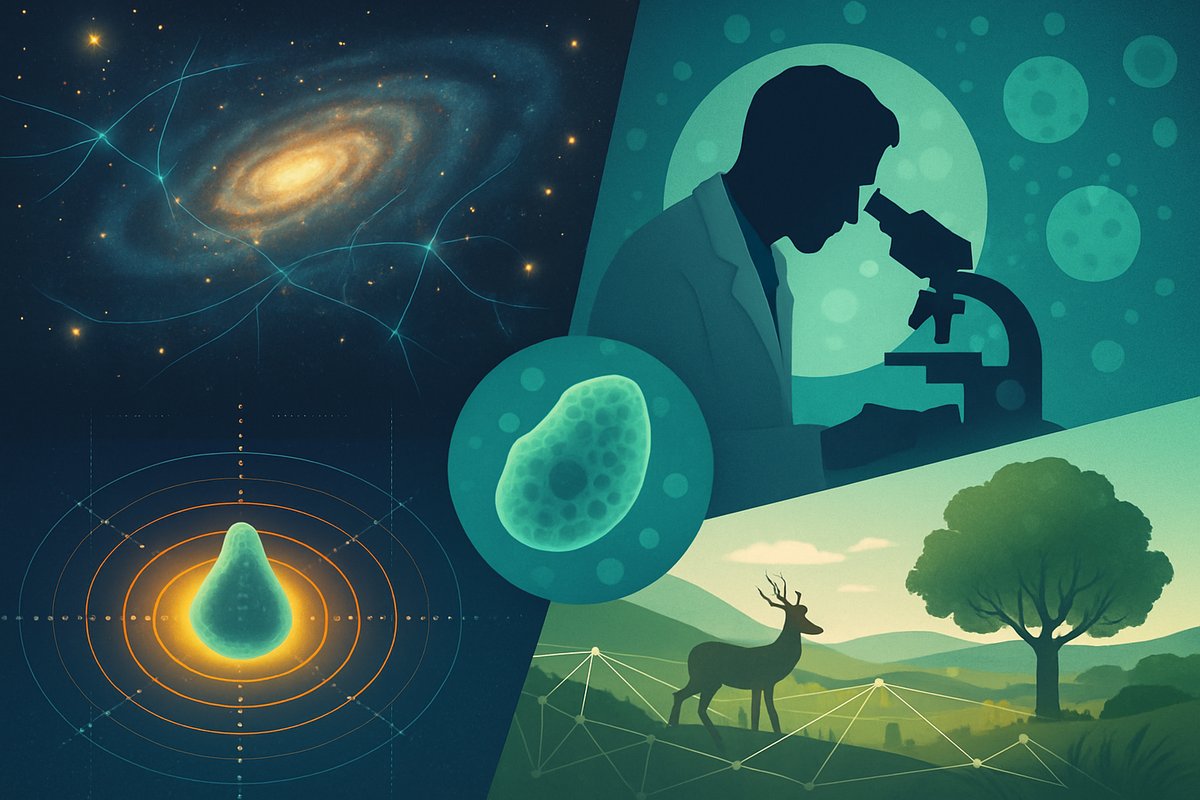
A fusion of breakthroughs is painting an unprecedented portrait of reality-from quantum imaging of single molecules to deep-field surveys that trace cosmic webs. As researchers decode cellular resilience and model intricate ecosystems, a shared spirit of curiosity is propelling us toward new frontiers of understanding.
In labs and observatories around the globe, a quiet revolution is underway. At the smallest scales, physicists are peering into the behavior of individual particles. At planetary and galactic scales, astronomers map vast filaments that cradle galaxies. Biologists probe the adaptive genius of cells, while climate researchers overlay data streams to forecast ecological shifts. Underlying these diverse inquiries is a single theme: the world reveals itself when precision meets curiosity. Today’s scientific breakthroughs illustrate how cross‐disciplinary innovation can transform our grasp of reality-and spark fresh questions about the forces that shape life and matter.
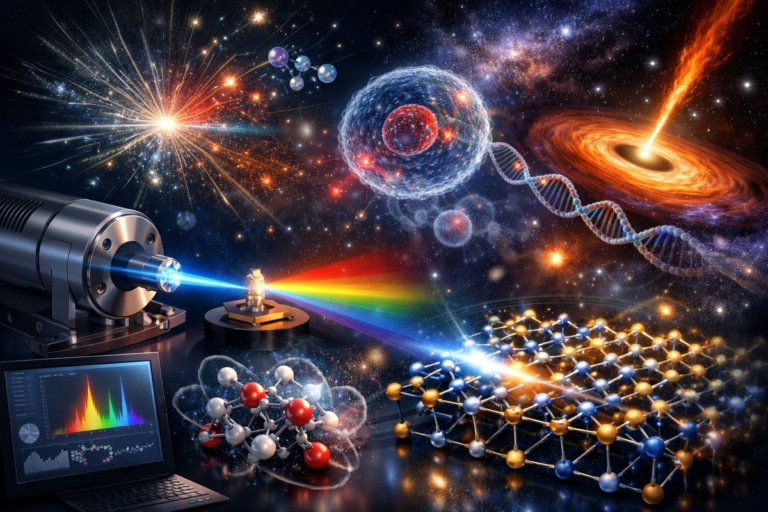
A recent advance in quantum imaging illustrates just how far precision can carry us. By using a technique known as nitrogen‐vacancy center magnetometry, researchers have achieved the resolution needed to map magnetic fields at the level of individual molecules. Unlike conventional microscopes, this method exploits a defect in diamond crystals that emits photons in response to magnetic fluctuations. The result is a high‐contrast portrait of molecular bonds in motion-opening doors to real‐time studies of chemical reactions and protein folding. Early demonstrations have already tracked the formation of an enzyme-substrate complex, offering promise for drug design and synthetic chemistry.
Meanwhile, high‐altitude balloon experiments are carrying quantum sensors above much of Earth’s atmosphere. Suspended beneath stratospheric balloons, these sensors pick up faint magnetic signals generated by lightning strikes and solar activity. By combining data from multiple flights, scientists are constructing three‐dimensional maps of Earth’s upper magnetic environment. The findings help improve navigation systems, reveal links between solar storms and weather patterns, and hint at deeper connections between Earth’s magnetic field and climate dynamics.
On the cosmic end of the scale, wide‐field observatories are completing what one editorial dubbed the most comprehensive deep‐field survey since the Hubble Ultra Deep Field. Using next‐generation infrared detectors, astronomers have captured thousands of faint galaxies whose light set out billions of years ago. By cataloging the distribution of these galaxies, they are tracing the web‐like filaments of dark matter that undergird the cosmic structure. These maps are already refining models of galaxy formation and the role of dark energy in accelerating cosmic expansion. Observers are astonished to see previously unseen dwarf galaxies and to detect subtle alignments that could illuminate the nature of gravity itself.
Bridging the quantum and cosmic realms, a collaboration between particle physicists and astrophysicists is hunting for the cosmic neutrino background-a sea of low‐energy neutrinos left over from the Big Bang. Using ultra‐cold bolometers buried beneath ice, the team hopes to sense telltale minute temperature changes caused by passing relic neutrinos. Success would confirm a key prediction of early‐universe theory and provide a direct glimpse of conditions a fraction of a second after the universe’s birth.
Meanwhile, closer to home, cellular biologists are making headlines with a new CRISPR‐based tool that illuminates the dynamics of gene expression in living tissues. By tagging messenger RNA transcripts with fluorescent reporters that switch on and off in response to cellular stress, researchers can visualize how cells adapt in real time. In recent field tests on coral reef fragments, the technique revealed waves of stress‐response genes that correlate with rising water temperatures. This insight could guide conservation efforts by identifying resilient strains of coral and informing interventions that bolster reef health.
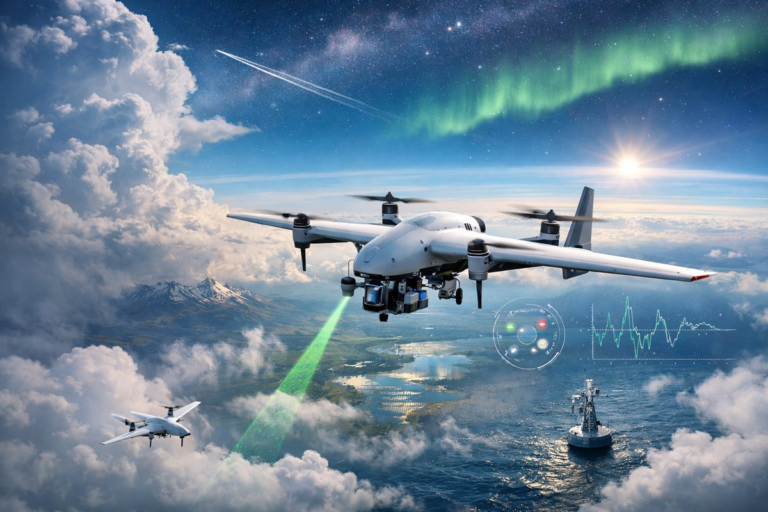
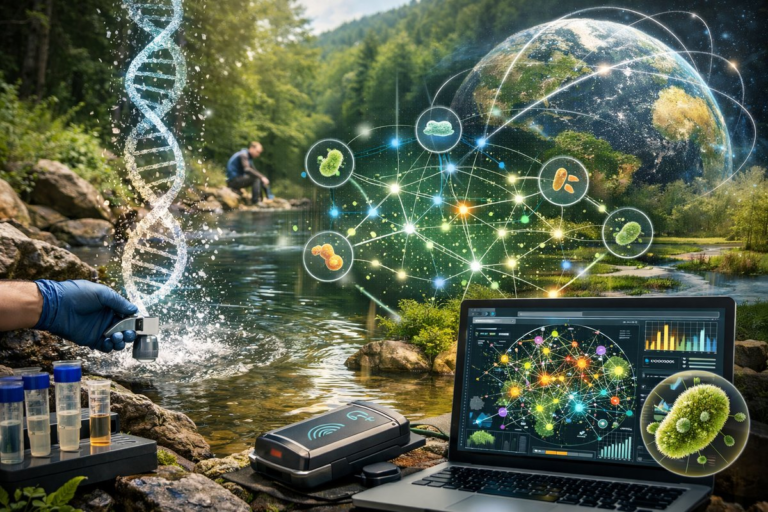
Ecologists are also embracing data fusion at an unprecedented scale. A network of micro‐drones equipped with multispectral cameras is capturing canopy‐level snapshots of forests. Combined with ground‐based sensors measuring soil moisture, carbon flux, and acoustic biodiversity, researchers can now model the health of entire ecosystems hour by hour. The resulting digital twins of forests allow scientists and land managers to run “what‐if” scenarios-simulating the impact of drought, invasive species, or reforestation strategies. Early results suggest that strategic plantings of drought‐tolerant species can reduce wildfire risk by up to 30 percent in vulnerable regions.
In urban settings, citizen science initiatives are tapping smartphone sensors to monitor air quality and noise pollution. Mobile apps guide volunteers through simple calibration routines, transforming tens of thousands of devices into a hyperlocal sensor network. Data from these networks feed municipal dashboards that inform traffic planning, public health advisories, and green‐space development. The approach is shaping a new model for participatory research-one that values community engagement as much as laboratory precision.
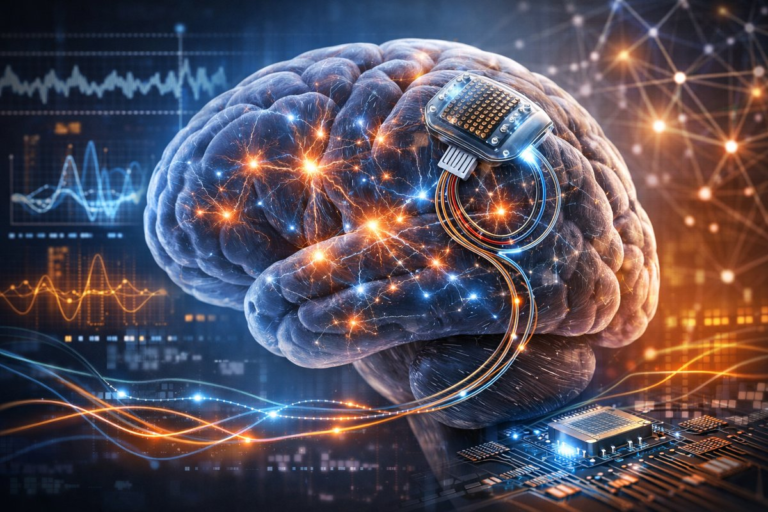
Cognitive scientists, too, are pushing frontiers by exploring the neural basis of curiosity itself. Using noninvasive brain‐imaging techniques, they’ve tracked patterns of activity when volunteers solve puzzles or absorb novel information. Regions associated with reward processing light up when people pursue uncertain challenges-underscoring the intrinsic motivation that underlies scientific discovery. Such insights are inspiring new educational tools that leverage gamified learning experiences to foster sustained engagement and deeper understanding.
Across disciplines, a shared ethos emerges: integrate measurement, computation, and creativity. Computational models are no longer mere supplements to experiments; they’re co‐equal partners. At a supercomputing center, fluid dynamicists have linked lattice‐based simulations with wind‐tunnel tests to refine aircraft designs that cut drag by 8 percent. In materials science, machine‐learning algorithms screen millions of candidate compounds to identify alloys with both high strength and corrosion resistance-slashing the development time for next‐generation infrastructure components.
As scientists reach for ever‐finer detail and ever‐vaster vistas, questions about ethics, access, and sustainability come into sharper focus. What standards should govern the use of gene‐editing tools in wild populations? How can open‐data policies ensure that global research benefits low‐resource communities? What safeguards protect climate models from misuse or misunderstanding? Meeting these challenges will require not only technical ingenuity but also emotional intelligence and dialogue across borders and disciplines.
Even with such lofty ambitions, some of the most profound moments of discovery happen in unexpected corners of the lab. A graduate student adjusting a laser alignment might spot a speckle pattern that hints at an uncharted optical effect. A field researcher photographing a frog’s mating display might notice a previously undescribed communication gesture. Science thrives on such spontaneous sparks of wonder, which remind us that curiosity is as much an attitude as a method.
Looking ahead, the frontier lines between disciplines will continue to blur. Quantum sensors will enable new probes of planetary interiors. Astrophysical techniques for analyzing light will inform noninvasive medical diagnostics. Insights into network dynamics from social science will illuminate patterns in neural circuits. In each case, the true breakthroughs will emerge where the quantum meets the cosmic, the cellular meets the societal.
Today’s headlines may celebrate a single discovery, but the deeper narrative is one of connection. By weaving together tools and ideas from diverse fields, researchers are revealing the hidden tapestry of nature-from the ephemeral flicker of an electron to the vast sweep of galactic clusters. As we stand on the verge of unprecedented clarity about our world, one truth remains constant: science is an adventure of the mind and spirit. It invites us to think deeply, question assumptions, and discover boldly.
With every advance, the horizon shifts, beckoning curious explorers to venture further. Whether your interest lies in the strange realm of quantum states or the boundless depths of space, the next revelation may be just around the corner-or within the beam of your microscope. The playground of science is open, and its wonders await those willing to look closely and dream big.