Location
Mount Vernon, WA 98274

Location
Mount Vernon, WA 98274
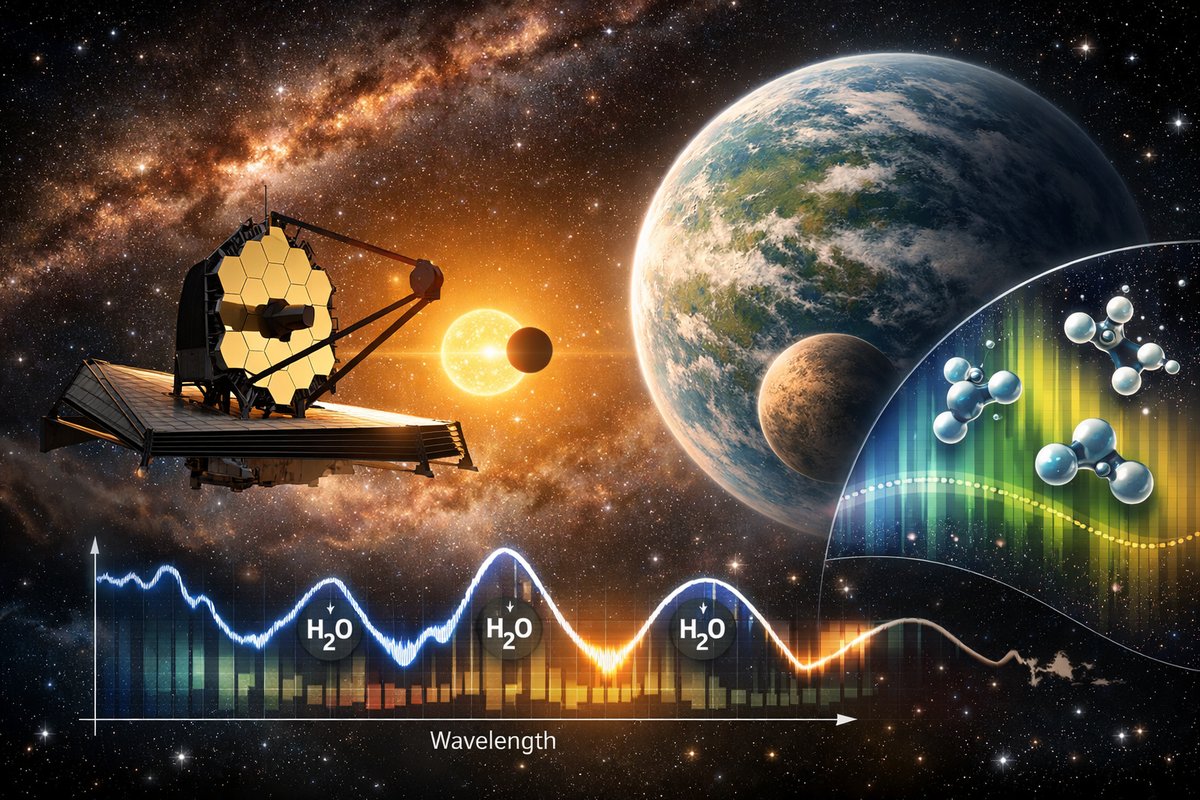
A recent survey using next-generation infrared space telescopes has detected clear signatures of water vapor in the atmospheres of several distant exoplanets, marking a milestone in our search for habitable worlds. By combining transit spectroscopy with advanced data analysis, scientists are charting chemical fingerprints that hint at weather patterns, cloud dynamics, and the potential for life beyond Earth.
From the moment a planet transits its host star, a fraction of starlight filters through the world’s atmosphere, carrying the subtle imprints of molecules within. In a groundbreaking survey conducted with a state-of-the-art infrared space telescope, astronomers have now decoded those imprints for multiple exoplanets, unveiling definitive water-vapor signatures and painting a more detailed picture of alien skies.
This large-scale program targeted a diverse sample of planets ranging from puffy gas giants to smaller super-Earths. By capturing the infrared spectrum during each transit event, the telescope’s sensitive spectrographs measured how molecules like water, carbon dioxide, and methane absorb light at specific wavelengths. For the first time, this work confirms that water vapor is not a rare oddity but a common component in the atmospheres of several distant worlds.
Key to this success was the pairing of two infrared instruments that operate in complementary wavelength ranges. One instrument scanned the near-infrared band, pinpointing water features around 1.4 micrometers, while the other delved deeper into the mid-infrared, refining measurements near 5 to 8 micrometers where carbon-bearing gases leave their mark. By layering these datasets, researchers reduced observational uncertainties and corrected for potential interferences from high clouds or atmospheric hazes.
Among the most striking results is the detection of water vapor in a super-Earth orbiting a sun-like star at roughly twice Earth’s radius. Previous observations had hinted at a tenuous atmosphere, but the infrared survey revealed a robust water signature at high altitudes. Models suggest that this world may host thick cloud decks and even a global haze, reminiscent of Venus but richer in water. Such insights challenge our understanding of how planets of that size develop and evolve.
Gas giants in the study fared no less fascinating. One planet, slightly larger than Jupiter, displayed unexpected carbon dioxide lines alongside water bands-evidence of vigorous atmospheric circulation that lifts molecules from deeper layers. Another hot Neptune showed muted water absorption, likely due to high-altitude silicate clouds blocking parts of the spectrum. Those clouds, composed of molten rock droplets, hint at exotic weather where temperatures soar above 2,000 degrees Fahrenheit.
These atmospheres are more than static chemical cauldrons. By comparing repeated transits over several months, astronomers tracked subtle changes in molecular abundances, inferring seasonal patterns in planetary weather. One gas giant exhibited a 10-percent variation in water vapor strength, possibly driven by shifts in stellar heating or dynamic cloud formation. This time-series approach transforms exoplanets from isolated snapshots into worlds with climate cycles and meteorological phenomena.
The technical challenges were formidable. Infrared detectors must remain at cryogenic temperatures to suppress thermal noise, so the telescope’s sunshield and cooling systems operated flawlessly during each multi-hour observation. Data pipelines then subtracted instrument signatures, corrected for cosmic ray hits, and co-added thousands of individual spectra. Open-source software frameworks and cloud computing played a crucial role, allowing teams across continents to collaborate on spectral fitting and atmospheric retrieval.
Beyond the sheer thrill of discovery, this survey lays the groundwork for assessing habitability. Water vapor is a cornerstone for life as we know it, but its presence alone does not guarantee surface oceans. Future measurements of molecules like ozone or methane in tandem with water could build a more complete biosignature profile. Meanwhile, mapping temperature gradients and wind speeds will inform models of energy circulation-key factors in determining whether a planet can sustain stable climates.
The broader scientific community has already begun mining the publicly released dataset. Citizen-science platforms let amateurs sift through transit curves and flag unusual features, while professional astronomers calibrate cloud-formation models against the new observations. The open-data ethos accelerates progress and fosters transparency, ensuring that each new interpretation gets cross-checked across independent teams.
Looking ahead, the upcoming generation of ground-based observatories equipped with adaptive optics will complement space-based infrared measurements. By resolving exoplanet light directly, they can validate transit-derived abundances and probe broader wavelength ranges. Combined with next-wave missions designed for ultraviolet and visible spectroscopy, the full electromagnetic portrait of distant worlds will come into sharper focus.
What makes this milestone particularly inspiring is the rapid pace of technological maturation. Just a decade ago, only a handful of exoplanet atmospheres had tentative water detections. Today, routine surveys chart H2O, CO2, and other molecules on planets hundreds of light-years away. These strides underscore our growing ability to place Earth in context, comparing its atmospheric fingerprint with those of kindred worlds.
For enthusiasts peering skyward, the survey deepens the romance of stargazing. Every unassuming dot of light in the night sky could host cloud-streaked horizons, rain-flecked winds, or gas-layer storms of molten rock. The next time a transit curve appears in research logs, it will not just mark a dimming star but a nuanced weather report from a world beyond our own.
As telescopes refine their gaze and software deciphers ever-finer signals, the frontier of exoplanet science continues to expand. The infrared revelations announced now are only the beginning of a multi-spectral push toward understanding which alien atmospheres might, one day, mirror our own.
In the end, the quest to find water among the stars is a search for connection-revealing that even in the vast expanse, the ingredients of life may be woven into planetary tapestries across the galaxy.