Location
Mount Vernon, WA 98274
Location
Mount Vernon, WA 98274

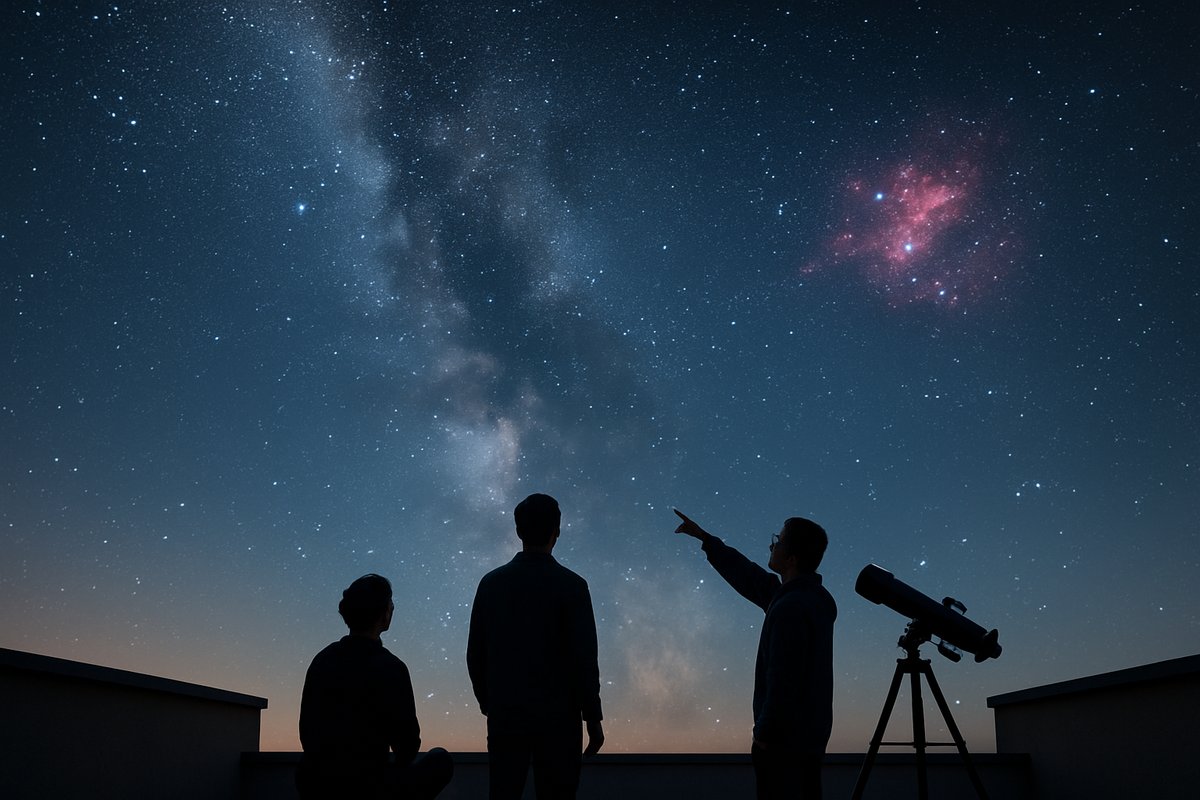
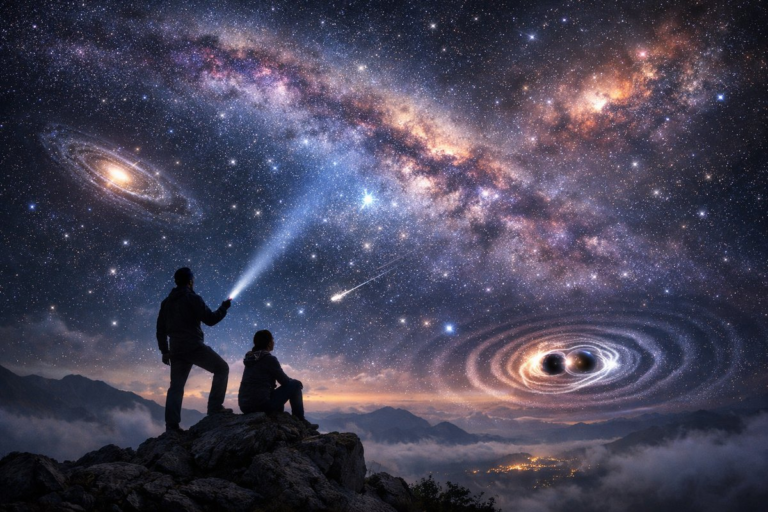
A hush settles over the rooftop as curious minds tilt their eyes toward the heavens, tracing patterns born in light years. This article invites you to explore the fine art of stargazing, the thrill of capturing distant nebulae, and the profound sense of scale that comes from simply looking up.
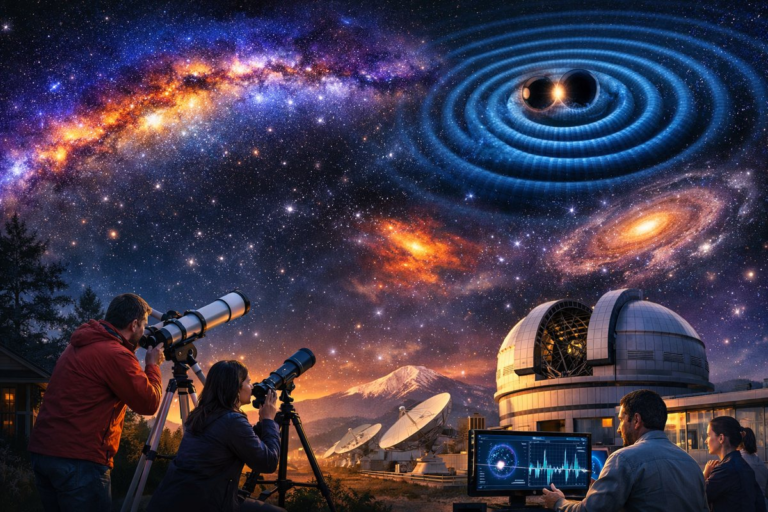
The night sky is a vast tapestry, stitched together by ancient photons that have journeyed across emptiness for millennia. In a small clearing outside a city’s glow, a circle of enthusiasts gathers around a gleaming optical instrument perched on a tripod. Their breath creates tiny clouds in the cooling air as they peer into the eyepiece, sharing gasps and quiet laughter when a giant planet or a swirling cloud of gas comes into view. This ritual of collective wonder is a reminder that cosmic curiosity thrives in the mingling of technical tools and childlike awe.
On this rooftop observatory, a classic refractor telescope stands ready. Its polished metal tube reflects streetlights from below, but once the cap is removed, all attention turns skyward. Jupiter emerges first, painted in subtle stripes of russet and ivory, its four largest moons shimmering like distant lanterns. Guided by a rotating planisphere star chart, observers learn to distinguish Orion’s belt and Betelgeuse’s ruddy glow. The star wheel becomes a passport to the firmament, collapsing the complexity of celestial coordinates into a simple twist of plastic.
Beyond identifying constellations, the group delves into the physics that make them so luminous. Light from stars bends around the edges of massive objects, an effect of general relativity. Gravitational lensing turns clusters of galaxies into shimmering arcs, refracting light in ways that reshape our visual narratives of space. In 2019, a telescope nestled high in the Chilean Andes captured a ring of distorted light from a galaxy nearly seven billion light years away. That cosmic arcade is both a visual spectacle and a natural laboratory, letting scientists test Einstein’s equations on the grandest scale.
Meanwhile, amateur astrophotographers share stories of long exposure images, where the spinning Earth trailed starfields into streaks of ivory. One night, a budding photographer affixed a digital camera to the telescope’s mounting bracket and let it click away for eight minutes. The result: a haunting portrait of the Orion Nebula, its billowing clouds of gas and dust rendered in shades of violet and pink. A sturdy, vibration-damping tripod and motorized mount can mean the difference between a blurry glow and a detailed portrait of stellar nurseries. As these images are processed, each pixel reveals a chapter in the life cycle of stars, from their swirling birth in dense molecular clouds to their dramatic supernovae finales.
Not all cosmic explorations require high-magnification lenses. A pair of astronomy binoculars offers sweeping views of the Milky Way’s river of stars, its bright core glimmering against inky darkness. During a Perseid meteor shower, the group lies back on a blanket, scanning the sky for shooting stars. The binoculars frame the dance of tiny dust particles burning up in the atmosphere, transforming them into sudden, fleeting streaks of light. Recording each sighting on a shared logbook, the observers become a distributed meteor-tracking network, contributing data on shower intensity and peak activity.
At the same time, citizen scientists scan the sky for satellites glinting in low Earth orbit. A network of camera traps monitors flashes from passing spacecraft, mapping their trajectories and helping amateur radio operators predict when to tune in. These modest pieces of equipment become part of a larger chorus-data streams flowing into online repositories where researchers study satellite traffic, space debris, and even the occasional rogue balloon.
Virtual reality brings another dimension to cosmic curiosity. Slipping on a headset, you can drift through the rings of Saturn, feeling their icy particles brushing past. A simulated tour of the International Space Station highlights the flicker of lights inside the modules and the curve of Earth below. Developers have begun layering real telescope data into these environments, so nebulae and galaxies are rendered with scientific accuracy. VR experiences let you traverse the Pillars of Creation in the Eagle Nebula or ride along with a probe flying past Pluto, all from the comfort of your living room.
Yet the true wonder lies not just in the tools, but in the questions they provoke. What mysteries does the cosmic microwave background hold? That faint afterglow from the Big Bang encodes information about the universe’s earliest moments, whispering secrets of its rapid inflation. When you adjust a radio antenna to receive these microwaves, you’re tuning into a broadcast older than the oldest galaxies we can see. Piecing together these signals is part detective work, part cosmic archaeology.
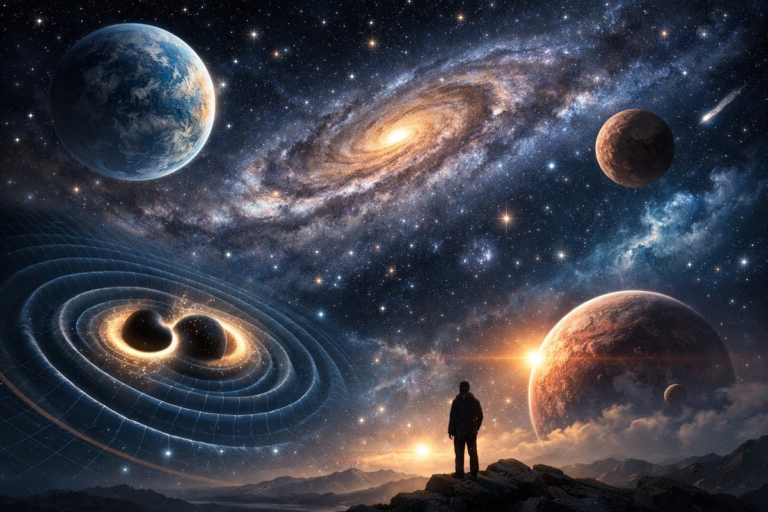
Cosmic curiosity also invites us to consider our place in the grand scheme. Carl Sagan described Earth as a pale blue dot suspended in a sunbeam-our home a tiny speck against the immensity of space. That perspective humbles us, yet it also empowers. The same laws that govern orbiting moons govern subatomic particles in a laboratory. By studying faraway stars and distant galaxies, we refine technologies from medical imaging to renewable energy.
Back on the rooftop, smartphones beam real-time star maps into eager hands. An augmented reality app overlays constellation outlines on the sky, letting novices match patterns without squinting through charts. With a simple tap, they access observations logged by professional observatories, or connect to live feeds from infrared telescopes tracking newborn stars. This fusion of low-tech star wheels, high-precision optics, and powerful software creates a hybrid practice of stargazing that is endlessly adaptable and open to newcomers.
Cosmic curiosity is a form of play that straddles science and poetry. It turns everyday objects-a chart, a lens, a tripod-into portals to the unknown. It reminds us that even a backyard observation session can feel like a voyage to other worlds. Each photon captured, each pattern traced, each question asked brings us a step closer to understanding the universe and our own place within it.
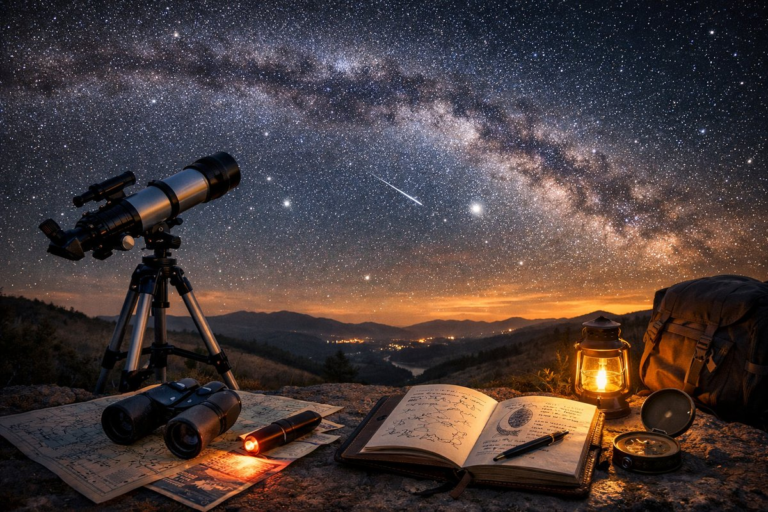
So the next time you look up at a clear night sky, consider arming yourself with simple tools: a star chart to decode constellations, a sturdy mount to steady your lens, a pair of binoculars to widen your view. Pause to listen for the hum of distant quasars, or to imagine the ghostly glow of cosmic background radiation bathing the cosmos. In this playground of light and shadow, curiosity is the only compass you need.