Location
Mount Vernon, WA 98274
Location
Mount Vernon, WA 98274


Artists and designers are forging a new path where sustainability and interactivity converge in public spaces. From biodegradable sculptural installations to augmented-reality murals, these works invite curiosity and communal participation while championing eco-friendly materials and innovative technologies.
In city parks, on urban rooftops, and even along canal towpaths, a new wave of public art is taking shape-one that dissolves the boundaries between audience and artwork, and between permanence and ephemerality. Emerging from a collective desire to marry environmental responsibility with immersive experiences, this movement is redefining how we engage with visual expression in shared spaces.
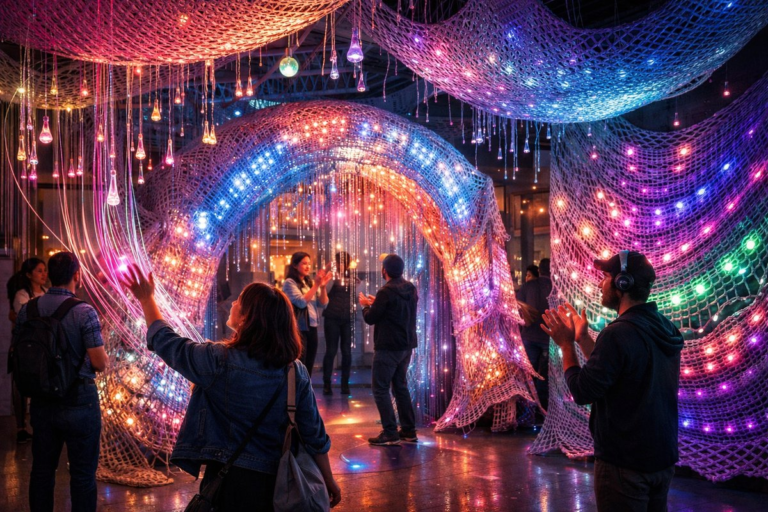
Across several recent installations, artists have abandoned traditional canvas or bronze in favor of renewable, biodegradable materials. One project transformed a disused waterfront into a corridor of sculptural blooms made from eco-conscious filament extruded by desktop 3D printers. Over the course of a month, these blossoms shimmered with projected light and then gracefully decomposed back into the soil, leaving only a faint scent of wood pulp. Visitors were encouraged to touch the forms, watch their shapes morph under shifting sunlight, and even rearrange petal-like components, becoming co-creators in the work’s evolving life cycle.
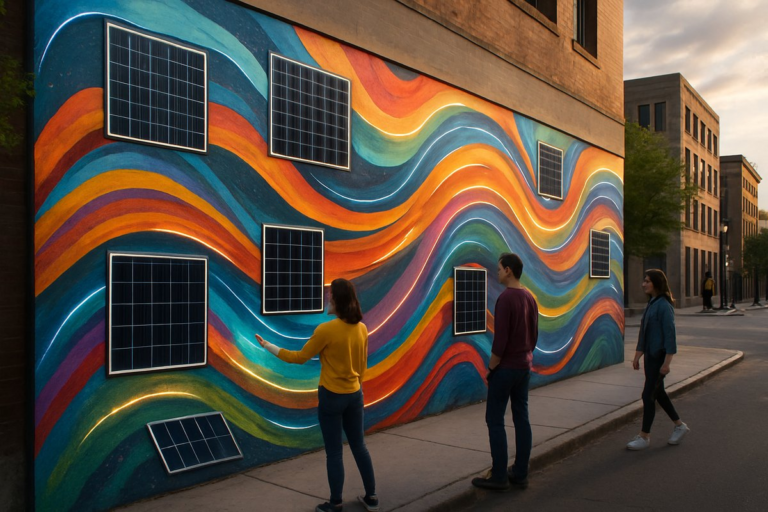
Parallel experiments are taking place in the realm of augmented-reality murals. Instead of static paint on brick, AR-enabled street art layers digital animations onto weathered walls. Passersby simply open a free smartphone app or scan a QR code to watch animated brush strokes ripple across surfaces, revealing hidden motifs of endangered wildlife or time-lapse sequences of nature reclaiming abandoned lots. By making the unseen visible, these pieces spark reflection on our ecological footprint without resorting to didactic slogans.
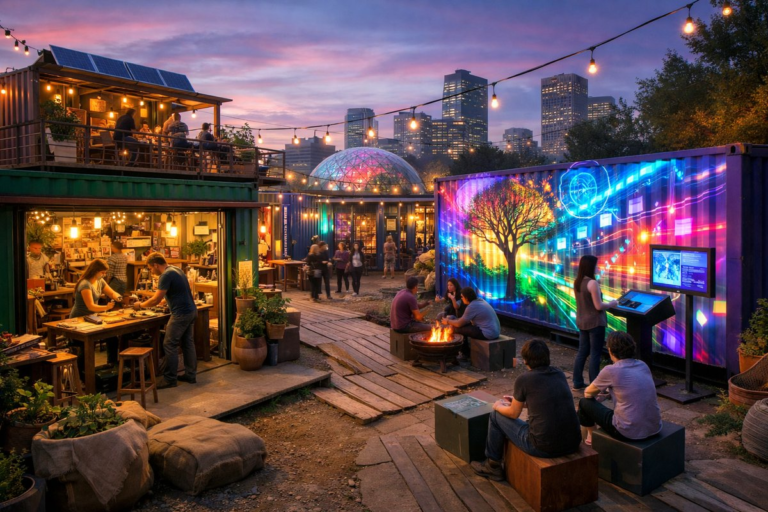
A recent pop-up exhibit invited local families to step into a mobile dome outfitted with a 360-degree projection system. Inside, participants selected from a palette of eco-friendly digital brushes and painted collective dreamscapes on the dome’s interior. Once a wall was filled, the scene would blend into the next participant’s vision, creating a layered tapestry of communal creativity. After each session, the installation was packed into modular crates built from reclaimed wood and shipped to its next host community, demonstrating that portability and low-carbon logistics can go hand in hand with immersive design.
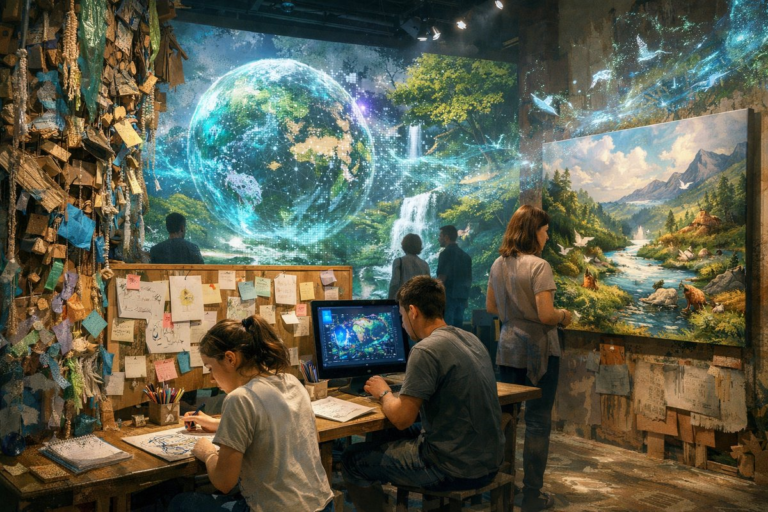
Behind these projects lies a growing community of makers committed to material innovation. Workshops on biodegradable PLA filament blends, algae-based plastics, and recycled textile composites are drawing crowds of novices and professionals alike. In one studio, participants learn to cast lightweight panels from discarded paper pulp, hand-dye them with botanical inks, and assemble them into largescale screens that filter daylight in public plazas. The tactile, low-tech process is as much about reclaiming local waste streams as it is about catalyzing conversation around resourcefulness and regeneration.
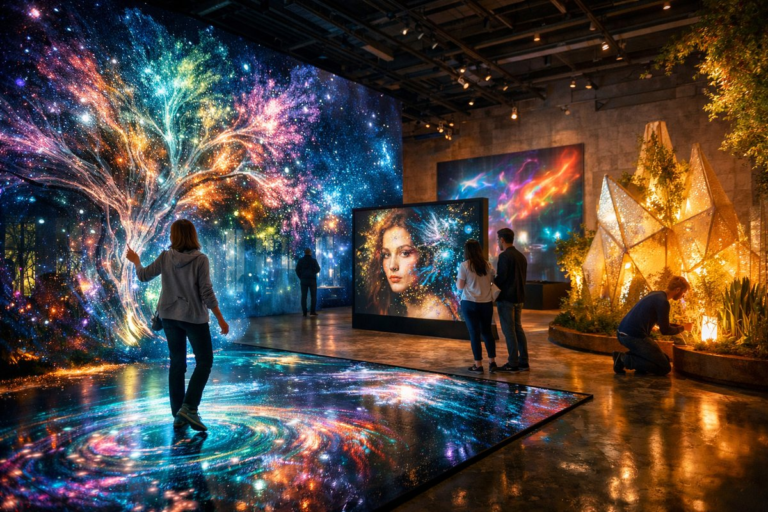
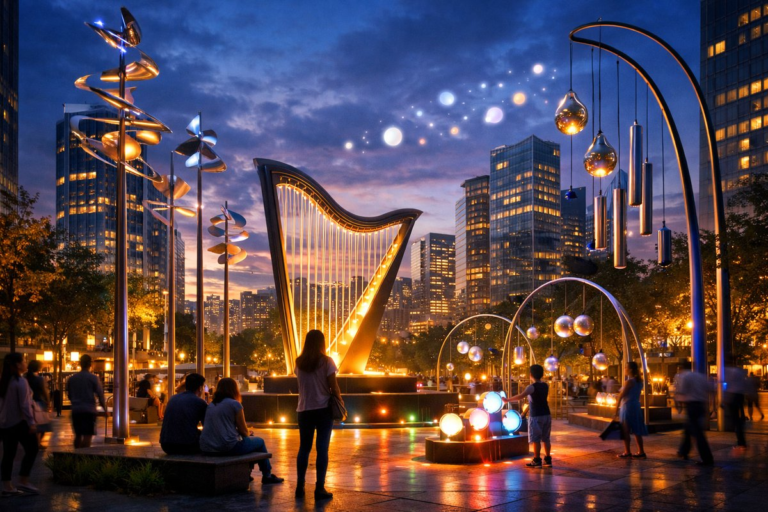
Interactivity has become the north star guiding many creators. Motion sensors, simple infrared beams, and low-power LED projectors are seamlessly integrated into corners of city squares and museum atriums. A sculpture of stacked stone slabs springs to life when someone approaches: tiny laser-cut filigree patterns trace themselves across the stones, accompanied by a gentle chime. As viewers move closer, the lights intensify and the soundscape swells. Stepping back triggers a fade to silence, inviting participants to explore the interplay of space, presence, and perception.
Critics and curators note that this ethos of participatory design taps into a deeper human craving for agency. Traditional art, while powerful, can feel distant-a static object observed from afar. By contrast, an installation that responds to your heartbeat, mirrors your silhouette, or dissolves as you touch it offers a fleeting but potent sense of belonging. It shifts the art-viewer dynamic into a fluid dialogue.
These ventures also reflect a mindfulness about environmental impact. Instead of shipping in heavy steel frameworks or off-gassing toxic paints, many creators are opting for solar-charged projectors, compostable polymers, and locally sourced bamboo scaffolding. Even when technology is involved, the aim is minimal energy draw and easy disassembly. At the end of a show’s run, components are reclaimed, repurposed, or returned safely to the earth, rather than stacked in warehouses or landfills.
Funding models are adapting too. Crowdfunding campaigns now highlight carbon-neutral production as a key benefit, drawing backers who care as much about process as final visuals. Local governments have begun leasing underused public spaces for pop-up art that enhances community cohesion and promotes eco-tourism. Meanwhile, tech incubators are mentoring interdisciplinary teams of designers, engineers, and environmental scientists, accelerating prototypes that blur the line between art installation and ecological prototype.
Central to this movement is a set of guiding principles: curiosity over consumption, collaboration over competition, and regeneration over waste. Workshops in botanical dyeing emphasize how plants once used for pigments can nourish pollinators if sown in adjacent gardens. AR developers share open-source code that anyone can adapt for new murals. Makerspaces publish manuals on press-molding scrap cardboard into structural forms. The result is not just a spate of eye-catching projects, but the budding of a sustainable creative ecosystem.
One of the most compelling aspects is how these works spark community dialogue. In a redeveloped plaza, a temporary pavilion built from modular bamboo pieces invited local residents to file in and share stories on audio recorders embedded in its columns. The pavilion’s outer walls were painted with oxygen-releasing moss and lichen, transforming the structure into a living breathing entity. When the exhibit closed, the recorded anecdotes were stitched into a soundscape that now accompanies the mossy walls as they continue to grow, offering a layered portrait of place and memory.
Yet challenges remain. Weather can wreak havoc on biodegradable mediums, requiring artists to design for resilience-waterproofing joints without plastic sleeves, ensuring wind loads don’t topple light installations, and mapping shade patterns so solar panels stay efficient. Maintenance protocols must be intuitive enough for non-specialists to follow. Artists are collaborating with engineers to develop quick-assembly connectors, colorfast natural dyes, and weather-resistant botanical composites.
As this trend gains momentum, traditional art institutions are paying attention. Galleries are commissioning outdoor interventions that dissolve at season’s end. Museums are dedicating wings to interactive displays that track visitor movement, lighting up as crowds gather and dimming as they disperse. Design schools are launching programs that marry sculpture, ecology, and digital media, training a new generation to think across disciplines.
Ultimately, these sustainable, interactive art forms are less about rejection of traditional techniques and more about expansion. They invite us to ponder impermanence, to co-author meaning, and to see public spaces as living laboratories. By choosing materials that feed back into natural cycles and by inviting audiences to shape the outcome, artists and designers are cultivating experiences that resonate on an emotional level and a practical one.
In a world grappling with climate realities and digital overload, this emergent art offers both respite and inspiration. It demonstrates that creativity need not cost the earth, and that when we allow art to breathe, adapt, and involve us directly, it becomes a force for wonder-and regeneration-right in the heart of our cities.
Every shimmering projection, biodegradable bloom, and responsive installation is a step toward a future where public art is not just admired, but lived, touched, and ultimately returned to the landscapes and communities that nurtured it.