Location
Mount Vernon, WA 98274

Location
Mount Vernon, WA 98274
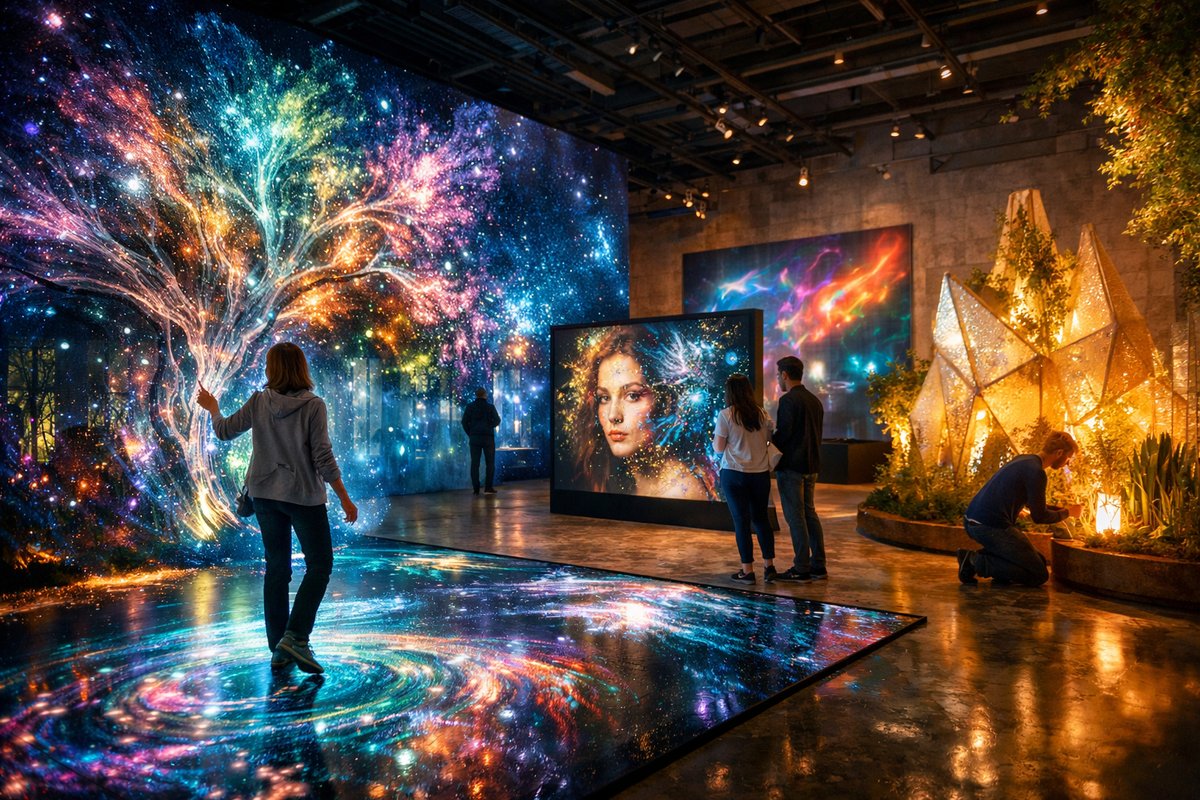
A new wave of exhibitions is blurring the lines between technology and traditional art, ushering in immersive environments driven by artificial intelligence and interactive design. From generative visuals that respond to visitor movements to sustainable materials redefining installation practices, museums and independent spaces alike are rethinking how creativity meets curiosity.
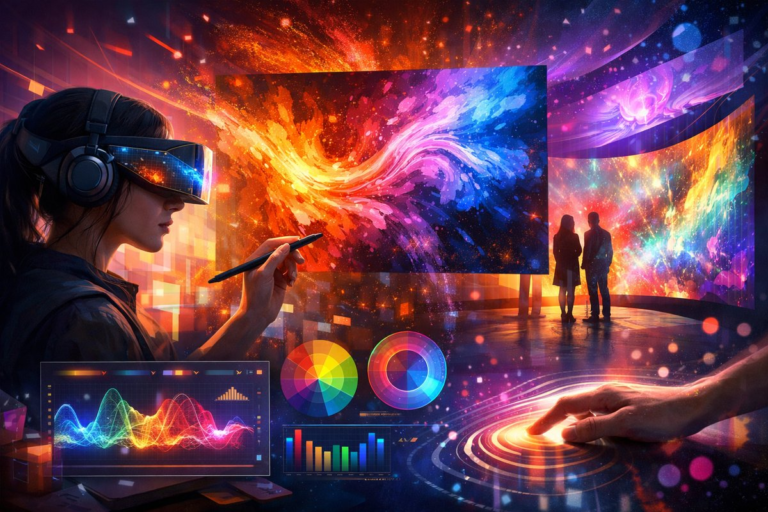
In a dimly lit warehouse on the edge of the city’s creative district, dozens of visitors stand transfixed as swirling patterns of color coalesce on a 30-foot wall. The installation, powered by a generative AI engine and a grid of motion sensors, transforms each person’s movement into living brushstrokes that bloom, trace, and dissolve in real time. Far from passive screens showing recorded content, these walls feel alive, reacting to the collective energy of the audience.
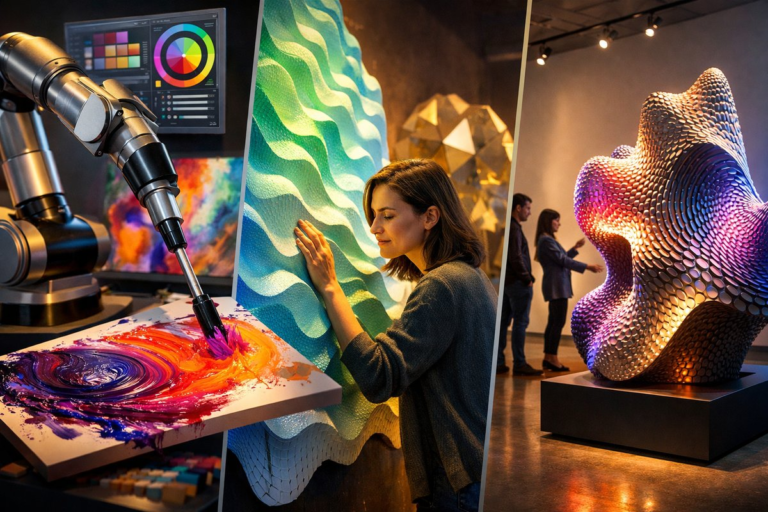
Across the street in a repurposed shipping container, another exhibition showcases sculptural forms printed from biodegradable composites. Each piece emerges layer by layer, its contours shifting under changing lights and animated projections. Here, the dialogue centers on sustainability and craft, offering a counterpoint to the data-driven dynamism of AI-generated canvases. Yet both shows share a common thread: they insist that art is an experience, not just an object.
News of these boundary-pushing spaces is spreading rapidly. Small galleries are partnering with tech labs to develop bespoke software that translates biometric data-heart rate, skin temperature-into evolving patterns. Independent curators are sourcing natural pigments and recycled resins for installations that challenge the ecological footprint of large-scale art. Even cities once known for traditional painting and sculpture are now commissioning interactive murals infused with solar-powered sensors, so surfaces glow and pulse after sunset.
What’s driving this surge of hybrid creativity? Part of it is a fascination with immediacy. In an era when so much content feels recycled, generative systems offer endless novelty. An AI algorithm that teaches itself from every brushstroke can produce infinite variations: no two visitors see precisely the same image. That sense of personal authorship-where the viewer becomes a kind of co-creator-resonates deeply with audiences fatigued by static installations.
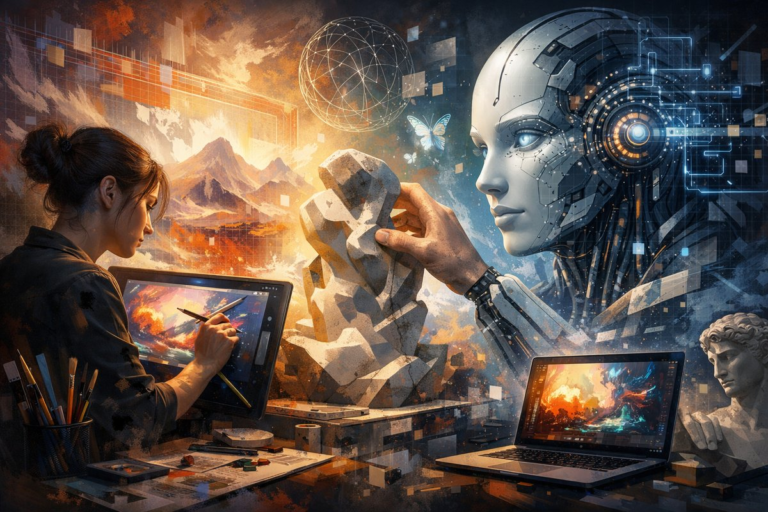
Yet technology isn’t simply a gimmick. Artists and designers insist that the core impulses of visual expression-color, composition, light, emotion-remain at the center of these works. The AI tools act like collaborators, suggesting unexpected combinations or subtle shifts in hue that push human intuition in new directions. In some studios, programmers sit side by side with painters, each exchanging feedback: “This section feels too cold; let’s warm it up,” or “Maybe more organic forms here, like spores.”
At the same time, sustainability emerges as an equally urgent theme. As major museums expand to host ambitious digital spectacles, the energy-consumption concerns are drawing scrutiny. LED walls, computers, and cooling systems can leave a substantial carbon footprint. In response, some spaces are installing solar arrays or using off-grid battery storage to power events. Others are creating modular, transportable structures built from reclaimed wood and industrial fabrics, so installations can move from city to city without the heavy logistical burden of traditional shipping.
This intersection of high-tech and low-impact materials invites fresh philosophical questions. What does it mean to preserve an artwork that is, by design, in flux? How do curators archive pieces that literally rewrite themselves each moment? Some collectors are investing in blockchain-based provenance systems, where every change in an installation’s generative algorithm is recorded in a public ledger. Others are building open-source repositories so that codebases, like digital sketchbooks, can be studied, forked, and remixed by future generations.
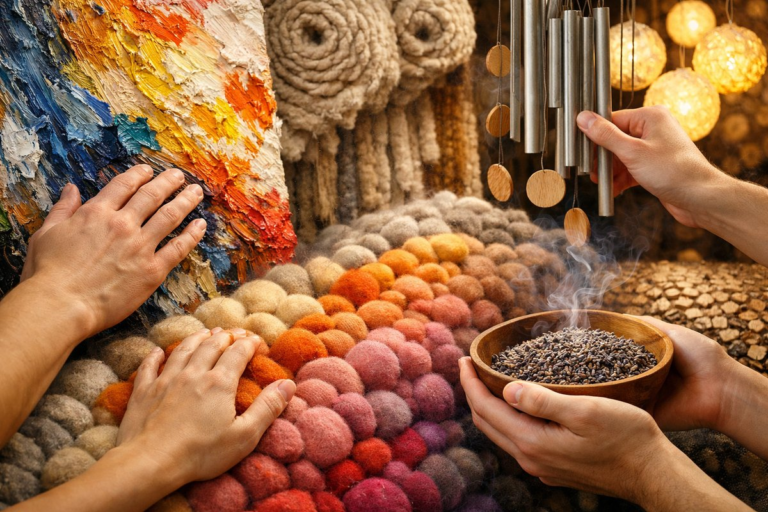
Independent spaces are flourishing alongside institutional players. A collective of media artists recently transformed an abandoned stadium into a walk-through dreamscape of synchronized projections, binaural soundscapes, and tactile gradients that shift underfoot. Patrons navigate winding corridors of pixelated light, encountering moments of calm-an echo of birdsong in a projected forest-and sudden eruptions of color triggered by footsteps. The entire environment is constructed from off-the-shelf components-projectors, microcontrollers, fiber-optic cables-reconfigured in surprising ways to evoke a sense of wonder.
In another corner of town, a design studio has repurposed vintage arcade cabinets to host interactive pixel art generators. Players draw with a joystick and buttons on low-resolution LED grids, then watch as their creations are interpolated by neural networks into high-definition murals projected on gallery walls. The juxtaposition of nostalgic hardware and cutting-edge AI invites reflection on how past visions of the future inform today’s aesthetic.
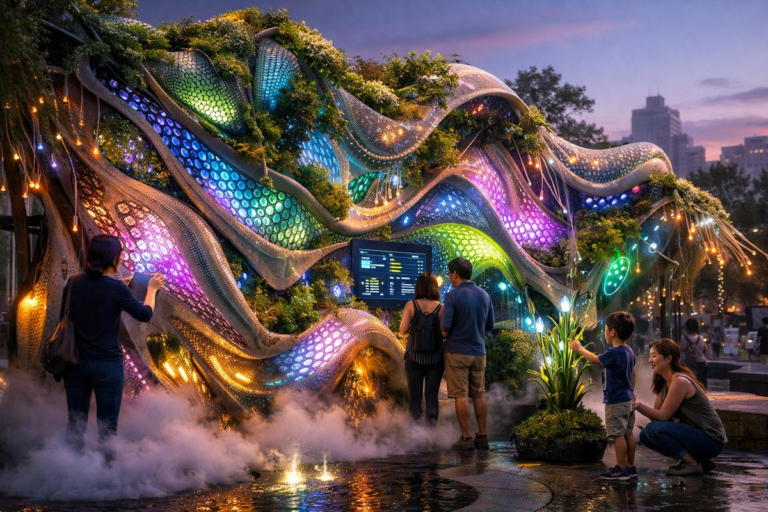
Beyond gallery walls, public art commissions are evolving too. City councils are installing adaptive light sculptures in plazas that respond to weather data. When the air quality dips, the sculpture dims; on windy days, kinetic arms sway in harmony with gusts. Residents can view real-time environmental metrics on an accompanying app, reinforcing a sense of collective stewardship. These living installations foster civic engagement, turning passive onlookers into active participants in urban ecology.
Education is adapting alongside practice. Art schools now offer hybrid degrees in algorithmic art and sustainable design, pairing classes on color theory with workshops on sensor integration and material science. Students learn to prototype with laser cutters one week and train generative models the next. Graduates emerge not only with portfolios of striking visuals but also with the technical fluency to realize complex interactive projects.
Critics note that this era of technologically driven visual arts is not without challenges. Concerns about algorithmic bias-favoring certain aesthetic styles over others-mirror discussions in other domains of AI ethics. Artists worry that reliance on pre-trained models could lead to homogenized results if everyone uses the same open-source libraries. Meanwhile, the cost and learning curve of advanced tools may exclude emerging voices without access to labs or grants.
Still, the overall momentum suggests that art and design will continue to expand outward, embracing new media, forms, and philosophies. Immersive exhibitions travel faster and farther than ever before. Pop-up installations in shipping containers and bus shelters can reach communities overlooked by brick-and-mortar institutions. Virtual galleries grant access to audiences worldwide, offering 360-degree tours of living artworks that evolve as long as their code is live.
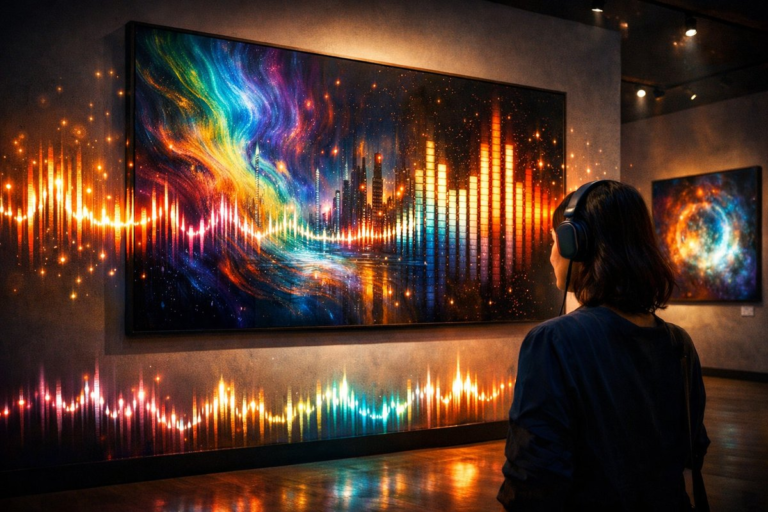
In the glow of a projection-lit night, a visitor steps back to take it all in. She sees her own shadow flicker across the morphing shapes, a reminder that creativity thrives when human perception and machine ingenuity converge. The future of the gallery is not a silent white cube, but a responsive ecosystem: part laboratory, part theater, part sanctuary. Here, curiosity meets creativity in an endless loop, inviting each of us to become co-authors of the visual world around us.
As these experiments multiply, they prompt us to reconsider what art can be. Is it an object to own, or an experience to share? A static canvas, or a living, breathing environment? The answer seems to lie in the space between brush and code, between pigment and pixel-a space where imagination meets innovation, and the only constant is change.