Location
Mount Vernon, WA 98274
Location
Mount Vernon, WA 98274


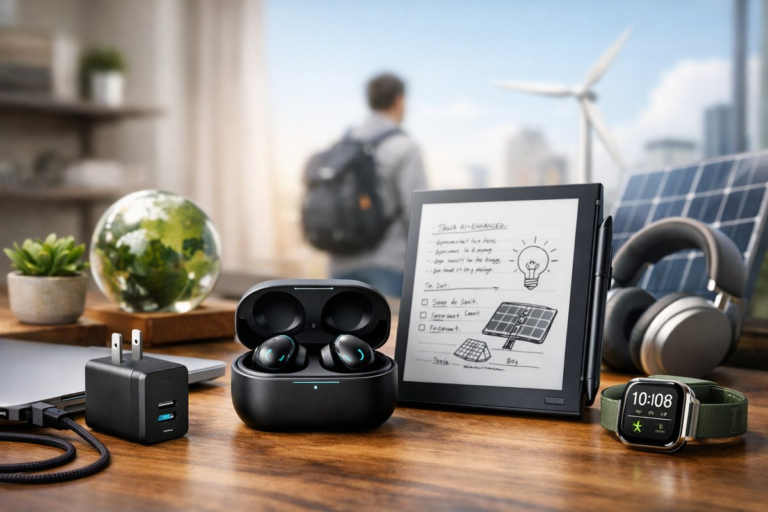
A new wave of compact, intelligent devices is transforming how we work, play, and stay connected. From sustainable power solutions to AI-driven assistants, these tools blend practicality with environmental mindfulness to meet evolving daily needs.
In homes and offices around the globe, the latest generation of gadgets is pushing boundaries on sustainability, personalization, and convenience. Far from one-size-fits-all appliances, today’s innovations feel like tailored extensions of our own habits, with modular designs and open APIs that invite creative customization. Even as pocket-sized powerhouses shrink in profile, they widen the horizon for smarter workflows, healthier routines, and more responsible consumption.
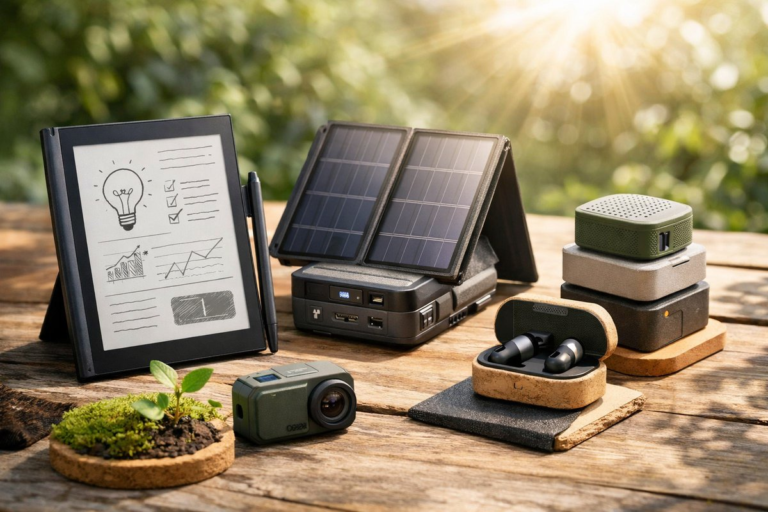
At the heart of this movement lies a fresh approach to energy. Emerging solid-state batteries promise higher energy densities without the risk of leakage or thermal runaway characteristic of traditional lithium cells. Although still in early production phases, prototypes demonstrate rapid charging cycles paired with longer lifespans, hinting at a future where a single charge could carry a device through several days of heavy use. In parallel, micro solar arrays-lightweight panels thin enough to slip into a notebook cover or backpack flap-are gaining traction as auxiliary power sources. They may not replace wall outlets overnight, but they speak to a wider demand for decentralized, on-the-go energy that reduces reliance on the grid.
Material innovation extends beyond batteries. Recycled plastics, bio-based polymers, and reclaimed metals are finding their way into casings for smart speakers, wearable health monitors, and handheld gaming controllers. These eco-conscious components not only lower carbon footprints but often yield a distinctive look and feel, with subtle texture variations and matte finishes that stand out from glossy mass-produced plastics. Certain brands have even introduced take-back programs, offering discounts on future purchases in exchange for end-of-life device returns, further reinforcing circular design principles.
On the software side, voice and gesture interfaces have matured into robust platforms capable of understanding context and following multi-step instructions. Instead of issuing discrete commands-such as asking an assistant to play a song, then set a timer-users can speak conversationally: “Play jazz while I prep dinner, and remind me in 15 minutes to check the sauce.” Complementing this is an emerging breed of on-device neural accelerators that perform complex speech recognition and natural language processing without routing data to distant servers. This local processing not only cuts latency but also keeps personal interactions more private, since sensitive voice recordings never leave the gadget itself.
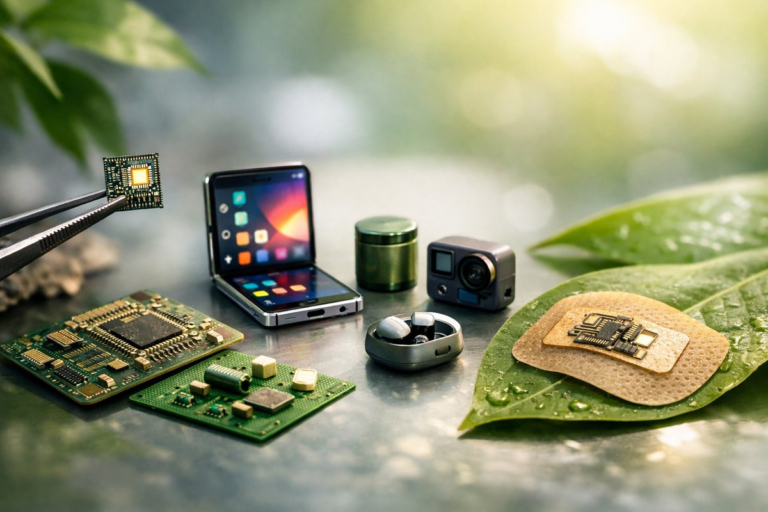
Health and wellness gadgets are capitalizing on miniaturized sensors to deliver clinical-grade insights in familiar form factors. Wearable patches the size of a postage stamp can now track hydration levels, core body temperature, and muscle fatigue, transmitting real-time metrics to a dashboard on the user’s smartphone. Meanwhile, countertop analyzers-no larger than a coffee grinder-can run nutritional scans of fresh produce, estimating vitamin content and detecting pesticide residues. These tools democratize lab-style testing, empowering consumers to make more informed choices about both diet and activity.
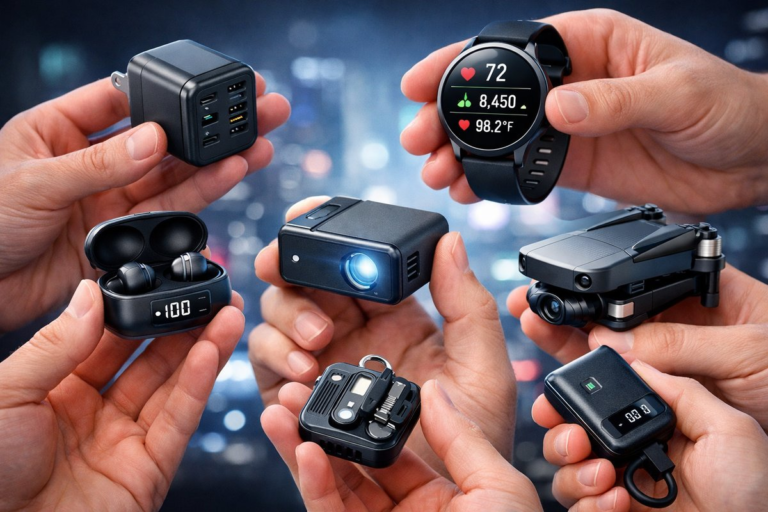
One of the most transformative trends is modularity. Detachable camera modules, snap-on sensor pods, and plug-and-play battery banks give devices a dynamic quality: today’s projectors become tomorrow’s document scanners, and portable gaming units can evolve into full-fledged productivity workstations with the right accessory kit. This approach not only extends the lifespan of core electronics but also lets users tailor their toolkit for specific tasks without buying entirely new products.
Connectivity continues to advance, too. Ultra-wideband positioning systems now enable room-scale device handoffs-walking from the living room into a home office, your audio call seamlessly migrates from a smart speaker to a desk microphone, then to wireless earbuds as you head out the door. Such intelligent handoff depends on sophisticated mesh networks and low-energy radio protocols that minimize interference while maximizing range. The stark contrast with early wireless standards is hard to overstate: what once required bridges, repeaters, and manual pairing now happens invisibly in the background.
Despite these leaps, challenges remain. Rapid iteration cycles can lead to fragmentation, with competing modules or software ecosystems that don’t play well together. Interoperability standards are only just beginning to stabilize, so consumers may face a patchwork of compatibility requirements depending on which smart-home platform they adopt. And while many manufacturers tout eco-friendly credentials, true sustainability demands transparency in supply chains-mining practices, labor conditions, and end-of-life processing all factor into a product’s overall impact.
Privacy concerns also linger. Even as more data processing moves on-device, many systems still default to cloud backups or analytics for feature updates and performance tuning. Users who value personal data sovereignty must navigate complex privacy settings and occasionally sacrifice certain conveniences to maintain full control over their digital footprint. Fortunately, a growing number of open-source firmware projects and third-party security audits provide pathways for more technically minded individuals to lock down their smart tools.
The emotional resonance of these devices often comes down to personalized experiences. Smart lighting systems that blend circadian-friendly color shifts with subtle motion triggers can make an apartment feel more alive and responsive. Portable aroma diffusers synchronized with relaxation playlists help signal work-life boundaries in cramped urban dwellings. And socially aware robots with gentle haptic feedback can offer comforting presence or reminders for medication, tapping into our innate need for companionship and care.
For businesses, these innovations open new frontiers in operational efficiency. Compact environmental sensors can track air quality, humidity, and noise levels in real time, alerting facilities managers to potential HVAC issues before occupants notice discomfort. Fleet operators are deploying edge-compute telematics devices that analyze driving behaviors locally, reducing data transfer costs while providing instant feedback to drivers via in-dash displays. Retailers are experimenting with smart shelves that detect weight changes and automatically trigger restocking alerts-bringing inventory management closer to autonomous control.
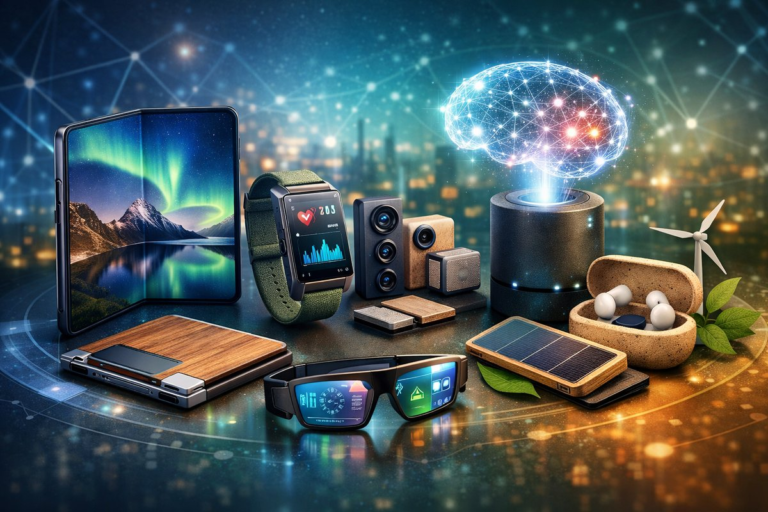
Looking ahead, the integration of flexible display materials and foldable electronics promises even more radical form factors. Imagine pocket computers that expand into tablet-size screens when unrolled or wearable smart textiles with embedded LEDs that shift color based on biometric feedback. While these concepts edge closer to sci-fi, recent demonstrations at industry expos show working prototypes, suggesting widespread adoption may not be far off.
Through all this change, the central theme remains adaptability: devices that learn our rhythms, scale with our needs, and respond to environmental imperatives. The most successful gadgets will likely be those that balance raw performance with social and ecological responsibility-tools that enrich our lives without widening resource gaps or compromising privacy. In an era of techno-optimism and growing awareness, the smart tools that endure will be those built on principles of modularity, transparency, and human-centric design.
As consumers, navigating this dynamic landscape requires both curiosity and a critical eye. By prioritizing open standards, transparent supply chains, and user-friendly privacy controls, we can ensure that the next generation of gadgets not only dazzles with novel features but also fosters a healthier relationship between technology, society, and the planet. Whether you’re charging a device with a solar array on your backpack or chatting with an AI assistant that respects your data, these innovations point toward a future where our tools truly reflect our values.