Location
Mount Vernon, WA 98274
Location
Mount Vernon, WA 98274

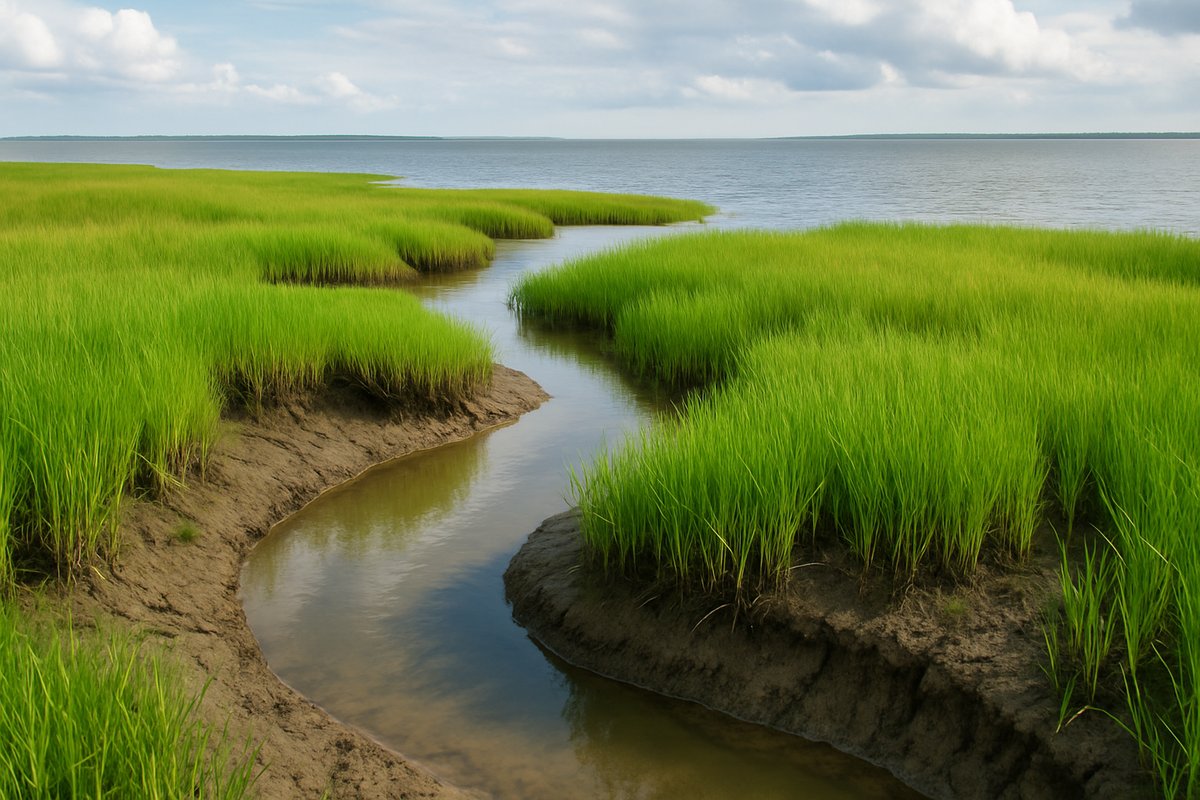
A new study reveals that tidal salt marshes along vulnerable shorelines are building natural defenses against rising seas. Researchers tracked patterns of sediment buildup and plant colonization to uncover how these ecosystems quietly shift and stabilize themselves in the face of climate pressure.
Coastal marshlands, long portrayed as fragile victims of sea level rise, are now emerging as surprising examples of ecological adaptability. In a collaborative effort spanning universities, government agencies, and community groups, scientists have documented how salt marshes along the Atlantic coast are adjusting their landscapes through a combination of sediment accumulation and vegetative growth.
After decades of monitoring shoreline changes, researchers published a report detailing how subtle shifts in marsh elevation are keeping pace, in some locations, with accelerating sea levels. The findings challenge prevailing assumptions that marshes are doomed to drown under a rising tide and point toward nature’s own strategies for resilience.
The study focused on ten sites stretching from the Gulf Coast to New England, each selected for its varying rates of sea level rise and human impact. Using a suite of remote sensing tools and on-the-ground measurements, scientists built a composite picture of how sediment settles among grasses, how root networks bind soil, and how tiny shifts in topography can make all the difference over years and decades.
Sediment often arrives on mudflats carried by tidal flows, storm surges, and river outflows. When these particles settle among marsh grasses, they gradually build up the ground. Meanwhile, robust networks of plant roots and fungal partners weave through the mud, stabilizing sediments and enabling new shoots to sprout. Over time, these processes have raised some marsh floors by several centimeters-enough, in certain spots, to offset local sea level increases.
Key to the research was the integration of aerial drone surveys with field-check stations. Multispectral imaging from low-flying unmanned craft highlighted areas of vigorous plant growth in sharp contrast to patches struggling under stress. On the shoreline, portable weather stations tracked rainfall and wind patterns, while tide gauges recorded precise fluctuations in water levels.
Portable sensors left in situ measured soil elevation changes down to the millimeter, and waterproof notebooks carried by field teams captured qualitative observations on plant species, wildlife activity, and unusual storm impacts. Together, these datasets revealed a dynamic system constantly negotiating between submersion and exposure.
In one Louisiana marsh, sedimentation rates peaked following a series of midseason tropical storms that carried silty river water deep into the wetland. The extra sediment settled around spartina grasses, raising the marsh platform by nearly five centimeters over a two-year span. Researchers noted that without those episodic boosts of sediment, the site likely would have lost ground to the rising gulf.
Further north, on a barrier island off Massachusetts, scientists witnessed a different mechanism: vegetation-driven trapping of windblown sand. Beach grasses and salt-tolerant shrubs slowed the advance of fine sand particles, which piled up and formed protective dunes. Underneath this mask of sand, salt marsh plants recolonized newly stabilized ground, creating an intertwined defense of flora and dune.
Despite these success stories, not all marshes enjoy such favorable conditions. In heavily urbanized estuaries, channel dredging and shoreline hardening have disrupted natural sediment influx. At sites where sea walls restrict marsh migration, rising waters can overwhelm existing vegetation, leading to die-off and open-water pools.
Researchers emphasize that the adaptive capacity of marshes-though remarkable-should not be misconstrued as an excuse to reduce coastal protections or delay emissions cuts. Instead, the study advocates for nature-based solutions that work with, rather than against, marsh dynamics. Strategic managed realignment of coastlines, removal of obstructive levees, and restoration of upstream sediment flows could multiply the marshes’ ability to generate their own resilience.
Community involvement also plays a significant role. Citizen scientists have been trained to identify subtle shifts in vegetation zones, record bird nesting sites, and report unusual erosion events. Their observations feed into open-access databases, helping researchers refine models and local planners develop responsive strategies. In towns dependent on marsh-based fisheries and tourism, empowering residents to monitor their own shorelines creates a shared commitment to conservation.
One local volunteer described her sense of wonder after deploying a simple tide gauge in her backyard marsh. “I used to worry that every storm was wiping our marsh away,” she said. “Now I see how a single big storm can bring new material and life. It makes me feel I belong to something bigger-like I’m part of the marsh’s story.”
Beyond their protective role, marshes deliver additional benefits that underscore their importance. They sequester carbon in deep mud layers, filter pollutants from runoff, and support vital nursery grounds for fish and shellfish. Recognizing these services in economic terms, some regional authorities have started awarding conservation credits to landowners who maintain healthy marsh ecosystems.
Policy experts note that accounting for marsh resilience could alter cost-benefit analyses for coastal development. When marshes thrive, property owners face lower flood insurance premiums, and municipalities spend less on engineered levees. Marsh restoration, once seen as an afterthought, is gaining traction as a fiscally prudent investment.
Yet challenges remain. Climate models predict that sea level rise will accelerate further by midcentury, and thermal expansion of ocean waters may outpace sediment accretion in many regions. Prolonged droughts, more intense storms, and pollution from upstream agriculture can weaken marsh vegetation. The study calls for ongoing monitoring and adaptive management plans that can respond as conditions evolve.
Looking forward, researchers are expanding their network of monitoring stations to include remote Pacific wetlands and warming subarctic salt marshes. Questions about universal thresholds for marsh collapse and the limits of natural recovery are still unanswered. But the current findings offer a message of cautious optimism: nature possesses an intrinsic toolkit for adaptation-one that humans can help maintain and scale up through thoughtful stewardship.
In the quiet interplay of tide and grass, we glimpse a larger narrative of resilience. Coastal marshes remind us that even in a changing world, living systems can surprise us with their capacity to endure. As we devise policies and technologies to protect shorelines, the marshes themselves stand as teachers, offering insights into how balance can be struck between water, land, and life.