Location
Mount Vernon, WA 98274
Location
Mount Vernon, WA 98274

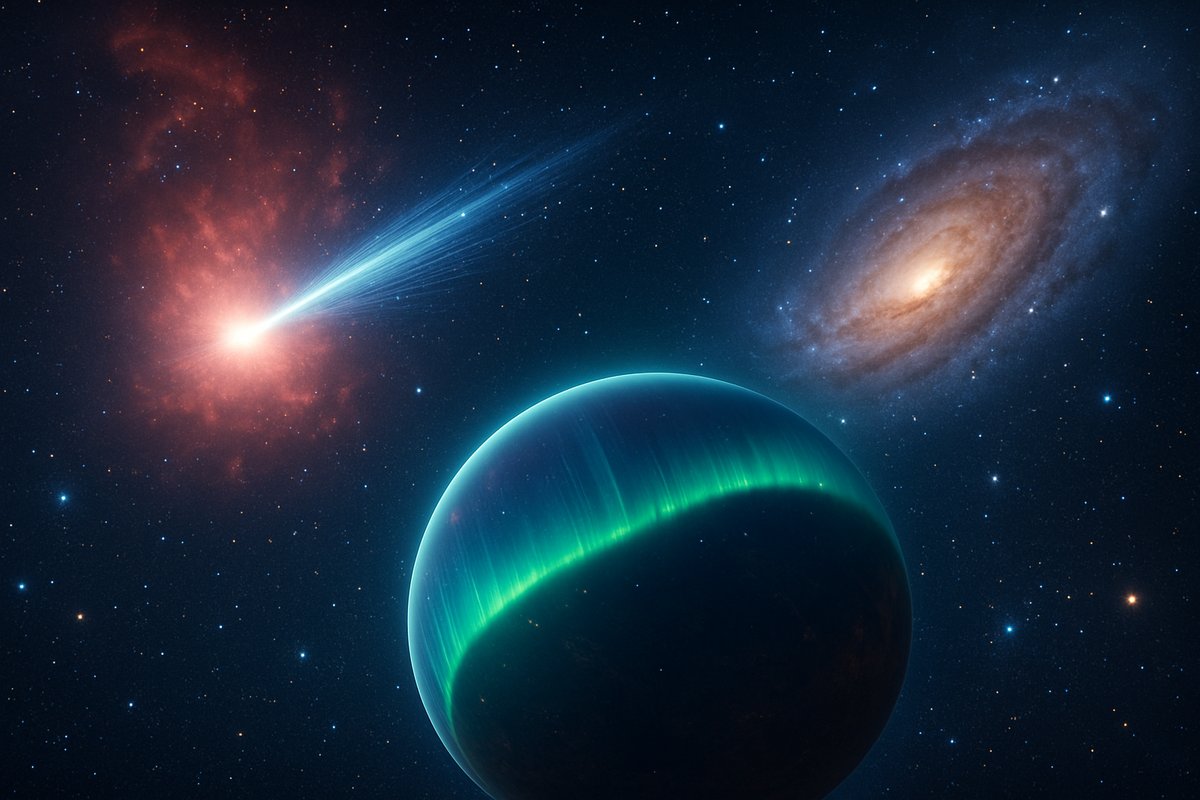
From enigmatic fast radio bursts to the shimmering glow of auroras on distant worlds, our universe brims with puzzles that tease both scientific rigor and playful wonder. This exploration weaves recent discoveries with reflections on why the cosmos continues to captivate the endlessly inquisitive.
A hum of excitement rippled through the astronomy community when a series of fast radio bursts was traced back to a magnetar in our own galaxy. These millisecond-long signals, first detected by a network of radio telescopes spread across continents, challenged long-held assumptions about where such bursts originate. Traditionally believed to come from distant galaxies, this closer-to-home source opened fresh chapters in our understanding of high-energy astrophysical phenomena-and sparked lively debates over dinner tables and online forums alike.
While the magnetar’s magnetic fields twist and snap, unleashing torrents of energy detectable across billions of light-years, a different kind of spectacle plays out closer to home in Earth’s upper atmosphere. Here, charged particles from the solar wind collide with atoms and molecules, igniting curtains of green, purple, and red above polar latitudes. These auroras are more than nature’s own light show: they remind us that the same cosmic forces fueling distant radio bursts also dance along invisible lines of magnetic force just overhead.
In the past few years, space missions have peeled back the layers of our stellar neighborhood. A probe venturing into the tail of a comet found a surprising abundance of organic compounds-building blocks of life-delivered by icy wanderers from the fringes of our solar system. Meanwhile, orbiting observatories have captured high-resolution portraits of exoplanets skimming their stars, teasing out signs of atmospheric water vapor. Each image, each spectrum plot, invites us to wonder whether life’s recipe might be a common byproduct of cosmic chemistry.
But cosmic curiosity extends beyond cataloguing molecules or charting planetary orbits. It delves into realms that defy everyday intuition. Time dilation-where minutes near a black hole might stretch into years for a distant observer-was once a thought experiment reserved for theoretical physicists. Now, teams are measuring time shifts in satellites orbiting Earth, confirming predictions from Einstein’s relativity with exquisite precision. These measurements feed GPS satellites, keeping our navigation systems honest, and remind us that time itself is malleable.
Quantum entanglement, too, has graduated from abstract equations to laboratory demonstrations. Photons sent across kilometers of optical fiber remain mysteriously linked, mirroring each other’s states instantaneously. This “spooky action at a distance,” as it was once derided, now underpins emerging technologies in secure communication and quantum computing. The fact that entanglement experiments routinely light up physics conferences speaks volumes about our evolving grasp of the subatomic stage.
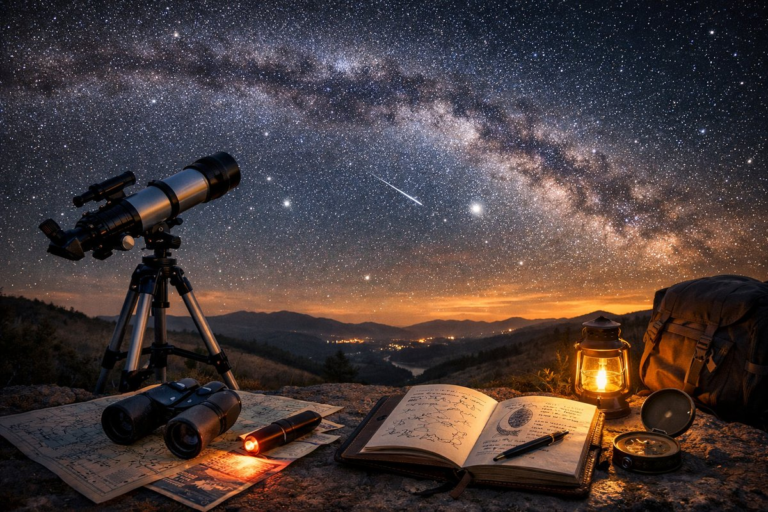
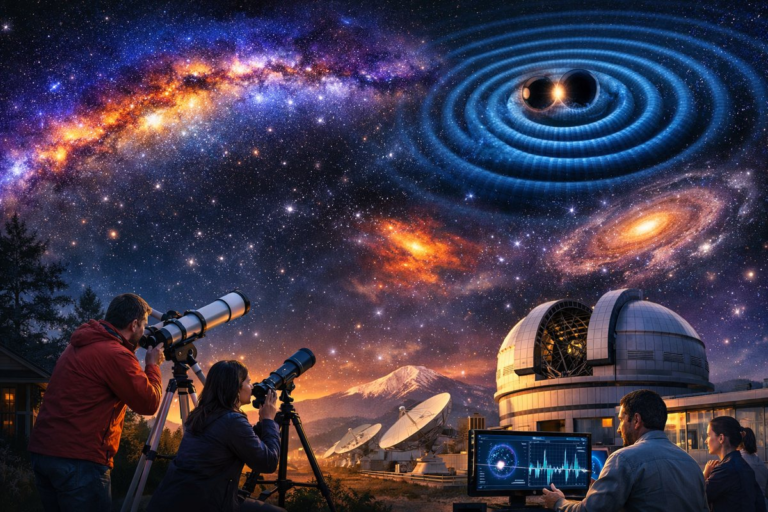
On the human side of cosmic curiosity, amateur astronomers continue to play starring roles. Backyard observers equipped with entry-level telescopes regularly spot supernovae in far-off galaxies or capture the faint trail of a shooting star. Citizen science platforms invite volunteers to sift through terabytes of telescope data, flagging strange light curves or candidate exoplanets for researchers to investigate. In this age of open data, the boundary between professional and hobbyist blurs, fostering a shared sense of discovery.
Cities, of course, can stifle such stargazing efforts with light pollution. Yet even in urban landscapes, a growing community of enthusiasts uses low-light cameras and filters to document the Milky Way’s hazy band cutting across the night sky. Pop-up astronomy events on rooftops or in public parks often pair hot chocolate with star tours, encouraging families to look up and reconnect with the cosmos that underpins our daily lives-even if most of its secrets lie light-years away.
For those drawn to the mathematical poetry of celestial mechanics, orbital simulations offer a sandbox of wonder. Open-source software lets users tweak parameters of planetary systems, watching as planets slip into resonant dances or hurl each other into interstellar space. Such virtual playgrounds not only illuminate why our own solar system’s architecture is so oddly orderly but also hint at the chaotic fates awaiting many star systems born in dense stellar nurseries.
The mind-bending beauty of gravitational lensing further demonstrates how nature itself crafts cosmic telephoto lenses. Massive galaxy clusters warp spacetime to magnify and distort the light of background galaxies. Amateur astrophotographers armed with digital cameras and modest telescopes now capture arcs of these lensed galaxies, reproducing patterns once seen only through the record eyes of major observatories.
Perhaps the most profound thread running through these discoveries is the reminder that science and art share a well of curiosity. Poets cling to the image of starfields shifting in the night, while physicists calculate the precise wavelengths of pulsar pulses. Children sketch imagined worlds bathed in violet skies, unaware that exoplanet surveys have already uncovered planets orbiting red dwarf stars where twilight colors might indeed skew toward purples we can scarcely imagine.
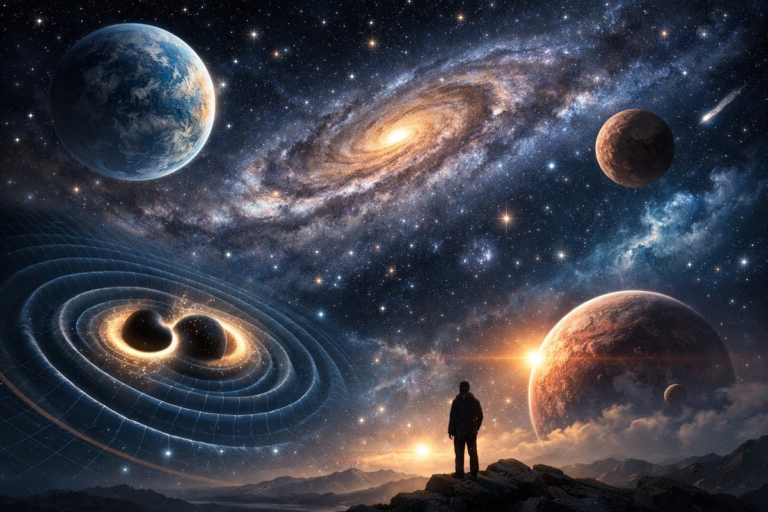
Yet, amid gravitational waves detected by gargantuan laser interferometers and quantum bits flickering in chilled labs, the heart of cosmic curiosity remains deeply human. It’s the same impulse that drove ancient stargazers to track Venus’s path or to carve lunar calendars in stone. Today’s telescopes and spacecraft extend our senses far beyond our eyes and fingertips, but the thrill of piecing together a stellar puzzle-of glimpsing patterns that span space and time-resonates in every culture and every era.
In the coming years, next-generation observatories promise to deepen our cosmic conversations. Probes set to land on ocean worlds may assess habitability beneath icy crusts. Deep-space interferometers could image Earth-like planets directly, searching for the spectral fingerprints of life. Meanwhile, gravitational-wave detectors are on track to listen not just for colliding black holes, but for murmurings from the earliest moments after the Big Bang.
All of this underscores a simple truth: cosmic curiosity is both playful and profound. It invites us to ask big questions while keeping alive the delight of small surprises-a newly spotted comet visible to the naked eye, or a rare alignment of planets before dawn. It bridges rigorous measurement and poetic musing, reminding us that each speck of light we unravel is a letter in the universe’s far-flung story.
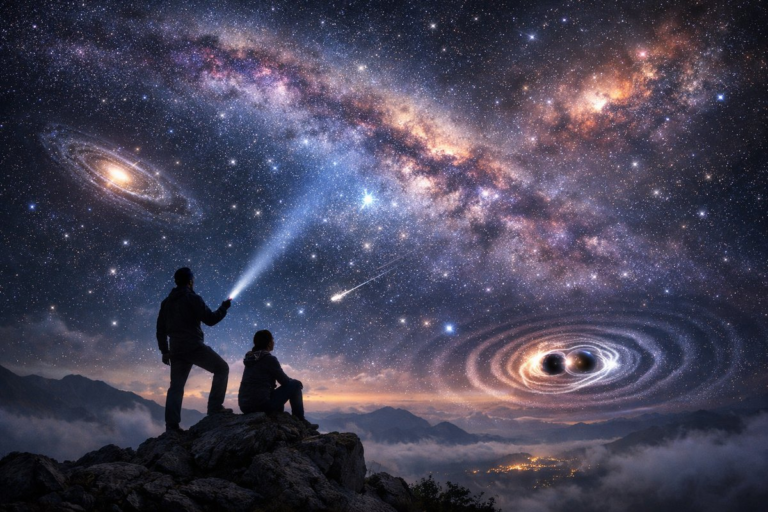
So whether you’re scanning the sky with a small telescope, diving into data from a space telescope archive, or simply stepping outside on a moonless night to trace the Milky Way’s glow, you’re participating in a grand conversation. The cosmos is not a distant monologue; it listens to our instruments, reflects our curiosity in faint pulses of light, and rewards each question with an invitation to look deeper. And as we continue to peer upward and outward, we carry with us the shared wonder that has always driven humanity to explore the strange and beautiful physics that underlie everything around us.