Location
Mount Vernon, WA 98274
Location
Mount Vernon, WA 98274


In every desert dune and alpine slope, an overlooked community of lichens, mosses, and cyanobacteria weaves a living tapestry that stabilizes soil, captures moisture, and fuels ecosystems. As climate shifts and human footprints expand, understanding these silent architects becomes vital to safeguarding landscape resilience.
Before the sun has fully climbed above the horizon, the ground can gleam with a subtle mosaic. Underfoot lies a fragile carpet of life-biological soil crusts-that springs into action with the first drop of dew. Composed of lichens, mosses, algae, and bacteria, these crusts cling to bare earth, knitting it together like nature’s own quilt. Their overlooked presence belies an outsized role in moisture retention, nutrient cycling, and soil stability.
Often mistaken for mere dirt or dust, biological soil crusts (BSCs) are complex microbial communities bound to the soil surface. Cyanobacteria exude sticky sugars that glue fine particles into aggregates, while filamentous lichens and tiny moss cushions add structure. Together, they form thin but resilient layers that turn barren ground into living, breathing landscapes.
Each component of a soil crust carries a distinct identity. Cyanobacteria, among the planet’s earliest photosynthesizers, trap carbon and fix atmospheric nitrogen. Tiny moss tufts cushion microhabitats for insects and seedlings. Crust fungi partner with algae to form lichens with leaflike thalli that sweep up moisture and nutrients from passing breezes. Even single-celled green algae and diatoms play their part in pigmenting the soil and fueling primary production.
In drylands, soil crusts act like ecological sponges. When dew condenses or light rains fall, the crust’s microstructure channels water into the soil pores below-delaying evaporation and making moisture available to deeper-rooted plants. Researchers have measured as much as a 30 percent increase in moisture retention beneath intact crusts, a lifeline for seedlings in unforgiving climates.
Through nitrogen fixation, some crust organisms convert inert atmospheric nitrogen into biologically usable forms. In a single square meter of desert crust, cyanobacteria can fix up to seven grams of nitrogen each year-enough to nourish the surrounding vascular plants and feed grazers. That nutrient boost ripples through the food web, fueling blooms of annual wildflowers, grass shoots, and soil invertebrates.
By binding soil particles, crusts prevent wind erosion that can strip tens of tons of dust from arid landscapes. When winds howl across desert flats, a stable crust holds the surface in place, reducing dust storms that degrade air quality hundreds of miles downwind. In sagebrush steppe and alpine moraines alike, crusts serve as living anchors against erosion and carbon loss.
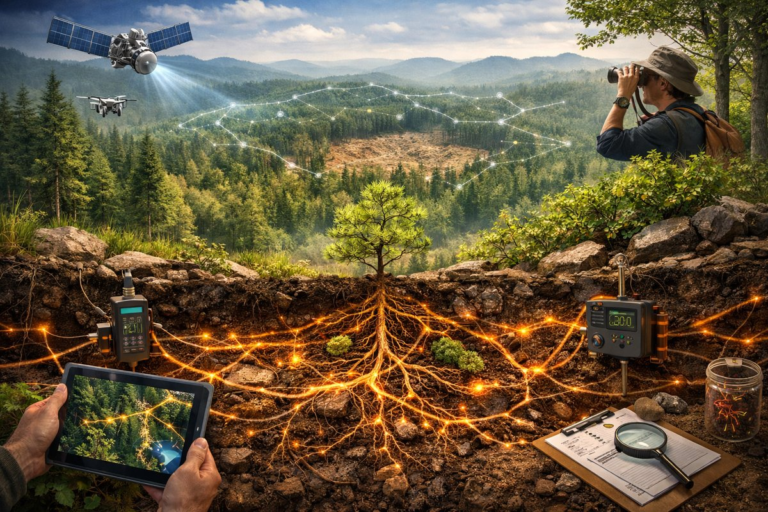
Scientists now harness remote sensing to map soil crust distribution and monitor health over vast regions. High-resolution satellite imagery reveals patterns of spectral reflectance-subtle color shifts that indicate crust coverage or disturbance. Field teams calibrate those satellite signals by collecting ground-truth measurements of crust thickness, moisture content, and species composition.
In the Mojave Desert, aerial surveys have charted the slow expansion of crust communities over abandoned mine tailings. Meanwhile, in Arctic tundra, crusts help insulate permafrost by absorbing sunlight and moderating surface temperatures. Though these habitats lie thousands of miles apart, the ecological logic is the same: crusts build resilience from the ground up.
Human activities pose one of the greatest threats to these cryptic communities. Off-road vehicles leave deep ruts that shatter crust layers, exposing bare soil to rapid erosion. Even a single bootstep in a fragile lichen field can take decades to recover. Livestock grazing, camping, and resource extraction all leave invisible scars that compromise the crust’s integrity.
Climate change adds new pressures. More intense droughts can kill delicate crust organisms that need periodic hydration. Heatwaves accelerate moisture loss and disrupt the microbial balance. In areas where rainfall patterns shift from gradual drizzles to torrential events, crusts may be overwhelmed by surface runoff rather than benefiting from gentle seepage.
Restoration efforts are gaining traction in some regions. Scientists cultivate crust inoculum in greenhouses-growing mixtures of algae, cyanobacteria, and moss under controlled conditions-and then spray it onto denuded soils. Protective blankets of biodegradable fiber help shield young crust communities from wind and sun until they establish. Early trials show promise: within two years, inoculated sites can approach the moisture retention values of untouched crusts.
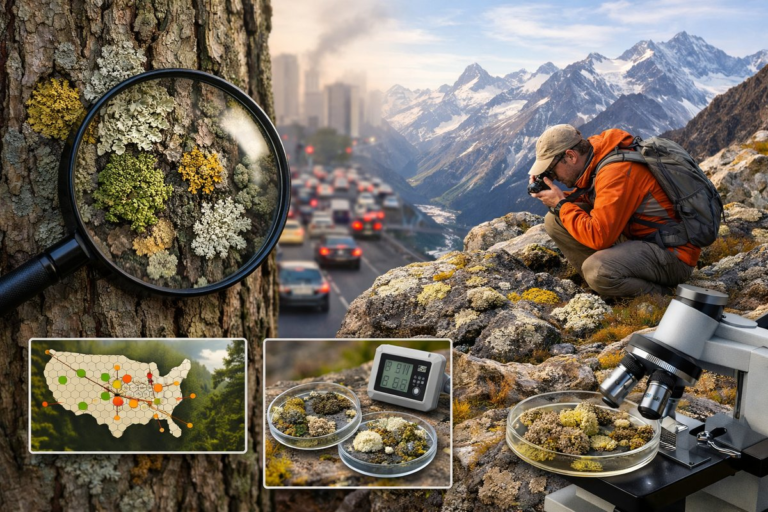
Citizen science projects also invite volunteers to document crust diversity and distribution using smartphone apps. Participants record GPS locations, upload photographs, and answer a few simple questions about ground cover texture and color. These crowdsourced observations feed into open databases that illuminate long-term trends and help prioritize areas for conservation.
Walking slowly through a desert canyon or a sun-baked ridge becomes an exercise in quiet awareness. By kneeling to examine tiny moss cushions or the filaments of a cyanobacterial mat, we tune into the fragile pulse of life that binds the landscape. A hand lens reveals the intricate geometry of lichen thalli like miniature green rosettes, each one harboring a universe of cells working in harmony.
These crust communities also connect to larger ecosystems in surprising ways. Small mammals dig shallow burrows beneath crust-covered soils, taking advantage of the stable ground. Insects and spiders use crust microhabitats as nursery sites. Even birds scratch at the crust surface to expose insects and seeds, playing a role in crust turnover and the dispersal of spores and cells.
As pressures mount from land development, off-highway vehicles, and a warming planet, the story of biological soil crusts reminds us that our stewardship often begins at ground level. Protective fencing around high-value crust sites, mindful trail design, and education campaigns help reduce unintentional damage. By fostering respect for these unassuming organisms, we preserve vital ecosystem services that support plants, animals, and human communities alike.
Perhaps the greatest lesson they teach is humility. Beneath our strides through forests, deserts, or tundra, countless microbes and cryptogams collaborate in silence, weaving the very foundation of life above. Not all champions of resilience roar. Some dwell in the soil, at the meeting point of dust and dew, grounding our sense of belonging to a living planet.