Location
Mount Vernon, WA 98274
Location
Mount Vernon, WA 98274

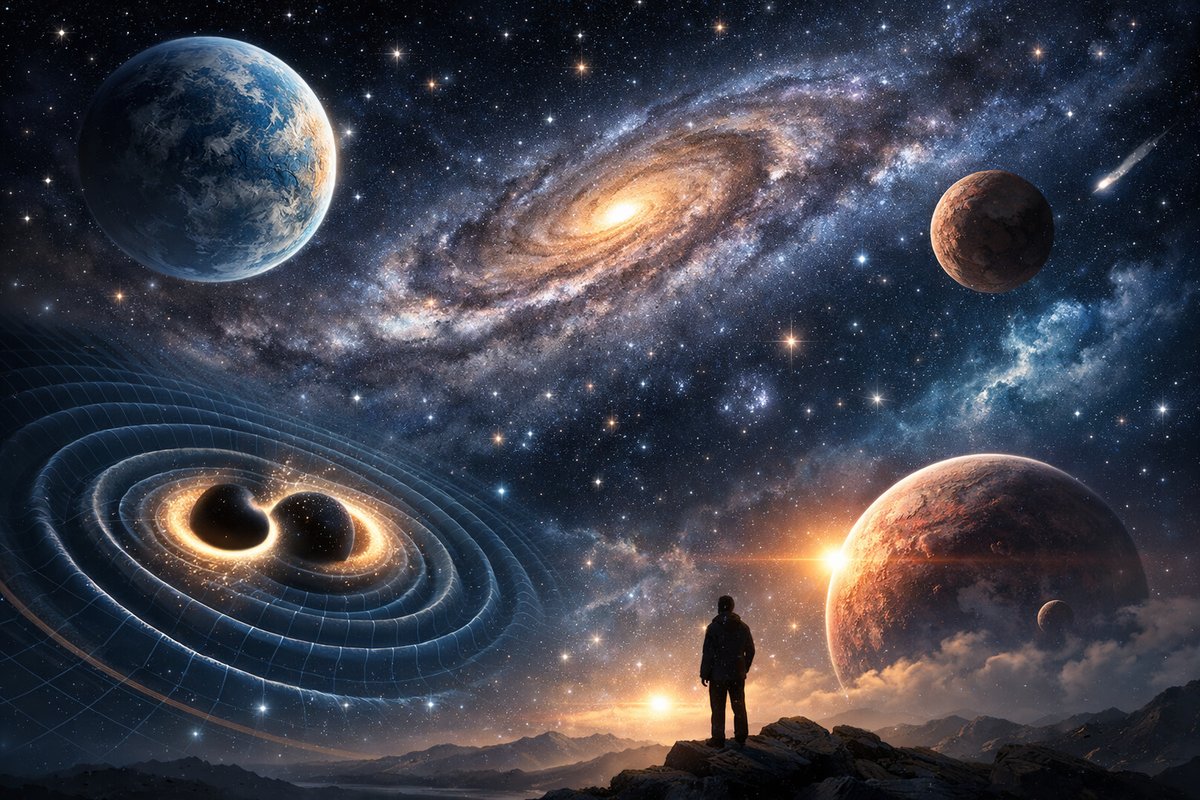
When we lift our eyes to the sky, the universe unfolds as both familiar and profoundly mysterious. From whisper‐quiet ripples in spacetime to the fleeting glow of distant exoplanets, humanity's latest observations are inviting us to rethink what we know about space, time, and the delicate tapestry that binds them.
For millennia, stargazers have stood beneath inky skies, tracing patterns in the firmament. Today, a new generation of instruments and experiments is peeling back layers of the cosmos that once seemed forever beyond reach. Advanced space telescopes are resolving the atmospheres of alien worlds; ground‐based detectors are eavesdropping on gravitational murmurs from black hole mergers; and particle observatories buried deep beneath ice sheets are recording ghostly neutrinos that carry secrets from the farthest reaches of space.
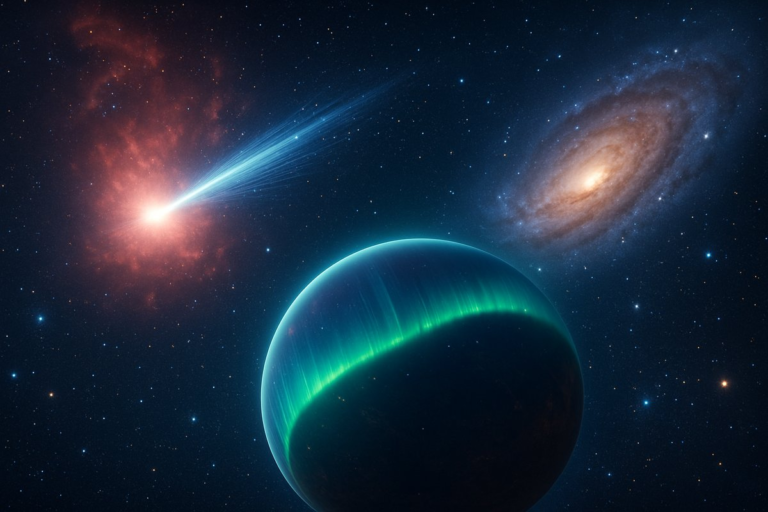
The turning point arrived when infrared eyes aboard an orbiting observatory captured the first spectrum of water vapor in the atmosphere of a planet orbiting a star hundreds of light‐years away. That one observation sent ripples through research institutes worldwide. Suddenly, astronomers could begin to compare weather patterns on exoplanets, theorize about chemical cycles, and hunt for signatures that hint at habitability. The lines between speculative fiction and hard science began to blur-our curiosity was finally armed with tools powerful enough to explore the raw materials of other worlds.
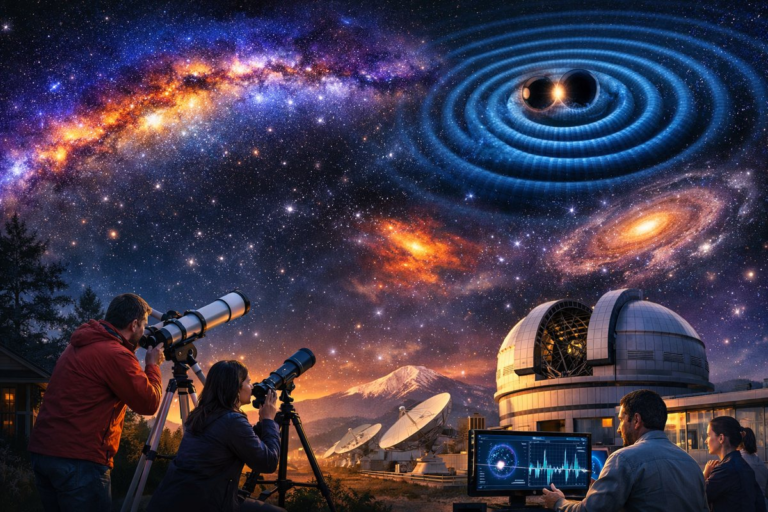
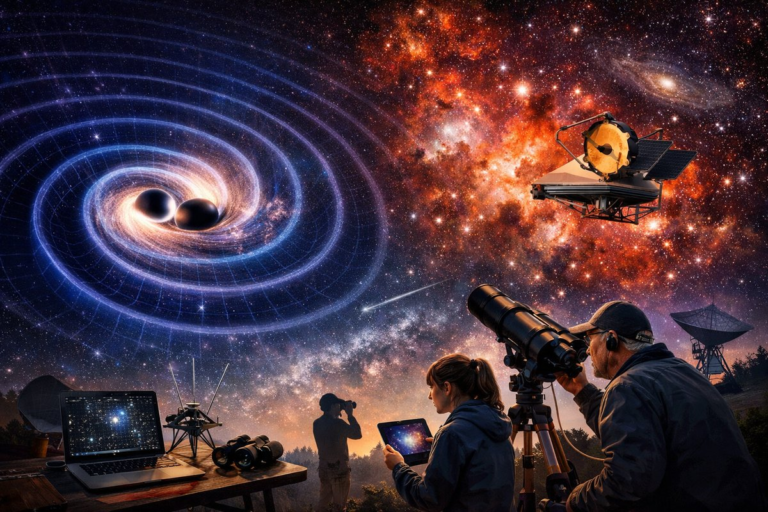
Meanwhile, back on Earth, a network of giant detectors marked by kilometers of laser arms has been listening for the faint tremors of gravitational waves. These waves, born when massive objects like black holes or neutron stars collide, stretch and squeeze the fabric of spacetime itself. Each new detection opens a fresh chapter in cosmic history: we are no longer just observers of visible light but also active listeners to the universe’s most profound conversations.
Deep under polar ice, cubic kilometers of pristine frozen water are studded with sensors designed to spot high‐energy neutrinos-subatomic messengers traveling unimpeded from the most violent cosmic events. When one of these nearly massless particles tears through the detectors, it lights up a cascade of secondary particles, creating patterns that scientists can decipher. These fleeting signals tell stories of stellar explosions and jets from supermassive black holes, carrying information that no telescope alone could capture.
Together, these breakthroughs are fueling a renaissance of cosmic curiosity. They remind us that discoveries often emerge at the intersection of disciplines-where particle physics, astrophysics, and observational astronomy converge. Graduate students and seasoned researchers alike pore over terabytes of data, developing machine learning algorithms to sift through noise and identify patterns that human eyes might miss. The pace of discovery has never been greater, and each announcement sends amateur stargazers racing to their backyards in search of corresponding glimmers.
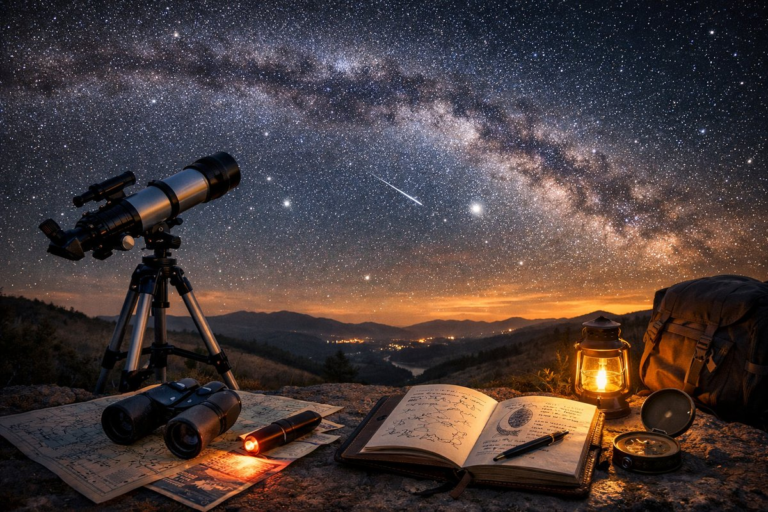
Even without million‐dollar observatories, there are ways for anyone to tap into the cosmic conversation. A modest refractor telescope with a 70-millimeter aperture can reveal Jupiter’s cloud bands and the jagged silhouette of the lunar crater Tycho. Pairing this instrument with a smartphone adapter transforms casual snapshots into keepsakes of transiting satellites or the occasional meteoroid streaking across the frame. Guided by a glow-in-the-dark star map, observers can identify constellations, nebulae, and bright planets in real time as the night deepens and city lights fade.
Light pollution remains the single greatest obstacle to backyard astronomy. Yet, sustainable solutions are emerging: shielded LED streetlamps, community dark-sky reserves, and software that models local light domes. In some regions, citizens have successfully petitioned for retrofits that minimize upward glare while still providing safety on sidewalks. Even small changes-switching outdoor floodlights to motion-sensing lamps with warm color temperatures-can dramatically improve visibility of the Milky Way.
Inside planetariums and science centers, immersive domes offer another way to engage. Visitors recline beneath pitched ceilings as projectors recreate the cosmic panorama in astonishing resolution. Narratives weave through the origins of the cosmic microwave background-the afterglow of the Big Bang-before zooming forward to the birth of stars and the assembly of galaxies. These experiences translate abstract data into a visceral sense of scale and wonder, awakening a deeper empathy with the universe’s grand chronology.
At the same time, tabletop experiments in quantum optics are probing the interplay between light and matter on scales smaller than atoms. Entangled photons separated by kilometers still exhibit correlations that defy classical intuition. Such experiments fuel debates about the nature of reality itself and hint at future technologies-from ultra-secure communications to sensors of unprecedented sensitivity-that could revolutionize our relationship with the environment and with one another.
While research teams chase distant signals, a parallel movement is inviting reflective contemplation. Poets, painters, and musicians draw on cosmic imagery to express the fragile beauty of existence. Celestial motifs appear in art installations that use cosmic dust samples to create luminescent sculptures, or in orchestral works that incorporate real radio emissions from Jupiter’s magnetosphere. Through these creative explorations, the scientific and artistic communities are discovering shared ground-both are driven by curiosity about what it means to be part of a universe ever in motion.
Online platforms host live streams from robotic telescopes in remote deserts. Subscribers can schedule time at the observatory, selecting targets ranging from supernova remnants to active comets. Observers receive raw image files to process with open-source software, learning techniques like dark-frame subtraction and image stacking. The thrill of converting pixel noise into a crisp portrait of the Crab Nebula fosters a sense of participation in a centuries-old tradition of scientific inquiry.
Behind every data point, there’s a human story. Graduate students working in extreme environments-on Arctic icebreakers, atop volcanic plateaus, or in desert radio silence-endure biting cold, isolation, and logistical hurdles to keep scientific instruments alive. They measure submillimeter wavelengths, calibrate spectrometers, and patch fiber‐optic cables by headlamp light. Their dedication underscores a shared passion: each advance, no matter how technical, is ultimately driven by the desire to expand the boundary of human knowledge.
What lies ahead is both thrilling and humbling. Next-generation observatories planned for lunar orbit could deliver panoramic views of deep space free from Earth’s atmospheric distortion. Quantum gravity experiments might unveil how spacetime weaves itself at the smallest scales. Citizen science projects are mobilizing thousands of volunteers to classify cosmic structures, turning curiosity into collective discovery.
As we push beyond familiar horizons, we are reminded that the cosmos is not a distant backdrop but an active participant in our story. Its rhythms-rotations, pulsations, and collisions-echo in our own biological and cultural cycles. By learning to read these cosmic registers, we gain fresh insights into time, change, and our place in the unfolding narrative of existence.
In the end, cosmic curiosity is as much about the questions we dare to ask as it is about the answers we uncover. Whether you’re peering through a telescope at a neighboring planet or contemplating the subatomic dance of entangled particles, the pursuit binds us together. It invites us to transform wonder into understanding, to recognize that every photon that reaches our retina carries a fragment of a story billions of years in the making. And with each new chapter, our capacity to marvel-and to imagine what lies beyond-grows ever more profound.