Location
Mount Vernon, WA 98274
Location
Mount Vernon, WA 98274

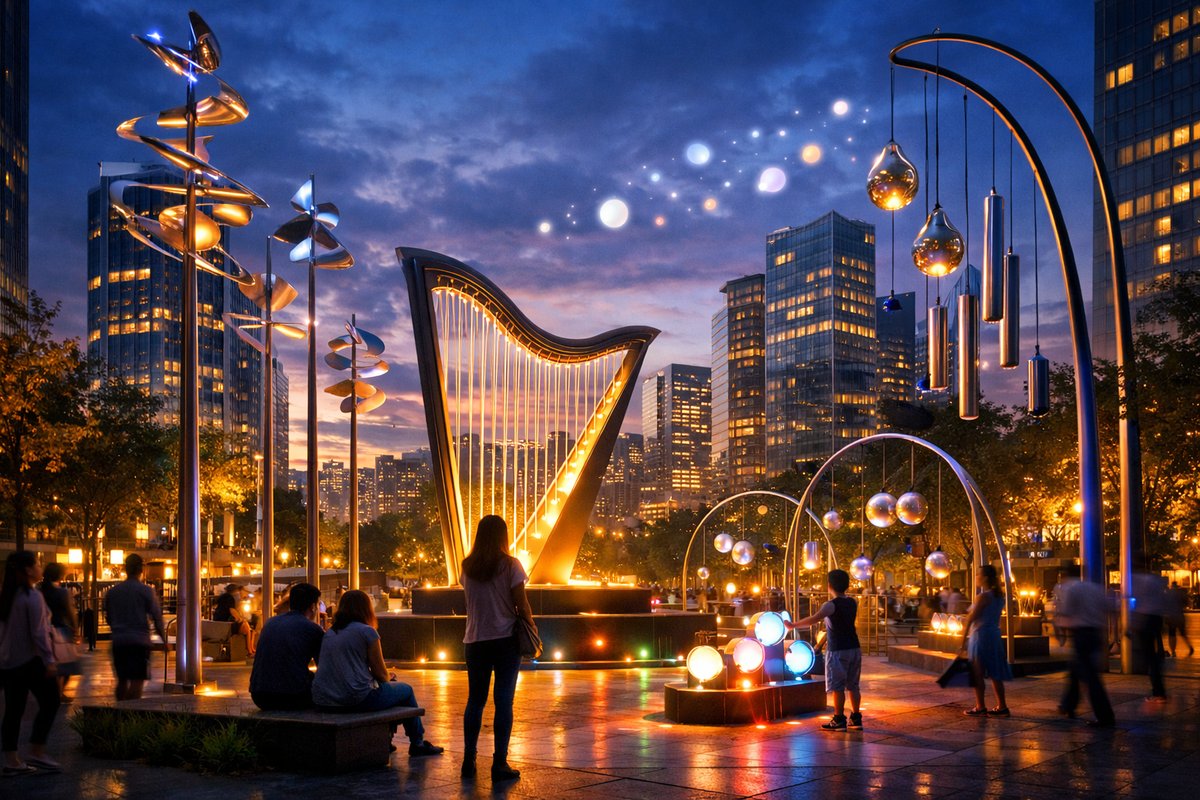
Cities are tuning into new soundscapes as kinetic acoustic sculptures harness wind, motion, and digital triggers to create ever-shifting melodies. These installations blend engineering, art, and community interaction, offering unexpected moments of wonder amid the urban bustle.
In plazas, parks, and waterfront promenades around the world, a fresh breed of public art is emerging-kinetic acoustic sculptures that transform air currents, footsteps, and digital signals into shifting soundtracks. Unlike static murals or digital projections, these installations rely on physical motion and sonic resonance to engage audiences in real time. Each gust of wind, each passing visitor, becomes part of an evolving composition, blurring the line between artwork, environment, and audience.
More than simple wind chimes, these sculptures merge architecture, acoustic engineering, and interactive technologies. Stainless-steel tubes tuned to precise pitches join solar-powered motion sensors and custom software to translate environmental data into sound. One early pioneer, a coastal sculpture known locally as the “Whispering Harp,” features a dozen steel rods mounted on a curved frame. As sea breezes pass through, each rod vibrates at a calibrated frequency, producing haunting, harp-like tones that swell and fade with the tide. At dusk, integrated multicolor LEDs bathe the structure in soft light, turning the sculpture into a glowing instrument.
In an urban square far from shore, another collective debuted a network of kinetic columns equipped with micro-turbines. Each column captures pedestrian-generated wind and converts it to electrical pulses. Those pulses feed an array of tiny speakers hidden within the base, emitting rhythmic pulses that follow the tempo of foot traffic. On quiet mornings, the sculpture whispers gentle pulses; during rush hour, it crescendos into a lively percussion. Passersby often pause, intrigued by the organic patterns, then find themselves unconsciously matching their steps to the rhythmic modulation.
Beyond harnessing natural elements, some installations incorporate direct human interaction. In a recently installed project at a science museum plaza, pressure-sensitive pads embedded in the pavement trigger clusters of hollow aluminum chimes overhead. Each step generates a note or chord, inviting visitors of all ages to compose impromptu melodies with every jump or stride. Families gather on weekends, turning the plaza into a spontaneous orchestral playground where laughter and conversation mingle with low bass tones and crystalline pins.
Engineers and artists collaborate closely on these works, navigating challenges that blend artful ambition with practical realities. Acoustic modeling software predicts how wind patterns will interact with different tube lengths and materials. Engineers test prototypes in wind tunnels, fine-tuning resonance points and damping mechanisms to avoid unwanted rattles. Materials must withstand corrosion, UV exposure, and vandalism, so alloys, weatherproof coatings, and tamper-resistant fasteners are essential. Meanwhile, control systems draw on microcontrollers and wireless data networks to monitor performance, schedule light sequences, or integrate live weather feeds.
Sustainability factors prominently in both design and community impact. Solar panels discreetly integrated into sculptural bases power sensors and light arrays, eliminating the need for external grid connections. Many projects reclaim industrial or salvaged metals, turning disused pipelines or deconstructed rail segments into the heart of a sound sculpture. Local workshops often lead fabrication, creating job opportunities and giving neighborhoods a sense of ownership. In one district, a defunct factory now houses a fabrication lab where designers teach residents to build mini kinetic sound pieces from discarded kitchen utensils and bicycle spokes.
Beyond aesthetic delight, kinetic acoustic sculptures address environmental and social goals. Urban noise pollution is a growing concern, linked to stress, sleep disturbances, and cognitive fatigue. Strategically placed sound installations can mask unpleasant traffic noise with harmonious tones, providing pockets of acoustic relief. In one bustling downtown corridor, a series of arching steel tubes plays a low pentatonic melody that blends seamlessly with ambient sounds. Pedestrians report feeling calmer and more focused after passing beneath the arches, turning a mundane commute into a restorative moment.
Community engagement often extends into the programming of these sculptures. Some projects feature open-source software that allows participants to log onto a website and adjust sound parameters in real time. Neighborhood councils host evening sessions where laughter mixes with code as residents tweak pitch, tempo, and lighting. Others integrate educational workshops, teaching basic sound theory, coding logic, and metal-working skills. By blurring the line between spectator and operator, these installations foster deeper connections and shared stewardship.
Critics of public art sometimes argue that interactive works can feel gimmicky or overly reliant on novelty. Kinetic acoustic sculptures counter this by combining rigorous craft with poetic resonance. At a recent city unveiling, a renowned sound artist described the piece as “an invitation to listen to the invisible currents that carry us through daily life.” Visitors circulated around the base, fingertips brushing against metal nodes to hear subtle harmonic shifts, as if the sculpture were both speaker and sounding board. Observers noted how the piece led them to slow down, pay attention to ambient details, and find beauty in mundane forces.
Municipal planners are taking note. As urban centers seek to humanize concrete expanses and encourage healthy public gatherings, kinetic acoustic art offers a proven formula for engagement. Unlike static sculptures that can fade into the background, sound-driven installations demand ongoing interaction. City budgets now set aside funds specifically for multi-sensory public art, recognizing its potential to promote well-being, tourism, and local identity. In one metropolitan region, a dedicated “soundscape art” budget allocates resources for new commissions, maintenance, and community programming over a five-year cycle.
Future developments hint at even richer experiences. Integrations with augmented reality could overlay visualizations of soundwaves around the physical structure. Machine-learning algorithms might adapt compositions to seasonal wind variations or crowd densities. Biofeedback sensors could allow the sculpture to respond to heart-rate data from willing participants wearing fitness trackers, creating a collective sonification of a community’s pulse. Imagine a sculpture that sings more vigorously as crowds grow excited at a street festival, then eases into softer tones as dusk approaches.
Such visions raise new questions about data privacy, artistic intent, and the boundaries between audience and installation. When a sculpture incorporates live user data, how are contributors informed and protected? Who owns the compositions generated by public interaction? Frameworks are emerging that treat these sculptures as collaborative platforms rather than static artworks, with clear guidelines for consent, data stewardship, and shared authorship.
The marriage of sound, motion, and public space is still in its early stages, but the momentum is clear. From seaside promenades to inner-city courtyards, kinetic acoustic sculptures are carving out new forms of collective wonder. They remind us that art need not be silent or motionless, that the invisible forces around us can become brushstrokes and notes in a grand urban symphony. As more cities embrace these installations, our public spaces will resonate not just with traffic and chatter, but with the harmonics of wind, footsteps, and human imagination.
In a time when digital screens dominate our daily interactions, the resurgence of tactile, motion-driven sound art offers a welcome counterpoint. It encourages curiosity, collaboration, and an acute awareness of the world we inhabit. The next time you walk through a plaza and hear a mysterious harmony drifting on the breeze, look around-you might be part of the composition.