Location
Mount Vernon, WA 98274
Location
Mount Vernon, WA 98274

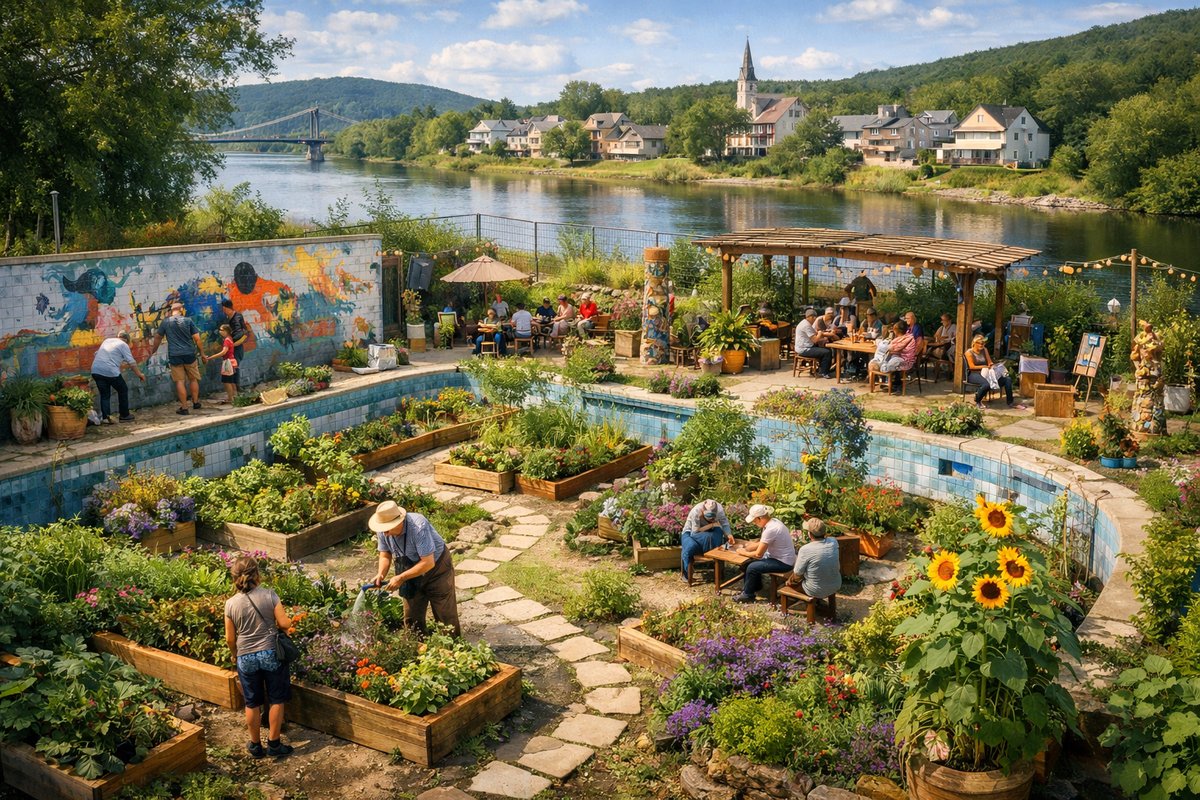
An abandoned municipal swimming pool once stood as a symbol of decline in a small riverside town. Through the collective energy of volunteers, refugees, seniors and students, the empty basin transformed into a thriving garden, art space and gathering hub-proving that healing often springs from the ruins of abandonment.
In the heart of a once-bustling riverside town, the municipal pool sat empty for years, its tiled floor cracked and its water drained away. Once a place of laughter and summer splashes, it became a ruin that mirrored the sense of isolation creeping into the community. Shops shuttered, families drifted away, and the old bathhouse seemed destined to fall into complete disrepair. Yet it was here, against the backdrop of peeling paint and rusted railings, that a diverse group of neighbors discovered an unexpected path back to hope.
A handful of volunteers first gathered above the sunken pool one crisp spring morning, armed with gloves, garden shears and a shared sense of urgency. Among them were former factory workers laid off during an economic downturn, young refugees seeking to build new roots, retirees craving purpose after decades of routine, and high school students hungry for a project that felt bigger than a school assignment. Each arrived carrying personal burdens-grief, loneliness or the sting of failure-and found a single way forward: collective action.
Their plan was hardly foolproof. The pool basin, thirty feet wide and twenty feet deep, seemed too vast to conquer. But one afternoon, over steaming cups of coffee and scraps of sketch paper, the group sketched a blueprint: raised garden beds would line the shallow end, mural paintings would color the walls, a low wooden stage would occupy the deep section for music and gatherings, and solar lanterns would light evening yoga and meditation circles. The outline felt ambitious, but it also felt right.
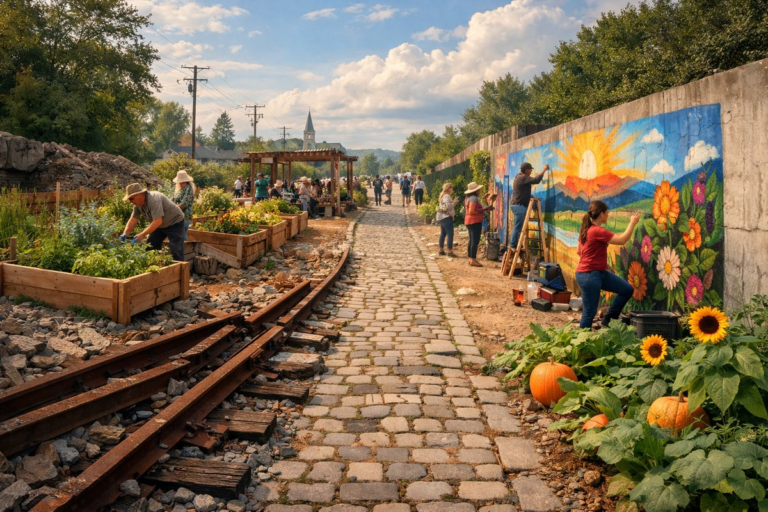
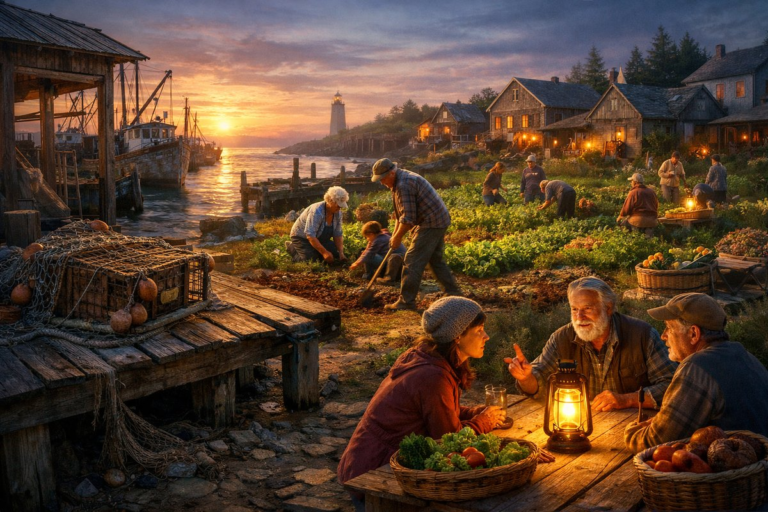
The first challenge was soil. Volunteers hauled wheelbarrows filled with compost from a nearby recycling center and mixed it with store-bought topsoil to create fertile beds. As hands dug into the earth where once swimmers had tread water, stories emerged. A former machine operator recalled how all he had ever built was defective parts; here he dug fertile ground instead. A teenager who had dropped out of school confessed that planting seeds made her feel less adrift than homework ever did. Soon, the empty pool filled with rows of tomatoes, zucchini, herbs and wildflowers.
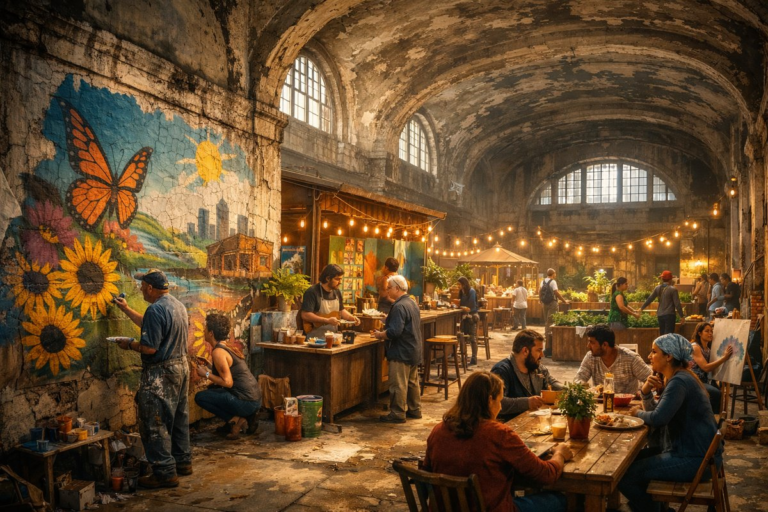
Meanwhile, evenings at the site took on an electric energy. Local artists and students used washable paint to transform the high walls into vibrant murals: a phoenix rising from cracked tiles, silhouettes of children dancing, blossoms spiraling toward open windows. The act of painting became a ritual of renewal-messy hands mixing pigment, laughter echoing across the concrete, quiet applause when the final stroke was laid in place. For many, this was the first time they had contributed something tangible to their town’s landscape.
With greenery and color taking shape, the group introduced communal dinners every Sunday. Long tables spanned the shallow end, draped in simple linen cloths. People brought bowls of salads, fresh-picked veggies from the planters, jars of preserves made by the retirees, and loaves of crusty bread baked by local teens. These meals fused personal narratives into a single feast: refugees teaching others how to fold flatbread, elders passing down recipes they feared might be lost, students snapping photos for social media but reluctant to leave when the laughter kept them rooted in place.
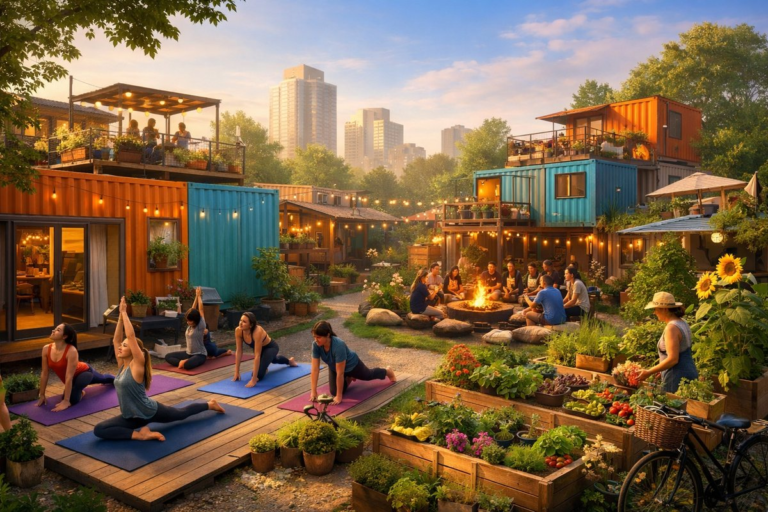
Soon came yoga mats and meditation cushions, unrolling like invitations across a newly built wooden deck that floated above the pool floor. At dawn, instructors guided gentle flows beneath a sky painted pink with sunrise light. Neighbors who had once scrolled through screens late into night discovered that grounding their feet in practice soothed the anxiety they carried. The pool’s empty basin, eerily silent just weeks before, now resounded with shared breath and the murmur of encouragement.
With each passing month, the space evolved organically. A clothes swap corner emerged under a shadowed alcove, where people left scarves, sweaters and jackets they no longer needed. A bookshelf of donated novels appeared near a corner bench. Rainwater collection barrels fed both the garden beds and a small fountain imported to trickle at the deep end. Workshops on composting, mural techniques and mindfulness meditation became regular offerings, each hosted by someone whose skills had gone unnoticed until this project.
The shift rippled through the town. Isolation rates, once alarmingly high among seniors and young adults, showed preliminary signs of easing according to a community survey. Local businesses reported a modest uptick in foot traffic as visitors came to stroll through the gardens and admire the art. A nearby daycare arranged field trips so children could harvest lettuce and learn where their food truly comes from. The pool site, once a relic, earned a feature in a regional architecture magazine for its adaptive reuse and spirit of collaboration.
Personal transformations accompanied these collective gains. A former inmate who had joined the project as a condition of parole found steadier footing in everyday conversations, his confidence rebuilding one tomato plant at a time. A single mother juggling two jobs said she finally felt supported enough to enroll in evening classes. Teenagers who once described themselves as “listless” spoke now about college dreams and careers in horticulture or social work. The common thread was this: when the community offered space to try again, people rose to the occasion.
What began as a ragtag volunteer effort has matured into a nonprofit social enterprise. Seedlings grown on-site are now sold at a local farmers’ market with proceeds reinvested in site upkeep and educational materials. Nearby towns have reached out to replicate the model, sparking conversations about how to reinvent vacant spaces-from old gas stations to boarded-up libraries-into living, breathing hubs of connection.
The story of the abandoned pool turned sanctuary reveals something universal: failure and decay, though painful, often carry within them the seeds of reinvention. When a community chooses curiosity over resignation and compassion over apathy, even the most forlorn places can bloom. For readers seeking inspiration, the lesson is simple yet profound: purpose grows in company, and courage often comes disguised as elbow grease and shared meals.
In a world brimming with uncertainty, the bathhouse rebirth shows how ordinary people can reclaim their surroundings-and their lives-from the brink of neglect. The promise lies not in grand gestures but in persistent, small acts of collaboration: planting a seed, sharing a paintbrush, breaking bread at dusk. From the hollow basin of an old pool, a new chapter of resilience emerged-one that may well echo far beyond the town’s riverbanks.