Location
Mount Vernon, WA 98274
Location
Mount Vernon, WA 98274


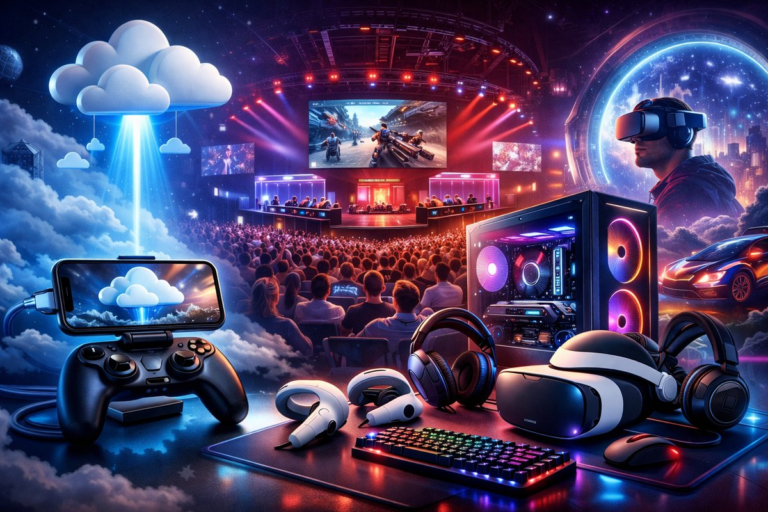
A wave of innovative hardware is transforming gaming spaces into high-performance playgrounds. From modular furniture to haptic VR vests, this report dives into the latest developments powering immersion, comfort, and sustainable setups that cater to both competitive and casual players alike.
Gaming is no longer confined to a screen on a desk-it’s evolved into an all-encompassing experience where environment, equipment, and community converge. Recent showcases at major tech expos have revealed a surge of products designed to break out of the traditional rectangular setup. Developers and designers are collaborating with athletes, ergonomists, and sustainability experts to reimagine how players interact with virtual worlds. Whether you’re launching rockets in a space simulator or commanding squads in a global competition, every piece of gear now plays a critical role in performance, health, and immersion.
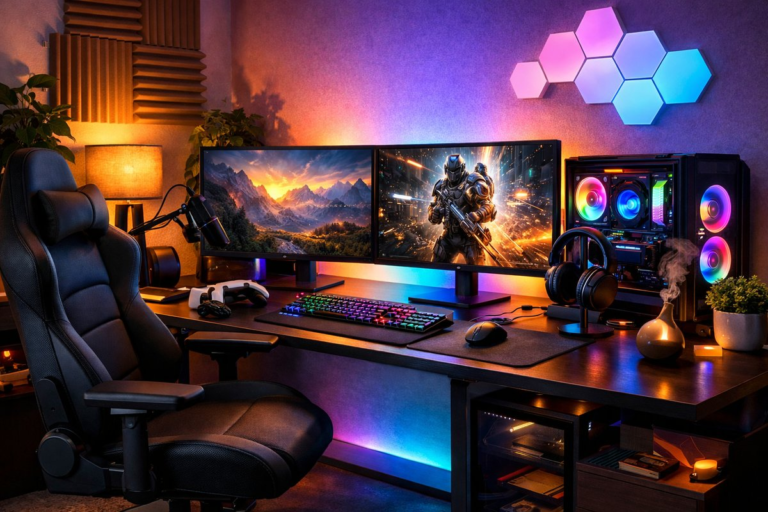
At the heart of the conversation is the workstation itself. Modular furniture systems are gaining traction, offering interchangeable segments that let gamers swap out desktop panels, cable trays, and even risers for vertical storage. Standing-desk converters with whisper-quiet motors allow players to shift from sitting to standing in seconds, easing back tension during marathon sessions. Beneath the surface, clever cable-management sleeves and under-desk trays corral power bricks, dongles, and charging pads into tidy channels. This level of organization not only sharpens focus but also extends the life of cables and components by reducing wear from tangles and sharp bends.
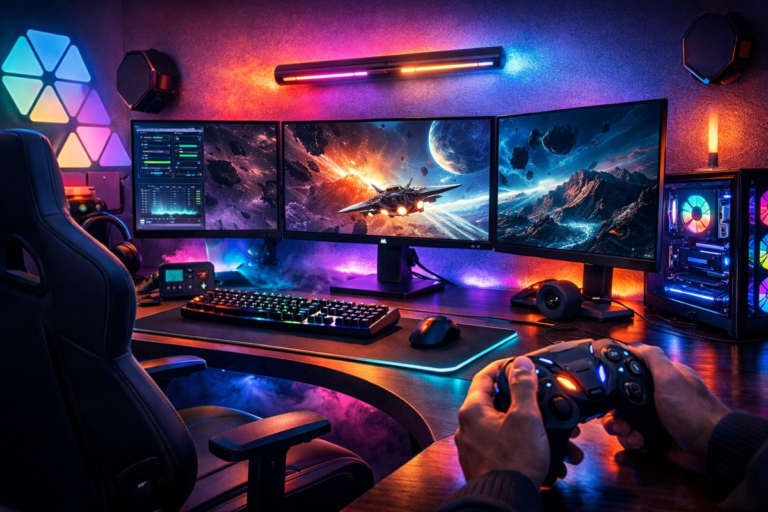
Lighting has emerged as a surprisingly powerful tool for immersion. Beyond the well-known strips of addressable LEDs, manufacturers are introducing wall-mounted ambient panels that communicate with in-game events. Imagine your entire room pulsing with the red glow of an incoming missile or bathing in serene aquamarine hues when exploring underwater realms. These dynamic panels integrate with open APIs, letting users craft custom light shows tied to health bars, kill streaks, or real-time chat activity. Such multisensory feedback has shown potential to heighten reaction times and amplify emotional engagement, especially in high-stakes arenas.
Ergonomics remain a top priority as prolonged play becomes the norm. New gaming chairs now feature adjustable lumbar supports that adapt to your spine’s curvature, eliminating pressure points during those late-night raids. Height-adjustable arm rests, with micro-click adjustments, accommodate everything from a slim membrane keyboard to a wide mechanical model. Some brands are even experimenting with modular foam inserts for headrests, allowing users to swap dense padding for cooling gel layers. The goal is reducing fatigue without sacrificing the plush comfort that keeps you locked into the action.
Audio designers are pushing open-back headphone architectures further into the mainstream. These cans deliver expansive soundstage imaging, crucial for pinpointing distant footsteps or discerning the direction of incoming fire. Complementing this is a new generation of compact audio mixers built with low-latency digital converters. Rather than bulky rack gear, these mixers plug directly into USB ports and offer multiple channels for game audio, voice chat, and music streaming. Fine-tuning EQ on the fly, adjusting microphone gain, or routing ambient room mics becomes a few quick knob twists away-empowering creators and competitors to maintain full control over their sonic environment.
Haptic feedback is taking a leap forward. The latest tetherless VR headsets boast integrated motion-tracking base stations that no longer require fixed ceiling mounts. Paired with vests and gloves embedded with vibrotactile actuators, players can feel gusts of wind, impacts from projectiles, or the recoil of virtual weaponry. Even racing games are benefiting from motion platforms that tilt and vibrate in sync with in-game physics. This multisensory blend blurs the line between digital and physical, offering a truly embodied sense of presence.
For live broadcasters and content creators, streamlined signal routing is key. Capture cards with multi-camera support now fit into slim desktop towers, capturing 4K HDR footage with minimal hardware overhead. Control decks featuring programmable dials and LCD label keys replace cluttered macro pads, integrating scene switches, audio fades, and chat moderation into one ergonomic console. USB-powered docking stations provide power, network, and peripheral connections via a single cable, making it effortless to convert a game-ready desktop into a portable streaming rig.
Connectivity standards are racing ahead as well. Wi-Fi 6E routers optimized for low-ping gaming and mesh network nodes ensure every corner of the house gets reliable bandwidth. Dedicated network switches with QoS prioritization are now affordable enough for home use, reserving peak throughput for gaming consoles and PCs during peak hours. Some enthusiasts are even experimenting with private 60GHz wireless links to eliminate trace latency on high-refresh-rate displays, though these setups demand line-of-sight conditions.
On the software side, calibration utilities are equipping players with precision controls. Macro-recording apps can remap hotkeys based on game context, adjusting to different heroes or loadouts. Dynamic color-grading tools allow streamers to maintain consistent visual tone across multiple cameras, while noise-reduction software now uses machine-learning models to filter out keyboard clicks, console fans, and ambient room noise-all without introducing the hollow artifacts of older denoisers.
Community experiences are branching out from solo streams to hybrid pop-up arcades. Mobile gaming trucks now host LAN-style tournaments in makeshift parking lots, complete with LED battlestations and projection mapping that syncs with in-game action. Urban gaming hubs have installed floor-to-ceiling screens and spatial-audio rigs to immerse groups in cooperative adventures. These gatherings emphasize shared play, showcasing how high-end gear can become a social glue-turning digital goals into IRL celebrations.
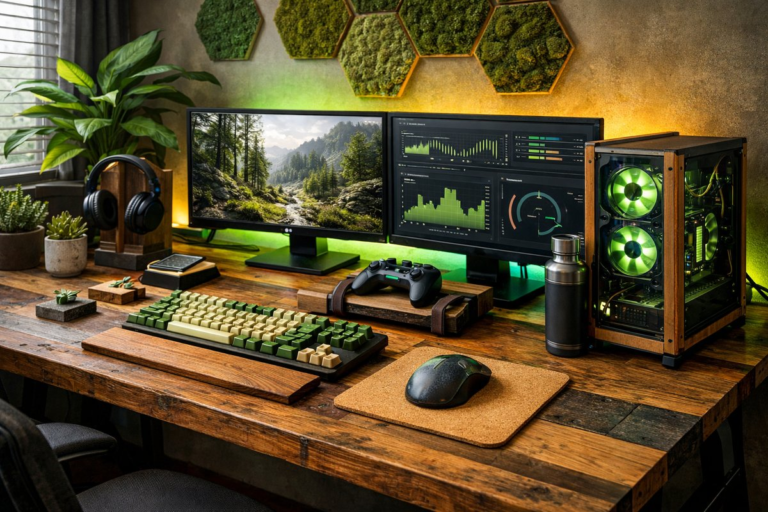
Sustainability has finally found its place in the gaming gear conversation. Brands are using recycled plastics and repairable modules, making it possible to replace a broken fan or button instead of discarding an entire controller. Key switches and cable connectors are being sourced from suppliers with closed-loop manufacturing processes, reducing e-waste across the supply chain. Even packaging is being redesigned for compostable materials and zero-ink printing, aligning the industry with broader eco-goals without compromising build quality or durability.
Looking ahead, the future of play appears rooted in adaptive environments. Early prototypes of AI-driven desks can adjust height, tilt, and ambient settings based on biometric feedback-tracking heart rate, posture, and stress levels to optimize comfort in real time. Cross-reality systems are emerging that blend streamed gameplay with AR overlays in the physical room, letting spectators at home project live stats and holographic avatars onto real-world surfaces. As hardware and software coalesce around personalization and sustainability, play will become more than a pastime-it will be an integrated lifestyle choice that respects both player well-being and the planet.
From cable trays to haptic vests, the gear shaping the next generation of gaming underscores a universal truth: serious play demands serious design. As manufacturers continue to push the boundaries of comfort, immersion, and eco-friendly engineering, every level of player stands to benefit. Whether you’re a weekend explorer or a professional competitor, the latest wave of components invites you to craft a space tailored to your style, health, and community goals. After all, in today’s gaming universe, setup equals strategy-so upgrade wisely and play on.