Location
Mount Vernon, WA 98274
Location
Mount Vernon, WA 98274

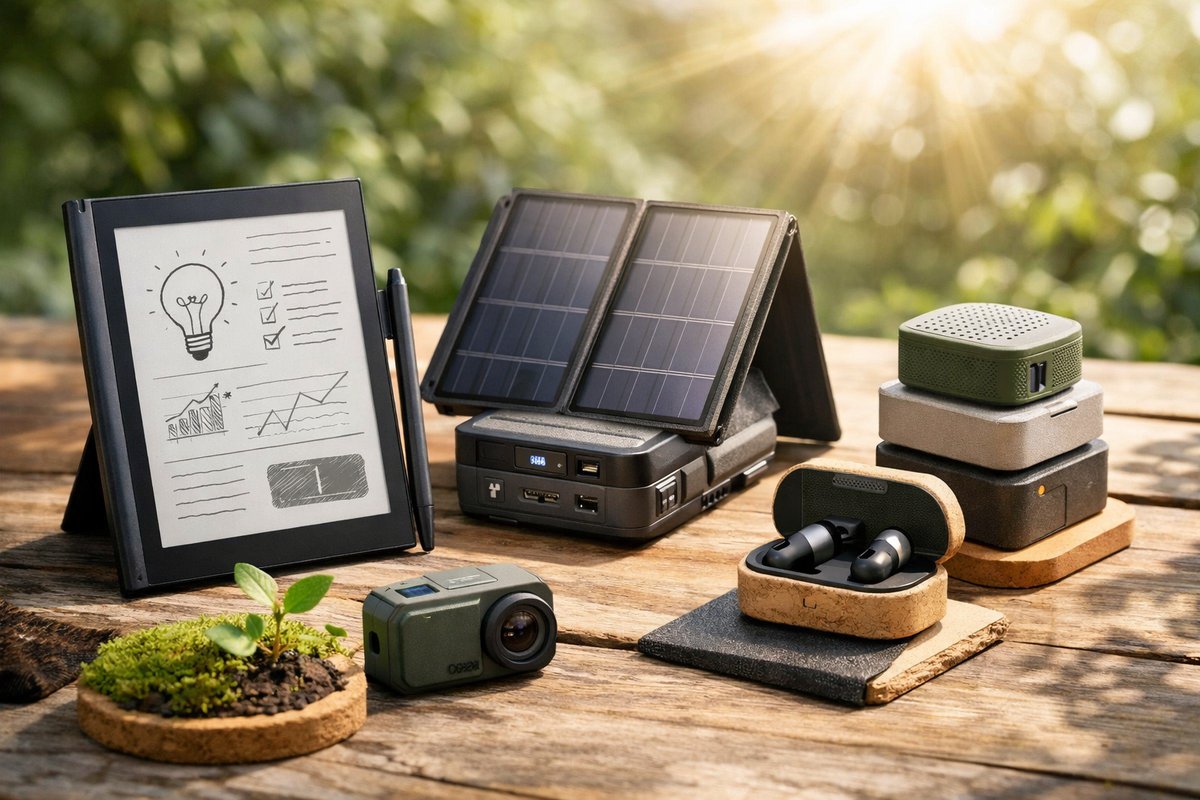
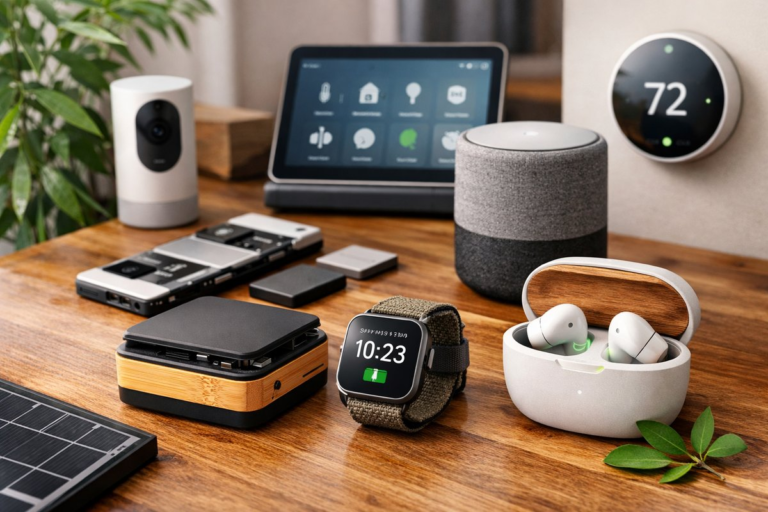
Tiny form factors meet mighty performance in the latest wave of consumer gadgets-from digital ink notepads that sip power to solar-charged battery packs that turn sunshine into standby juice. This exploration uncovers how ultra-compact design, sustainable materials, and modular smarts are converging to deliver real impact in everyday life.
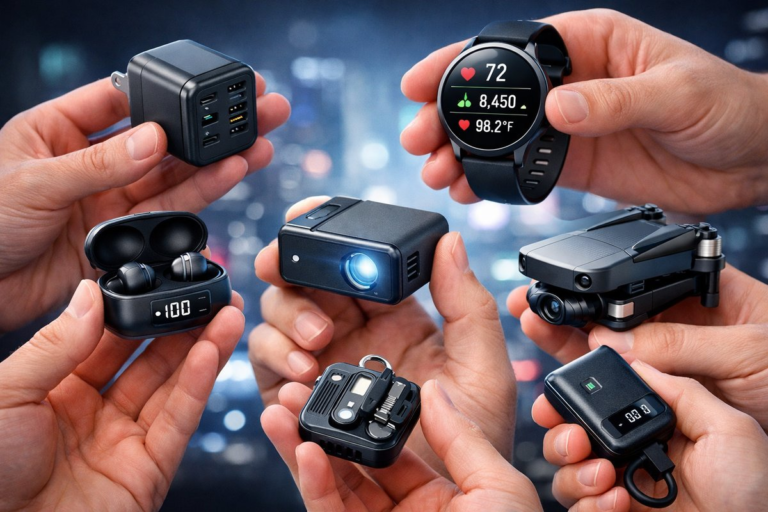
Innovation is often measured in leaps and bounds, but in today’s gadget world, real breakthroughs are happening at the millimeter scale. As processors shrink, battery chemistry evolves, and manufacturing methods refine, devices once bulky enough to need a desk are now thin enough to slip into a card slot or clip onto a keychain. Yet this miniaturization isn’t just about saving pocket space-it’s ushering in new ways to integrate technology into daily routines, heightening convenience without sacrificing sustainability or battery life.
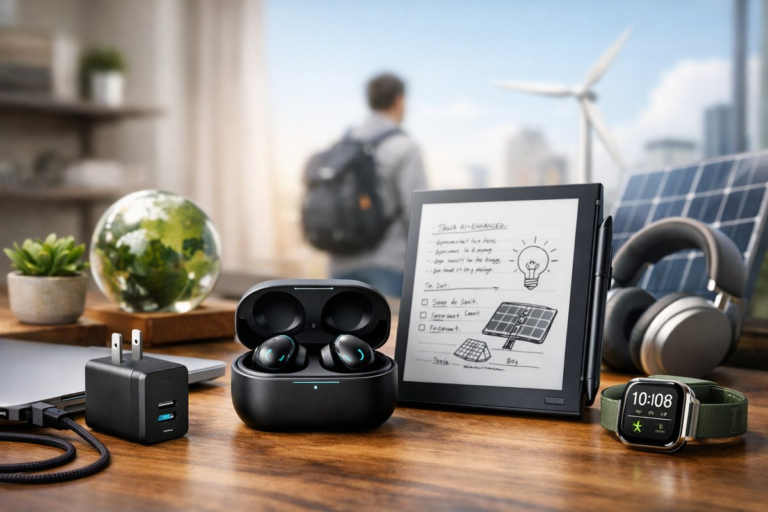
Early adopters of ultra-compact gadgets quickly appreciate how micro-architecture lets them carry powerful tools in the palm of their hand. Imagine replacing dozens of paper notebooks with a single digital notepad that boasts weeks of battery life and an anti-glare e-ink display. Or slipping a solar-charged power bank into a backpack, knowing a midday hike can keep your smartphone topped up even off the grid. What used to require a backpack full of gear now fits into a minimalist travel kit.
Behind this shift is a focus on energy efficiency. Advances in low-power display panels and specialized microcontrollers mean devices can hover in standby for months, springing to life only when needed. New battery chemistries, including silicon anodes and solid-state electrolytes, deliver higher capacities at lower volume. Solar cells and energy-harvesting circuits, once exotic, now appear in wearables and outdoor tools, converting ambient light or body heat into usable power. The result is a new class of gadgets that feel more like living companions-always quietly ready.
But sustainability doesn’t end with power. Manufacturers are increasingly drawing on recycled plastics and biodegradable composites for casings. Modular design principles let users upgrade individual components-batteries, sensors, or storage-without discarding entire units. This reduces electronic waste and offers a longer lifecycle, helping conscious consumers make mindful choices without sacrificing the thrill of cutting-edge tech.
Connectivity continues to play a central role. Embedded 5G modules, ultra-wideband radios, and next-gen Wi-Fi antennas are finding their way into devices barely larger than a credit card. This transforms them from standalone tools into nodes in a seamless digital ecosystem. A pocket-sized environmental sensor can relay air-quality data to your phone, then pass aggregated metrics to a home automation system that adjusts air filtration. A wearable patch that tracks hydration levels can sync with a smart water bottle to remind you when it’s time to drink.
Voice assistants, once confined to home speakers and smartphones, have migrated into the tiny realm too. Developers have created modular voice-activated buttons that can be integrated into backpacks, bike helmets, or safety gear. With a simple tap or voice command, you can trigger navigation prompts, send emergency alerts, or even start a voice memo-all without pulling out your phone.
The melding of scaled-down neural networks and edge computing is especially compelling. Rather than laboriously routing every AI request to a remote server, these miniature devices run inference locally, ensuring faster responses, greater privacy, and lower bandwidth consumption. For instance, a tiny camera module shimmed onto a door frame can recognize familiar faces and unlock an entryway in under a second, all while keeping video data on-device. Similarly, noise-canceling earbuds can adapt in real time to your environment, dampening chatter on a busy commute while preserving ambient sounds when you cross a quiet street.
Wearables have leaped forward as well. Smart textiles infused with conductive fibers can monitor vital signs, track posture, and even harvest mechanical energy from movement. These fabrics are being woven into everyday clothing-shirts that measure heart rate variability and jackets that charge your phone as you walk. The integration of microfluidic patches allows continuous sweat analysis, giving athletes real-time feedback on electrolyte balance and hydration strategies.
Augmented reality (AR) and micro-projectors are another frontier. Ultra-compact modules-no larger than a USB stick-can beam heads-up information onto the nearest surface. In a workshop, you might project step-by-step instructions directly onto a circuit board. At a café, you could display navigation cues across a tabletop. These pocket projectors marry ultra-bright LEDs and tiny mirrors to create crisp images without bulky lenses.
For the everyday user, the key takeaway is that bigger isn’t always better. Devices with a singular function but stellar execution are finding their niche. Consider a pen-like instrument that digitizes handwritten notes in real time, then transfers them to your favorite productivity app. Or a multi-sensor air-quality monitor the size of a matchbox, capable of detecting particulate matter, volatile organic compounds, humidity, and temperature-and delivering alerts via a custom mobile interface.
Customization is another hallmark. Many of these gadgets allow firmware tweaks or plug-and-play modules, so hobbyists and professionals alike can tailor functionality to their needs. Gear makers share open-source libraries that simplify integration with popular development boards, encouraging community-driven innovation. This DIY spirit fosters a cycle where users prototype clever add-ons, manufacturers incorporate the best ideas, and the entire ecosystem keeps evolving.
In commercial and industrial settings, ultra-compact smart tools are proving invaluable. Maintenance technicians carry handheld analyzers that diagnose equipment health, predict failures, and schedule repairs before downtime strikes. Field researchers pack micro-laboratories that test water quality or analyze soil composition on the spot. Emergency responders use pocket-size transceivers to coordinate operations in areas without reliable infrastructure. In every scenario, the common thread is delivering high-value functionality in a device that’s easy to carry, simple to use, and robust enough for demanding conditions.
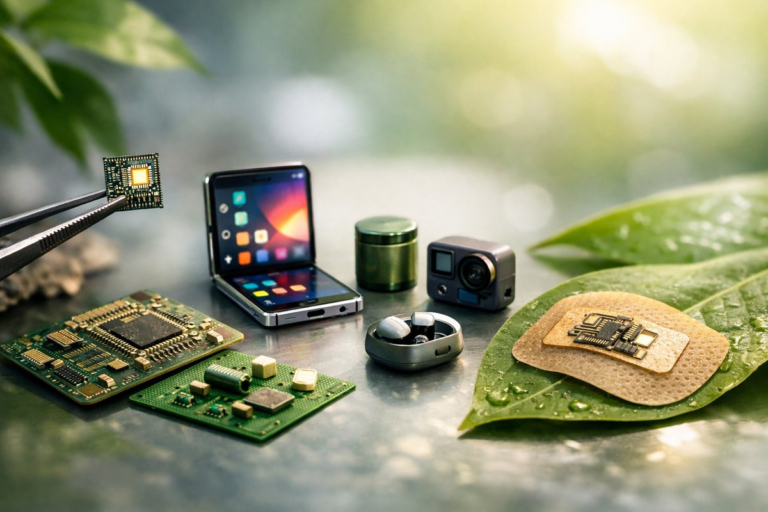
As we look to the future, the convergence of miniaturization, sustainability, and modularity points toward a world where our daily tools are not just smart, but also ethical by design. Biodegradable components, non-toxic materials, and fair-labor manufacturing practices will matter as much as feature lists. Circular-economy initiatives-such as take-back programs and component recycling-will become integral to product lifecycles. The next wave of gadgets will not only shrink our tech footprint physically but also lighten our ecological impact.
Between now and then, innovation will continue at breakneck speed. Researchers are exploring nanoscale batteries that charge in seconds, ultra-light metamaterials for foldable displays, and neural-interface wearables that translate thought patterns into commands. Yet even as we push the boundaries of what’s technically possible, the core promise remains the same: to create tools that blend seamlessly into everyday life, amplify our capabilities, and respect the planet that makes it all possible.
Whether you’re a digital nomad, an outdoor enthusiast, or someone who simply appreciates the elegance of well-crafted design, tiny powerhouses and smart tools are redefining how we interact with technology. They invite us to rethink our gear habits, choosing devices that do more with less, consume less, and last longer. In doing so, they help usher in a future where innovation and responsibility go hand in hand-one compact gadget at a time.