Location
Mount Vernon, WA 98274
Location
Mount Vernon, WA 98274

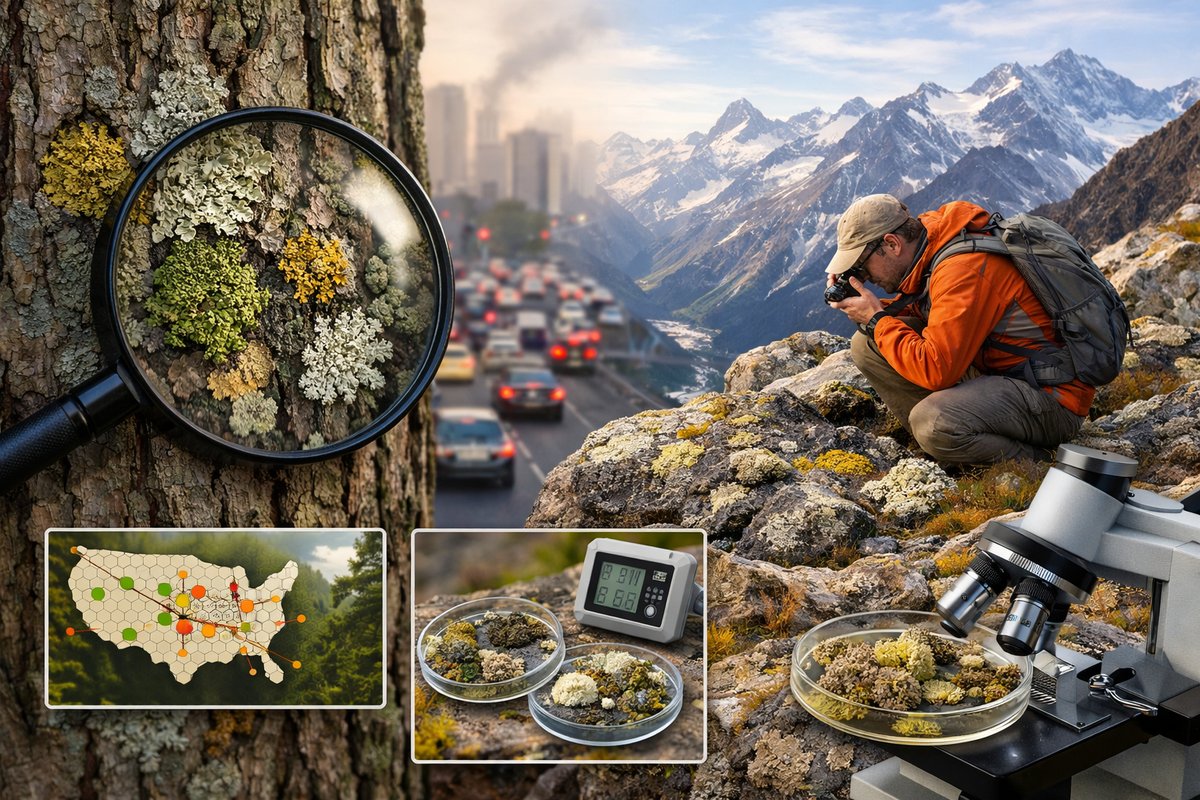
From the bark of city trees to remote alpine rocks, lichens quietly record changes in air quality and climate. Recent studies show shifts in lichen populations offer a living map of environmental health, bridging science with citizen curiosity.
At dawn, when the forest floor is still cool and droplets of mist hover over ancient stones, a hidden community stirs in silence. Clinging to rocks, tree bark, and weathered roofs, lichens multiply with glacial patience. These unheralded pioneers of life thread their way across landscapes, knitting together earth and sky in curious patterns of leaf-like growths and thorny tendrils. To the casual eye they are mere crusts or crusty green patches, but beneath their humble façade lies a wealth of stories about air quality, climate change, and the fragile weave of ecosystems.
Lichens are not single organisms but a partnership-a living tapestry woven by a fungus and its photosynthetic partner, an alga or cyanobacterium. The fungus builds the stage: a delicate scaffolding of hyphae that traps moisture and shields the partner from harsh ultraviolet rays. The alga or cyanobacterium repays the favor with sugars and energy created through photosynthesis. Together they achieve feats neither could manage alone: colonizing bare rock surfaces, surviving months of drought, and withstanding freezing temperatures.
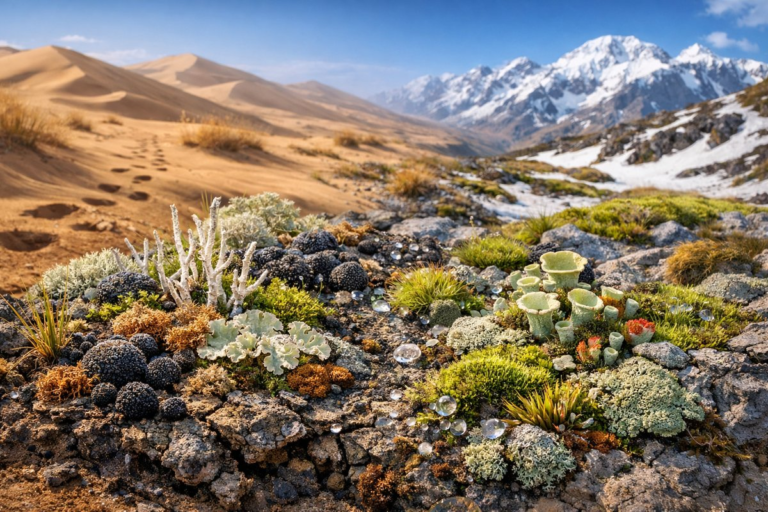
Across thousands of species, lichens take three main forms. Crustose lichens lie flat, almost imperceptible against stone. Foliose types fan out like miniature leaves, often in muted shades of green, gray, and even orange. Fruticose lichens dangle or stand erect, resembling tiny shrubs or coral fragments. Each growth form tells a story of adaptation-how the partnership allocates resources, exports waste, and interacts with the atmosphere.
One of the most remarkable gifts lichens offer is insight into the quality of the air we breathe. Because they lack roots, they extract water and nutrients directly from rainfall and airborne particles. As a result, their tissues accumulate trace elements, both beneficial and toxic. Scientists collect small samples and analyze concentrations of nitrogen compounds or heavy metals like lead and cadmium. Patterns in these concentrations reveal pollution hotspots, sources of industrial emissions, and even shifts in wind-borne dust.
A landmark study published in Environmental Science & Technology examined urban lichen cover in ten major cities over a decade. Researchers found that declines in certain foliose species corresponded closely with peaks in vehicle emissions. As cleaner fuel standards took effect, some lichen populations began to recover-green shoots of change on once-gray walls. Elsewhere, improvements in air quality led to the return of thriving fruticose communities in formerly polluted valleys.
But lichens do more than chronicle pollution. Their geographic ranges shift subtly as temperatures rise. High-elevation species have been recorded moving uphill at rates of nearly 50 meters per decade. In northern latitudes, cold-adapted lichens are retreating, while generalist species advance into territories once locked by ice. A transcontinental survey in the Arctic revealed a 15 percent decline in cold-loving species over the past twenty years, offering a quiet alarm bell for climate scientists.
Citizen scientists play a vital role in mapping these changes. Armed with smartphone apps, volunteers record lichen sightings, uploading geotagged photographs to open-access databases. Algorithms help verify species identity, while privacy safeguards ensure personal data remains secure. Across public parks and backyards, everyday observers help create large-scale maps of lichen diversity and health. These living atlases guide researchers toward emerging pollution events and help track the pace of warming in remote regions.
In many European cities, community surveys have revealed startling correlations between lichen diversity and nitrogen dioxide levels. In one project, schoolchildren measured foliose lichen cover along busy streets and playgrounds. By comparing their findings to air-quality monitoring stations, they saw firsthand how traffic density shaped the living landscape. Such hands-on experiences cultivate environmental empathy and a sense of belonging to a shared ecosystem where human activity leaves a trace in stone and bark.
For the nature-curious wanderer, lichen observation requires only a few simple tools. A handheld magnifier lets you examine surface structures and reproductive bodies. A macro lens attachment for a smartphone transforms ordinary snapshots into detailed records of color patterns and sponge-like porosity. A waterproof journal lets you sketch forms, jot down GPS coordinates, and note surrounding vegetation. With these essentials in a daypack, you can turn any trail or urban alley into an open-air laboratory.
Identification guides remain indispensable. Illustrated keys show growth forms, chemical spot tests, and typical substrates. Some lichens react to drops of bleach or potassium hydroxide, shifting color in seconds-a low-tech glow test that can distinguish look-alike species. Digital field guides and online forums offer quick feedback from seasoned lichenologists, so you can refine your observations in near real time.
Ethical fieldwork means treading lightly. Lichens grow slowly-often less than a millimeter a year. Resist the urge to pry samples from substrates; instead, photograph and measure. If you do collect for scientific analysis, take only a fragment no larger than a thumbnail, and always follow local regulations. By leaving most colonies intact, you ensure they continue their work in soil formation, nutrient cycling, and habitat provision for tiny invertebrates.
Beyond their role as bioindicators, lichens are crucial players in many ecosystems. Cyanolichens fix atmospheric nitrogen, enriching the soil and supporting plant communities in barren landscapes. Fruticose species provide shelter for microscopic mites and springtails. In Arctic ecosystems, reindeer and caribou nibble on soft, pale-yellow lichens during snowbound winters, forging a link between these silent organisms and large herbivores.
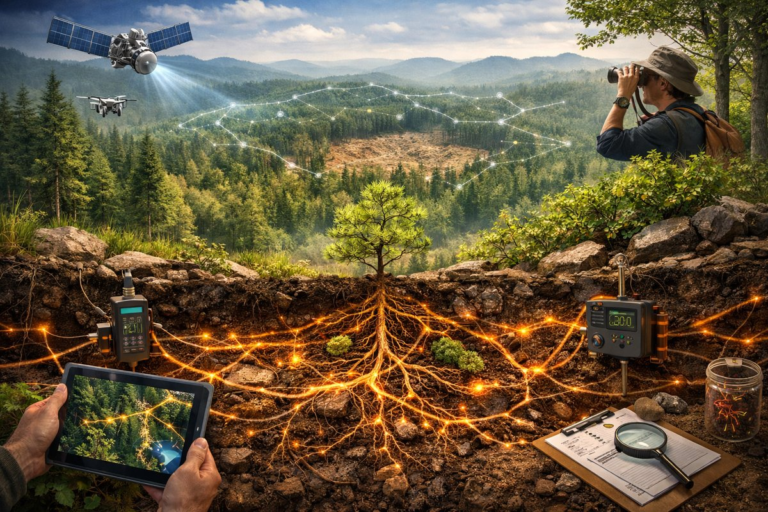
Emerging technologies promise to expand our view of lichen landscapes. Researchers are testing drone-mounted hyperspectral cameras to map foliose lichen density across rugged alpine terrain. Satellite imagery combined with ground-truthing lets scientists model distribution shifts on a continental scale. Such approaches deepen our understanding of how air pollution plumes spread and how warming alters vulnerable mountain systems.
All these threads-symbiosis, pollution monitoring, climate migration, and citizen engagement-converge around a simple invitation: notice the details. Peer at a fuzzy green patch on a boulder, and you’ll find branching filaments that have weathered centuries. Touch a crustose lichen and sense how it clings to stone in a slow embrace. Through these encounters, we cultivate patience and emotional intelligence, learning to perceive the rhythms of change that unfold beyond our daily routines.
As global air-quality policies tighten and warming trends accelerate, lichens will continue to record our collective impact on the planet. They beckon us to join in a long-term science project that spans generations. By mapping their presence and absence, we map our own role in shaping the living world. In the quiet spaces between bark and rock, these silent sentinels speak volumes about resilience, adaptation, and the delicate bonds that unite us with the air we share.
So the next time you step onto a riverside path or wander through an abandoned lot, pause. Let your gaze descend to the textures underfoot. There, on surfaces both natural and man-made, lichens offer a mirror of environmental health and a testament to nature’s subtle artistry. In tuning ourselves to their slow signals, we find a pathway to belonging and stewardship-one tiny, resilient organism at a time.