Location
Mount Vernon, WA 98274
Location
Mount Vernon, WA 98274


A recent initiative in northern Italy invites travelers to navigate the UNESCO-listed Po River Delta on electric houseboats. Combining cultural immersion, wildlife encounters, and zero-emission cruising, this new slow-travel experience showcases sustainable alternatives to conventional boat tours and opens a quieter, more contemplative window onto one of Europe's richest wetland labyrinths.
In a move that marries cutting-edge eco-technology with centuries-old waterways, Emilia-Romagna’s regional tourism board has launched an electric houseboat fleet for the Po River Delta. Under the banner of the Green Waters Initiative, a dozen zero-emission vessels now ply the intricate channels of Italy’s largest wetland, offering an alternative to diesel-powered tours and drawing fresh attention to a landscape that inspired artists and naturalists for centuries.
Spanning more than 380 square miles at the mouth of the Po River, the delta is a patchwork of reed beds, salt pans, pine forests and winding channels. It earned UNESCO status decades ago for its importance as a migratory bird sanctuary and as a rare example of a dynamic European delta shaped by human management since medieval times. Yet many sections remain off the beaten path, with narrow waterways connecting fragments of village life, artisan fisheries and hidden estuaries.
Those waterways are now threaded by PoliVela, the first line of electric houseboats in the region. Each vessel features silent electric motors and rooftop solar panels that reduce fossil-fuel reliance by up to eighty percent. A single charge yields twenty hours of continuous cruising, enough to cover thirty nautical miles in a single day. Charging docks have gone live in Porto Tolle, Comacchio and Pila, allowing captains to replenish batteries overnight alongside historic harbors and salt-harvesting harbors still run by local families.
Travelers describe waking before dawn to drift through mist-shrouded reed beds in hushed silence. “The only sound is the gentle lapping of water and the wings of herons,” says one visitor. Spotting elusive kingfishers, glossy ibises and even the occasional marsh harrier has become routine on sunrise tours. Guests are encouraged to keep binoculars at hand and sketch journals on deck-many report feeling a deep connection to each subtle ripple and light shift across the delta’s glassy expanse.
Beyond wildlife watching, the experience is designed as a cultural odyssey. Daytime stops include visits to artisanal eel farms in Comacchio, where hosts demonstrate traditional net-fishing techniques that date back to the 8th century. In the village of Gorino, travelers can watch master craftsmen braid wicker baskets for collecting local salt. These hands-on workshops underscore the region’s century-old ties to both river and sea.
Culinary exploration is woven into each itinerary. Onboard chefs source mussels, clams and freshwater fish from nearby producers, alongside wild asparagus, fennel pollen and pine-nut pesto from inland orchards. At dinner, passengers gather around communal tables under linen canopies, sampling risotto with lagoon clams or a simple grilled eel wrapped in vine leaves. All leftovers are composted or fed to goats at a neighboring agriturismo, part of a farm-to-table cycle designed to minimize waste.
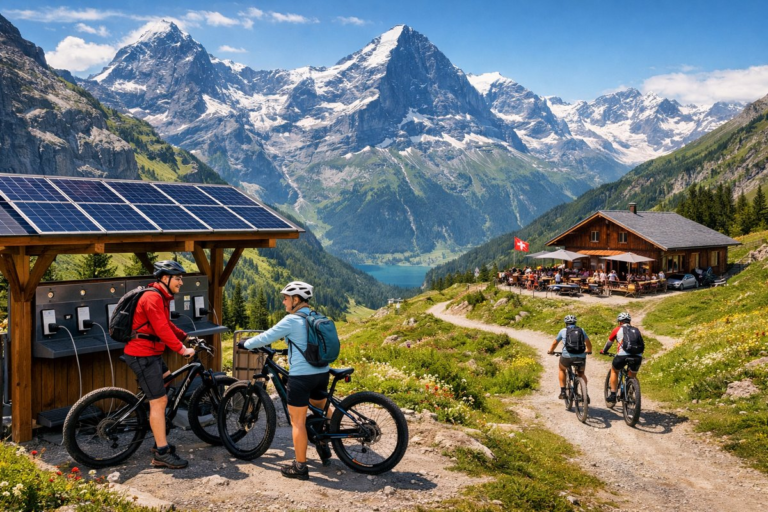
During daylight hours, houseboats are moored at quiet levees that lace through inland forests, and guests borrow electric bikes to pedal across low embankments. The levee roads offer panoramas of heron rookeries and hidden chapels, as well as access to ghostly salt flats where weather-beaten salt-workers use hand rakes to skim precious crystals from brine pools. In autumn, rosy flamingos gather by the thousands along these flats, painting the horizon in shades of pink.
The initiative also emphasizes hands-on stewardship. Each traveler can participate in shoreline cleanups or reed-bed restoration projects guided by local ecologists. Planting native grasses or removing invasive cordgrass becomes a living classroom in wetland ecology, a reminder that sustainable tourism can slip seamlessly into ecological guardianship. By dusk, groups gather on sandy banks with portable lanterns, listening as river guides recount legends of pirates and prodigal fishermen who once hid along these marshes.
Solar-charged lights illuminate the decks after sunset, softening the line between vessel and delta. With smartphones set aside, guests rely on old-fashioned star charts to identify constellations in the clear sky. On still nights, the Milky Way arches above the water, and the tips of reeds glimmer like phosphorescent strands in the ripples.
Logistics are designed for ease: seasonal departures run from late spring through early autumn, with options ranging from three-night taster cruises to ten-day itineraries spanning the full delta loop. Professional skippers handle navigation, fueling and provisioning. Travelers are simply asked to pack light layers, sturdy walking shoes, a waterproof backpack and binoculars-tools for a journey that unfolds at walking pace by water.
While the electric houseboat concept is still in its infancy here, planners hope the Po Delta can serve as a blueprint for other river systems worldwide. Similar projects are being discussed along the Nile’s quieter branches, the Mekong’s tributaries and South America’s Pantanal waterways. The overarching goal is to demonstrate that low-impact transport and intimate immersion need not be mutually exclusive.
As more visitors share images of dawn reflections and silent crossings, local entrepreneurs are adapting. Floating yoga classes now anchor in sheltered coves, sound-bath performances drift across the reeds and poetry readings on deck invite passengers to reflect on their own inner landscapes. Each twist of the channel seems to reveal not just a new vista, but a new way of seeing-both external and within.
The Green Waters Initiative underscores travel’s potential to reshape perspective, to reveal the fragile choreography between human communities and watery wilds. In the Po Delta’s quiet embrace, the old romance of river navigation finds new relevance in the age of sustainability. For those who answer the call, a journey that begins on solar-tipped decks becomes a life-shifting voyage home.
Looking ahead, the program’s architects envision expanding to larger catamarans powered by hydrogen fuel cells and exploring partnerships with neighboring regions. But for now, the jewel of northern Italy invites travelers to move slowly, listen deeply, and carry the delta’s silences and stories back into a world that rarely stands so still.