Location
Mount Vernon, WA 98274
Location
Mount Vernon, WA 98274


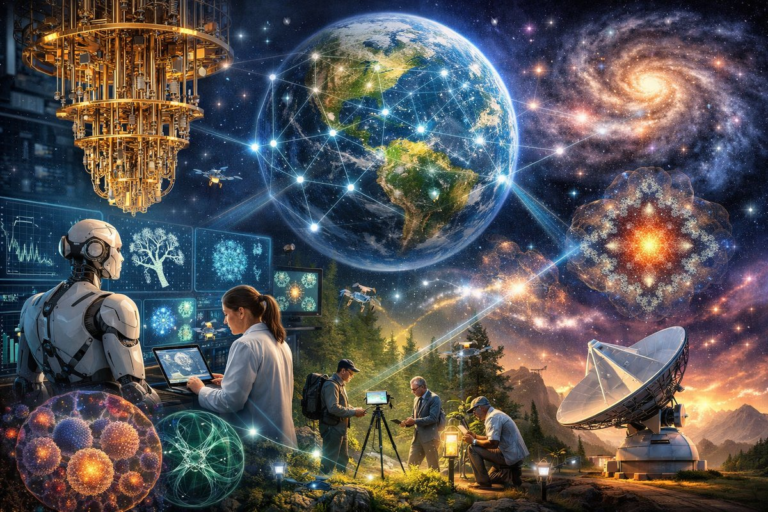
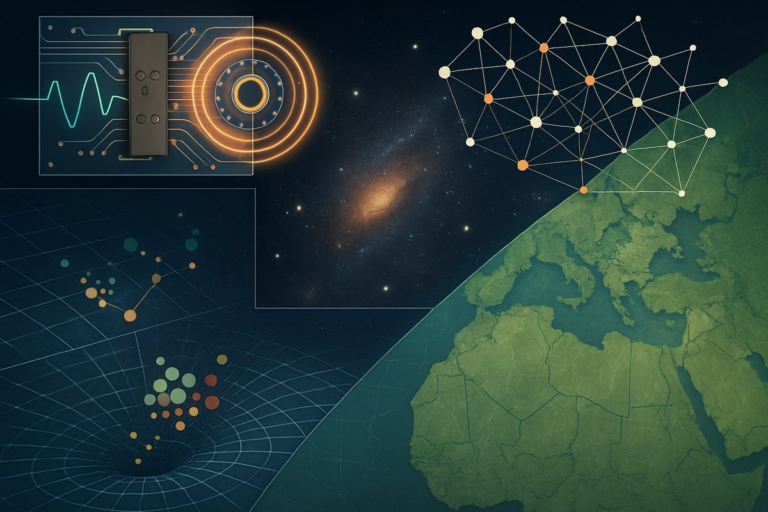
A global initiative has launched an ambitious project to uncover recurring patterns that span scales from molecular structures to cosmic webs. By combining AI-driven analysis, cutting-edge quantum sensors, and crowdsourced data, researchers aim to reveal the universal symmetries that underpin life, ecosystems, and the universe.
In laboratories and observatories around the world, a new scientific collaboration known as the Symmetry Quest has begun collecting data on phenomena as minute as protein folding and as immense as galactic filaments. Spearheaded by an international consortium of physicists, biologists, ecologists, and data scientists, this project seeks to identify recurring mathematical patterns-scaling laws, self-similar fractals, and symmetry groups-that tie together diverse systems across vast size and time scales.
At its core, the initiative rests on three pillars: advanced quantum sensing technologies that capture signals beyond the reach of conventional detectors; machine-learning algorithms designed to sift through petabytes of heterogeneous data; and a global network of citizen scientists contributing observations from backyards, school gardens, and smartphone apps. By uniting these approaches, Symmetry Quest hopes to expose the “grammar” of nature, discovering the simple rules that give rise to complex structures, whether they appear in living cells or dark-matter filaments stretching across intergalactic voids.
On the microscopic front, teams in Europe and Asia are deploying optically pumped quantum magnetometers to map magnetic field variations inside single cells. These sensors-sensitive enough to detect the faint fields generated by biochemical reactions-are revealing that certain protein networks exhibit branching patterns closely resembling fractal trees. Early results suggest that these patterns optimize transport of ions and metabolites, pointing toward universal design principles in cellular physiology.
Meanwhile, data scientists at several universities have trained deep neural networks on high-resolution images of cellular membranes, vascular networks, and microbial colonies. The AI models automatically extract measurements of branching angles, segment lengths, and local curvature, then compare those metrics to datasets drawn from river deltas, lightning strikes, and coral reef growth. Remarkably, the networks are finding consistent scale-invariant ratios-numerical signatures that hint at a shared underlying mechanism guiding resource distribution in both living and nonliving systems.
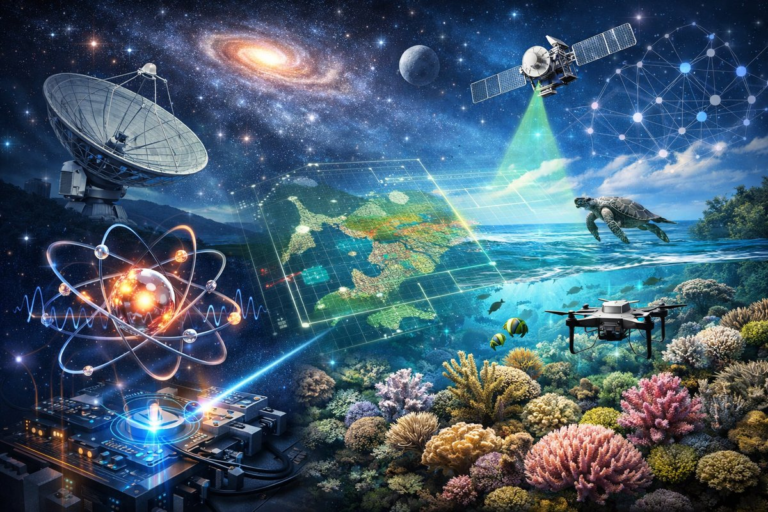
Moving to a larger ecological scale, field biologists and volunteers are documenting interactions among species in forests, grasslands, and wetlands. Using a smartphone app, citizen scientists upload geotagged photos of plant root systems, insect foraging trails, and animal migration paths. Combined with drone-based LIDAR data, these observations are helping to map the spatial networks that sustain biodiversity. Preliminary analyses point to “sweet-spot” connectivity thresholds, where ecosystem resilience peaks-patterns that echo the connectivity seen in neural networks.
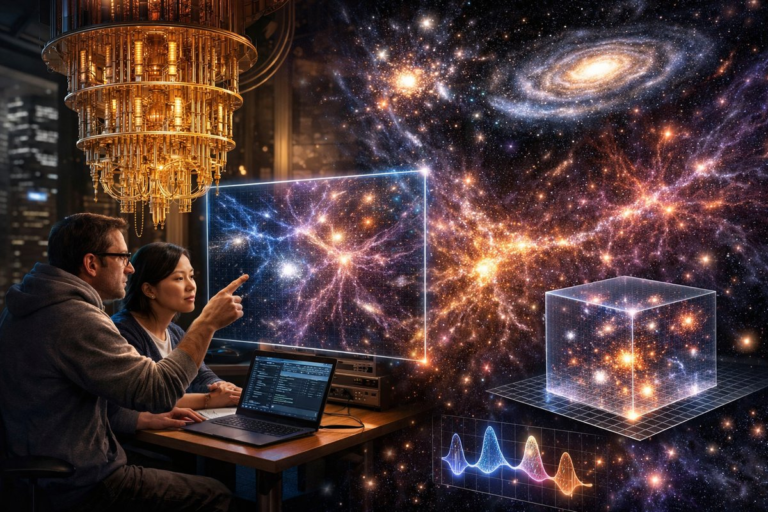
Beyond Earth, astrophysicists are harnessing data from radio telescopes, space-borne observatories, and next-generation quantum interferometers to chart the cosmic web-the vast network of dark-matter filaments and galaxy clusters that delineates the universe’s large-scale structure. By applying the same fractal analysis tools used in the lab, researchers have discovered that the fractal dimension of galactic distributions matches, within error margins, the dimensions found in neuronal networks and fungal mycelium. This convergence has prompted provocative questions: Could similar physical constraints govern growth and connectivity, from neurons firing in our brain to galaxies clustering across billions of light-years?
Key to integrating these diverse datasets is a suite of AI algorithms developed as open-source software. Rather than treating each dataset in isolation, researchers are using transfer learning to allow models trained on one domain-say, cellular imagery-to adapt to another, such as ecological maps. This cross-pollination of insights not only accelerates discovery but also fosters transparency, as all code and anonymized data are publicly available for independent analysis and replication.
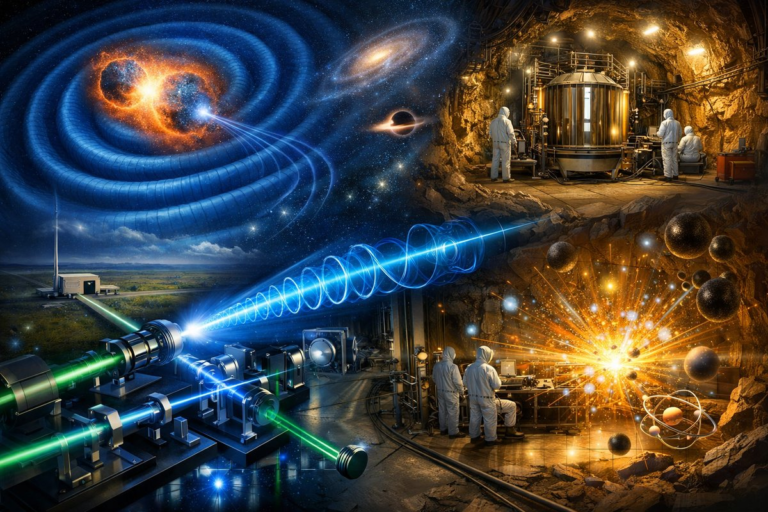
Quantum sensing has proven especially transformative. Traditional sensors often hit sensitivity limits when measuring extremely weak magnetic or gravitational fields, but quantum devices-operating at cryogenic temperatures or leveraging entangled states-can register subtler signals. In one lab, a quantum gradiometer array captured minute fluctuations in Earth’s magnetic field caused by groundwater flows, providing real-time maps of aquifer dynamics. Similar methods are being adapted to detect seismic tremors deep underground and trace variations in atmospheric pressure patterns linked to climate anomalies.
Building a global network of these sensors has required collaboration across disciplines and borders. Partnerships with tech startups have yielded portable quantum sensor prototypes that schools and community labs can adopt. Workshops held in cities from Nairobi to São Paulo train local educators to operate the devices, bringing advanced instrumentation into classrooms and igniting student participation. Early outreach programs have already inspired hundreds of high-school projects, from mapping metal concentrations in local soils to modeling branching patterns in leaf veins.
Despite its promise, the Symmetry Quest faces significant challenges. Integrating data from sensors with different noise characteristics and resolutions demands sophisticated calibration pipelines. Moreover, pattern-finding algorithms can be prone to identifying spurious correlations when overwhelmed with high-dimensional data. To guard against false positives, the consortium has instituted a rigorous peer-review process, requiring candidate patterns to be validated across at least three independent experimental setups and subjected to statistical hypothesis testing.
Another hurdle lies in scaling the network of contributors. While citizen science apps have attracted tens of thousands of downloads, sustaining long-term engagement requires continuous feedback loops. To address this, the project team is developing gamified interfaces that reward users for consistent data uploads and offer interactive visualizations showing how individual contributions fit into the larger pattern-finding effort.
Even as challenges arise, the potential rewards are profound. Uncovering universal symmetry laws could revolutionize materials science, guiding the design of self-assembling nanostructures or ultra-efficient fluid distribution networks. In biology, a deeper understanding of fractal architectures might lead to breakthroughs in tissue engineering, enabling the creation of artificial organs with lifelike vascular systems. On the cosmic scale, grasping the symmetry principles of the universe’s structure could inform new theories of dark matter and dark energy.
Economically, open-source algorithms and affordable quantum sensors promise to democratize cutting-edge research, allowing small labs and educational institutions to participate alongside major research centers. Environmentally, insights into ecosystem connectivity could inform restoration projects, helping to bolster resilience against climate change impacts. Socially, the project’s collaborative model-bridging experts, students, and hobbyists-exemplifies a new form of decentralized research network, one that empowers communities worldwide to ask bold questions and contribute to global knowledge.
As the Symmetry Quest moves into its second year, researchers are preparing to publish an initial compendium of discovered patterns, complete with detailed methodologies and open-access code repositories. Conferences are already being scheduled to explore interdisciplinary applications, from neuroscience and ecology to finance and urban planning. By illuminating the shared architectures of complex systems, this initiative aspires to catalyze a new era of science-one defined by unity, openness, and a renewed sense of wonder at the hidden symmetries that bind our world together.
Whether you’re tracking neuronal spikes in a university lab, surveying plant networks in your backyard, or scanning the heavens through a telescope, the Symmetry Quest invites you to join a global exploration of nature’s repeating motifs. The patterns we uncover may reshape scientific paradigms, spark technological revolutions, and change how we see our place in a universe woven by common design principles. In the end, the effort reminds us that from the tiniest cell to the most distant galaxy, curiosity is the catalyst that propels discovery-and that every data point, no matter how humble, can help reveal the grand tapestry of reality.