Location
Mount Vernon, WA 98274
Location
Mount Vernon, WA 98274


From foldable displays you can slip in a pocket to AI-driven tools that learn your habits, the next wave of gadgets is all about blending power, personalization, and sustainability. Explore how breakthroughs in materials, modular design, and connectivity are turning everyday objects into adaptable allies.
In the last few years, everyday gadgets have shrunk to sizes that once felt futuristic, packing more processing grunt and advanced sensors into palm-sized shells. A surge of innovation driven by breakthroughs in materials science, wireless standards, and open-source firmware is ushering in devices that adapt to individual needs, minimize waste, and bridge the gap between physical and digital worlds.
Foldable displays, once the province of high-end research labs, now appear in handheld projectors and e-ink notebooks you can roll up and slip into a messenger bag. At the same time, flexible batteries built from graphene or printed zinc electrodes are enabling rapid charging and longer longevity. Taken together, these advances are shifting the focus of gadget design away from rigid, single-purpose tools toward modular platforms that evolve alongside the user.
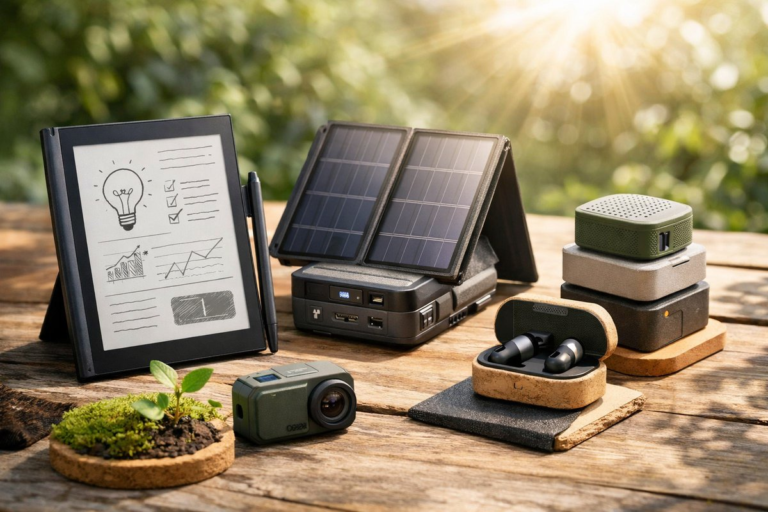
One of the most exciting developments is in the field of printed electronics. Researchers at major technical universities have fine-tuned inkjet and screen-printing techniques to lay down circuits on paper, fabric, and even wood fiber. This makes it possible to produce ultra-thin sensors for health monitoring, disposable smart labels for package tracking, and foldable keyboards that react to touch. Imagine unrolling a 12-inch e-ink display embedded in a recycled paper notebook, jotting down notes with a stylus, then folding it up to scan data directly into the cloud.
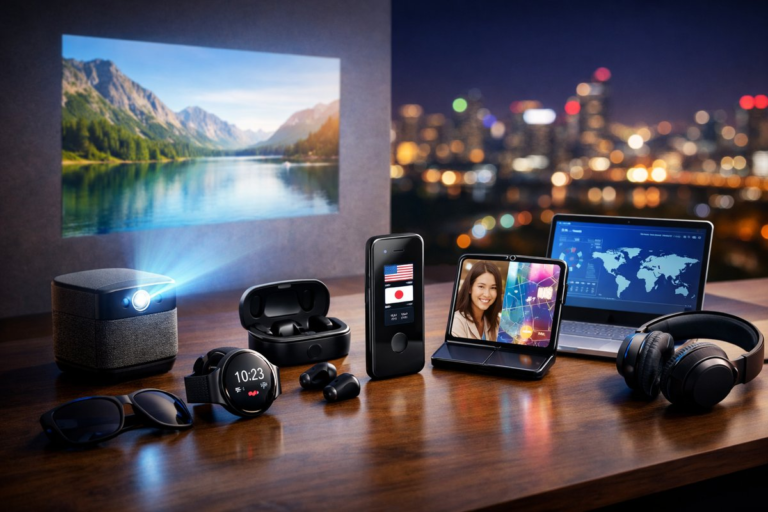
Meanwhile, a new generation of pocket-sized projectors is delivering bright, high-contrast images using laser-based light sources. These palm-friendly units leverage micro-electromechanical mirrors to steer red, green, and blue beams with precision, producing crisp video even in daylight. They often include built-in Wi-Fi 6E radios and Bluetooth Low Energy audio, so you can mirror your smartphone screen or pipe sound to wireless earbuds without extra dongles.
Behind the scenes, improvements in low-power wireless standards are stitching these gadgets into a seamless ecosystem. Bluetooth LE Audio, which rolled out support for multi-stream synchronization, is bringing lossless wireless headphone performance within reach. At the same time, Matter-a cross-platform smart home protocol backed by industry consortia-ensures that a portable sensor or display can communicate with thermostats, door locks, and lighting systems regardless of brand or cloud service.
This interoperability is key to creating adaptable workstations and living spaces. Picture a slim, motorized desk rig that adjusts height and tilt based on your calendar events and posture readings from a wearable band. As you walk in, a motion sensor triggers your personalized lighting scene. Then, a detachable mini display docks on the edge of your desk to show meeting prompts or streaming video. When you leave, the desk folds flat and the display retracts, leaving no clutter.
Sustainability has become a guiding principle for designers who recognize the environmental costs of disposable electronics. Many startups are experimenting with bio-resins and recycled polymers for housings, combined with repair-friendly snap-in modules. One concept uses a magnetic latch system that lets you swap out batteries, cameras, or sensors without tools, extending the useful life of flagship devices. Spare parts can be shipped in flat packs, reducing packaging waste and carbon emissions from transport.
In parallel, manufacturers are exploring closed-loop recycling programs that recover precious metals and rare earth elements from old gadgets. Through specialized collection kiosks, consumers can drop off used electronics, which are then sorted by robotic arms and processed in clean-energy facilities. This model not only lowers the environmental footprint but also creates a more resilient supply chain for critical components.
The push for personalization is equally strong. AI models running on miniature neural-processing units now fit on standalone modules that you can attach to a camera, speaker, or wearable. These on-device AI accelerators handle voice recognition, gesture detection, and real-time translation without sending data to the cloud. Privacy-focused applications-like smart doorbells that notify you only when human movement is detected-are blossoming as a result.
Consider smart glasses equipped with bone-conduction speakers and depth-sensing cameras. Rather than streaming constant video to a remote server, these glasses process raw sensor streams locally to identify objects, transcribe speech, or overlay navigation cues through semi-transparent lenses. Battery life extends to all-day use thanks to hybrid power management that switches between high-efficiency cores and low-power co-processors.
On the audio front, ultra-compact wireless earbuds now sport active noise cancellation, hear-through modes, and health-monitoring biotrackers. Pulse oximetry and blood-pressure estimation run on tiny photoplethysmography sensors built into the tips. While these features are useful for fitness enthusiasts and commuters, the bigger leap comes from spatial-audio rendering chips that position sound density around the listener in 3D, immersing users in podcasts, game audio, and virtual meetings.
Everyday productivity is also getting a boost from smart pens that record strokes and pressure levels on any paper surface. Paired with a companion app, these pens index your notes, convert handwriting to text with high accuracy, and even extract sketches of diagrams or chemical structures. When combined with cloud sync, you can tap on a concept in your digital notebook and instantly pull up related documents, voice recordings, or calendar entries.
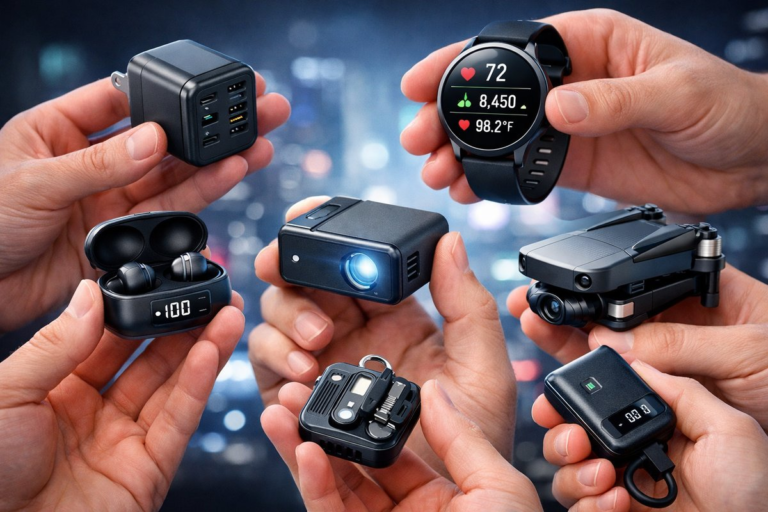
In kitchens and workshops, pocket-sized diagnostic tools are replacing bulky meters and bulky toolboxes. Infrared thermometers, ultrasonic leak detectors, and material analyzers now come in credit-card form factors, communicating results to your phone via NFC or BLE. Prototypes at tech expos have demonstrated handheld mass spectrometers that identify plastics, metals, and even pathogens in seconds, hinting at a future where on-the-go quality control will become routine.
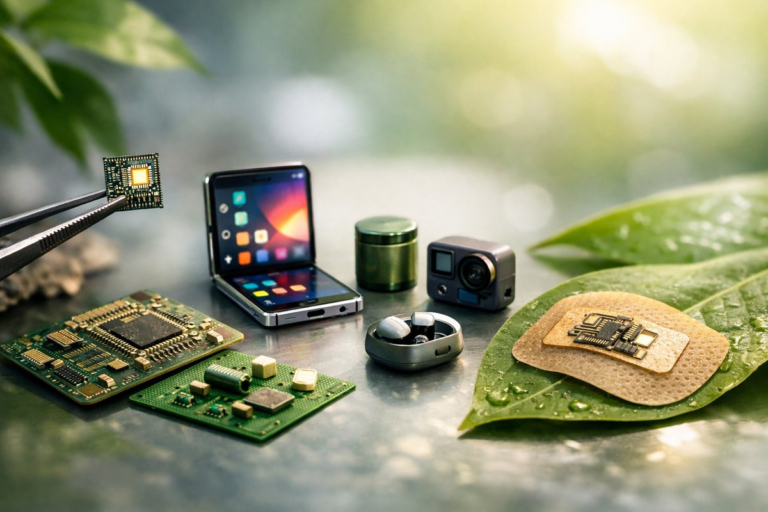
Health and wellness devices are no longer tethered to the wrist alone. Smart patches using stretchable electronics adhere to skin for continuous biometric monitoring-tracking hydration, glucose levels, and muscle fatigue. Data is relayed to home hubs over secure local networks and can trigger alerts on smart mirrors or voice-activated assistants if readings fall outside safe ranges.
Designers are also crafting intuitive interfaces that blur the line between hardware and software. Haptic-feedback surfaces embedded in textiles let you control multiple functions with swipes, pressure patterns, or gestures, eliminating the need for traditional buttons. Concept garments showcased at conferences integrate LEDs, vibration motors, and tiny speakers in collars and cuffs, transforming clothing into interactive displays and communication devices.
Security and privacy are baked into these emerging platforms from the start. Hardware cryptographic modules generate unique keys for each sensor, while zero-trust network architectures verify every message. Open standards for firmware signing and transparent supply-chain audits ensure that modules aren’t tampered with during manufacturing or shipping.
As modular ecosystems matures, communities of makers and open-source developers are contributing add-on boards and firmware packages. Online repositories host drivers for novel sensors-such as gas-analysis chips that detect air quality or neural interfaces that read muscle signals. DIY enthusiasts can piece together custom rigs for assistive devices, environmental monitoring, or even amateur astronomy using miniaturized adaptive optics.
All these innovations share a common thread: they empower users to tailor their tools around personal needs and values. Whether it’s choosing a biodegradable case for a wearable tracker, loading custom voice commands onto a pocket translator, or snapping on a new sensor to a modular smartphone, the future of gadgets lies in flexibility.
Industry analysts forecast that the global market for modular and sustainable consumer electronics will expand at double-digit rates over the next five years. Driving this growth are factors such as tighter environmental regulations, consumer demand for repairable goods, and the rapid adoption of edge-computing architectures that reduce reliance on centralized cloud servers.
Early adopters report that these next-gen devices are already changing daily routines. Commuters find they can transform a portable projector into a presentation board at a moment’s notice. Hikers rely on solar-rechargeable power banks and multi-sensor survival tools that collapse down to the size of a smartphone. Remote educators use foldable e-ink readers to annotate live video lessons while conserving battery life by up to 90 percent compared to tablets.
Even in industrial settings, pocket-sized smart tools are making an impact. Maintenance crews deploy handheld ultrasound scanners to detect equipment wear, and wireless vibration sensors that beginners can install in minutes to catch anomalies before they lead to costly breakdowns. In agriculture, miniature vision modules mounted on drones assess crop health at scale, while soil-analysis pH testers feed data into on-premise AI systems for precision fertilization.
As this ecosystem coalesces, one challenge remains: avoiding gadget fatigue. With so many modular pieces and protocols, users risk creating disjointed collections of devices that don’t speak to each other. That’s where industry alliances and user-driven standards groups step in, crafting universal mounting systems, power-delivery specs, and data schemas so that your smart wallet, silent earbuds, and handheld spectrometer all function as parts of a coherent whole.
We’re poised at a turning point where pocket-sized marvels no longer represent novelty but genuine utility. The real breakthrough isn’t just how small these gadgets have become, but how seamlessly they integrate into daily life-taking cues from our habits, values, and environments to become extensions of our intuition. In this new era of adaptive, eco-minded design, the next gadget you pick up may feel less like a tool and more like a trusted companion.